



WE PROVIDE BUSINESS CONSULTING
Cras metus quam, condimentum ut venen rutrum ediam vehicula quis fringnull lobortis fermentum dignissim ullam rutrum turpi ondimen tristique.
Get startedDISCOVER & CREATE THE NEW HORIZON
Cras metus quam, condimentum ut venen rutrum ediam vehicula quis fringnull lobortis fermentum dignissim ullam rutrum turpi ondimen tristique.
Get startedUNLOCK YOUR BUSINESS POTENTIAL
Cras metus quam, condimentum ut venen rutrum ediam vehicula quis fringnull lobortis fermentum dignissim ullam rutrum turpi ondimen tristique.
Get started
Birthdays
Happy Birthday To These Individuals...

Heroes
Giants And Champions -- Living Or Deceased...
Holidays
Federally Designated Days Of Commemoration...

Justice
Legal Equity, Righting Wrongs, Ensuring Equitable Outcomes...

Notables
Noteworthy People, Events, And Contributions...
Observances
Acknowledging People Or Occurences...

Places
Spots, Buildings, Venues, Towns, Or Locales...


The National Black Calendar (NatlBLACK) is the premier source of holidays and observances important to the African American community! Lorem ipsum dolor sit amet, consectetur adipiscing elit. Ut elit tellus, luctus nec ullamcorper mattis, pulvinar dapibus leo.
Review NatlBLACK days by Type:
• Birthdays
• Heroes
• Holidays
• Notables
• Observances
Submit a suggestion for consideration by clicking here.
Review NatlBLACK days by Type:
• Birthdays
• Heroes
• Holidays
• Notables
• Observances
Submit a suggestion for consideration by clicking here.
~~ Susan Rice,
Attorney & Diplomat
Featured This Month
June 1 …
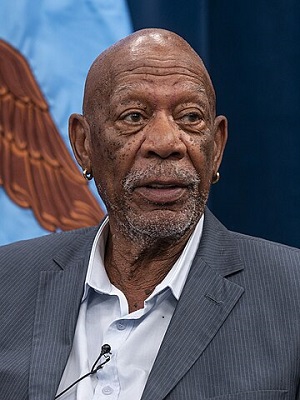
Morgan Freeman is one of the most respected and recognizable actors in American cinema, celebrated for his commanding voice, quiet intensity, and decades-long commitment to his craft.
Born on June 1, 1937 in Memphis, TN and raised in Mississippi and Chicago, Freeman grew up in a working-class family during the era of segregation in the American South. His passion for performance blossomed as a child when he won a school drama competition, offering early confirmation of his talent. Following high school, Freeman briefly served in the United States Air Force with aspirations of becoming a fighter pilot but soon recognized that his true passion lay in acting.
After his military service, Freeman relocated to Los Angeles, where he studied theater arts at Los Angeles City College. This formal training honed his innate abilities, while his studies in dance and involvement in community theater laid a solid foundation of discipline and versatility.
In the early stages of his career, he drew inspiration and mentorship from the flourishing Black theater movement, particularly from artists associated with the Negro Ensemble Company in New York, which helped him refine his stage presence. With influences from celebrated figures like Sidney Poitier and trailblazing Black actors, Freeman developed a style defined by dignity, emotional depth, and gravitas.
Freeman first captured national attention in the 1970s on the children’s educational television series The Electric Company, but it was in the 1980s that he achieved significant recognition in film with impactful supporting roles, most notably in Street Smart. His portrayal of the kind-hearted yet steadfast Red in The Shawshank Redemption garnered him international acclaim, and he continued to assemble an impressive filmography with titles such as Se7en, Driving Miss Daisy, and Million Dollar Baby. Throughout this period, he collaborated with contemporaries like Denzel Washington, Robert De Niro, and Tom Hanks, helping to shape an era of character-driven cinema in American film.
Freeman’s performances have earned him widespread acclaim and numerous accolades, including an Academy Award for Best Supporting Actor for his role in Million Dollar Baby, alongside multiple Oscar nominations throughout his career. He has also received Golden Globe Awards, Screen Actors Guild Awards, and the Cecil B. DeMille Award for lifetime achievement.
His distinctive voice, showcased in narration for documentaries and films, has further solidified his cultural prominence, making it synonymous with authority and wisdom in a variety of projects.
In addition to his acting career, Freeman has made significant contributions to the arts as a producer and co-founder of Revelations Entertainment, a company dedicated to thoughtful storytelling. He has actively supported educational and community initiatives, particularly in Mississippi, where he established a blues club and promoted regional culture.
Revered for his professionalism, humility, and enduring talent, Morgan Freeman remains a towering figure in American entertainment—an artist whose career exemplifies perseverance, mastery, and an unwavering commitment to meaningful storytelling.
June 1 …
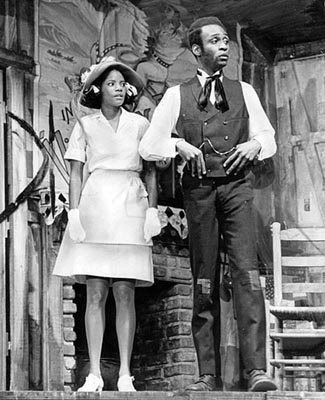
Cleavon Little, was a trailblazing actor whose performances on stage and screen helped redefine the portrayal of African Americans in American entertainment.
Born on June 1, 1939 in Chickasha, OK and raised in California, Little initially studied music before discovering his passion for acting, ultimately graduating from San Diego State University and later earning a scholarship to Juilliard. His training and talent quickly propelled him into the spotlight, where he would become known for his versatility, charm, and fearless approach to challenging roles.
Little’s breakout role came on Broadway in 1970 when he won a Tony Award for Best Actor in a Musical for “Purlie,” a satirical show that blended gospel music, comedy, and a powerful critique of racial injustice in the American South. His portrayal of the charismatic preacher Purlie Victorious was a bold and joyous performance that broke new ground for Black actors on Broadway. It established him as a dynamic stage presence and affirmed that Black performers could lead commercially successful and socially meaningful productions.
While he continued to shine on stage, it was Little’s performance as Sheriff Bart in Mel Brooks’ 1974 comedy Blazing Saddles that made him a household name. As the first Black sheriff of a racist frontier town, he brought intelligence, humor, and cool charisma to a role that subverted stereotypes and lampooned bigotry. The film, a biting satire of racism wrapped in slapstick comedy, became a cultural touchstone, and his performance stood out as both hilarious and heroic. His ability to balance wit with dignity helped challenge Hollywood’s limited view of Black characters.
Throughout the 1970s and 1980s, Little worked steadily in both film and television, appearing in projects such as Vanishing Point, FM, and the sitcom, Temperatures Rising. He frequently chose roles that pushed back against one-dimensional portrayals of African Americans, bringing nuance and depth to his characters. Though he often operated within a system that limited opportunities for actors of color, he consistently found ways to elevate the material and use his roles to reflect broader social commentary.
In addition to his acting, Little was an advocate for better representation of Black artists in Hollywood. His career helped open doors for future generations of performers by proving that a Black actor could successfully carry both comedic and dramatic roles with broad appeal. He brought a sense of style and confidence to his performances that challenged the industry’s norms and expanded the landscape of American film and television.
Little died in 1992 at the age of 53, but his contributions continue to resonate. He was more than a talented actor — he was a cultural pioneer who used humor, intelligence, and heart to challenge racial stereotypes and carve out space for Black talent in mainstream entertainment. His legacy lives on in the generations of actors who followed in his footsteps, as well as in the continued relevance of his most iconic roles.
Cleavon Little remains a symbol of courage, creativity, and excellence in American stage and screen history.
About The Photo:
- Cleavon Little and Melba Moore from the Broadway musical “Purlie” taken in 1970. (Zodiac Photographers, New York)
June …
Provident Hospital (Baltimore) stands as a landmark in the history of American healthcare — a testament to resilience, community self-determination, and the long struggle for equitable medical access in the United States.
Founded in the late 19th century, the Hospital transformed from a modest clinic into a vital institution that provided care to underserved populations and trained generations of Black medical professionals at a time when segregation restricted their access to mainstream hospitals and educational opportunities.
In June 1894, a dedicated group of African American physicians established the Provident Hospital and Free Dispensary in a private residence in northwest Baltimore. The founders — Dr. J. Marcus Cargill, Dr. William E. Harris, Dr. Charles Henry Fowler, Dr. Richard Johnson, Dr. William T. Carr, and Dr. James O’Neil Creditt — were practicing physicians committed to creating a place of healing and a training ground for Black nurses and doctors.
The Hospital initially opened with just 10 beds to serve Black patients who often faced denial of treatment elsewhere. Its rapid growth from the very beginning reflected its early success and significance. Throughout its history, the Hospital relocated multiple times to meet the demands of its growing patient population.
From its inception, Provident Hospital’s mission was guided by the dual goals of providing quality care and expanding professional opportunities for African Americans during a time of widespread racial discrimination.
In 1896, the Provident Hospital Training School for Nurses opened, one of the few pathways for Black women into the nursing profession. Over the following decades, its graduates served in hospitals and public health roles well beyond Baltimore.
As the institution expanded, it embraced innovations in medical training and patient care, earning accreditation and establishing residency programs that allowed Black physicians to specialize and advance in fields ranging from surgery to obstetrics. Consequently, the hospital’s impact extended into broader movements of medical education and civil rights, challenging exclusionary practices and enlarging the ranks of trained Black healthcare professionals.
Although financial pressures ultimately led to a merger with Lutheran Hospital in 1986 and the eventual closure of the Providence legacy site in 1999, its century-long operation left an indelible mark on Baltimore and American medical history. The hospital’s archives, preserved in state and city collections, document its role as a community anchor and a symbol of Black achievement in healthcare.
Commemorative sites such as the Trinity Gardens memorial on the former hospital campus ensure that its contributions are remembered for future generations.
The story of the Hospital is interwoven with the larger narrative of social change in America, embodying aspirations for equity, professional inclusion, and compassionate care. While it may not have received many formal awards in an era before widespread recognition of such institutions, its accolades lie in the lives transformed through its services and in the professional legacies of its alumni, who went on to practice, teach, and advocate across the nation.
The impact Provident Hospital (Baltimore) on the city’s culture and society persists not only in physical memorials, but also in the expanded opportunities for diversity in healthcare professions that it helped to create.

June 1 …
The Montford Point Marines were the first African American men to serve in the United States Marine Corps, and their courage and discipline reshaped the military, advanced national security, and accelerated the struggle for racial justice in America.
This broader movement toward inclusion was fueled by civil rights advocates like A. Philip Randolph, whose campaigns for fair employment and military opportunities significantly influenced federal policies during World War II.
On June 25, 1941, President Roosevelt signed Executive Order 8802, which prohibited government agencies and federal contractors from denying employment in industries involved in defense production based on race, creed, color, or national origin. It marked the first presidential directive on race since the Reconstruction era. Additionally, the order mandated that the armed services, including the Marine Corps, actively recruit and enlist African Americans.
On June 1, 1942 — responding to civil rights activism and wartime manpower demands — the Marine Corps began recruiting Black men for military service.
Initially confined to segregated units and often assigned to support roles, the Marines at Montford Point — located near Camp Lejeune in Jacksonville, NC — trained intensely in preparation for overseas deployment, even as the nation denied them full equality. Among the early leaders was Gilbert H. Johnson, one of the first Black drill instructors, renowned for his high standards and affectionately dubbed “the Pied Piper of Montford Point.”
Their service during World War II and the early Cold War challenged the deep-rooted segregation within the armed forces and established crucial foundations for the integration of the U.S. military, leaving a profound impact on American society and culture.
From 1942 to 1949, nearly 20,000 African American men completed their training at Montford Point, serving in critical campaigns across the Pacific, including Saipan, Iwo Jima, and Okinawa, where they played essential roles in ammunition and supply operations amid combat, supporting frontline efforts. Their exemplary performance challenged and dismantled prevailing racist stereotypes about the abilities of Black servicemen.
In 1948, President Truman signed Executive Order 9981, which mandated the desegregation of the armed forces, and by 1949, the Marine Corps began integrating its ranks, closing the Montford Point training facility. This transition marked a significant stride toward equality within one of the country’s most traditional institutions.
The legacy of these Marines continued to resonate long after integration. Veterans like Edgar R. Huff and Frederick C. Branch — who became the first African American Marine Corps officer in 1945 — emerged as symbols of resilience and professional excellence. Their service enhanced national security by broadening the Corps’ manpower and talent pool, while upholding democratic ideals during a global struggle against fascism and later communism.
Many Montford Point veterans evolved into community leaders, contributing actively to postwar civic life and the advancing Civil Rights Movement, showcasing how military service could catalyze broader social change.
In 2012, the Montford Point Marines were collectively honored with the Congressional Gold Medal, one of the nation’s highest civilian honors, in recognition of their historic contributions and sacrifices. Individual members also received long-overdue acknowledgments and public tributes, with Montford Point being renamed Camp Gilbert H. Johnson to honor the pioneering drill instructor.
Their story has become a significant chapter in American military history, embodying resilience, patriotism, and the continued pursuit of aligning the nation’s democratic ideals with its practices. Through their unwavering service amid discrimination, the Montford Point Marines redefined the concepts of honor and equality within the United States Armed Forces.
June …
The Association of Black Journalists (ABJ) — subsequently known as the Philadelphia Association of Black Journalists (PABJ) — holds a foundational place in the American media landscape as the first established professional association of Black journalists in the United States, shaping how newsrooms approach diversity, how stories about Black communities are told, and how Black journalists are supported and celebrated across generations.
Since its inception in the mid-1970s, the association has evolved into a dynamic center for media professionals, making significant contributions that extend well beyond Philadelphia, shaping national efforts to enhance representation and opportunities in journalism.
Established in June 1974, ABJ emerged when a group of Black journalists from the Greater Philadelphia area working across newspapers, radio, and television. They came together to tackle the inadequacy of representation in mainstream media and to create a unified voice advocating for equitable employment and fair coverage of Black communities.
The group officially incorporated in January 1976 as the Association of Black Journalists of Philadelphia, establishing a formal structure for its previously held monthly meetings in North Philadelphia. The founders represented various media outlets and shared a common dedication to transforming the racial dynamics within newsrooms and media leadership.
The organization’s mission has always been diverse. It included such goals as to inspire more Black individuals to enter the media field, raise awareness about biases in predominantly white newsrooms, and strengthen professional connections among journalists of color, alongside offering skills development opportunities, scholarships for students, and workshops that align media professionals with community needs.
Over the years, membership has expanded to include more than 300 active journalists, students, educators, and media creators, positioning it as one of the largest and most influential associations of its kind in the country. Through signature initiatives such as the Media Access Workshop, residency programs for Black content creators, and persistent advocacy for equity in newsrooms, the association has supported both emerging and seasoned journalists while emphasizing media entrepreneurship and storytelling rooted in the lived experiences of Black communities.
Additionally, PABJ has established a rich tradition of honoring excellence in journalism and community leadership through its annual awards and recognitions, celebrating outstanding contributions to media and cultural life. Events like the Media Professional Awards pay tribute to journalists, scholars, and communicators, including notable figures such as Walter H. Annenberg School Dean John L. Jackson, Jr. and doctoral candidate Antoine Haywood, in recognition of their significant impact on media and community storytelling.
PABJ’s awards galas and scholarships have facilitated the growth of emerging journalists, supported their education, and highlighted the accomplishments of Black media professionals who have significantly influenced public discourse.
The historical role of the Philadelphia Association of Black Journalists as the founding chapter that inspired the National Association of Black Journalists highlights its enduring legacy as a catalyst for change in American journalism, both locally and nationally.
June …
African American Music Appreciation Month — celebrated every June — is a dedicated time to honor and recognize the profound influence of Black musicians, songwriters, and producers on the development of American music, entertainment, and culture.
The celebration originated from the collective efforts of musicians, cultural advocates, and public figures dedicated to highlighting the essential contributions of African Americans in shaping music across various genres. This month-long observance not only celebrates the accomplishments of Black artists, but also illuminates the ongoing challenges and victories within the industry, ensuring that the influence of Black musicians remains recognized and valued in the broader narrative of American music.
Originally called Black Music Month, its origins can be traced back to then-President Jimmy Carter, who issued a proclamation on June 7, 1979 to officially acknowledge the significance of Black music to American culture. This initiative was initially promoted by influential figures in the music industry — like renowned producer Kenny Gamble, pioneering industry executive Ed Wright, and radio personality Dyana Williams, along with other members of the Black music community. These individuals aimed to enhance visibility and appreciation for the rich tradition of Black musical artistry.
The celebration was designed to honor the achievements of Black artists and pay tribute to their pioneering contributions. It also aimed to underscore the vital role of African American musical innovation in the development of diverse genres, including Jazz, Blues, R&B, Soul, Gospel, Hip-Hop, and Rock.
Throughout its history, the observance has received support from various organizations, such as the National Museum of African American History and Culture, the Recording Academy, and music advocacy groups. These stakeholders have focused on highlighting the historical context of Black music, tracing its roots in African rhythms and the cultural exchanges that shaped its evolution in America
Its mission extends beyond celebrating the music itself. It also aims to examine the broader societal impact of Black musicians, whose work has influenced everything from civil rights movements to popular culture. By acknowledging the crucial role that Black music has played in shaping American identity, this observance seeks to promote greater awareness and appreciation for its cultural and historical significance.
Over the years, Black Music Month has gained increasing recognition and importance, with artists, musicians, and activists utilizing the occasion to spotlight issues of representation, equity, and opportunity within the music industry. Numerous events, festivals, and concerts are held throughout June in tribute to the trailblazers and emerging artists who continue to shape American music.
The observance has also inspired the creation of several awards, such as the BET Awards, which celebrate the achievements of Black musicians across different genres. Consequently, African American Music Appreciation Month has evolved into a significant cultural moment, acknowledging not only the successes of individual artists but also the lasting legacy of Black music woven into the fabric of American society.
June …
American Black Film Festival (ABFF) is a premier annual event that has significantly shaped American cinema and culture by championing stories by and about people of African descent and providing a vital platform for Black filmmakers to connect, create, and be celebrated.
The festival traces its origins to June 1997, when it was first held as the Acapulco Black Film Festival in Acapulco, Mexico. It was founded by Jeff Friday, Byron E. Lewis, and Warrington Hudlin to counter the lack of diversity and access they observed in major industry events and to create a space where Black creatives could network, collaborate, and elevate their work outside of mainstream constraints.
The founders drew on their experience in advertising, business, and Black cultural advocacy, united by a mission to provide greater opportunities, visibility, and industry access for Black filmmakers and storytellers who were often overlooked in Hollywood and beyond. From its early years in Acapulco, the festival introduced awards, workshops, training sessions, and networking forums that helped emerging directors, writers, and actors refine their craft and gain exposure.
In 2002, ABFF was renamed the American Black Film Festival and later moved to Miami Beach, where it became an annual gathering attracting thousands of filmmakers, executives, and film lovers. It is an independent Oscar-qualifying event.
Key participants over the years have included industry professionals, major studios, and media personalities who support the festival’s goals of artistic expression, education, and industry collaboration. Sponsors and partners such as HBO, Warner Bros. Discovery, Comcast NBCUniversal, and the Greater Miami Convention & Visitors Bureau have played important roles in expanding its reach and impact.
ABFF’s audience is broad and international, encompassing emerging talent, established artists, film executives, and enthusiasts passionate about diverse voices in storytelling. Its mission — to empower Black artists and content creators, promote diverse narratives, and strengthen artistic community — has led to the discovery and advancement of numerous filmmakers and actors who have gone on to shape Hollywood and global cinema.
The cultural contributions of the American Black Film Festival have been recognized through its inclusion in honors and archives celebrating Black creative achievement. It continues to be a cornerstone of representation, innovation, and celebration in American entertainment.
June 1 …
Reverend Ike was a prominent and controversial mid-20th century preacher whose flamboyant delivery and promotion of a prosperity-centered faith reshaped aspects of popular religion, media ministry, and Black cultural life.
Born Frederick J. Eikerenkoetter II on June 1, 1935 in Ridgeland, SC to parents of Dutch-Antillean and African descent, Eikerenkoetter began his preaching journey as a teenager and served briefly as a chaplain’s aide in the U.S. Air Force. He earned a B.A. from American Bible College in Chicago in 1956 and held pastorates in South Carolina and Boston before establishing his prominent ministry in New York City during the mid-1960s.
Eikerenkoetter bought and extensively restored the Loew’s 175th Street Theatre. He later renamed it Palace Cathedral/United Palace, transforming it from an old movie palace into the flagship venue for his large, predominantly Black congregation.
Theologically, Eikerenkoetter blended Pentecostal charisma, New Thought philosophies, and elements of Christian Science and Norman Vincent Peale’s optimism into what he termed the “Science of Living.” This doctrine equated spiritual growth with material wealth and self-empowerment.
Eikerenkoetter’s signature practices included the “Blessing Plan,” where radio and TV listeners would send money in exchange for blessings, along with vivid prosperity visualizations. At his peak in the 1970s, his radio show reached thousands of stations and millions of listeners. While traditional clergy and civil rights advocates criticized his theology as shallow and commercial, supporters and some later ministers credited him with redefining economic aspiration as a legitimate religious desire.
Eikerenkoetter’s public persona and innovative methods significantly influenced later televangelists and prosperity preachers. Contemporary figures in the prosperity movement, such as Oral Roberts, Kenneth Hagin, and Kenneth Copeland, shared overlapping styles and teachings, while younger African-American pastors like Frederick K.C. Price, Creflo Dollar, and T.D. Jakes acknowledged the movement’s influence while distancing themselves from aspects of Ike’s flamboyance.
Although Eikerenkoetter had fewer visible mentors, his connection to New Thought and postwar healing revival leaders is evident. His son, Xavier Eikerenkoetter, became his primary protégé, eventually assuming leadership of the United Church/United Palace ministry.
Eikerenkoetter amassed considerable personal wealth and gained public recognition, becoming a multimillionaire through donations, radio and TV broadcasts, book and tape sales, and church businesses. His career also attracted investigations from the IRS and postal services. While formal ecclesiastical honors are scarce, he enjoyed significant cultural recognition, maintaining a strong presence in popular culture through music and comedy references, as well as the landmark United Palace building that he restored.
Reverend Ike died on July 28, 2009, but his legacy endures in the realm of prosperity theology, the use of mass media in Black preaching, and ongoing debates about the intersections of religion, consumption, and social uplift in American history.
June 2 …
George Houser was a pivotal, but often underrecognized figure in the Civil Rights Movement.
Born on June 2, 1916 in Cleveland, OH, Houser grew up in a family steeped in religious and social activism. His early life laid a foundation for his unwavering commitment to justice and equality. He was influenced by both his family’s Methodist values and the wider social gospel movement of the time, which emphasized Christian responsibility for social reform. These formative experiences would eventually lead him to take bold and often dangerous stands against racism and oppression, both in the United States and abroad.
Houser’s activism began in earnest during his college years. While studying at Union Theological Seminary in New York City, he became deeply involved in social justice causes and joined forces with fellow seminarians who believed that nonviolent resistance could serve as a powerful force for change. It was here that he met Bayard Rustin and other future leaders of the Civil Rights Movement. Together, they helped lay the groundwork for an early wave of nonviolent protest against racial discrimination, modeling their strategies after the teachings of Mahatma Gandhi. His commitment to pacifism and direct action would become a hallmark of his career.
In 1942, Houser co-founded — with James Farmer and Bernice Fisher — the Congress of Racial Equality (CORE), an interracial civil rights organization dedicated to challenging segregation through nonviolent protest. As one of CORE’s first leaders, he helped organize sit-ins at segregated restaurants and public venues in the Midwest. These actions predated and foreshadowed the more widely known sit-ins of the 1960s, marking him as an early architect of direct-action civil disobedience in the United States. CORE’s campaigns, under his leadership, were instrumental in demonstrating the effectiveness of peaceful resistance in the face of violent racism.
Perhaps one of Houser’s most historically significant contributions came in 1947 when he co-led the Journey of Reconciliation, a precursor to the more famous Freedom Rides of the 1960s. Alongside Bayard Rustin and other activists, Houser rode interstate buses through the upper South to test the Supreme Court’s ruling in Morgan v. Virginia, which outlawed segregation on public transportation. Facing arrests and mob violence, he and his colleagues highlighted the Southern states’ defiance of federal law and brought national attention to the ongoing struggle for racial justice.
Houser’s commitment to liberation extended beyond American borders. In the 1950s and beyond, he shifted much of his focus to the African continent, advocating against colonialism and apartheid. He founded the American Committee on Africa, which became a central hub for American anti-colonial activism.
Houser traveled extensively, met with African leaders like Kwame Nkrumah and Julius Nyerere, and used his platform to build bridges between African independence movements and progressive organizations in the United States. His efforts helped connect the civil rights struggles in the U.S. to broader global movements for freedom.
Despite working largely outside of the media spotlight, Houser remained a tireless advocate for justice throughout his life. His lifelong dedication to peace, nonviolence, and international solidarity set a powerful example for future generations of activists. He served as a moral compass during a period of enormous social upheaval, reminding Americans that civil rights were not only a national issue, but a human one, deeply connected to the global fight against oppression in all its forms.
Houser died in 2015 at the age of 99, leaving behind a legacy of courageous and principled activism. While his name may not be as widely recognized as some of his contemporaries, his influence on the Civil Rights Movement and his deep commitment to nonviolence and human dignity are undeniable.
Through his work with CORE, the Journey of Reconciliation, and the American Committee on Africa, George Houser helped shape the moral and strategic contours of 20th-century social justice activism. His life is a testament to the power of conscience-driven action and the enduring impact of those who fight for equality across both national and international lines.
June 2 …
Charlie Sifford was a groundbreaking figure in American sports, whose courage and talent reshaped the landscape of professional golf and advanced the cause of racial equality in athletics.
Born in Charlotte, NC on June 2, 1922, Sifford grew up in an era when racial segregation was deeply entrenched in every facet of American life, including sports. He began his golf career as a caddie, practicing in secret on whites-only courses, developing a formidable game in the shadows of discrimination. Despite the barriers, he honed his skills on the United Golf Association (UGA) tour, where he won dozens of events and established himself as one of the best African American golfers in the country.
Sifford’s most significant achievement came in 1961, when he broke the color barrier by becoming the first African American to earn a PGA Tour card, following the removal of the PGA’s “Caucasian-only” clause. This milestone was not easily won. He faced constant hostility from both players and fans, including threats, sabotage, and open racism. But Sifford remained undeterred, allowing his performance to speak for itself.
Sifford won two PGA Tour events — the Greater Hartford Open in 1967 and the Los Angeles Open in 1969 — becoming the first Black golfer to win at that level. He also won the UGA’s National Negro Open six times and the PGA Seniors’ Championship in 1975. These victories were not just athletic accomplishments, they were powerful statements that challenged the foundations of exclusion in the sport.
Off the course, Sifford became a symbol of perseverance and dignity, embodying the broader struggle for civil rights during a transformative era in American history. His fight for inclusion was not only personal, but emblematic of the demands for access, fairness, and recognition that defined the Civil Rights Movement.
Sifford’s presence on the PGA Tour helped to shift perceptions, proving that African American athletes could compete — and win — at the highest levels of golf, a sport long reserved for white elites. He paved the way for future generations, including Lee Elder and Tiger Woods, who would later cite him as a key influence and inspiration.
In addition to his competitive achievements, Sifford was a mentor and advocate for diversity in golf. He used his platform to encourage young Black athletes to pursue the sport and worked to expand opportunities for minorities in golf programs across the country.
Sifford’s journey was one of quiet resistance — not defined by dramatic confrontation, but by steady, undeniable excellence in the face of adversity. His contributions helped initiate a slow, but vital transformation in the culture of golf, making it more inclusive and reflective of the country’s diversity.
Sifford’s legacy was eventually recognized with numerous honors, including induction into the World Golf Hall of Fame in 2004 and the Presidential Medal of Freedom in 2014. Though his path was marked by hardship, his impact was lasting and profound.
Charlie Sifford didn’t just change the game — he changed who the game was for. Through his courage, determination, and trailblazing spirit, he left an indelible mark on American sports, culture, and history, reminding the world that the pursuit of excellence must never be bound by race or prejudice.
June 2 …
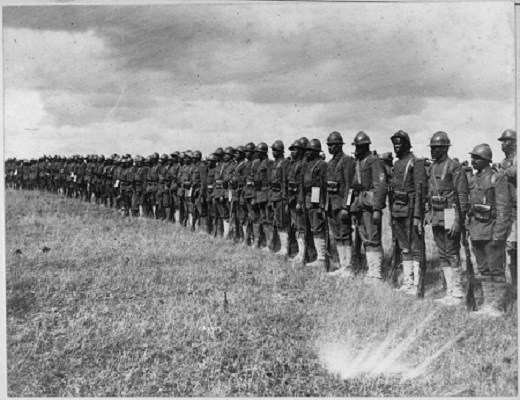
The “Harlem Hellfighters” — officially designated the 369th Infantry Regiment — hold a unique and powerful place in American military history.

Coat of Arms of the Regiment.
When the United States entered World War I in 1917, the 369th Infantry was among the first African American regiments to be deployed overseas. However, due to racial discrimination, they were not initially permitted to fight under the American command. Instead, the U.S. Army assigned them to the French Army, which was more accepting of Black soldiers. Equipped with French weapons, helmets, and rations, the Hellfighters entered combat alongside their French allies, determined to show the world what they could do. Their partnership with the French military became a turning point, marking the beginning of their legendary reputation.
The 369th Infantry Regiment served on the front lines for an astonishing 191 consecutive days — longer than any other American unit during the war. They fought bravely in key battles, including the Meuse-Argonne Offensive, one of the largest operations of the war. Despite enduring relentless shellfire, gas attacks, and brutal conditions, they never lost a single foot of ground to the enemy nor allowed any of their men to be captured. Their resilience and discipline earned them immense respect from the French and admiration from fellow Allied forces. The French government awarded many of them the Croix de Guerre, one of France’s highest military honors.

Johnson and Roberts in 1918
The Hellfighters were not only soldiers, but also cultural ambassadors. Their regimental band, led by the renowned musician James Reese Europe, introduced jazz to European audiences, forever changing the musical landscape of the continent. Noble Sissle, who later became first elected president of the Negro Actors Guild of America, served as a member of the Harlem Hellfighters’ band.
Their performances during the war and afterward helped spread African American music across France and beyond, influencing the global rise of jazz as a defining art form of the 20th century. In this way, the Hellfighters contributed not just to military victory, but to a cultural revolution that bridged continents and reshaped popular culture.

Famous New York soldiers … the Hellfighters parade through NYC after their return home. The Regiment (the old 15th National Guard of New York City) was the first New York regiment to parade as veterans of the Great War.
Thousands lined the streets to cheer the regiment that had brought honor to the United States and pride to the African American community. Yet, even after their remarkable service, the soldiers faced the same systemic racism they had left behind. Their heroism abroad stood in stark contrast to the discrimination they endured at home, highlighting the deep contradictions of American democracy during that time.
Despite these injustices, the legacy of the 369th Infantry Regiment endures as a symbol of courage, patriotism, and perseverance in the face of inequality. They broke barriers, redefined what it meant to serve one’s country, and laid the groundwork for future generations of Black soldiers in the U.S. military.
Their story remains a powerful reminder that patriotism is not measured by how one is treated, but by how one responds to adversity. The Harlem Hellfighters proved through their actions that valor knows no color — and their contributions continue to inspire the ongoing fight for equality and recognition in American history.
About The Photo: In the photo above, the Harlem Hellfighters, part of the 15th Regiment Infantry New York National Guard organized by Colonel Haywood, are decorated with the French Croix de Guerre. It is noted that the men have taken to the French helment, instead of the flatter and broader British style.
June 2 …
Cornel West is a prominent American philosopher, theologian, political activist, and public intellectual whose career has spanned academia, ministry, electoral politics, and cultural commentary, making him one of the most recognizable voices in contemporary American public life.
Born on June 2, 1953 in Tulsa, OK and raised in Sacramento, CA, West was nurtured in a Baptist household where church life intertwined with the Black freedom struggle. From a young age, he exhibited remarkable intellectual abilities and a deep commitment to justice, which would later define his roles as a scholar and prophetic critic of American democracy.
At just 16 years old, West entered Harvard University, where he graduated magna cum laude in Near Eastern languages and civilization. He later earned his Ph.D. in philosophy from Princeton University, becoming one of the first African Americans to achieve this distinction there.
His esteemed academic career includes positions at Union Theological Seminary, Yale University, Harvard University, and Princeton University, where he taught on subjects such as the philosophy of religion, African American studies, and political thought. Known for his ability to weave scholarly rigor with a sermonic delivery, West drew inspiration from the Black church tradition to enliven his philosophical explorations.
West garnered national acclaim as author of works like Race Matters, which explored the moral and structural crises confronting the United States in the late 20th century. His scholarship integrates elements of American pragmatism, Christian theology, and Marxist social analysis, placing him in conversation with notable figures such as W.E.B. Du Bois, Martin Luther King Jr., and Reinhold Niebuhr — whose influences he openly acknowledges.
He also finds inspiration in the improvisational genius of jazz artists like John Coltrane, evaluating their artistry as a reflection of democratic experimentation. His contemporaries include prominent public intellectuals like bell hooks, Michael Eric Dyson, and Henry Louis Gates Jr., with whom he has engaged in insightful discussions on race, culture, and politics.
Beyond academia, West is actively engaged in activism and electoral politics. As a steadfast advocate for democratic socialism, prison reform, and economic justice, he has taken part in protests, civil disobedience, and grassroots organizing. His political journey has involved associations with progressive movements and, more recently, a high-profile presidential campaign focused on addressing issues of poverty, militarism, and moral renewal in American public life. West frames political dilemmas as ethical concerns, emphasizing the necessity of love, justice, and solidarity in guiding public policy.
A theologian rooted in the Black prophetic Christian tradition, West emphasizes hope amidst oppression and the transformative power of collective struggle. His sermons and lectures integrate scripture with philosophy and blues-infused rhetoric, highlighting his belief that theology must resonate with the experiences of the marginalized.
West has mentored countless students and young scholars, fostering a commitment to interdisciplinary study and public engagement, acting as both an academic mentor and a moral guide. Through his role at institutions like Union Theological Seminary, he has influenced aspiring clergy, activists, and intellectuals.
Throughout his career, West has been honored with numerous degrees, book awards, and accolades that recognize his significant contributions to scholarship and public discourse. These honors reflect not just his intellectual accomplishments, but also his ability to bridge the gap between academia and the broader public.
A frequent media commentator, West has participated in cultural projects encompassing film, music, and documentaries, shaping national discussions on race, democracy, and faith.
By marrying philosophical depth with prophetic fervor, Cornel West has made an enduring impact on American politics, theology, education, and cultural history, continually urging the nation to realize its highest democratic ideals.
June 3 …
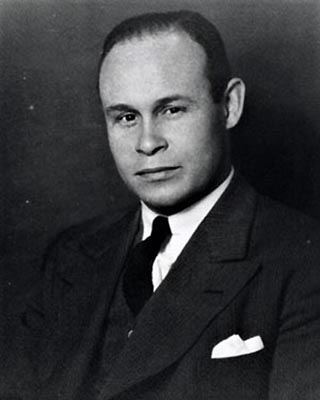
Charles Drew was a pioneering African American physician, surgeon, and medical researcher whose work revolutionized the field of blood transfusion and saved countless lives.
Born on June 3, 1904 in Washington, D.C. and raised in a tight-knit, middle-class family, Drew exhibited both academic and athletic prowess from a young age. He earned a scholarship to Amherst College, where he excelled in sports and pre-medical studies. Though he initially considered a career in athletics, his growing interest in medicine led him to pursue medical training at McGill University in Montreal, one of the few institutions at the time where African Americans could receive a high-quality medical education.
Drew’s deep commitment to medicine was matched by a keen scientific mind. After earning his M.D. and completing surgical residencies, he enrolled in Columbia University for advanced studies. It was there, during the late 1930s, that Drew conducted groundbreaking research in the field of blood preservation. His dissertation, “Banked Blood,” laid the foundation for modern blood banking.
He discovered that plasma — the liquid portion of blood — could be stored and used more effectively than whole blood, especially in emergencies. His innovations enabled blood to be preserved for extended periods and transported across long distances, which was unprecedented at the time.

1943 illustration of Dr. Charles Richard Drew, M.D. C.M. MED. D.Sc. (Professor of Surgery at Howard University and Chief Surgeon at Freedmen’s Hospital in Washington, D.C.) by Charles Alston in the collection of the National Archives
During World War II, Drew’s expertise became critically important. He was appointed medical director of the Blood for Britain project, which provided life-saving plasma to British soldiers and civilians. He later led the American Red Cross blood program, establishing large-scale blood banks and standardized procedures that are still in use today.
Despite his invaluable contributions, Drew faced systemic racism. One of the most painful contradictions was the Red Cross’s policy of segregating blood donations by race — an unscientific and discriminatory practice Drew strongly opposed. His protests marked an early and powerful stance against racial injustice in medicine.
Drew’s influence extended beyond the laboratory and battlefield. As a professor at Howard University, he trained and mentored a generation of Black physicians, encouraging excellence in a time when opportunities for African Americans in medicine were severely limited. He emphasized rigorous standards, integrity, and service to the community. His presence at Howard, a historically Black university, became a beacon of hope for aspiring Black doctors and a symbol of resistance to racial inequality in education and professional life.
In a society where African Americans were routinely denied access to medical institutions, Drew’s achievements challenged deeply entrenched beliefs about race and intellect. He not only advanced medical science but also disrupted cultural narratives that sought to marginalize Black professionals. His visibility and leadership in a predominantly white field helped shift perceptions and opened doors for others. He demonstrated that excellence knows no color, and his success brought dignity and pride to Black communities across America.
Tragically, Drew’s life was cut short in 1950 when he died in a car accident at the age of 45. Despite his untimely death, his legacy endures in the systems he helped build and in the lives of those he inspired.
The blood banks that he pioneered have become vital components of modern medicine, especially in surgeries, trauma care, and disaster response. Moreover, his insistence on ethical practices and racial equality within the medical field continues to influence discourse and policy today.
Charles Drew’s story is not only a narrative of scientific brilliance but also of moral courage and social impact. His work sits at the intersection of innovation, equity, and human dignity. He belongs to a lineage of thinkers and doers whose work redefined what it meant to serve the public good through science.
Through his intellect, perseverance, and commitment to justice, Dr. Charles Drew helped reshape American medicine and left a legacy that continues to pulse through hospitals, universities, and communities worldwide.
June 3 …
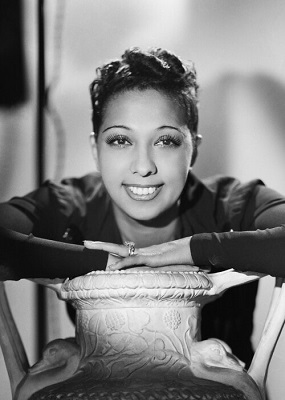
Josephine Baker was an American-born dancer, singer, and actress whose career was centered primarily in Europe, mostly in France.
Baker was born Freda Josephine McDonald on June 3, 1906 in St. Louis, MO into a world that offered few opportunities for a young Black woman with big dreams. From an early age, she found solace and purpose in performance, dancing on the streets and in local theaters to help support her family.
The hardships of Baker’s youth — marked by poverty, racial prejudice, and instability — shaped her resilience and fueled her determination to rise above the limitations imposed by society. By her teenage years, she had joined a traveling vaudeville troupe, setting the stage for a career that would transcend borders and defy expectations.
Baker’s early performances in America coincided with the Harlem Renaissance, a flourishing of Black art and culture during the 1920s. She became known for her comedic timing, expressive dance, and uninhibited energy, which captivated audiences in New York. However, despite her growing talent, she encountered the persistent racism that permeated the entertainment industry.
Frustrated by these barriers, Baker accepted an invitation to perform in Paris in 1925 — a decision that would change her life forever. In France, she found both fame and freedom, quickly becoming one of Europe’s most celebrated entertainers.
Baker’s performances in Paris were revolutionary, blending African rhythms, jazz, and modern dance in ways that challenged Western ideas about race and femininity. The iconic image of Bakerher dancing in a skirt made of bananas became a symbol of her boldness and the complex interplay between exoticism and empowerment.
While some viewed Baker’s act as controversial, others recognized it as a subversive commentary on colonial stereotypes and a celebration of Black identity. Her charisma and innovation made her a sensation in Europe, turning her into the first Black woman to become an international superstar.
Beyond her artistic triumphs, Baker’s life was defined by courage and conviction. During World War II, she joined the French Resistance, using her fame and access to gather intelligence for the Allies. She smuggled coded messages written in invisible ink on her sheet music and transported sensitive documents across borders under the guise of performing.
For her bravery, Baker received the Croix de Guerre and the Legion of Honour, two of France’s highest military decorations. Her wartime service revealed another side of her — not just a performer, but a patriot and a humanitarian committed to justice and equality.
After the war, Baker used her influence to fight racial discrimination, particularly in the United States. Returning to America in the 1950s, she refused to perform for segregated audiences and became active in the Civil Rights Movement.
Baker was a vocal supporter of Martin Luther King Jr., and in 1963, she spoke at the March On Washington, wearing her French military uniform to symbolize solidarity and service. She also adopted 12 children from different countries — her “Rainbow Tribe” — as part of her vision to show that racial harmony was possible. Through her life and choices, she embodied the idea that art could be a force for social change.
Baker’s legacy endures as that of a trailblazer who transformed entertainment and challenged the boundaries of race, gender, and nationality. She was not only a performer of extraordinary talent, but also a woman of profound principle and courage. Her influence can be seen in the generations of artists who followed her path — those who used the stage as both a platform for expression and a tool for progress.
In 2021, Josephine Baker was posthumously inducted into the Panthéon in Paris, becoming the first Black woman to receive this honor. Her life remains a testament to the power of resilience, creativity, and the unwavering pursuit of freedom.
June 3 …
Curtis Mayfield was a singer-songwriter, guitarist, and producer whose socially conscious soul and funk music—rooted in gospel and rhythm-and-blues—profoundly influenced popular music and the cultural politics of the 1960s and beyond.
Born on June 3, 1942 in Chicago, Mayfield grew up in the Cabrini-Green public housing project, where he was immersed in church music. He left high school to pursue his passion for music, co-founding The Impressions in the late 1950s.
With the group, Mayfield refined his skills as a vocalist and songwriter, merging doo-wop and gospel harmonies with increasingly impactful lyrics. His early musical education came from community experiences, church involvement, and hands-on performance rather than from formal training.
Mayfield achieved significant acclaim, writing and recording a series of influential hits with the Impressions, including “People Get Ready,” “Keep on Pushing,” and “Choice of Colors,” which became anthems for the Civil Rights Movement and Black empowerment movement.
As a solo artist, Mayfield delved deeper into socially conscious and politically charged themes, most notably composing and producing the soundtrack for the 1972 film Super Fly. This work combined cinematic storytelling with funk rhythms, achieving commercial success and sparking cultural debate due to its nuanced depiction of urban life. His contributions expanded the expressive potential of soul music, highlighted the Black social experience, and helped forge a connection between popular music and activism.
Mayfield drew inspiration from gospel-rooted performers and contemporary R&B artists, citing the doo-wop and gospel traditions of his upbringing. He collaborated with a range of producers and musicians from Chicago and later Los Angeles.
Mayfield’s mentors and peers in the influential Chicago R&B and soul scenes. This included his contemporaries in the soul and funk movements — Marvin Gaye, James Brown, Sly Stone, Isaac Hayes, among others — who shared his commitment to blending sonic innovation with social commentary.
Mayfield’s influence extended across generations, inspiring musicians across various genres. Notable artists such as Stevie Wonder, Prince, and numerous hip-hop producers and soul musicians drew from his songwriting, distinctive falsetto, and guitar work.
Mayfield’s artistic and cultural impact has been recognized with multiple honors. He was inducted into the Rock and Roll Hall of Fame, both as a member of the Impressions in 1991 and later celebrated posthumously for his solo contributions. He received several Grammy awards, including lifetime achievement acknowledgments, along with various industry and civic tributes.
Following a 1990 accident that left him paralyzed from the neck down, Mayfield persisted in composing and recording. He continued to earn respect for his resilience and creative output.
The legacy of Curtis Mayfield continues through sampling, cover versions, and ongoing scholarly and popular engagement with his unique blend of powerful lyricism and melodic artistry, which has reshaped American music and defined the soundtrack of an era.
June 4 …
The Nicholas Brothers are celebrated giants in American dance history, embodying innovation, elegance, and astonishing athleticism.
Born into a musical family and immersed in the vaudeville scene of the early 20th century, Fayard Nicholas and Harold Nicholas crafted a distinctive style that blended tap, jazz, ballet, and acrobatic movements, termed classical tap or flash dancing, pushing the art form beyond its traditional limits. Their journey from the Standard Theatre in Philadelphia and Harlem’s renowned Cotton Club to global fame showcased not just their remarkable technical skill, but also their profound musicality and expressive performance, setting a new benchmark for dancers worldwide.
The exact date in 1932 that they became the featured act at the Cotton Club is unknown, but the brothers made their movie debut in the short film “Pie, Pie Blackbird,” which was released on June 4 the same year. Though uncredited, they were featured alongside Nina Mae McKinney, Noble Sissle, and Eubie Blake and his orchestra.
Influenced by the great Black entertainers of their youth, including jazz legends and vaudeville stars, they learned the art of rhythmic sophistication and showmanship that shaped their performance evolution. Fayard, the elder by seven years, was largely self-taught, learning by observation before passing his knowledge to his younger brother Harold, who soon became an equally dynamic partner and creative force. Throughout their teenage years, frequenting the Cotton Club alongside icons like Duke Ellington, Cab Calloway, and Ethel Waters enriched their craft and expanded their artistic vision.
Their contributions to film and Broadway allowed their artistry to reach a broader audience, even as Hollywood’s racial barriers restricted opportunities for Black performers. Their electrifying performances in films such as Stormy Weather and Orchestra Wives became legendary, with the “Jumpin’ Jive” sequence often hailed as one of the greatest dance moments in cinematic history. They were pioneers, not only for their spectacular technical feats—such as leaping into splits down staircases and executing back flips —but also for presenting themselves with dignity and style at a time when many Black entertainers were confined to negative stereotypes.
The impact of the brothers transcends their own performances. Tap dancers and choreographers like Savion Glover, Gregory Hines, and Maurice Hines have all recognized the significant influence the brothers’ innovations have had on modern tap. Iconic figures beyond the tap realm — including Michael Jackson and Debbie Allen — have drawn inspiration from their unique fusion of rhythm, athleticism, and theatricality. Additionally, they imparted their expertise through master classes and residencies at esteemed institutions like Harvard and Radcliffe, ensuring the technical and expressive elements of flash tap were passed on to new generations.
In recognition of their remarkable legacy, Nicholas Brothers received numerous accolades later in life, including the Kennedy Center Honors for lifetime achievement, a star on the Hollywood Walk of Fame, a Tony Award for choreography, and induction into the International Tap Dance Hall of Fame, among others.
Despite facing racial prejudice throughout much of their early careers, Fayard Nicholas and Harold Nicholas transformed the cultural landscape of American entertainment, leaving an enduring legacy of artistic excellence, innovation, and inspiration that continues to resonate across dance, film, and popular culture.

June 5 …
The American Negro Theatre (ANT) was founded on June 5, 1940 in Harlem, NY by a group of Black actors, writers, and stage technicians led by playwright Abram Hill and actor Frederick O’Neal.
The organization was created in response to the limited opportunities available to African Americans in the performing arts and the widespread stereotyping of Black characters in mainstream theater. Rooted in a desire to present authentic, nuanced portrayals of Black life, the theater quickly became a vital force in American cultural life, using the stage as a platform for both artistic expression and social change.
Operating out of the basement of the Harlem branch of the New York Public Library, the theater became a training ground and performance venue for emerging Black talent. Its founders believed that Black artists deserved the same opportunities to develop their skills and share their stories as their white counterparts.
They modeled the organization on the principles of the Federal Theatre Project’s Negro Unit but sought to retain full creative control. Productions were affordable, community-centered, and intentionally reflective of the lives and struggles of ordinary African Americans. The theater’s motto — “About Us, By Us, For Us, and Near Us” — captured its commitment to self-representation and accessibility.
The ANT launched the careers of several major figures in American entertainment, most notably Sidney Poitier, Ruby Dee, Ossie Davis, Harry Belafonte, and Earle Hyman. These performers not only gained foundational stage experience at the ANT, but also carried its legacy into film, television, and activism.
Through rigorous acting workshops and public performances, the theater fostered a sense of artistic discipline and social responsibility. The emphasis on truthful storytelling and cultural pride helped shift the representation of Black characters from caricature to complexity.
Beyond individual careers, the theater significantly influenced American theater as a whole by expanding the canon to include Black voices and experiences. It produced more than 20 plays during its decade-long existence, including both original works by Black playwrights and adaptations of established works with Black casts.
The ANT’s productions addressed themes like racial injustice, economic hardship, and the richness of Black community life. This approach not only entertained but also educated, contributing to a broader national conversation about race, identity, and equity in the arts.
Although the ANT disbanded in 1951, its legacy endures in the institutions and movements it inspired. It laid the groundwork for later Black theater companies, such as the Negro Ensemble Company and the National Black Theatre, and continues to be studied as a pioneering model of culturally rooted artistic production.
By giving a voice to Black artists and audiences in a segregated cultural landscape, the American Negro Theatre reshaped the American stage and affirmed the centrality of Black experience in the nation’s artistic and historical narrative.
June 5 …
John Carlos is an iconic American athlete and activist whose achievements on the track and courageous stand for human rights helped redefine the role of sports figures in society, leaving a lasting imprint on American sports, culture, and history.
Born on June 5, 1945 in Harlem, NY, he rose from humble beginnings to become one of the fastest men in the world, but it was his moral conviction as much as his speed that secured his place in the national consciousness. Carlos gained prominence while competing for San Jose State College, a track and field powerhouse, where he was guided by the legendary coach Bud Winter and influenced by sociologist Harry Edwards.
Together with his fellow athletes, he became a pivotal figure in a generation that believed excellence in sports could go hand in hand with principled resistance. Carlos’s athletic achievements were remarkable.
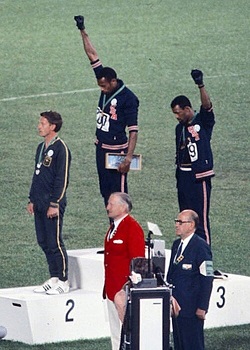
Carlos (right) and Tommie Smith (center) showing the raised fist on the podium after the 200 m race at the 1968 Summer Olympics; both wear Olympic Project for Human Rights badges. Peter Norman (silver medalist, left) from Australia also wears an OPHR badge in solidarity with Smith and Carlos. (photo credit: Angelo Cozzi, Mondadori Publishers)
At the 1968 Olympic Games in Mexico City, he won a bronze medal in the 200 meters, finishing behind his teammate and friend Tommie Smith, as well as Australia’s Peter Norman. The race was historic, but what followed became one of the most enduring images in sports history. During the medal ceremony, Carlos and Smith raised a black-gloved fist to protest racial injustice and inequality in the United States. This silent gesture, often linked to the broader Black Freedom Movement, had significant repercussions — they were expelled from the Games and faced intense backlash at home. Yet over time, the moment evolved into a powerful symbol of peaceful protest and athlete activism.
Beyond the Olympics, Carlos recorded multiple world-class times and was part of the illustrious San Jose State sprint tradition alongside contemporaries like Lee Evans and Bob Beamon, athletes who were pushing the boundaries of human speed and performance.
Carlos drew inspiration from a lineage of trailblazers who combined athletic excellence with social impact. He admired Jesse Owens, whose victories at the 1936 Berlin Olympics challenged racist ideologies on a global stage, and Jackie Robinson, who broke Major League Baseball’s color barrier with dignity and courage. The boldness of Muhammad Ali, who relinquished his heavyweight boxing title for principles, profoundly shaped Carlos’s understanding of standing up for justice.
Simultaneously, he was influenced by the moral leadership of figures like Malcolm X and Martin Luther King Jr., whose appeals for dignity and equality resonated well beyond politics and into locker rooms and stadiums. Carlos and his peers believed that athletes were not merely entertainers but also citizens with voices and responsibilities.
Following the upheaval of 1968, Carlos continued to compete before playing professional football, including stints with the Philadelphia Eagles and the Canadian Football League. Although his athletic career eventually evolved into coaching, counseling, and public speaking, his influence only magnified.
Over the decades, what was once seen as a controversial protest came to be recognized as an act of profound courage. In 2008, Carlos and Smith received the Arthur Ashe Courage Award, affirming their roles as pioneers of athlete activism. They were later inducted into the U.S. Olympic & Paralympic Hall of Fame, and a statue commemorating their medal stand was erected at San Jose State University — an enduring testament to their courage and principles.
John Carlos’s legacy transcends medals and records. He broadened the definition of what it means to be an American athlete, showing that the pursuit of excellence on the field can coexist with a commitment to justice off it. His actions paved the way for future generations of athletes to advocate on issues ranging from racial inequality to human rights, reshaping public expectations about the societal role of sports figures.
Today, John Carlos stands as a symbol of conviction under pressure, a man whose raised fist continues to resonate across decades as both a protest and a promise.
June 5 …
Breonna Taylor was a 26-year-old emergency medical worker whose life and death became a defining catalyst for modern debates about race, policing, and justice in the United States.
Born on June 5, 1993 in Grand Rapids, MI, Taylor was primarily raised by her mother in a family connected to healthcare, ultimately relocating to Louisville, KY, where she established her adult life and relationships. Known for her compassion and determination, friends and family recognized her as someone who embraced responsibility at an early age, valuing stability, independence, and care for others.
Taylor’s personal journey reflected common aspirations. This included building a career, securing her finances, and planning for a future that included home ownership and further education.
After high school, Taylor pursued education, briefly attending the University of Kentucky before returning to Louisville to concentrate on her work and practical goals. She became an emergency medical technician and later an emergency room technician, making direct contributions to patient care.
By 2020, she was working in healthcare during the COVID-19 pandemic as an essential worker on the front lines. With aspirations to further her education and train as a nurse, she showcased a long-term commitment to public service and the medical field.
Taylor’s accomplishments were largely rooted in everyday impact rather than public recognition — offering emergency care, supporting her community, and charting a path of upward mobility through healthcare work. Those who knew her described her as motivated and caring, effectively balancing her professional duties with strong family ties. Generally, her life encapsulated the experiences of many young Black Americans striving for stability and professional development within systems that often present structural challenges.
On March 13, 2020, Taylor was tragically killed in her Louisville apartment when police officers forcibly entered during a late-night raid linked to a drug investigation involving another individual. Unarmed at the time, no drugs were found in her home. During the incident, her boyfriend fired a shot, thinking intruders had invaded, prompting officers to return fire, ultimately striking and killing her.
The aftermath led to widespread public outrage, a $12 million settlement for Taylor’s family, policy changes limiting “no-knock” warrants, and a complex legal process in which some officers faced federal civil rights charges. One officer was ultimately convicted and sentenced to prison, while others had charges dismissed or contested over time.
Taylor’s death became a pivotal rallying point in the broader movement for racial justice, joining other high-profile cases from 2020. Her name was invoked in protests, cultural discussions, and policy debates, raising awareness around police practices and the unique experiences of Black women.
The phrase “Say Her Name” gained prominence as part of her legacy, highlighting the need for visibility and accountability. To highlight social justice and the Black Lives Matter movement, the abbreviated and postponed 2020 WNBA season was dedicated to Taylor and other Black women who were either killed by police or whose deaths resulted from over-policing, such as Sandra Bland.
The life and death of Breonna Taylor significantly influenced social justice movements, contributed to legislative reforms, and reshaped national conversations about policing, civil rights, and systemic inequality — impacts that continue to resonate in public discourse and policy debates today.
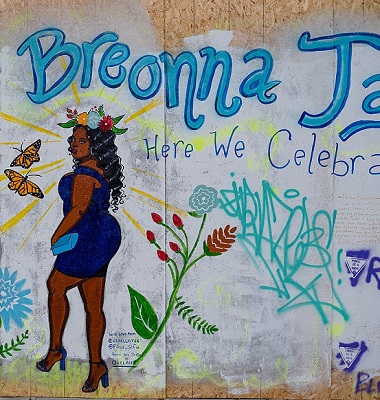
About The Photo:
- Starting in the Summer of 2020, professional and amateur artists created murals all over the world, including this one in Oakland, California. Mural by Estella Tse and Sofía Sharpe / Photograph by Levi Clancy.
June 5 …
Tyre Nichols was a man whose life and death became a powerful catalyst for renewed national attention on policing, accountability, and justice in the United States.
Nichols was born on June 5, 1993 in Sacramento, CA and later moved with his family to Memphis, TN. Raised primarily by his mother, RowVaughn Wells, Nichols grew up in a nurturing and supportive family environment. He was considered a gentle, creative, and introspective man, with a profound appreciation for nature and art. He sought moments of calm and reflection, often enjoying the sights of sunsets and spending time outdoors.
Nichols attended local schools and worked diligently to build a stable life in Memphis. He was employed by FedEx in a physically demanding role while also pursuing his passion for photography outside of work. Among his friends, he was known for his desire to enhance his skills behind the camera, capturing both landscapes and everyday moments. His pursuits illustrated a fusion of discipline in his professional life and artistic curiosity in his personal endeavors.
Nichols’ achievements were rooted in these personal and creative explorations. While he may not have been widely recognized before his tragic death, he fostered meaningful relationships and expressed his individuality through art, striking a balance between responsibility and creativity. His life became emblematic of the humanity often overlooked in the narratives surrounding victims of police violence, emphasizing the need to view individuals as more than the circumstances of their passing.
On January 7, 2023, Nichols was stopped by officers from the Memphis Police Department during a traffic stop. The encounter escalated into a violent beating by multiple officers, resulting in his hospitalization. He died on January 10, 2023.
The release of video footage of the incident sparked widespread outrage. Five officers were subsequently fired and charged with second-degree murder and other offenses, facing both state and federal proceedings, with several pleading guilty in federal court.
Nichols’s death profoundly impacted his family and community. It ignited protests in Memphis and across the nation, while also intensifying calls for police reform and accountability.
The story of Tyre Nichols reinforced ongoing efforts within the Black Lives Matter movement and left a significant mark on American social justice, culture, and history.
About The Photo:
- Tyre Nichols protests at the Ohio State House in Columbus, Ohio. (Photo by Becker1999)

June 6 …
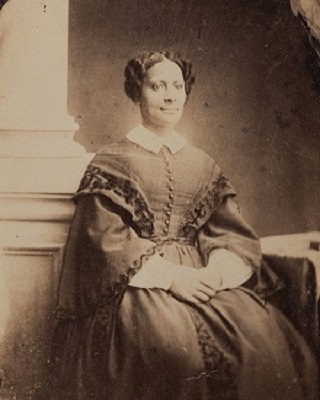
Sarah Parker Remond was a pioneering African American abolitionist, lecturer, and physician whose life exemplified resistance to racial and gender oppression in the 19th century.
Born on June 6, 1826 in Salem, MA into a prosperous and politically active Black family, Remond was raised in an environment that valued education, civic engagement, and the pursuit of justice. Her parents, who operated a successful catering business, ensured that their children, including her brother Charles Lenox Remond, received quality education — an uncommon opportunity for African Americans at the time. From a young age, Remond was exposed to the pressing issues of slavery and racial inequality, which ignited in her a lifelong passion for advocacy.
Remond began her public life as an anti-slavery lecturer in her teenage years, becoming one of the few Black women of her era to address mixed audiences on the abolitionist circuit. Her eloquence, moral clarity, and personal conviction distinguished her as a powerful orator. She denounced slavery not only as a system of physical bondage but as a moral stain on the American conscience, often drawing attention to the hypocrisy of a nation founded on liberty while enslaving millions. She traveled extensively throughout the United States and Europe, challenging audiences to confront the brutal realities of slavery and racism.
Her activism extended beyond the podium. Remond was deeply involved in several abolitionist organizations, including the American Anti-Slavery Society, and she worked closely with prominent figures like Frederick Douglass and William Lloyd Garrison. She also fiercely advocated for women’s rights, believing that the liberation of women and the abolition of slavery were intertwined struggles. Remond’s dual commitment to racial and gender justice placed her at the forefront of intersecting social movements, well ahead of her time in articulating what would later be understood as an intersectional approach to activism.
Frustrated by the limited opportunities and pervasive discrimination she faced in the United States, Remond eventually moved to England and later to Italy. In England, she continued her abolitionist work and enrolled at Bedford College, an institution that offered women access to higher education. Her time in Europe not only broadened her intellectual horizons but also offered her a level of respect and opportunity that was largely unavailable to Black women in America. Ultimately, she settled in Florence, where she earned a medical degree and practiced as a physician — an extraordinary achievement for a Black woman in the 19th century.
Remond’s life abroad did not diminish her commitment to justice. She remained engaged in international debates around race, slavery, and colonialism and became part of a transatlantic community of reformers who saw these issues as part of a broader human rights struggle. She challenged white supremacy not just in American institutions, but also in the broader framework of Western imperialism, advocating for a more humane and equitable global society. Her ability to navigate and influence multiple cultural and political landscapes speaks to her intellectual agility and unwavering dedication to justice.
Though often overlooked in mainstream historical narratives, Remond’s contributions to American society are profound. She broke barriers in education, medicine, and public discourse, and her life serves as a powerful testament to the resilience and brilliance of Black women in the face of systemic oppression.
By using her voice, intellect, and compassion across continents, Sarah Parker Remond not only advanced the cause of abolition but also broadened the scope of what it meant to fight for freedom. Her legacy continues to inspire new generations committed to justice, equity, and the global struggle for human rights.
June 6 …
Tommie Smith is a transformative figure in American sports history whose record-breaking speed and moral courage reshaped the relationship between athletics, civil rights, and national identity.
Born on June 6, 1944 in Clarksville, TX and raised in California, Smith rose from humble beginnings to become one of the most electrifying sprinters of his time. His journey paralleled the tumultuous 1960s, a decade marked by struggle and reform, and he became a symbol of both sporting excellence and principled resistance. More than just a champion on the track, Smith emerged as a global icon of conscience, proving that athletes could leverage their platforms to impact society and culture well beyond the confines of stadiums.
Smith’s athletic achievements were remarkable. Competing for San Jose State College under the esteemed coach Bud Winter, he became a dominant force in the 200 and 400 meters.
At the 1968 Olympic Games in Mexico City, he claimed the gold medal in the 200 meters, setting a world record of 19.83 seconds — the first officially timed instance of the event falling under 20 seconds. His victory was part of a notable performance by American sprinters, including his teammate John Carlos, who won bronze, along with contemporaries like Lee Evans and Bob Beamon, all of whom were pushing the limits of speed and power. Smith’s graceful stride and commanding finishes solidified his status as one of the premier athletes of his era, admired for both his natural talents and rigorous training.
Smith (center) and John Carlos (right) showing the raised fist on the podium after the 200 m race at the 1968 Summer Olympics; both wear Olympic Project for Human Rights badges. Peter Norman (silver medalist, left) from Australia also wears an OPHR badge in solidarity with Smith and Carlos. (photo credit: Angelo Cozzi, Mondadori Publishers)
Inspired by civil rights leaders like Martin Luther King Jr. and earlier trailblazers such as Jesse Owens and Jackie Robinson, Smith believed that athletic success carried the duty to confront injustice.
After the Olympics, Smith briefly played professional football in the National Football League before dedicating much of his life to education and mentorship as a track coach. His commitment to guiding young athletes mirrored the support he received from figures like Harry Edwards, whose advocacy for athlete activism shaped Smith’s perspective.
Many years after the 1968 controversy, public recognition of his bravery swelled. In 2008, Smith and John Carlos received the Arthur Ashe Courage Award for their principled stance, and Smith was inducted into the U.S. Olympic & Paralympic Hall of Fame. A statue at San Jose State University commemorates the iconic podium moment, ensuring that future generations grasp both the athletic and social dimensions of his legacy.
Tommie Smith’s impact reaches far beyond medals and records. He redefined what it means to be an American champion. By merging world-class performance with a steadfast commitment to human rights, he expanded the cultural role of athletes and inspired countless sports figures to advocate for justice and equality.
The legacy of Tommie Smith lives on in every athlete who sees sport as a platform for change, and his raised fist stands as a lasting testament to the power of conviction under pressure.
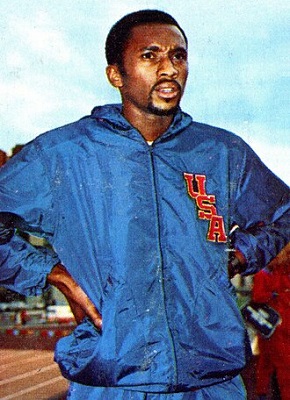
June 6 …
Daniel L. Haynes was a pioneering American actor whose work in early 20th-century stage and cinema helped expand the presence and complexity of Black performers in U.S. entertainment history.
Born Daniel Leo Haynes on June 6, 1889 in Atlanta, GA, he grew up in an era when systemic racism and segregation severely limited opportunities for African American artists in the performing arts. While detailed records of his formal education are scarce, Haynes refined his craft through theater and performance in touring and Broadway productions, developing his skills as both an actor and singer long before making his transition to the silver screen.
Early influences on his artistic sensibility included the rich traditions of Black musical and dramatic expression common in the South and within Black theater communities, particularly in cities like New York during the Harlem Renaissance.
Haynes’s most lasting legacy originates from his groundbreaking role as Zeke in King Vidor’s 1929 film Hallelujah, one of the first significant Hollywood productions featuring an all-Black cast by a major studio, Metro-Goldwyn-Mayer. His performance infused depth and humanity into a character grappling with faith, temptation, and resilience at a time when portrayals of Black life were scarce and often stereotyped.
Hallelujah is now recognized as culturally and historically significant, capturing the rhythms, spiritual traditions, and social contexts of African American communities that mainstream cinema largely overlooked. Haynes appeared alongside peers such as Nina Mae McKinney and William Fountaine, who were also trailblazing new paths for Black actors during the early sound era.
Throughout his career, Haynes adeptly transitioned between mediums, featuring in films like The Last Mile, Mary Burns, Fugitive, and So Red the Rose, while maintaining a vibrant stage presence. On Broadway, he showcased his versatility in productions such as The Bottom of the Cup, Earth, The Green Pastures, and a 1938 rendition of Androcles and the Lion, encompassing roles that ranged from dramatic leads to adaptations of classical works.
Although he did not receive the widespread recognition of awards that would come to be established later in the 20th century, his contributions are historically honored as part of the pioneering group of Black performers who paved the way for future generations of actors.
His contemporaries and collaborators included not only his co-stars but also notable figures like Paul Robeson from Show Boat, for whom Haynes understudied onstage, reflecting the rich artistic networks forged by Black actors during that era.
In his later years, Haynes stepped away from show business to devote himself to religious service as a Baptist minister, a role that resonated deeply with the spiritual themes present in much of his impactful work. He passed away on July 28, 1954, in Kingston, NY, leaving a legacy intertwined with key cultural moments in American entertainment and African American history.
The influence of Daniel L. Haynes continues to resonate through the actors he inspired — those who sought broader and more nuanced roles for Black artists — and in the enduring recognition of films like Hallelujah, which are still studied for their artistic and social significance.
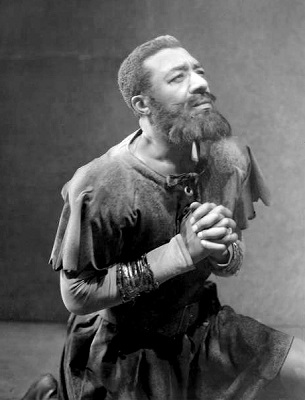
June 6 …
Julian Mayfield was a multifaceted actor, writer, educator, and activist whose work across theater, fiction, film, and international diplomacy advanced Black cultural expression and political solidarity in the mid-20th century.
Born June 6, 1928 in Greer, SC and raised in Washington, DC, ayfield graduated from Paul Laurence Dunbar High School, served in the U.S. Army, and briefly attended Lincoln University before relocating to New York in 1948 to pursue a career in theater and writing. He immersed himself in the Black cultural left and Harlem literary scene, joining the Harlem Writers Guild and collaborating with fellow creatives in both theatrical and radical political circles. His early life was characterized by a blend of formal education, self-driven learning, and deep involvement in artistic and activist communities.
Mayfield’s contributions spanned a diverse array of fields, including novels, plays, film, journalism, and public service. His early works, including two novels — The Hit (1957) and The Long Night (1958) — delved into urban Black life and economic challenges.
Mayfield also acted on Broadway in “Lost in the Stars” and starred in the 1968 film Uptight, for which he co-wrote the screenplay. Additionally, he played a significant role in media as an editor, co-founding an English-language radio station in Puerto Rico.
In 1960s, he served as a communications aide in Ghana to Kwame Nkrumah while editing African Review. Later, he taught at Cornell University, the University of Maryland, and was a writer-in-residence at Howard University, where he influenced countless students and emerging writers.
Mayfield’s life was shaped by notable figures like Paul Robeson, Langston Hughes, Ossie Davis, and Lorraine Hansberry, who were key members of the Harlem cultural community. He collaborated with contemporaries like LeRoi Jones (Amiri Baraka), Robert F. Williams, John Oliver Killens, Sidney Poitier, and Harlem Writers Guild members like Rosa Guy and Audre Lorde.
While specific protégés are not extensively documented, his teaching and editorial roles provided essential mentorship to budding Black writers and activists. His idols and colleagues were central to the mid-20th-century Black literary and political movements, with Robeson and Nkrumah serving as influential figures during his time in Ghana.
Mayfield received recognition for his work that was more professional than ceremonial, including academic fellowships such as a Du Bois fellowship at Cornell, and accolades for his film and literary achievements. His legacy has been enriched by subsequent critical reassessment, which positions him among influential Black intellectuals of his time. Archival collections and scholarly studies preserve his contributions to Black arts and global activism.
The impact of Julian Mayfield endures through his novels, plays, and films, reflecting a lifelong commitment to cultural and political engagement that connected U.S. civil rights struggles with African and Caribbean movements for independence and development.
June 6 …
Dillard University — chartered on June 6, 1930 in New Orleans, LA — is a private Historically Black University created through the merger of Straight College and New Orleans University.
The American Missionary Association of the Congregational Church founded Straight University on June 12, 1868, to meet the educational needs of the newly emancipated. Straight University provided basic schooling, but also eventually offered professional training, including, by 1874, a law department. Straight University was renamed Straight College in 1915 to reflect its actual curricular offerings.
The Union Normal School was established on July 8, 1868, by the Freedman’s Aid Society of the Methodist Episcopal Church to train teachers for newly freed Black people. Union Normal School later became known as New Orleans University. In order to more efficiently provide higher education and to better meet their fiscal challenges, both colleges agreed to merge in 1930. Dillard University was born.
The institution was named for James Hardy Dillard, a white professor at Tulane University, and an officer of two notable philanthropies supporting Black education — the Jeanes Fund and the Slater Fund. Under the University’s second President, Albert W. Dent (1941–1969), Dillard expanded its academic offerings and institutional profile.
The institution established one of Louisiana’s first accredited nursing programs for African Americans in 1942 and became a founding member of the United Negro College Fund in 1944.
Over the decades, the university has graduated several thousand students. By the early 21st century, estimates place its alumni body at over 15,000 graduates, reflecting steady institutional growth despite historical challenges.
From its beginning, Dillard offered a liberal arts curriculum to prepare students for leadership and service, particularly within southern Black communities of the American South. And its alumni have made significant contributions across multiple fields. Among them are the following individuals who exemplify the university’s impact on American cultural and intellectual life.
- Ellis Marsalis Jr. (1955) — Pioneering jazz musician and influential teacher.
- Ruth Simmons (1967) — First African American president of an Ivy League university at Brown University.
- Garrett Morris (1958) — Original cast member of Saturday Night Live.
Today, Dillard University remains an important institution within the network of Historically Black Colleges and Universities. Its legacy reflects the broader struggle for educational access and equality in the United States, while its continued emphasis on the liberal arts and civic engagement underscores its enduring role in shaping future generations.
Selected Sources:
- “Dillard University.” Encyclopaedia Britannica.
- “Dillard University.” Wikipedia: The Free Encyclopedia.
- “History & Traditions.” Dillard University.

June 6 …
The Ancient Egyptian Arabic Order Nobles Mystic Shrine of North and South America and Its Jurisdictions, Inc. (AEAONMS) — commonly known as the Prince Hall Shriners — emerged in the late 19th century as a major branch of Prince Hall Freemasonry.
The organization formally traces its origins to June 6, 1893, when Mecca Temple was founded in New York City by John George Jones and other African American Masons who sought to establish a Black counterpart to the white Ancient Arabic Order of the Nobles of the Mystic Shrine, which excluded Black members.
The movement spread rapidly in the early 20th century across Black communities in major cities, including Chicago, Philadelphia, Detroit, Memphis, and Atlanta. Local temples became prominent centers of Black civic life, sponsoring charitable drives, youth programs, scholarships, hospitals, bands, drill teams, and public parades. They offered African American professionals and businessmen opportunities for leadership, public ceremony, and institutional independence unavailable in segregated white society.
Many influential Black civic leaders were active in the organization. John George Jones of Chicago, founder of Mecca Temple, was a lawyer, journalist, and civil rights activist who later served in national Shrine leadership. Charles H. Wesley, noted historian and educator, documented the order’s development and participated in Prince Hall Masonic circles closely connected to Shrine leadership. Mississippi physician and businessman Theodore A. M. Howard actively served in civic and charitable affairs as a Prince Hall Shriner.
Founded in 1909, the organization’s women’s auxiliary, the Daughters of Isis, became one of the nation’s largest African American women’s fraternal organizations. Together, the Shrine and the Daughters of Isis built extensive social-service networks spanning the United States, Canada, the Caribbean, and parts of Africa.
Throughout the 20th century, Prince Hall Shriners supported civil rights, educational initiatives, disaster relief, and Black business development while preserving ceremonial traditions rooted in Freemasonry. The AEAONMS remains active today as an international fraternal and philanthropic organization committed to community service, fellowship, and African American civic leadership.
Selected Sources:
- Walkes, Joseph A., Jr. Black Square and Compass: 200 Years of Prince Hall Freemasonry. Richmond, VA: Macoy Publishing and Masonic Supply Company, 1981.
- Muraskin, William A. Middle-Class Blacks in a White Society: Prince Hall Freemasonry in America. Berkeley: University of California Press, 1975.
- Ancient Egyptian Arabic Order Nobles Mystic Shrine of North and South America and Its Jurisdictions, Inc. “Proceedings of the Imperial Council.” Various years.
- “John George Jones.” The Chicago Defender, various issues, 1890s–1910s.
June 7 …
Nikki Giovanni, is one of the most influential poets, writers, and activists of the 20th and 21st centuries.
Born Yolande Cornelia Giovanni Jr. on June 7, 1943 in Knoxville, TN and raised in a close-knit Black family in both Knoxville and Cincinnati, Giovanni was deeply influenced by the stories, language, and resilience of African American communities. Her early exposure to Black oral traditions and the political atmosphere of the Civil Rights Movement shaped her distinctive voice — one that would soon become central to American literature and cultural discourse.
Giovanni rose to prominence in the late 1960s during the Black Arts Movement, a time of cultural awakening and political resistance. Her early poetry collections, such as Black Feeling, Black Talk and Black Judgment, expressed unapologetic Black pride and revolutionary energy. She wrote about racial identity, self-love, and resistance with raw intensity and lyrical power, becoming a poetic spokesperson for the struggles and triumphs of Black America. Her work resonated deeply with readers seeking affirmation in the midst of systemic oppression and rapidly shifting social landscapes.
In the decades that followed, Giovanni expanded her literary range to include children’s books, essays, and spoken word recordings, all while continuing to publish acclaimed poetry. Her 1970 poem “Nikki-Rosa,” reflecting on the richness of Black childhood amid material poverty, remains one of her most beloved works and is widely taught in schools.
Giovanni’s writing often blends personal reflection with social commentary, revealing the political within the personal. She championed themes such as family, Black womanhood, cultural memory, and the enduring power of love and language.
Beyond her writing, Giovanni made significant contributions to American education and public life. As a longtime professor at Virginia Tech and a dynamic speaker, she influenced generations of students, writers, and thinkers.
Giovanni used her platform to address issues such as racial justice, LGBTQ+ rights, and the importance of preserving African American history. After the 2007 Virginia Tech shooting, her powerful and compassionate words at the university’s memorial service helped comfort and unify a grieving campus, showcasing her role as not just a poet, but a moral voice in times of crisis.
Giovanni’s work earned her numerous accolades, including NAACP Image Awards, the Langston Hughes Medal, and induction into the Ohio Women’s Hall of Fame. She received more than two dozen honorary degrees and was celebrated for her fearless honesty, emotional resonance, and commitment to justice.
Giovanni’s influence still spans literature, music, education, and activism, making her a multi-dimensional figure in American cultural life. She collaborated with artists across genres, including jazz musicians and hip-hop performers, further proving the versatility and relevance of her voice.
Through decades of artistic innovation and political engagement, Giovanni, who died on December 9, 2024, left an indelible imprint on American history. Her body of work continues to affirm Black identity, inspire creative expression, and challenge readers to confront injustice. She once said, “I really don’t think life is about the I-could-have-beens. Life is only about the I-tried-to-do.”
Nikki Giovanni tried — and succeeded — in giving voice to a people, a generation, and a movement, solidifying her place as one of the most important literary figures of our time.
June 7 …
WDIA is a historic American radio station based in Memphis, TN, best known as the first radio station in the United States programmed entirely for African American audiences. Its influence on music, culture, and community life has reverberated across the nation since the late 1940s.
Broadcasting from downtown Memphis, the radio station first went on air on June 7, 1947. Initially, the station offered a mix of country, light pop, and other mainstream programming, but it struggled to build an audience. A turning point came when the station began to tailor its programming to the city’s significant African American community, which comprised nearly 40% of Memphis at the time, an audience that no other local station was addressing.
In 1948, though white owned, Nat D. Williams, a high school history teacher and columnist, launched “Tan Town Jubilee,” a show that intertwined blues, jazz, and culturally relevant commentary, deeply resonating with Black listeners. His success led the radio station to embrace an all-Black programming format, featuring Black DJs and music that celebrated African American culture. This bold transformation propelled the station to the forefront of local radio, garnering immense popularity throughout the Mississippi Delta and beyond, reaching areas as far north as Missouri and south to the Gulf Coast.
The station’s on-air talent included influential figures who would later shape American music and entertainment, like B.B. King, who began his career singing jingles and playing records at the station, and Rufus Thomas, who became a beloved personality and recording artist. Notable hosts like Martha Jean “The Queen” Steinberg and Maurice “Hot Rod” Hulbert helped cultivate a vibrant Black radio culture, showcasing gospel, rhythm and blues, and facilitating community conversations.
The station also pioneered community engagement initiatives, such as its Goodwill Fund, which provided scholarships, youth programs, transportation services, and housing assistance for Black Memphians.
Beyond entertainment, the radio station acted as a cultural lifeline and civic voice during critical moments in American history, prominently covering civil rights events and local news often overlooked by mainstream stations. By 1954, the station had boosted its signal, reaching an estimated 10% of the nation’s African American population and making it a vital platform for artists, public discourse, and information.
Over the years, the station’s legacy has been marked by milestones such as anniversary concerts celebrating its contributions to music and the community.
Today, WDIA stands as a testament to the transformative power of media in amplifying and uplifting the voices of historically underserved audiences.
June 7 …
Karamu House in Cleveland, OH is the nation’s oldest African American theater and community arts center, notable for fostering Black artistic talent and civic engagement.
The theater was founded on June 7, 1915 as The Play House Settlement by Russell and Rowena Jelliffe — with the backing of the Charity Organization Society and the Union Baptist Church — to cater to the ethnically diverse Hough neighborhood. The couple envisioned a community center that integrated recreation, education, and dramatic arts to foster interracial cooperation and uplift the community.
The theater was renamed Karamu House in 1919. Its mission focused on cultural enrichment, social improvement, and the professional development of actors and artists, offering theater productions, classes, and social services that creatively addressed community needs.
Throughout the Harlem Renaissance and beyond, Karamu emerged as a pivotal incubator for talent, nurturing performers, playwrights, and directors, including Langston Hughes and Jesse Owens, who participated in its early programs. The theater’s repertoire featured a blend of classical plays, new works by Black writers, community-centered productions, and workshops that trained generations of artists and technicians.
Its influence expanded into film and the broader entertainment industry through its alumni and various collaborations, while community programs such as youth theater, arts education, and outreach advanced social justice by increasing access to the arts. The theater provided a platform for African American voices in a segregated cultural landscape.
Karamu House has garnered both local and national recognition for its cultural and civic contributions, receiving honors from arts commissions and civic organizations, historic preservation designations for its buildings, and invitations to engage in national cultural initiatives. Its legacy continues to thrive in Cleveland’s cultural landscape, reflected in the careers of the artists it has launched and its ongoing commitment to linking artistic excellence with community empowerment.
June 7 …
Gwendolyn Brooks was a groundbreaking literary voice whose poetry captured the realities of Black life in America, while reshaping the landscape of modern American literature.
Brooks was born on June 7, 1917 in Topeka, KS and raised in Chicago, a city that became central to her artistic identity and subject matter. She began her poetic journey at a young age, nurtured by parents and teachers who recognized her talent early on. She attended Wilson Junior College, although she did not pursue a traditional four-year degree, choosing instead to hone her craft through extensive reading, writing, and active engagement with the literary community.
Influenced by poets like Langston Hughes and Paul Laurence Dunbar, who focused on Black life and language, Brooks developed a keen commitment to capturing the everyday experiences of African Americans with precision, dignity, and emotional depth.
Brooks’s literary career took flight in the 1940s with the publication of her first poetry collection, A Street in Bronzeville, followed by the renowned Annie Allen, which made her the first African American to win the Pulitzer Prize for Poetry in 1950. Often focusing on life in Chicago’s Black neighborhoods, her work explored themes of identity, struggle, family, and resilience.
Brooks emerged as a pivotal figure in American literature, writing alongside contemporaries such as Robert Hayden and James Baldwin, who also examined race and society in their writings. As her career progressed, she became increasingly involved in the Black Arts Movement, evolving her style toward more politically engaged and community-focused poetry that resonated with the changing dynamics of the Civil Rights era.
In addition to her published works, Brooks made a lasting cultural and educational impact, serving as a mentor and inspiration to younger generations of writers. She led poetry workshops, visited schools, and nurtured emerging poets like Nikki Giovanni and Sonia Sanchez, who drew inspiration from her dedication to Black expression and empowerment.
Her poetry served as a bridge between literary tradition and social activism, illustrating how art could directly tackle issues of justice, inequality, and community identity. Brooks’s contributions significantly broadened the scope of American poetry by elevating voices and experiences that had often been overlooked.
Throughout her life, Brooks garnered numerous honors, including the National Book Award, an appointment as Poet Laureate of Illinois, and the honor of being the first African American woman appointed Consultant in Poetry to the Library of Congress. She also received the National Medal of Arts in recognition of her contributions to literature and culture.
Through her poetic vision and lifelong advocacy for artistic and social truth, Gwendolyn Brooks left an indelible mark on American literature, creating a legacy that continues to influence writers, educators, and cultural discourse across generations.

June 8 …
George Edward Hardy was a distinguished figure in American military and aviation history, best known for his role as one of the legendary Tuskegee Airmen — the first group of African American military pilots in the United States Armed Forces.
Born on June 8, 1925 in Philadelphia, Hardy came of age during an era marked by rigid segregation and widespread racial discrimination. Despite the barriers facing Black Americans, especially in military service, he was determined to serve his country and pursue his passion for flight. At just 17 years old, he enlisted in the Army Air Corps and soon began training at the Tuskegee Institute in Alabama, the only training program for Black military pilots during World War II.

The Tuskegee Airmen’s aircraft had distinctive markings that led to the name, “Red Tails.” (photo by U.S. Air Force)
Hardy’s service in WWII was just the beginning of an extraordinary military career that would span three major conflicts. He later flew 45 combat missions in the Korean War and an additional 70 in the Vietnam War, making him one of the few Tuskegee Airmen to serve in three wars.
Throughout his career, Hardy consistently demonstrated courage, skill, and leadership in the air and on the ground. He also played a crucial role in challenging the institutional racism of the U.S. military. The exemplary performance of the Tuskegee Airmen helped lay the foundation for President Truman’s Executive Order 9981 in 1948, which desegregated the armed forces.
Hardy’s long service and adaptability across different wars and eras highlight not only his personal dedication but also the evolving role of African Americans in the military. His life is a testament to perseverance in the face of adversity and the pursuit of excellence in a system that often denied him equal recognition.
After retiring from the Air Force as a Lieutenant Colonel, Hardy became an important voice in preserving and educating others about the history of the Tuskegee Airmen. He frequently spoke at schools, museums, and public events, using his experience to inspire younger generations and to ensure that the contributions of Black aviators would not be forgotten. His work as a speaker and advocate helped expand public awareness of the significance of the Tuskegee Airmen in American history and the broader struggle for civil rights and equality.
Hardy’s legacy is one of extraordinary service, both in uniform and as a civilian. His contributions to American aviation and military history span decades of change, from segregation to integration, from World War II to the modern era. He not only flew combat missions across the globe but also helped reshape the image of what was possible for African Americans in military and aviation roles.
The last surviving member of the Tuskegee Airmen, George Edward Hardy died on September 24, 2025 at age 100. His life stands as a powerful narrative of resilience, patriotism, and quiet defiance against injustice — a story that continues to inspire and educate future generations.

June 8 …
Robert Robinson Taylor was a pioneering American architect and educator whose career helped shape the built environment of historically Black institutions while opening doors for African Americans in the architectural profession.
Born on June 8, 1868 in Wilmington, NC, Taylor was the son of Henry Taylor, a skilled craftsman and builder, and Emily Still Taylor, a formerly enslaved woman. Growing up in a family immersed in the building trades introduced him to carpentry, design, and construction from an early age, igniting a passion that would shape his career. He pursued higher education at the Massachusetts Institute of Technology, enrolling in the architecture program in the late 19th century.
In 1892, he made history as the first African American graduate of MIT and the first formally trained Black architect in the United States. During his time at MIT, he experienced a pivotal period in American architectural education influenced by the Beaux-Arts tradition, learning from renowned professors and designers whose focus on technical rigor and classical principles informed his professional perspective.
Shortly after graduation, Taylor was invited by educator Booker T. Washington to join the faculty at Tuskegee Institute in Alabama. There, he established and led architecture and construction programs, training countless students in design, drafting, engineering, and building trades. His approach combined academic knowledge with hands-on construction, overseeing the design and construction of many of Tuskegee’s early campus buildings and helping to forge its architectural identity.
Taylor also played a vital role in developing structures at other historically Black institutions, including Hampton Institute. This demonstrated the significance of architecture and technical education in advancing African American communities during the late 19th and early 20th centuries.
Taylor’s career unfolded alongside a remarkable generation of Black educators, intellectuals, and reformers who aimed to broaden educational and professional opportunities following Reconstruction. He collaborated closely with Booker T. Washington and engaged with other prominent figures in Black educational leadership, such as W.E.B. Du Bois and George Washington Carver, who also taught at Tuskegee for many years.
His teaching and mentorship inspired numerous students who later entered the fields of architecture, engineering, and construction, creating a vital professional pathway at a time when opportunities for African Americans were severely restricted. Taylor’s legacy lives on through the many campus buildings he designed and the architecture and engineering programs he helped establish.
The contributions of Robert Robinson Taylor have been recognized in various ways, including accolades from MIT and the naming of the Robert R. Taylor School of Architecture and Construction Science at Tuskegee University, underscoring his enduring impact on American architecture, education, and cultural history.
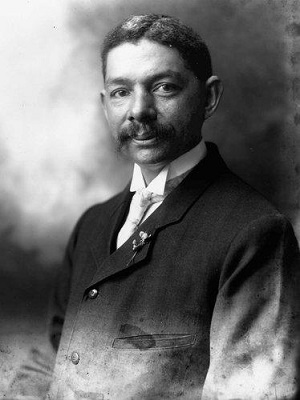
June 8 …
Kanye West — also known as Ye — is a rapper, producer, designer, and cultural figure whose inventive production, genre-shifting albums, and high-profile public persona have had a major and contentious impact on 21st-century music, fashion, and public discourse.
Born June 8, 1977 in Atlanta and raised in Chicago after his parents’ divorce, West was raised in a household influenced by his mother, Donda West, an English professor, and his father, Ray West, a former Black Panther and photojournalist. He attended Polaris High School before pursuing further studies at the American Academy of Art and Chicago State University, ultimately leaving to chase his passion for music.
During his formative years, he forged early friendships with local producers like No I.D. and began his career by producing for Chicago artists. This path eventually led him to New York to collaborate with top acts. He initially gained significant attention as a producer, with his signature “chipmunk soul” style playing a key role in defining the seminal album by Jay-Z, The Blueprint.
West later launched into a successful solo career with his debut album in 2004, The College Dropout, followed by a series of influential releases, including Late Registration, Graduation, 808s & Heartbreak, My Beautiful Dark Twisted Fantasy, Yeezus, The Life of Pablo, Jesus Is King, and Donda.
West founded G.O.O.D. Music, collaborated on landmark projects like Watch the Throne, ventured into fashion with Yeezy partnerships, and held large-scale Sunday Service performances. He even ran for president in 2020. All were accomplishments that fundamentally altered mainstream hip-hop aesthetics, pop production, and celebrity entrepreneurship.
West’s musical influences and early mentors shaped his artistry. He credits No I.D. as a significant mentor and involves himself in the broader soul and hip-hop traditions he both sampled and reinterpreted. Artists like Michael Jackson and Prince served as early idols, while producers such as the RZA inspired his production style.
West’s contemporaries and frequent collaborators include Jay-Z, Pusha T, Kid Cudi, John Legend, and Pharrell Williams. Through G.O.O.D. Music and his mentorship, he has helped elevate artists like John Legend, Big Sean, Pusha T, and Kid Cudi, all of whom regard him as an influential figure in their own careers.
West’s accolades and controversies highlight the dichotomy of his public persona: he is one of the most awarded artists of his generation, boasting over 20 Grammy Awards, appearances on Time’s 100 Most Influential list, and critical acclaim for albums such as My Beautiful Dark Twisted Fantasy. At the same time, his public controversies — including outspoken political views and antisemitic comments in 2022–2023 that resulted in significant partnership losses — have severely impacted his commercial relationships and public standing.
These complexities add layers to the cultural legacy of Kanye West, keeping his work and persona at the center of discussions surrounding art, power, race, mental health, and influence in contemporary American culture.

June 8 …
Keenen Ivory Wayans is a pioneering comedian, writer, director, and producer whose work transformed late-20th and early-21st-century comedy, television, and film.
Born on June 8, 1958 in New York City into a large family, Wayans briefly attended Seward Park High School and later enrolled at Tuskegee University on an engineering scholarship. He ultimately dropped out to pursue a career in comedy.
Wayans refined his skills performing at The Improv in New York before relocating to Los Angeles with his mentor and collaborator, Robert Townsend, who played a pivotal role in introducing him to independent film. Townsend also co-created early projects that launched Wayans’s cinematic journey.
Wayans’s achievements encompass groundbreaking work in film and television. He co-wrote and starred in Hollywood Shuffle, and wrote and directed the Blaxploitation parody I’m Gonna Git You Sucka. He created and executive-produced the influential Fox sketch series In Living Color, which catapulted stars like Jim Carrey, Jamie Foxx, and Jennifer Lopez into the spotlight.
Wayans directed hit comedies such as Scary Movie, White Chicks, and Little Man. He hosted The Keenen Ivory Wayans Show and served as a judge on Last Comic Standing, so he significantly shaped the talent pipeline in mainstream comedy and enhancing Black representation on screen.
Wayans drew inspiration from mentors like Robert Townsend and stand-up legends like Richard Pryor. He shared industry camaraderie with his contemporaries — Eddie Murphy, Martin Lawrence, and Spike Lee.
Wayans closely collaborated with family members — Damon Wayans, Kim Wayans, Shawn Wayans, Marlon Wayans, and others — many of whom became protégés through recurring roles and writing opportunities on In Living Color and in later films. His mentoring influence also extended to performers discovered through the show, including Jim Carrey, David Alan Grier, and Jamie Foxx.
Among Wayans’s honors is an Emmy Award for Outstanding Variety, Music or Comedy Series in 1990 as executive producer of In Living Color. The commercial success of his films established the viability of Black-led comedy.
The cultural legacy of Keenen Ivory Wayans is measured more by his influence than by awards — opening doors for comedians of color, normalizing sharp racial satire in mainstream platforms, and fostering a family-centric creative enterprise that transformed the landscape of American entertainment.
June 8 …
Bernie Casey was a multifaceted performer and former professional athlete whose work in film, television, and the arts reflected a broad and influential presence in American cultural life.
Born on June 8, 1939 in Wyco, WV and raised in Columbus, OH, Casey showcased remarkable prowess in both academics and athletics from an early age. He attended Bowling Green State University, where he excelled as a football player and earned All-American accolades.
Prior to his acting career, Casey played professionally in the National Football League, experiences that instilled in him a strong sense of discipline and a public persona. Alongside his athletic endeavors, he nurtured artistic passions, including painting and poetry, which later influenced his creative endeavors.
Influenced by trailblazing actors like Sidney Poitier, whose pioneering career opened doors in Hollywood, Casey was part of a generation that included performers such as Jim Brown and Fred Williamson, who similarly moved from athletics to acting and advanced the representation of Black talent in cinema. In the late 1960s, he made a seamless transition into acting, establishing a notable career in film and television with memorable roles in projects such as Revenge of the Nerds and Blaxploitation films, Cleopatra Jones and Dr. Black, Mr. Hyde.
Casey developed a reputation for portraying strong, authoritative, and multifaceted characters, contributing to the expansion of representation for Black actors in mainstream entertainment. Although he did not receive prestigious industry accolades like the Academy Awards, he earned admiration and recognition for his versatility, longevity, and meaningful contributions to independent and genre cinema. His career served as an inspiration for athletes and artists aspiring to break into acting and other creative realms.
Beyond the realm of entertainment, Casey’s influence reached into broader cultural and artistic domains. As a visual artist and writer, he delved into themes of identity, history, and self-expression, contributing to important dialogues about the role of Black artists in American culture.
The career of Bernie Casey mirrored the evolving opportunities and challenges faced by Black performers in the late 20th century, and his legacy continues to be a vital part of the narrative surrounding diversity, representation, and creative achievement in American history.
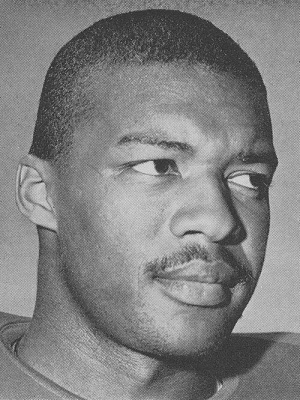
June 9 …
Skip James was a seminal figure in Delta blues whose haunting voice, intricate guitar work, and distinctive songwriting helped shape the Delta blues tradition and influenced generations of musicians.
Born Nehemiah Curtis James on June 21, 1902 in Bentonia, MS, he was raised in a deeply religious household, where he sang in church choirs and learned to play the guitar from a young age. He informally studied music, immersing himself in local traditions and the distinctive Bentonia blues style, known for its emphasis on minor keys and ethereal melodies. This upbringing in the Mississippi Delta provided the emotional depth and technical foundation that would ultimately shape his recordings and performances.
In the early 1930s, James began his professional recording career with Paramount Records, producing iconic tracks like “Devil Got My Woman” and “I’m So Glad,” which highlighted his innovative fingerpicking, haunting falsetto, and emotional intensity. Inspired by blues pioneers such as Charlie Patton and Son House, he adopted elements of their phrasing and musical expression.
Although specific mentors are not well-documented, James’ style reflects the broader Bentonia blues tradition and the techniques prevalent in Mississippi at the time. He shared stages with contemporaries like Robert Johnson, Blind Willie McTell, and Tommy Johnson, contributing to the rich tapestry of Delta blues.
After a period of obscurity in the 1940s and 1950s, James experienced a resurgence during the 1960s folk and blues revival. Folk aficionados and younger musicians, including Bonnie Raitt and Robert Plant, recognized the depth of his recordings, leading to new interpretations within both the blues and rock genres.
While James did not have formally acknowledged protégés, his influence was widespread, shaping the styles of guitarists and vocalists who sought to embody the emotional nuance and technical mastery of early Delta blues. His inspirations included both earlier blues artists and spiritual singers from his youth, whose emotive performances deeply influenced his expressive style.
Although James did not receive mainstream accolades during his lifetime, his contributions have since been widely celebrated. Posthumously, he has been inducted into various blues halls of fame and acknowledged by historians and musicians for his lasting impact on American music. His recordings remain essential for blues scholars, and his haunting melodies continue to resonate with audiences, preserving a unique cultural heritage that links rural Southern traditions to the broader narrative of American entertainment and music.
The life and work of Skip James embody the profound capacity of music to express human emotion, influence culture, and leave a lasting mark on society.
June 9 …
Tamela Mann is an acclaimed singer, actress, and minister whose dynamic voice, compelling performances, and inspirational work have had a profound impact on gospel music, entertainment, and American culture.
Born on June 9, 1966, in Fort Worth, TX, Mann grew up in a family that cherished faith, music, and community. She pursued formal training in music and theater during her college years, which provided a solid foundation for her dual career as a gospel singer and actress. Rooted in a deeply religious upbringing, she developed a passion for gospel music and a commitment to spreading uplifting messages, which have shaped her artistry and public persona.
Mann gained prominence as a member of Kirk Franklin & The Family, where her powerful soprano voice and emotive delivery shone through landmark gospel albums like Whatcha Lookin’ 4 and Kirk Franklin & The Family. Influenced by mentors such as Kirk Franklin and inspired by gospel legends like Aretha Franklin and CeCe Winans, she honed her musical style. She has collaborated with and shared stages with contemporary artists like Mary Mary, Tasha Cobbs Leonard, and Yolanda Adams.
In addition to her music career, Mann has made a significant impact in film and television, particularly within Tyler Perry productions such as Madea’s Family Reunion, Madea Goes to Jail, and the sitcom Meet the Browns. In these roles, she portrayed strong, relatable characters that resonated with audiences and helped normalize and celebrate African-American family life, faith, and resilience in mainstream media. Her influence on emerging gospel artists and actors is evident, as she often speaks about mentoring younger performers within her church and music circles.
Mann’s contributions have been honored with numerous awards and accolades, including multiple Stellar Awards, GMA Dove Awards, and Grammy nominations. Her solo albums, such as Best Days and Overcomer, have achieved both critical and commercial success, establishing her as one of gospel music’s most influential voices.
Tamela Mann impacts on society and culture as she shares and promotes messages of faith, hope, and empowerment, inspiring audiences worldwide and leaving a lasting imprint on music and entertainment history.
June 9 …
Jackie Wilson was a groundbreaking singer, performer, and entertainer whose dynamic stage presence, vocal virtuosity, and genre-defining contributions helped shape rhythm and blues, soul, and American popular music.
Born Jack Leroy Wilson Jr. on June 9, 1934 in Detroit, he grew up in a working-class family during the Great Depression, showcasing his musical talent from an early age through church choirs and local groups. He participated in school music programs that refined his performance abilities. Although he did not pursue formal higher education, his dedication to practice and immersion in Detroit’s vibrant music scene set the stage for a remarkable career in entertainment.
Wilson launched his professional career in the early 1950s as a member of the R&B group Billy Ward and His Dominoes, which brought him to national prominence and sharpened his stage presence. Inspired by legends like Nat King Cole and Louis Jordan, he crafted a style that seamlessly blended vocal precision with dynamic choreography.
Wilson was part of a new wave of soul music alongside contemporaries like Sam Cooke, Ray Charles, and James Brown. His electrifying performances later influenced icons like Michael Jackson and Prince, who credited Wilson’s energy and artistry as foundational to their own performances.
Over his career, Wilson delivered numerous hits, including “Lonely Teardrops,” “Baby Workout,” and “Higher and Higher,” which highlighted his impressive vocal range and captivating stage presence. His groundbreaking performances merged the fervor of gospel with secular rhythm and blues, while his television appearances brought African American music to wider audiences. An informal, yet impactful mentor, he inspired younger R&B and soul artists in Detroit and beyond, though specific protégés may not be extensively documented.
Wilson’s artistry and cultural influence garnered recognition, although he received limited awards during his lifetime due to the racial barriers of his time. Posthumously, he was inducted into the Rock and Roll Hall of Fame in 1987 and honored with the Rhythm and Blues Foundation Pioneer Award.
The music of Jackie Wilson continues to resonate within American culture, impacting generations of artists, shaping the evolution of soul and pop music, and leaving a lasting legacy in the entertainment industry by challenging racial barriers in mainstream music and performance.
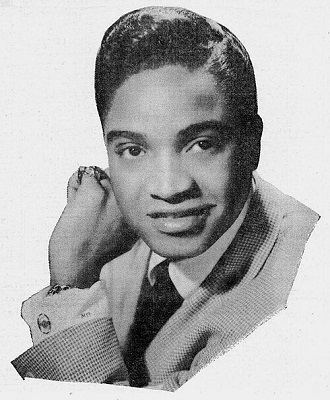
June 10 …
Edward Elder Cooper was a pioneering African American publisher and civic leader whose work in late 19th-century journalism helped shape public discourse on race, citizenship, and democracy during a transformative era in American history.
Born into slavery on June 10, 1858, Cooper emerged as a prominent figure in Washington, D.C., as the founder and editor of The Colored American (DC), one of the most influential Black newspapers of its era. Through his editorial leadership, he established the press as both a watchdog and an advocate, using print media to promote civil rights, education, and political engagement among African Americans in the post-Reconstruction years.
Cooper was publisher of the Indianapolis Freeman starting in July 1888. After selling that newspaper in 1892, he launched The Colored American (DC) with the intention of creating a national platform for Black political thought and social progress. At a time when mainstream newspapers often overlooked or misrepresented African American viewpoints, his publication provided comprehensive coverage of civil rights issues, federal appointments, educational initiatives, and community successes.
The newspaper advocated for equal opportunity, voting rights, and access to public office, while celebrating the achievements of Black professionals, educators, and entrepreneurs. Cooper’s editorial voice was both measured and assertive, promoting racial uplift and civic responsibility while challenging discriminatory practices ingrained in American society.
His work was informed by the broader tradition of African American journalism exemplified by figures like Frederick Douglass, whose earlier publications showcased the press’s potential as a catalyst for reform. Cooper navigated an intellectual landscape shaped by leaders such as Booker T. Washington and W.E.B. Du Bois, whose differing philosophies on racial progress fueled national debates.
Among his contemporaries in Black journalism were Timothy Thomas Fortune of the New York Age and Ida B. Wells, whose investigative work on lynching pushed the boundaries of advocacy journalism. Cooper’s newspaper fostered dialogue among these diverse perspectives, contributing to a national conversation about race, citizenship, and progress as the century turned.
In addition to journalism, Cooper was actively engaged in civic and political life. His federal appointments reflected his professional capabilities and the emerging, albeit limited, opportunities for African Americans in government during this time. His newspaper frequently reported on the appointments of Black officials and underscored the importance of representation in public institutions, reinforcing his belief that political participation was essential for racial advancement.
Through his editorial work and public service, Cooper helped position Washington, D.C., as a center of Black intellectual and political activity during a period characterized by both promise and setbacks.
Though Cooper did not gain widespread national accolades during his lifetime, his impact was acknowledged within African American communities and among reform-minded leaders who appreciated the independence and rigor of his publication. His legacy endures as part of the pioneering generation of Black publishers who sustained a vibrant alternative press amid segregation and disenfranchisement.
By demanding that African American voices be heard in the national discourse, Edward Elder Cooper played a crucial role in defining the mission of the Black press in American journalism and secured a lasting place in the broader narrative of American culture and democratic development.

June 10 …
Hattie McDaniel was a pioneering American actress, singer, and entertainer whose remarkable talent and resilience helped break racial barriers in Hollywood and left an enduring mark on American film, culture, and history.
Born on June 10, 1893 (or 1895) in Wichita, KS to parents who had been enslaved, she was the youngest of 13 children. Growing up immersed in musical and theatrical performance with her family’s minstrel troupe, she honed talents that would later define a remarkable career in entertainment. Rising from humble origins on the vaudeville and radio circuits to international acclaim, McDaniel’s journey showcased both her extraordinary artistry and the racial challenges of her time.
Early in her career, McDaniel performed in traveling minstrel shows and became one of the first Black women to be featured on American radio, displaying her skill as a singer, songwriter, and comedian. Before establishing herself in Hollywood, she toured with various ensembles and made a name for herself in nightclubs, drawing increasing attention to her talent.
Upon arriving in Los Angeles, she began landing small film roles in the early 1930s, and by 1934, she garnered acclaim in notable films like Judge Priest and The Little Colonel, where her vibrant performances earned her recognition alongside leading stars such as Shirley Temple and Lionel Barrymore. Despite the limited opportunities available to Black performers during that time, McDaniel infused depth and warmth into every character she portrayed.
Her most celebrated achievement came with her role as Mammy in Gone with the Wind (1939), a performance that won her the Academy Award for Best Supporting Actress in 1940. That made her the first African American to be nominated for and win an Oscar — a milestone that echoed throughout the entertainment industry.
This groundbreaking success not only paved the way for McDaniel, but also symbolized progress for Black artists in Hollywood, even as segregation and discrimination persisted. At the award ceremony, she was required to sit at a segregated table due to the venue’s racist policies.
Throughout the 1940s, McDaniel continued to thrive in film and radio, becoming the first African American actress to star in her own weekly radio program with The Beulah Show in 1947. The show would later transition to television, enhancing her visibility and influence.
McDaniel also organized entertainment for Black troops during World War II as chairwoman of the Negro Division of the Hollywood Victory Committee, delivering performances to segregated soldiers and bolstering morale.
McDaniel’s contemporaries included legendary figures like Clark Gable and Vivien Leigh, with whom she shared the screen, as well as allies such as Bette Davis, who supported her during wartime tours.
Civil rights advocates criticized her for the stereotypical roles she often played. However, McDaniel remained convinced that her success opened doors for Black performers and challenged public perceptions.
In addition to her Oscar, she was honored posthumously with two stars on the Hollywood Walk of Fame — one for her contributions to radio and another for film. She was inducted into the Black Filmmakers Hall of Fame.
The legacy of Hattie McDaniel as a pioneering figure in American entertainment continues to inspire generations of artists who follow in her footsteps.
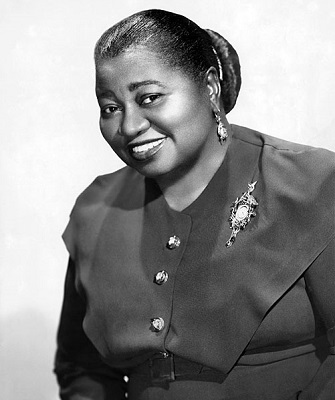
June 11 …
Medal of Honor recipient Henry Johnson (Buffalo Soldier) was a distinguished Buffalo Soldier during a time when the nation was still deeply divided by slavery and racial injustice.
Born on June 11, 1850 in Boydton, VA and growing up in the years surrounding the Civil War, Johnson came of age in a transforming America where newly freed African Americans sought to define their place in society. Drawn by a sense of duty and the promise of opportunity, he enlisted in the U.S. Army in 1866, joining the ranks of the famed Buffalo Soldiers. These African American regiments were formed after the Civil War and became some of the most disciplined and courageous units in the U.S. military, tasked with protecting settlers, building forts, and maintaining peace across the western frontier.
As a member of the 10th Cavalry Regiment, one of the original Buffalo Soldier units, Johnson served during the Indian Wars — a series of conflicts between the U.S. government and various Native American tribes. The Buffalo Soldiers often faced harsh conditions, long marches, and constant danger while operating in remote regions of the American West.
Despite enduring discrimination within the Army and hostility from some civilians, Johnson distinguished himself through his bravery, discipline, and unwavering commitment to duty. His service exemplified the integrity and resilience that came to define the Buffalo Soldier legacy, as they carried out some of the most difficult and dangerous assignments in the U.S. military.
The defining moment of Johnson’s heroism came in August 1881, near Fort Tularosa, NM. While serving as a private, he and his small detachment were attacked by a large band of Apache warriors. Vastly outnumbered, Johnson fought with extraordinary courage, holding his ground and protecting his fellow soldiers. His quick thinking and unflinching resolve helped repel the assault and saved the lives of his comrades.
For his bravery in the face of overwhelming odds, Johnson was awarded the Medal of Honor in 1890, the highest recognition for valor that a soldier can receive. His citation described his actions simply but powerfully: “Distinguished bravery in action.”
Johnson’s contributions to American military history extend far beyond a single act of courage. As a Buffalo Soldier, he was part of a group that not only secured the western territories, but also paved the way for greater African American participation in the armed forces. The presence of the Buffalo Soldiers in the West brought stability to new settlements, constructed vital infrastructure, and symbolized the enduring fight for equality and respect within a segregated military. Johnson’s courage and professionalism challenged prevailing racial stereotypes and demonstrated that valor and patriotism know no color.
Johnson’s legacy is a testament to the determination and heroism of the Buffalo Soldiers who helped shape the American frontier. Born just before the Civil War and serving in an era when African Americans still faced immense barriers, he rose to become one of the many unsung heroes who defended their nation with honor. His Medal of Honor remains a symbol not only of his individual bravery, but also of the collective strength and sacrifice of the Black soldiers who stood tall in the face of adversity.
Today, the story of Henry Johnson (Buffalo Soldier) continues to inspire generations, reminding Americans that courage, loyalty, and service are timeless virtues that transcend history and circumstance.
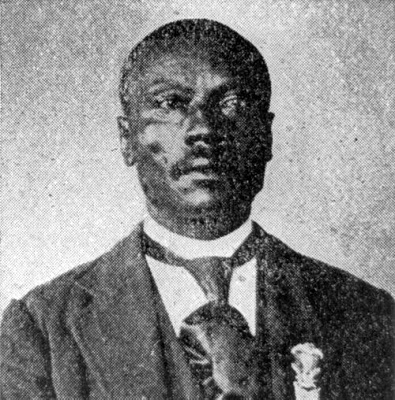
June 11 …
Charles B. Rangel was a towering figure in American politics whose decades-long congressional career helped shape national policy on taxation, urban development, and civil rights, while amplifying the political voice of Harlem and marginalized communities.
Born on June 11, 1930 in Harlem, NY, Rangel grew up during the Great Depression in a working-class African American family, facing significant economic challenges from an early age. He left high school to serve in the U.S. Army during the Korean War, where he earned both a Purple Heart and a Bronze Star for his bravery in combat.
After returning home, Rangel took advantage of the G.I. Bill to complete his education, graduating from New York University before obtaining a law degree from St. John’s University School of Law. His experiences of war, poverty, and education profoundly shaped his lifelong commitment to public service and social justice, He was inspired by earlier Black political leaders like Adam Clayton Powell Jr., whose leadership in Harlem influenced Rangel’s political aspirations.
In 1970, Rangel entered politics by defeating Powell in a landmark congressional race, embarking on a tenure in the U.S. House of Representatives that would extend until 2017. Representing New York’s 13th Congressional District, he became a founding member of the Congressional Black Caucus and quickly established himself as a prominent voice on issues affecting urban America.
Over the years, Rangel ascended to the role of chairman of the powerful House Ways and Means Committee, making history as its first African American chair. In this capacity, he played a vital role in shaping major tax legislation, trade policy, and economic reform, with a focus on affordable housing, economic opportunity, and bolstering the social safety net.
Throughout his career, Rangel collaborated with and influenced notable contemporaries such as John Lewis, Shirley Chisholm, and later leaders like Nancy Pelosi and Barack Obama. He was recognized for mentoring younger politicians and nurturing a new generation of leadership, including figures such as Adriano Espaillat, who would eventually take his seat in Congress.
Rangel’s political approach combined sharp wit, extensive institutional knowledge, and a dedication to coalition-building, enabling him to navigate complex political landscapes while championing civil rights and economic justice. His work also resonated with broader cultural movements, as he utilized his platform to tackle inequality and advocate for greater inclusion in American public life. The revitalization of the Apollo Theater in the 1990s exemplified how Rangel’s work enhanced the cultural landscape of Harlem.
Rangel’s contributions garnered numerous honors and accolades throughout his career. In addition to his military decorations, he received the NAACP Spingarn Medal and multiple honorary degrees in recognition of his impact on law, politics, and society — including the Jackie Robinson Foundation’s Lifetime Achievement Award in 2005, Presidential Medal from Baruch College in 2006, and Felton Davis Award of Merit from the New York Association of Chapters of Alpha Phi Alpha Fraternity in 2011.
Despite facing ethical controversies later in his career — culminating in a formal censure by the House of Representatives in 2010 — his legacy remains significant. This is particularly true with his work in advancing African American political influence and shaping national policy.
The life and work of Charles Rangel illustrate the complexities of American democracy and the ongoing struggle for expanded opportunity and representation within it.
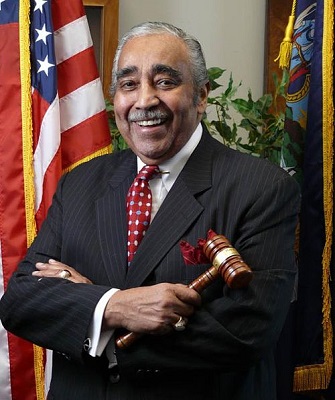
June 11 …
Addie Waites Hunton was an influential African American educator, organizer, and civil rights activist whose work spanned the late 19th and early 20th centuries. She is especially noted for her leadership in Black women’s organizations, her international humanitarian service during World War I, and her advocacy for racial and gender equality in the United States.
Born on June 11, 1866 in Norfolk, VA, Hunton was among the first generation of Black women to receive a formal higher education after the Civil War. She graduated from Spelman Seminary (now Spelman College) in 1889. Her education prepared her for a career in teaching and leadership at a time when educational opportunities for African Americans — especially women — were severely limited. She later taught and engaged in institutional and community uplift efforts, aligning with the broader Black women’s club movement.
Hunton became a prominent figure in the National Association of Colored Women (NACW), an organization dedicated to improving social conditions for African Americans through education, suffrage advocacy, and community reform. Her work emphasized racial uplift and women’s leadership, reflecting the NACW’s motto, “Lifting as We Climb.”
During World War I, Hunton expanded her activism internationally. She was among the first Black women to serve overseas with the Young Men’s Christian Association (YMCA), where she worked in France, providing support services to African American soldiers. Her experiences revealed the stark realities of racial discrimination within the U.S. military, even abroad. Along with Kathryn Magnolia Johnson, she later co-authored Two Colored Women with the American Expeditionary Forces (1920), a significant firsthand account documenting the contributions and struggles of Black troops during the war.
In the postwar years, Hunton continued her activism, working with the National Association for the Advancement of Colored People (NAACP) and focusing on issues such as racial violence, education, and political rights. She also engaged with international peace and women’s movements, reflecting her broader commitment to global justice.
The legacy of Addie Waites Hunton rests on her multifaceted contributions as an educator, organizer, and witness to history. She helped shape the trajectory of African American women’s activism in the early 20th century, linking local reform efforts to national and international struggles for equality. Her life exemplifies the expanding roles of Black women in public leadership during a transformative era in American history.
Selected Sources:
- Hunton, Addie W., and Kathryn Magnolia Johnson. Two Colored Women with the American Expeditionary Forces. Brooklyn, NY: Brooklyn Eagle Press, 1920.
- Lemons, J. Stanley. “The Woman Citizen in the Progressive Era: Addie Waites Hunton and Black Women’s Activism.” Journal of Negro History 62, no. 1 (1977): 45–57.
- Shaw, Stephanie J. “Black Club Women and the Creation of the National Association of Colored Women.” Journal of Women’s History 3, no. 2 (1991): 10–25.
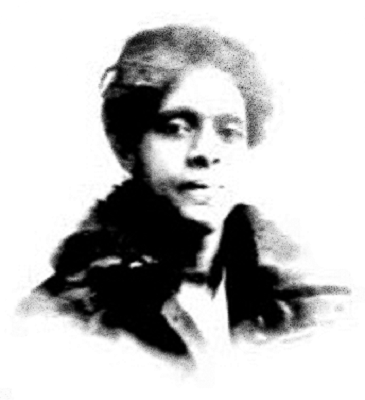
June 12 …
Nina Mae McKinney was a pioneering performer whose multifaceted career encompassed film, music, theater, and international entertainment during a time when opportunities for Black women were severely restricted. Not only was she one of the first African-American film stars in the United States, McKinney was one of the first African-Americans to appear on British television.
Born on June 12, 1912 in Lancaster, SC and raised in New York City, McKinney emerged during the Harlem Renaissance, a period that profoundly influenced her artistic identity. From an early age, she demonstrated remarkable talent as a singer and dancer, capturing attention with her charisma, beauty, and natural command of the stage. Her rise coincided with the onset of sound film, situating her at a crucial moment in American entertainment history.
McKinney’s breakthrough came in 1929 when she starred in “Hallelujah,” a pre-code musical and one of the first major Hollywood films featuring an all-African-American cast. Her performance was electrifying, earning her the nickname “The Black Garbo” and establishing her as one of the earliest African American film stars.
“Hallelujah” — starring Daniel L. Haynes, William Fountaine, and Harry Gray, and McKinney — was a critical and commercial success on release. It was the first sound film directed by King Vidor, who was nominated for an Academy Award for Best Director.
While modern reviews warn that “Hallelujah” includes racial stereotypes, controversial depictions of Black Americans, and white paternalistic views, many still think of the film as empathetic towards black Americans and worth viewing. Haynes, who starred in the film stated, “…’Hallelujah’ will, as Moses led his people from the wilderness, lead ours from the wilderness of misunderstanding and apathy.”
At a time when Black actresses were often relegated to stereotypical roles, McKinney infused her characters with sensuality, emotional depth, and musical sophistication. Her singing and dancing showcased the influences of blues, jazz, and vaudeville, blending rural Southern expression with the vibrant energy of Harlem nightlife.
McKinney drew inspiration from the early 20th-century blues women, jazz vocalists, and stage performers who merged music with dramatic storytelling. She was invigorated by the freedom and innovation within Harlem’s cultural scene, tapping into the works of Black composers, choreographers, and writers who redefined American art.
Additionally, McKinney admired white European film stars of the time, studying their screen presence and dramatic restraint, ultimately adapting those techniques to develop her own expressive style. Her mentorship often arose from collaboration and observation rather than formal training, as she navigated an industry that provided minimal institutional support for Black women.
Dissatisfied with Hollywood’s constraints, McKinney broadened her career internationally, especially in Europe, where she discovered greater artistic freedom and respect. She performed in Britain and across the continent in films, stage revues, and nightclubs, becoming a celebrated entertainer abroad. This international work allowed her to explore a wider array of roles and musical styles, solidifying her reputation as a cosmopolitan performer with a universal appeal. Her transatlantic career placed her among a generation of Black American artists who redefined global perceptions of Black talent.
Though McKinney never received major industry accolades during her lifetime, her contributions have been recognized retrospectively by historians, film scholars, and cultural institutions. Today, she is celebrated as a trailblazer who paved the way for future generations of Black actresses, singers, and dancers.
McKinney’s legacy resides not only in her captivating performances, but also in her defiance against the narrow definitions imposed on Black women in entertainment. She exemplified that Black female performers could be glamorous, multifaceted, and internationally esteemed.
McKinney’s impact on American culture transcends any single medium. She helped lay the groundwork for Black musical film, expanded opportunities for African American women on stage and screen, and embodied the creative spirit of the Harlem Renaissance.
The life of Nina Mae McKinney encapsulates both the brilliance and the challenges of her time, making her story integral to understanding the evolution of American entertainment and the ongoing pursuit of artistic equity and recognition.

June 12 …
The Heroines of Jericho emerged in the 19th century as a women’s auxiliary within African American Prince Hall Freemasonry, particularly the Holy Royal Arch Masons branch of the Prince Hall system.
The organization combined ritual life, mutual aid, charitable work, and civic leadership among Black women who otherwise had limited access to formal public institutions. The strongest historical evidence indicates that Reverend Moses Dickson and Anjenetta Mahoney organized the first court — Saint Mary’s Court No. 1 — in St. Louis, MO on June 12, 1863.
Rather than operating under a single national governing body, the organization developed through independent state Grand Courts that supervised subordinate local courts within their respective jurisdictions. Membership eligibility traditionally extended to the wives, daughters, mothers, widows, and sisters of Prince Hall Royal Arch Masons.
The order drew its symbolism from the biblical story of Rahab, the “Heroine of Jericho,” who protected Israelite spies in the Book of Joshua. Members adopted Rahab’s scarlet cord as a symbol of protection, loyalty, and deliverance.
Courts of the order spread rapidly across Prince Hall jurisdictions in Missouri, Texas, Florida, Michigan, Ohio, and other states in the late 19th century. Missouri’s Grand Court was formally organized on May 18, 1874, and Michigan’s Grand Court on May 25, 1874. Florida’s Grand Court was established in January 1882, and Texas courts were established by the mid-1880s.
Like many other Black fraternal and mutual aid societies, the Heroines established sickness and burial funds, supported widows and orphans, organized fundraising campaigns, and sponsored educational and religious activities within Black communities. Surviving records from Saint Mary’s Court No. 1 show that local courts kept detailed minutes, elected officers, raised funds for relief efforts, and held memorial observances for deceased members.
In Texas and Missouri, Heroines’ courts organized scholarship drives, church support programs, food assistance, and funeral aid societies for their members. Through such efforts in cities such as Joplin, St. Louis, and Fort Worth, Heroines’ courts became important centers of Black middle-class community organization in the early 20th century.
Several notable African American women were associated with the Heroines of Jericho. Educator and civic leader Lillian B. Horace was a member of both the Heroines of Jericho and the Prince Hall Order of the Eastern Star while serving as an influential educator in Fort Worth, TX. Other documented members include activist and educator Vivian Osborne Marsh and civil rights-era community leaders in Texas and Missouri.
While membership declined in some areas after the civil rights era, many Grand Courts and local courts remain active today, upholding traditions of philanthropy, scholarship support, youth mentorship, and community service established by the Heroines of Jericho more than 150 years ago.
Selected Sources:
- Dickson, Moses. Court of Heroines of Jericho. St. Louis: privately published, 1895.
- Williams, Loretta J. Black Freemasonry and Middle-Class Realities. Columbia: University of Missouri Press, 1980.
- Muraskin, William A. Middle-Class Blacks in a White Society: Prince Hall Freemasonry in America. Berkeley: University of California Press, 1975.
- State Historical Society of Missouri. Heroines of Jericho, Saint Mary’s Court No. 1 Collection, 1891–1903. St. Louis Research Center.
June 13 …
Eleanor Holmes Norton is a distinguished American lawyer, civil rights advocate, and long-serving delegate to the U.S. House of Representatives whose leadership has advanced social justice, expanded democratic participation, and shaped national conversations on equality, urban policy, and human rights.
Born on June 13, 1937 Washington, DC, Norton grew up during a time of legal segregation in the nation’s capital, an experience that deeply shaped her lifelong dedication to dismantling racial barriers and fortifying democratic institutions. She excelled academically, earning her B.A. from Antioch College and her LL.B. from Yale Law School, where she enhanced her understanding of civil liberties, constitutional law, and public policy.
Early mentorship under prominent civil rights lawyers and scholars nurtured her philosophy that linked legal literacy with grassroots activism and institutional reform.
Norton first gained national recognition as Associate General Counsel for the American Civil Liberties Union, working on landmark cases involving civil rights, gender discrimination, and free speech. She later served under President Jimmy Carter as Chair of the Equal Employment Opportunity Commission, where she strengthened enforcement mechanisms and advocated for workplace equity.
Influenced by contemporaries like A. Leon Higginbotham Jr. and Archibald Cox, whose commitments to fairness and accountability mirrored her own, Norton developed a reputation as a principled advocate adept at navigating complex legal frameworks to protect individual rights and expand access to opportunity.
In 1991, Norton was elected as the non-voting Delegate to the U.S. House of Representatives representing the District of Columbia, a role she has maintained for decades. In Congress, she has tirelessly championed full voting representation for DC residents, equal access to federal programs, and progressive urban policies.
Her work spans issues such as affordable housing, healthcare access, environmental justice, and workers’ rights, often collaborating with peers like John Lewis and Barbara Lee on legislation and social initiatives. Her constituents consider her a steadfast voice for fairness and inclusion, and she has mentored emerging leaders from the District and beyond who share her commitment to democratic empowerment and civil liberties.
Throughout her career, Norton has received numerous accolades and awards recognizing her contributions to law, public service, and human rights, including lifetime achievement awards from various civil rights organizations, legal associations, and educational institutions. Her legacy is evident in her unwavering advocacy for representation, her influence on national policy debates surrounding equality and justice, and her impact on generations of activists, lawyers, and public servants.
As a bridge between grassroots movements and federal governance, the work of Eleanor Holmes Norton has profoundly shaped American politics, culture, and the ongoing pursuit of democracy for all citizens.
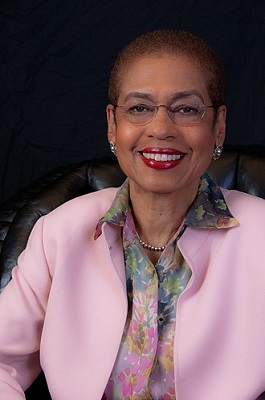
June 13 …
Albert Cleage Jr. was a minister, political thinker, and writer whose work reshaped Black religious life and contributed significantly to the ideological foundations of Black nationalism and liberation theology in the United States.
Born on June 13, 1911, in Detroit and raised in Indianapolis,Cleage grew up in a prominent African American family deeply engaged in civic life. His father was a successful physician, and his upbringing emphasized racial pride, education, and leadership.
Cleage attended Wayne State University before pursuing theological studies at Oberlin College’s Graduate School of Theology, where he was introduced to liberal Protestant thought and social gospel traditions. Initially ordained in a mainstream Christian denomination, he grew increasingly disenchanted with traditional churches for their failure to address systemic racism.
Influenced by Marcus Garvey’s teachings and the emerging Black nationalist movement, he began to reframe Christianity through a distinctly Black cultural and political perspective.
Cleage became a central figure in the Civil Rights Movement and Black Power Movement through his leadership of Detroit’s Shrine of the Black Madonna, which he founded in 1967. There, he promoted a theology that recognized Jesus as Black and presented Christianity as a means of Black liberation rather than a passive endurance. His 1968 seminal book, The Black Messiah, articulated these concepts and became a cornerstone of Black liberation theology.
Cleage further developed his ideas in works like Black Christian Nationalism and The Black Messiah, Volume II, merging religious ideology with calls for economic self-determination and political autonomy. As a political activist, he ran for public office and co-founded organizations aimed at establishing independent Black institutions, including the Pan-African Orthodox Christian Church.
Throughout his career, Cleage interacted with and was influenced by key figures of his time. This included Malcolm X, whose focus on Black self-defense and nationalism resonated with Cleage’s evolving beliefs, and Martin Luther King Jr., whose nonviolent philosophy he both respected and critiqued. He shared the stage with thinkers and activists like Stokely Carmichael, James Cone — an important voice in Black liberation theology — and Adam Clayton Powell Jr.
Cleage’s influence reached a generation of Black clergy and activists who embraced Afrocentric theology and community empowerment, even if specific proteges are less formally recorded. His ideological inspirations included Garvey and other Pan-African leaders who championed Black identity and global unity. The Shrine of the Black Madonna he founded continues to serve as both a church and community center, exemplifying his commitment to faith-based activism and economic empowerment.
Remembered as a radical theologian and cultural architect, Albert Cleage Jr. redefined the interplay between religion, politics, and Black identity in America, leaving an indelible mark on civil rights history, African American religious life, and the broader fight for social justice.
June 14 …
Marla Gibbs is a groundbreaking actress and singer whose vibrant career in television, theater, and music has left a lasting influence on entertainment, cultural representation, and the visibility of African American women in the arts.
Born on June 14, 1931 in Chicago, Gibbs grew up in a large family that emphasized perseverance and community values. She attended Chicago public schools and began her career as a secretary while nurturing her passion for performing. Her early involvement in music and theater through community programs played a crucial role in developing her talent and stage presence, eventually leading her to the realm of television and performance.
Gibbs is best known for her iconic portrayal of Florence Johnston, the witty maid on The Jeffersons, which aired from 1975 to 1985. Her performance infused humor, intelligence, and dignity into a character that could easily have been reduced to a stereotype, challenging societal norms and enhancing the representation of Black women on television.
In addition to The Jeffersons, Gibbs starred in her own series, 227, earning critical acclaim and multiple NAACP Image Awards for her work. She also showcased her versatility through various film and stage productions, including musical performances that highlighted her singing abilities.
Influenced by pioneers like Diahann Carroll and Ruby Dee, Gibbs navigated an industry where opportunities for African American women were scarce, carving out a space that inspired many others. She collaborated with contemporaries such as Sherman Hemsley, Isabel Sanford, and Esther Rolle, creating performances that melded humor, social commentary, and heartfelt storytelling.
Gibbs’ career has encouraged countless younger performers of color to pursue careers in television and stage with authenticity and confidence. Her idols and peers exemplify a generation of Black actors committed to breaking barriers and redefining representation in entertainment.
Throughout her illustrious career, Gibbs has received numerous accolades, including NAACP Image Awards, TV Land Legend Award, and recognition from the Black Filmmakers Hall of Fame, underscoring both her immense talent and her status as a cultural trailblazer.
By bringing characters to life with humor, intelligence, and humanity, Marla Gibbs not only entertained audiences, but also played a significant role in the evolution of television, theater, and music as platforms for social dialogue, shaping American culture and the portrayal of African American women in media.
June 14 …
Junior Walker was a pioneering musician whose electrifying saxophone playing and soulful performances helped define the sound of Motown and left a lasting mark on American music, culture, and entertainment.
Born Autry DeWalt Mixon Jr. on June 14, 1931 in Blytheville, AR, Walker grew up in a musical family and relocated to South Bend, IN during his childhood. He exhibited an early talent for the saxophone, teaching himself to play by ear and performing in local bands during his teenage years. His music education was mostly informal, influenced by live performances, church music, and the dynamic R&B and jazz scenes of the Midwest, which shaped his signature energetic style.
Walker rose to fame as the leader of Junior Walker & the All Stars, a Motown group that seamlessly blended rhythm and blues with soul and pop. Hit songs like “Shotgun,” “What Does It Take (To Win Your Love),” and “Can’t Stand to See You Go” highlighted his gritty, expressive saxophone playing and magnetic vocals.
Walker helped bridge the gap between instrumental R&B and vocal soul music, significantly contributing to Motown’s global success and influencing the evolution of funk and rock music. His vibrant stage presence and improvisational solos set a standard for generations of saxophonists and live performers.
Drawing inspiration from jazz legends such as Louis Jordan and contemporary soul musicians like James Brown, Walker cultivated a style that was both raw and refined. He collaborated with Motown contemporaries — including Stevie Wonder, Marvin Gaye, and the Temptations — thriving in a creative environment that expanded the boundaries of popular music.
Walker’s impact on saxophonists and R&B artists is well recognized, inspiring musicians like Maceo Parker and Clarence Clemons. His peers admired his unique ability to blend technical skill with soulful emotion, solidifying his status as an innovator in American music.
Throughout his career, Walker received numerous accolades acknowledging his musical contributions. He was inducted into the Michigan Rock and Roll Legends Hall of Fame, honored by Motown for his lasting influence, and his recordings continue to be celebrated for their historical and cultural significance.
By shaping the sound of Motown, energizing live performances, and inspiring countless musicians, Junior Walker left a lasting legacy on American entertainment and cultural history.

June 15 …
Judy Pace was an actress whose work in television and film during the 1960s and 1970s helped expand opportunities for Black performers in mainstream entertainment and contributed to the broader cultural visibility of African American talent during a transformative period in American media history.
Born on June 15, 1942 in Los Angeles, Pace grew up in a city rapidly becoming the heart of the American entertainment industry. She attended school in the Los Angeles area and began pursuing acting as a young adult, entering the field when roles for Black women on television were both limited and often stereotyped.
Driven to establish a professional career, Pace started landing guest roles on various television series in the 1960s, a time when the civil rights movement was transforming public expectations regarding representation in media. Her early work showcased her determination and mirrored the evolving landscape of the entertainment industry, as producers gradually opened doors to more diverse talent.
Pace’s breakthrough role came in the daytime serial Peyton Place, making her the first Black actress to have a recurring role on a primetime American television drama. Her presence on the show marked a significant milestone for representation in television, proving that African American actors could engage in mainstream narratives rather than being relegated to narrowly defined roles.
Pace later appeared in a variety of popular television shows, including Ironside, Sanford and Son, The Mod Squad, and The Rockford Files, cultivating a career that encompassed drama, comedy, and crime series. During this time, she shared the television landscape with pioneering performers like Diahann Carroll, Nichelle Nichols, and Cicely Tyson, whose collective contributions reshaped the expectations for Black actresses on American screens.
Beyond her individual performances, Pace’s career mirrored the cultural shifts of the late 20th century as television gradually expanded its portrayal of American society. Her success in network productions helped illustrate to producers and audiences that diverse casting could thrive in mainstream entertainment.
Although Judy Pace maintained a relatively private personal life, her work has been recognized by television historians as part of the pioneering generation of African American performers who broke barriers and normalized inclusive casting practices. Consequently, Pace’s legacy remains intertwined with the broader transformation of American television during the civil rights era, when actors of her generation helped expand representation and opened the door for future performers to find greater opportunities across film and television.
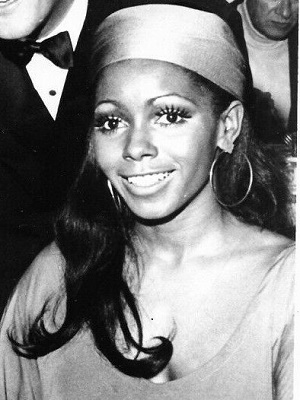
June 15 …
Erroll Garner was a highly influential jazz pianist and composer whose innovative contributions to jazz have left an indelible mark on American music and culture.
Known for his virtuosic technique, distinctive style, and catchy compositions, Garner became one of the most recognized jazz musicians of his time. He bridged the worlds of swing, bebop, and popular music.
Born on June 15, 1921 in Pittsburgh, PA, Garner was primarily a self-taught musician who honed his distinctive style without formal music training. He began playing the piano in his youth and by his teenage years, he was already performing professionally.
Despite being born with limited vision, Garner’s remarkable piano skills quickly gained attention in Pittsburgh’s lively jazz scene. He performed in clubs and on the radio, eventually relocating to New York City in the mid-1940s. There, he made a significant impact on the jazz world. His breakout moment came with his landmark recording of “Misty,” which became one of his signature songs and a lasting jazz standard.
Garner’s achievements as a performer were paralleled by his success as a composer. He was celebrated for blending complex jazz harmonies with accessible, engaging melodies. His innovative piano techniques — particularly his unique “octave” approach and spontaneous improvisational style — made him one of jazz’s most electrifying performers.
Garner’s compositions, including “Misty,” “Clarinet Marmalade,” and “Wild Music,” showcased a seamless blend of bebop and swing, infused with his personal flair, appealing to both jazz enthusiasts and a wider audience. His live performances were legendary, characterized by his vibrant personality, impeccable timing, and effortless connection with his band and listeners.
Influenced by icons like Art Tatum and Fats Waller, whose virtuosity shaped his piano style, Garner shared the stage with other jazz luminaries, such as Charlie Parker, Dizzy Gillespie, and Louis Armstrong, during the height of his career. Although Garner was primarily an individualist, he collaborated with many notable musicians, including Stan Getz, Tony Bennett, and Oscar Peterson, all of whom were inspired by his lively and innovative jazz approach.
Throughout his career, Garner’s extraordinary technical prowess and his ability to merge intricate jazz harmonies with joy and accessibility resonated with a diverse audience. His contributions to jazz were acknowledged during his lifetime, earning him several honors, including a Grammy Hall of Fame induction for his acclaimed 1955 album “Concert by the Sea,” one of the best-selling jazz records ever.
Garner was also recognized for his support of the Civil Rights Movement, using his influence to advocate for equality and justice during a tumultuous era. His music, particularly his improvisational style, inspired generations of jazz pianists such as Chick Corea and Herbie Hancock, who regarded him as a pivotal influence.
The work of Erroll Garner — particularly his role in broadening the appeal of jazz piano — is celebrated today as an essential part of American music history, solidifying his legacy as one of the greatest pianists of the 20th century.
June 16 …
Desirée Rogers is a trailblazing American businesswoman and political figure whose career has spanned corporate leadership, public service, and cultural influence.
Born in New Orleans on June 16, 1959, Rogers earned degrees from Wellesley College and Harvard Business School, positioning herself at the intersection of elite education and professional ambition. Her early career included successful stints in banking and energy, but it was her tenure as president of Peoples Gas and North Shore Gas that first established her as a standout executive in the utility sector.
Rogers quickly became known for her innovative thinking, strategic vision, and ability to modernize traditional industries. Her blend of corporate acumen and social grace made her an ideal candidate for political engagement.
In 2008, she was appointed White House Social Secretary by President Barack Obama. As the first African American to hold the position, Rogers brought a fresh, modern approach to White House events, emphasizing inclusivity and cultural sophistication.
Rogers sought to democratize access to White House experiences, ensuring that events reflected the diversity of the American people. Under her leadership, the administration’s public image was polished with a unique blend of elegance and approachability, drawing praise for making the “People’s House” more reflective of the nation it served.
Although her time in the White House was relatively brief, Rogers made a lasting impact on how political spaces could be reimagined through a more inclusive lens. Following her departure from the Obama administration, she returned to the private sector with renewed focus.
In 2010, she joined Johnson Publishing Company — home of Ebony and Jet magazines — as CEO. Her goal was to revitalize these iconic African American media brands during a time of major upheaval in the publishing industry. She led efforts to update their content, digital platforms, and advertising strategies, aiming to preserve their legacy while preparing them for the future.
Rogers has continued to make her mark in business through co-ownership of Black Opal and Ebony Fashion Fair, two cosmetics companies with longstanding commitments to serving women of color. Her work in the beauty industry reflects her ongoing dedication to diversity, representation, and entrepreneurship.
Rogers has championed inclusive branding and product development, helping to push the industry toward broader recognition of its diverse consumer base. Her leadership in these ventures has demonstrated the importance of combining cultural insight with strong business fundamentals.
Throughout her multifaceted career, Rogers has exemplified the power of versatility, sophistication, and representation. Whether in boardrooms, the White House, or the beauty industry, she has consistently used her platforms to challenge norms, expand access, and uplift underrepresented voices.
The influence of Desirée Rogers continues to resonate across both business and politics, serving as an inspiration for future generations of leaders who aim to blend style, substance, and social impact.
June 16 …
Lamont Dozier was a central architect of the Motown sound whose songwriting and production helped define the golden age of American soul music.
Born on June 16, 1941 in Detroit, Dozier grew up steeped in gospel and rhythm and blues traditions that profoundly shaped his musical identity. As a budding performer, he recorded for local labels before transitioning into songwriting and production at Motown Records. Although he did not pursue extensive formal higher education, his musical training flourished through hands-on experience in Detroit’s vibrant recording environment.
Dozier’s early influences included gospel music and artists like Ray Charles, whose fusion of sacred and secular styles informed his artistic sensibilities. Joining Motown immersed him in a creative atmosphere guided by Berry Gordy, whose mentorship and vision significantly influenced Dozier’s career trajectory.
Dozier achieved remarkable success as one-third of the legendary songwriting and production trio Holland–Dozier–Holland, alongside Brian Holland and Eddie Holland. Together, they crafted a series of iconic hits for Motown artists, including The Supremes, The Four Tops, and The Isley Brothers. Their work — featuring enduring classics like “Stop! In the Name of Love,” “Baby Love,” and “Reach Out I’ll Be There” — helped establish Motown as a formidable force in popular music, bringing Black artists into the mainstream.
Among Dozier’s contemporaries were influential figures such as Smokey Robinson and Stevie Wonder. They collectively defined the sound and cultural impact of the era.
After departing from Motown in the late 1960s, Dozier continued to write, produce, and perform, finding success as a solo artist while collaborating with a diverse array of musicians across genres. His songwriting transcended soul, encompassing pop and film, showcasing his versatility and enduring relevance.
Dozier inspired generations of songwriters and producers, many of whom drew from the melodic richness and emotional depth of his creations. His influence is evident in the careers of many artists who built upon the Motown legacy and its timeless approach to crafting hits.
Dozier’s contributions garnered him numerous honors, including induction into the Rock and Roll Hall of Fame in 1990 as part of Holland–Dozier–Holland, as well as inclusion in the Songwriters Hall of Fame. He also received multiple Grammy Awards and a Grammy Trustees Award acknowledging his lifetime achievements.
Through his work, Lamont Dozier helped shape the soundtrack of a generation, influencing American music, culture, and social history while leaving a legacy that continues to resonate throughout the entertainment industry.
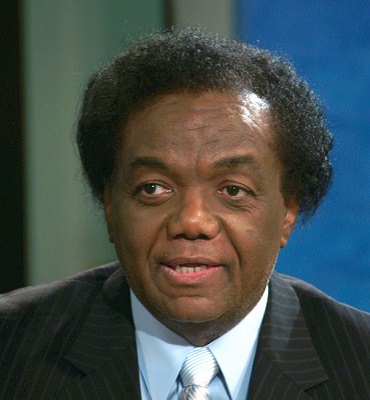
June 17 …
James Weldon Johnson was a towering figure in American history whose multifaceted career as a writer, educator, diplomat, and civil rights leader helped shape the cultural and political landscape of the early 20th century.
Born on June 17, 1871 in Jacksonville, FL, Johnson was raised in a household that emphasized education and cultural pride. He graduated from Atlanta University in 1894, later becoming the first African American to pass the Florida bar exam since Reconstruction. From an early age, he showed an unrelenting commitment to intellectual and artistic achievement, which he used as a platform for broader social change.
In the world of literature, Johnson made a lasting impact through his poetry, fiction, and journalism. He co-authored the famous song “Lift Every Voice and Sing,” which he wrote in 1900 with his brother J. Rosamond Johnson. The hymn would go on to be known as the Black National Anthem, a cherished anthem of the African American community and a rallying cry during the civil rights movement.
Johnson’s literary contributions reached a broader audience with the publication of The Autobiography of an Ex-Colored Man, a groundbreaking novel that explored issues of race, identity, and passing in America. His work laid important foundations for the Harlem Renaissance and challenged the conventions of American literature by centering Black voices and experiences.
Johnson’s influence extended well beyond the written word. In 1906, he was appointed U.S. consul to Venezuela and later to Nicaragua, becoming one of the first African Americans to hold such diplomatic posts. His work abroad gave him a broader view of racial issues on a global scale and deepened his conviction that the fight for civil rights in the United States was both urgent and universal. His diplomatic service also demonstrated that African Americans were fully capable of representing the nation with dignity and professionalism, countering the prevailing racist assumptions of the era.
After returning to the United States, Johnson threw himself into the struggle for civil rights with renewed vigor. In 1916, he joined the National Association for the Advancement of Colored People (NAACP) and quickly rose through its ranks to become the first Black executive secretary in 1920.
Under Johnson’s leadership, the NAACP expanded its influence, increased its membership, and intensified its efforts to combat lynching and racial violence. He spearheaded national anti-lynching campaigns and worked tirelessly to lobby Congress for federal legislation, laying the groundwork for future civil rights victories.
Johnson’s activism was marked by an emphasis on self-respect, education, and cultural pride. He believed that civil rights were not only a matter of legal recognition, but also of moral and cultural affirmation.
Johnson often wrote and spoke about the necessity of presenting African Americans not as victims, but as contributors to American society — intellectually, artistically, and civically. His vision was one of integration not merely into the political fabric of the nation, but into its cultural soul.
Throughout his life, Johnson remained a committed educator, serving as a professor of creative literature and writing at Fisk University and New York University. He mentored young writers and thinkers, and he championed the idea that education was the cornerstone of both individual advancement and collective liberation.
Johnson’s influence on generations of Black intellectuals and activists cannot be overstated. Through his teaching, he cultivated a new wave of voices that would carry the torch of civil rights into the mid-20th century.
Johnson died in a tragic car accident on June 26, 1938, but his legacy endures in countless ways. As a man who bridged the worlds of literature, diplomacy, education, and activism, he demonstrated the power of intellect and art to advance justice. His life was a testament to the belief that cultural expression and civic engagement are inseparable in the pursuit of equality.
James Weldon Johnson helped reframe the American narrative to include African Americans not on the margins, but at the center of its story, and his contributions continue to inspire those fighting for a more inclusive and just society.
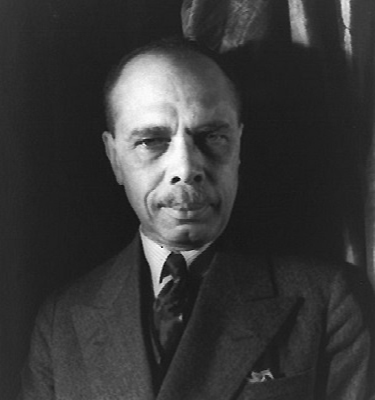
June 17 …
The Mother Emmanuel Mass Shooting was a racially motivated act of violence that shocked the United States and reignited national conversations about racism, gun violence, and the historical role of Black churches in American life.
The tragic attack occurred on June 17, 2015 at the Emanuel African Methodist Episcopal Church in Charleston, one of the oldest African American congregations in the United States. Founded in 1816 by the influential minister and activist Denmark Vesey, alongside other members of the African Methodist Episcopal community, the church — affectionately known as “Mother Emanuel” — has historically served as a center for Black religious life, civil rights advocacy, and community organizing.
During the evening of the attack, a white supremacist gunman infiltrated the church while a Bible study session was in progress, quietly joining congregants and visitors for nearly an hour before unleashing gunfire aimed at African American worshipers. Investigators later classified this horrific act as a racially motivated hate crime intended to provoke racial discord.
The shooting resulted in the tragic loss of nine lives, including the church’s senior pastor, Clementa C. Pinckney, who also held a position as a state senator in South Carolina. The other victims — Cynthia Hurd, Susie Jackson, Ethel Lance, Depayne Middleton-Doctor, Tywanza Sanders, Daniel Simmons Sr., Sharonda Coleman-Singleton, and Myra Thompson — represented a diverse array of community leaders, public servants, church volunteers, and family members, all deeply woven into the fabric of Charleston’s civic and religious life. The impact of their deaths resonated profoundly within the local community, prompting vigils, public mourning, and calls for unity.
The repercussions of this massacre echoed across the United States, intensifying national discussions surrounding racism, domestic extremism, and the persistent legacy of white supremacy in American history. Public reactions also showcased remarkable acts of forgiveness from some victims’ families during court proceedings, widely regarded as a powerful demonstration of faith and resilience.
One significant political outcome was the removal of the Confederate battle flag from the grounds of the South Carolina State House, catalyzed by renewed scrutiny of Confederate symbols in public spaces.
The victims and their families continue to be honored through memorials, scholarships, and community initiatives dedicated to fostering education and racial reconciliation.
The legacy of those lost during the Mother Emmanuel Mass Shooting and the congregation of Emanuel AME Church endure as symbols of courage, faith, and the persistent pursuit of justice and equality in American society.
June 17 …
Venus Williams is a transformative figure in tennis whose athletic excellence, business ventures, and advocacy have reshaped American sport and culture.
Born June 17, 1980, in Lynwood, CA and raised in Compton,Williams was introduced to tennis at a young age by her father and primary mentor, Richard Williams, and her mother, Oracene Price. Training on public courts in a working-class neighborhood, she developed a powerful and aggressive playing style that would later redefine women’s tennis.
Turning professional in 1994 as a teenager, Williams was part of a new generation of athletes shaped by family-driven coaching and the influence of earlier pioneers like Althea Gibson and Arthur Ashe, who broke racial barriers in the sport. While her tennis training was unconventional, she later pursued formal education and earned a degree in business administration from Indiana University East, showcasing her broader ambitions beyond athletics.
Williams’s accomplishments on the court are historic. She has won seven Grand Slam singles titles — including five Wimbledon championships and two U.S. Open titles — and reached the No. 1 world ranking in 2002. She also enjoyed tremendous success in doubles, partnering with her sister, Serena Williams, to secure 14 Grand Slam doubles titles and multiple Olympic gold medals.
Williams’s contemporaries included dominant figures such as Serena Williams, Maria Sharapova, and Lindsay Davenport, with whom she competed during a highly competitive era that heightened global interest in women’s tennis. She played a central role in transforming the sport’s physicality and style, introducing an unprecedented level of power and athleticism that has influenced generations of players.
Beyond her titles, Williams’s cultural and societal impact are equally significant. She emerged as a leading voice in the fight for equal pay in tennis, directly influencing policy changes that resulted in equal prize money for men and women at major tournaments like Wimbledon and the French Open.
Her advocacy extended to broader issues of gender equity and representation, establishing her as a role model for athletes such as Naomi Osaka and Coco Gauff, who have acknowledged her influence both on and off the court. Moreover, Williams became a successful entrepreneur, founding businesses in fashion and interior design, thereby expanding the perception of athletes as multifaceted leaders in culture and business.
Throughout her career, Williams has received numerous honors, including multiple Olympic gold medals, induction into various halls of fame, and recognition as one of the most influential figures in sports history. Her legacy is defined not only by her championships, but also by her role in reshaping expectations for women athletes — especially Black women—in American society.
Through her achievements, advocacy, and enduring presence, Venus Williams has made a lasting imprint on sports, culture, and the ongoing pursuit of equality.
June 17 …
Holland–Dozier–Holland (H-D-H) — composed of Brian Holland, Lamont Dozier, and Eddie Holland — are among the most influential creative forces in popular music, best known for defining the classic sound of Motown Records during the 1960s.
Working primarily out of Detroit, they crafted a remarkable run of hits that helped shape the global identity of soul and pop music. Their songwriting and production style combined infectious melodies, driving rhythms, and emotionally direct lyrics. They wrote, arranged, and produced many songs that helped define the Motown Sound in the 1960s.
The team began releasing commercially issued hits in the early 1960s, but the first major released song credited to the team’s classic Motown era output is generally identified as “Where Did Our Love Go” by The Supremes, released on June 17, 1964. The song marked the breakthrough moment for the trio as a dominant force at Motown Records and in popular American music.
They became the backbone for legendary acts such as The Supremes, The Four Tops, and many others. Songs like “Stop! In the Name of Love,” “Baby Love,” and “You Keep Me Hangin’ On” not only dominated the charts, but also became cultural touchstones of the 1960s.
Beyond their commercial success, the team fundamentally changed the sound and structure of popular music, elevating the role of the songwriter-producer as a central creative force in the recording industry. Their influence extended across genres, inspiring generations of artists in soul, R&B, pop, and rock.
Even after leaving Motown amid royalty disputes in the late 1960s, the trio continued to write and produce music. They left a legacy that endures in modern songwriting and production techniques.
H-D-H was inducted into the Songwriters Hall of Fame in 1988 and the Rock and Roll Hall of Fame in 1990.
Today, the work of Holland–Dozier–Holland is celebrated as a defining chapter in American music history, representing both artistic innovation and the cultural power of the golden era of Motown.
June 18 …
Barbara Ann Teer was a groundbreaking actress, educator, and cultural architect whose life and work redefined the role of theater in African American life.
Born on June 18, 1937 in East St. Louis, IL, Teer was raised in a family that valued education, creativity, and service. She trained as a dancer and later pursued acting at the University of Illinois and in Europe, eventually making a name for herself on Broadway and in film. Although she found early success in mainstream theater, she became disillusioned with the roles available to Black performers, which she felt often reinforced stereotypes and failed to reflect the depth and diversity of Black experiences.
In response to this artistic and cultural void, Teer shifted her focus from performing to creating transformative spaces for Black creativity. In 1968, she founded the National Black Theatre in Harlem, NY, a visionary institution born in the spirit of Black self-determination during the height of the Civil Right Movement and Black Arts Movement.
Teer envisioned a theater that was more than a place for performance — it was a sacred space rooted in African traditions, spiritual consciousness, and collective healing. Her approach fused ritual, storytelling, music, and activism to create what she called a “theater of transformation,” an innovative model that reimagined the purpose and power of art.
Through the National Black Theatre, Teer nurtured generations of Black artists, thinkers, and cultural workers. She developed programs that emphasized cultural education, self-empowerment, and community involvement. Her work helped launch and support numerous artists, including playwrights, musicians, and choreographers, who would go on to influence American theater and beyond. Her insistence on centering African heritage and spirituality in artistic expression was radical for its time and established a blueprint for culturally grounded theater that continues to inspire artists today.
Teer was also a fierce advocate for cultural preservation and economic justice in Harlem, resisting gentrification and advocating for Black-owned land and institutions. She saw the arts not only as a vehicle for expression, but as a foundation for community resilience and liberation.
Under her leadership, the National Black Theatre became a cultural sanctuary, offering workshops, public events, and youth programs that empowered Harlem residents to reclaim their narratives and cultural legacies. Her holistic approach to cultural work placed her at the intersection of art, politics, and spirituality in a way that few others achieved.
Teer’s legacy is one of bold vision, unshakable conviction, and deep love for her people. She redefined what it meant to be an artist by expanding the boundaries of performance to include healing, education, and revolution. Through her lifelong dedication to the liberation of Black voices and the celebration of African diasporic traditions, she left an indelible mark on American theater and culture.
The work of Barbara Ann Teer continues to live on in the artists and institutions she inspired, reminding the world that theater, at its highest form, is not just entertainment — it is a sacred act of transformation.
June 18 …
Avon Long was an American film, television, stage, and Broadway actor and singer who was originally cast to play George Jefferson in All in the Family.
Born on June 18, 1920 in Hattiesburg, MS, Long emerged as one of the most esteemed African American stage actors of the 20th century. Growing up in the segregated South, he was inspired by church choirs, touring musical revues, and the rich tradition of Black storytelling, which ignited his passion for music and performance.
Long’s journey took him north, where the lingering influence of the Harlem Renaissance and the vibrant cultural scene in New York City fueled his artistic ambitions. These formative experiences nurtured his vocal talent and strengthened his resolve to pursue a professional theater career at a time when opportunities for Black performers were severely restricted.
His early work in musical theater refined his ability to seamlessly combine acting, singing, and emotional restraint — hallmarks of his performances. Long’s professionalism and quiet authority earned him respect in rehearsal spaces that were often less than welcoming to performers of color.
In 1933, Long was featured at Harlem’s Cotton Club in a production of Hot Chocolates. He and Lena Horne co-introduced a composition in Cotton Club Parade in 1934 when Horne was only 16 years old. And in 1942, he performed in a number of Broadway shows.
Long’s career took off in the 1940s, amidst a generation of performers challenging racial barriers on Broadway and through national tours. He drew inspiration from pioneering Black artists who showcased that excellence and discipline could break down obstacles, learning from directors, composers, and fellow actors who prioritized craft over spectacle.
He is most renowned for his enduring association with George Gershwin’s Porgy and Bess, where he portrayed the character of Sportin’ Life for decades across Broadway productions, revivals, and international tours. Long infused the role with nuance and depth, resisting stereotypes in favor of psychological complexity and musical precision. His interpretation became a definitive portrayal for many and influenced generations of actors who followed.
Beyond Porgy and Bess, Long featured in productions such as Show Boat, Lost in the Stars, and My Darlin’ Aida, playing a crucial role in the gradual, but meaningful expansion of serious roles for Black performers on the American stage.
Throughout his illustrious career, Long shared the stage with notable contemporaries, including Cab Calloway, Etta Moten, Canada Lee, and William Warfield. He was part of a generation of artists who balanced their craft with a sense of activism, whether overt or subtle, by demanding dignity and excellence in their work.
While he was not particularly known for public protest, his unwavering professionalism and refusal to accept degrading portrayals served as a form of cultural resistance. Younger actors often looked to him as a model for navigating a challenging industry with integrity.
In addition to his stage work, Long made notable appearances in film and television, extending his influence beyond the theater and introducing a wider audience to classically trained Black performers. His remarkable longevity in the industry spanned eras of significant change in American entertainment.
Over time, he received accolades from theater organizations and cultural institutions that recognized both his artistic contributions and his role in advancing opportunities for African American actors. His performances were celebrated for their musical intelligence, emotional depth, and respect for the material.
Long died on November 18, 2003, leaving behind a legacy rooted in craftsmanship, perseverance, and cultural significance. Though he never sought fame, his work redefined the landscape for Black performers in American theater. By inhabiting complex characters with discipline and humanity, Long contributed to a broader transformation of American entertainment and cultural history.
The career of Avon Long serves as a testament to the idea that progress is often driven by artists whose impact is measured not by celebrity, but by the standards they establish and the doors they help to open.
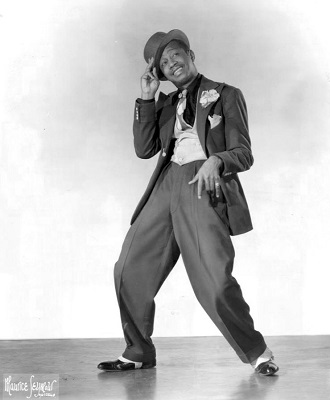
June 18 …
The Pekin Theatre holds a special place in American entertainment history as one of the most important venues for African American theater during the early 20th century.
The Pekin became a cornerstone of Black culture in Chicago, offering a vital platform for African American performers and playwrights at a time when racial segregation severely restricted their opportunities in mainstream theaters. Its contributions to the arts were instrumental not only in shaping the evolution of Black theater but also in highlighting the social and political struggles of African Americans in an era of rapid change.
Saloon keeper Robert T. Motts established the Pekin on June 18, 1904 to provide entertainment to his community. A group of Black entrepreneurs — including notable figures like former vaudeville performer William C. “Billy” Howard and theater manager Charles Gilpin — subsequently aimed to evolve the venue into a place where African American artists could perform for Black audiences, while also introducing White audiences to the richness of Black talent and storytelling.
The Pekin quickly emerged as a cultural hub for Chicago’s Black community, attracting large crowds with its mix of dramatic plays, vaudeville acts, musical performances, and comedy shows. In a city where African Americans faced exclusion from mainstream venues, the Pekin provided a sense of community and a stage for artists to thrive, free from the constraints of racial discrimination.
Over the years, the Pekin became a significant cultural institution, presenting a diverse range of performances that tackled themes, such as racial inequality and African American identity. Its mission extended beyond entertainment — it sought to educate and inspire, giving voice to Black playwrights and actors who often lacked visibility elsewhere.
The Pekin hosted influential figures in Black entertainment, including legendary performers like Mamie Smith and emerging stars of the Harlem Renaissance. Through these performances, it played a crucial role in shaping the African American cultural movement, offering an environment where Black artists could hone their craft and confront the complexities of their social and political realities.
Though the Pekin closed its doors in 1939 due to economic challenges and shifting dynamics in the entertainment industry, its legacy continues to impact the landscape of Black theater in Chicago and beyond. The venue set the stage for future institutions, such as the Negro Ensemble Company and the Goodman Theatre, which embraced diversity in the arts.
Despite its relatively brief existence, the Pekin’s influence on the American entertainment industry and its role in shaping Black cultural expression are invaluable.
Today, the memory of the Pekin Theatre endures as a symbol of the resilience and creativity of African American artists during a pivotal moment in American history.
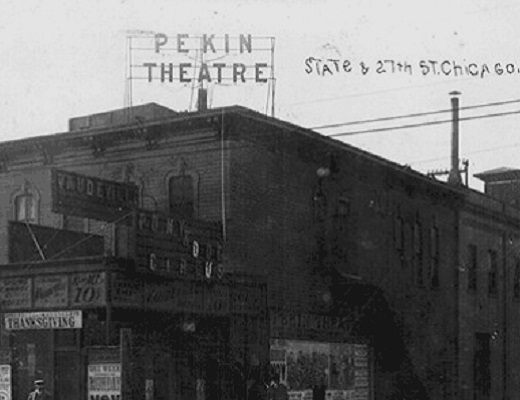
June 19 …
Juneteenth, officially Juneteenth National Independence Day, marks a pivotal moment in American history—the day enslaved African Americans in the state of Texas were finally informed of their freedom, more than two years after President Abraham Lincoln’s Emancipation Proclamation.
While the proclamation had been issued in 1863, many enslavers in Confederate states, including Texas, ignored it until Union soldiers arrived in Galveston, TX on June 19, 1865. Major General Gordon Granger’s announcement that all enslaved individuals were free is now commemorated as Juneteenth — a day of celebration, reflection, and remembrance of African American freedom and history.
The significance of the holiday is rooted in the delayed realization of freedom for many African Americans in the South. In Texas, which had been far removed from the reach of Union forces during the Civil War, slavery continued unabated long after the Emancipation Proclamation had been issued.
It wasn’t until the Union Army took control of Texas that enslaved people received the news that they were free. This event symbolizes the culmination of decades of struggle, sacrifice, and resilience by Black Americans, and the observance serves as a reminder of the enduring fight for freedom and equality.
Over the years, the holiday evolved from a day of personal and communal reflection to a broader cultural observance. The first celebrations involved parades, feasts, and religious services, creating a sense of unity and pride among newly freed African Americans.
In the following decades, the observance spread across the country, particularly within African American communities, and became a day to celebrate African American culture, history, and the ongoing pursuit of civil rights. Traditional activities include music, dance, storytelling, and the sharing of African American traditions and food.
In recent years, the holiday has gained wider recognition and is increasingly celebrated by people of all backgrounds as an important day in American history. Its growing awareness reflects a broader conversation about racial justice and the need to address the unfinished work of the Civil Rights Movement.
In 2021, the observance became a federal holiday, officially recognized by the United States government. This legislative milestone was the result of years of advocacy and activism, underscoring the importance of remembering the history of slavery and its lasting impacts on American society.
Today, the holiday is both a celebration and a call to action, reminding Americans of the continued struggles for racial equity and justice. While it is a time to honor the resilience and achievements of African Americans, it also serves as an opportunity for reflection on the work that remains in confronting systemic racism.
Juneteenth is a day that not only commemorates the emancipation of enslaved people but also reaffirms the ongoing fight for freedom, equality, and justice for all.

June 19 …
Smokejumper Joe Harris — believed to be the oldest surviving WWII paratrooper — was among the last surviving members of the U.S. Army’s first all-Black parachute infantry battalion.
Born on June 19, 1916 in the small town of West Dale, LA and raised in the South during a time of racial segregation and societal hardship, Harris’ sense of duty to his country developed early. When World War II broke out, he felt a deep calling to serve.
In 1941, at the age of 24, Harris enlisted in the U.S. Army, joining the newly-formed 555th Parachute Infantry Battalion, a historic and pioneering unit that was the first all-Black airborne regiment in American history. While many saw his enlistment as a courageous act of patriotism, for Harris, it was also a chance to prove that African American soldiers were just as capable and brave as any others in the fight for freedom.

Members of the battalion are briefed before takeoff from Fort Dix, NJ in 1947. The all Black airborne unit in World War II became one of the first smoke jumping units in U.S. Department of Agriculture Forest Service. (Photo courtesy of National Archives and Records Administration.)
In 1944, the battalion was deployed to the Pacific Theater, where they faced a unique mission unlike anything other airborne units experienced. While the 555th was trained for combat, their most famous operation became their role in combating forest fires caused by Japanese balloon bombs. These bombs, launched from Japan, were aimed at starting wildfires in the American Pacific Northwest, and the 555th was called in to help contain the blazes. This firefighting mission in 1945 became one of the most notable aspects of their service, showcasing their ability to adapt to unconventional wartime challenges.
However, it was in the latter part of the war, during 1945, when Harris’ resolve as a paratrooper was truly tested. The 555th spent time training and preparing for potential combat jumps into the Japanese-held islands in the Pacific. While they were never required to execute a major combat operation, the regiment’s readiness and commitment to the war effort did not go unnoticed.
Their courage and capability earned them respect within the broader airborne community, including soldiers from more widely recognized units like the 82nd Airborne Division. Harris’ role in these operations highlighted his dedication to the mission and his fellow soldiers, even if they were not directly involved in the large-scale airborne assaults that defined the war in Europe.
After the war ended, Sgt. Harris returned to the United States and settled into civilian life. He went on to live a quiet life in Louisiana, where he never sought the spotlight but remained proud of his service.
The Triple Nickles was not officially recognized for their contributions until years later, but Harris, like many of his comrades, quietly carried the weight of their extraordinary legacy. As one of the last surviving members of the 555th, he became a living reminder of the sacrifices made by African American soldiers during World War II, a group that faced not only the brutalities of war, but also the trials of racial discrimination in a segregated military.
Harris died on March 15, 2025 at the age of 108, leaving behind a legacy of courage, service, and resilience. His death marked the loss of one of the last remaining members of the 555th Parachute Infantry Battalion, and with it, a piece of living history. His service — which contributed to the broader success of World War II — would forever be remembered.
The life of Joe Harris, marked by pivotal moments in history, serves as a reminder of the immense courage of those who fought in World War II, particularly the paratroopers who jumped into harm’s way to secure a future of freedom for the world.

June 19 …
Addison Norton Scurlock was a pioneering African American photographer whose work captured the dignity, beauty, and complexity of Black life during the early to mid-20th century.
Born on June 19, 1883 in Fayetteville, NC, Scurlock moved to Washington, DC with his family as a young man and became deeply embedded in a city that was rapidly becoming a hub for Black intellectual and cultural life. He trained in photography under the tutelage of white photographers but quickly established his own unique style and perspective.
In 1911, he opened the Scurlock Studio on U Street, which would become one of the most important cultural landmarks in the nation’s capital. For many African Americans in Washington, a photograph by Scurlock was more than a picture — it was a symbol of self-worth and achievement.
Scurlock’s photography stood in stark contrast to the demeaning and stereotypical images of Black people that dominated popular media at the time. His portraits emphasized elegance, pride, and professionalism. Whether photographing families, civic leaders, or ordinary citizens, he consistently portrayed his subjects with a reverence that elevated their image and presence.
Through his lens, Scurlock documented a Black Washington that was striving, thriving, and determined to be seen in its full humanity. His work became a counter-narrative to the racist visual culture that sought to marginalize African Americans.
Over the years, Scurlock photographed an extraordinary array of figures, from civil rights leaders and politicians to artists and athletes. Notably, he took portraits of icons such as Booker T. Washington, Marian Anderson, Carter G. Woodson, and Duke Ellington. His studio became a cultural anchor for the city’s Black middle and upper classes, offering them a space to see themselves reflected with pride and sophistication.
Beyond individual portraits, Scurlock also chronicled the broader African American experience in Washington, DC, capturing pivotal moments in community life, from church events and graduations to political rallies and protests. He played a critical role in visually documenting the impact of the Great Migration, World Wars, and the early stirrings of the Civil Rights Movement. His photographs serve not only as art, but also as an essential historical archive, preserving aspects of Black life that were too often overlooked or erased by mainstream institutions.
Scurlock’s work was deeply rooted in the ethos of racial uplift. He understood the power of imagery in shaping public perception and identity, and he used his camera as a tool for advocacy and empowerment. In an era when Black people were routinely excluded from fair representation, his photographs offered an alternative vision — one that affirmed their humanity and aspirations. His artistry combined technical excellence with a deep cultural sensitivity, making his images both aesthetically compelling and socially meaningful.
The Scurlock Studio, which remained active under the direction of his sons George and Robert after his death in 1964, continued his legacy for decades. The studio adapted to changing times while maintaining the values that Addison instilled — excellence, respect, and community service. The vast archive of images created by the Scurlock family is now housed at the Smithsonian Institution, where it remains a vital resource for scholars, artists, and the general public interested in African American history and culture.
Scurlock’s contribution to American photography goes far beyond technical skill. He redefined how Black Americans could be seen and how they saw themselves. His legacy is a testament to the transformative power of visual storytelling, and his life’s work stands as both a historical record and an enduring source of cultural pride.
Through his camera, Addison N. Scurlock honored the resilience, grace, and dreams of a people, making him not just a photographer, but a visual historian of Black America.
June 19 …
Sometimes called “the original Freedom Rider,” Bruce Boynton was a pivotal figure in American civil rights history known for his courageous challenge against racial segregation in the 1960s.
As a pivotal figure in the legal struggles that dismantled discriminatory practices in public accommodations, Boynton’s actions and legal initiatives significantly contributed to the broader Civil Rights Movement and the pursuit of equality in the United States.
Born on June 19, 1937 in Selma, AL, Boynton grew up in a racially segregated South, an upbringing that profoundly shaped his understanding of justice and equality. He attended the historically Black Alabama State University, where experiences in the segregated South ignited his passion for civil rights.
Boynton later pursued a law degree at Howard University School of Law, learning from some of the most influential figures in African American legal thought, such as Charles Hamilton Houston and Thurgood Marshall. This strong educational foundation would later inform his legal strategies and equip him for the larger fight for civil rights.
Boynton’s most significant contribution to the Civil Rights Movement occurred in 1958 when he was arrested for sitting in the “whites-only” section of a bus terminal restaurant in Richmond, VA. At that time, segregation was widespread in public spaces, especially in the South. As a law student traveling from Washington, DC to Alabama, Boynton inspired the Freedom Riders movement when he bravely refused to adhere to the segregation policies of the bus terminal.
Boynton’s arrest sparked a legal battle that culminated in the landmark 1960 Supreme Court case, Boynton v. Virginia. The Court’s ruling in Boynton’s favor declared segregation in interstate bus terminals unconstitutional, marking a crucial victory that propelled the Civil Rights Movement forward by challenging the entrenched system of segregation in public facilities.
Throughout his career, Boynton was deeply influenced by prominent civil rights leaders, such as Martin Luther King Jr. and Thurgood Marshall, who significantly impacted his legal strategies and activism. His contemporaries, including legal minds from the NAACP Legal Defense Fund, provided invaluable mentorship and support as he fought for justice.
Boynton’s work, particularly in Boynton v. Virginia, established an important legal precedent for future civil rights battles. His commitment to racial equality and advocacy for the enforcement of federal desegregation laws set a standard for fellow activists and lawyers.
Though he did not seek personal recognition, Boynton’s contributions were crucial to the legal triumphs that followed, including the Freedom Rides and the Civil Rights Act of 1964
Historians and civil rights organizations have acknowledged the role of Bruce Boynton in the movement, recognizing how his courage in opposing segregation in public spaces was instrumental in dismantling institutionalized racism in America.
June 19 …
Zoë Saldaña is an actress and producer whose leading roles in major franchises and commitment to diverse storytelling have reshaped Hollywood’s global box-office landscape and broadened representations of Latina and Afro-Latina women in mainstream film and television.
Born Zoë Yadira Saldaña Nazario on June 19, 1978 in Passaic, NJ, Saldaña raised between Queens, NY and the Dominican Republic. She honed her skills as a dancer at ECOS Espacio de Danza and in New York youth theater before making her transition to acting.
Instead of pursuing a formal university acting program, Saldaña cultivated her craft through dance training, stage performances, early television roles. She made an early appearance on the television series Law & Order and cultivated a notable film career that began with Center Stage in 2000.
Positioned among the top box-office draws in movie history, Saldaña has starred in three of the highest-grossing film franchises:
- Avatar as Neytiri,
- Marvel Cinematic Universe as Gamora, and
- Star Trek reboot as Nyota Uhura.
Saldaña’s career extends beyond acting. She has produced various projects, lent her voice to animated characters, and received significant accolades including Golden Globe, BAFTA, Critics’ Choice, and SAG awards. She earned an Academy Award for Best Supporting Actress for her role in Emilia Pérez. She has also garnered festival honors and recognition on influential lists, such as Time’s 100.
Influenced by her dance background and Caribbean/Latinx heritage, Saldaña has drawn inspiration from a diverse range of cinematic collaborators and performers across generations, publicly acknowledging figures like Whoopi Goldberg and Angelina Jolie. She has worked closely with acclaimed directors such as James Cameron and J.J. Abrams and collaborated with peers in major franchise ensembles, including Sam Worthington, Sigourney Weaver, Chris Pratt, and Chris Hemsworth.
Saldaña is committed to supporting Latinx artists and amplifies their opportunities through her producing efforts. She has received honors from Empire, Saturn, and Teen Choice for her roles in film franchises. Additionally, she has received critical acclaim for her motion-capture and voice performances, as well as industry acknowledgments for her producing work and influence.
The cultural impact of Zoë Saldaña is marked by her efforts to elevate Afro-Latina visibility, enhance the commercial viability of actors of color in blockbuster films, and advocate for the inclusion of nonwhite women in leading, complex roles within the cinematic landscape.

June 19 …
Phylicia Rashad has played a defining role in shaping modern American entertainment, particularly through her groundbreaking work in television and theater, while also influencing cultural representations of Black family life, artistic excellence, and intellectual sophistication.
Born Phylicia Ayers-Allen on June 19, 1948 in Houston, TX, Rashad grew up in a family deeply rooted in the arts and education. Her mother, Vivian Ayers Allen, was a Pulitzer Prize–nominated poet, and her sister, Debbie Allen, became a celebrated performer and director.
After spending part of her youth in Mexico to avoid segregation in the United States, Rashad returned to pursue higher education at Howard University, graduating magna cum laude with a Bachelor of Fine Arts in theater in 1970. Her early training included classical performance and stage work. She began her professional career with the Negro Ensemble Company before making her Broadway debut in the early 1970s, building a strong foundation in theatrical performance that would define much of her artistic identity.
Rashad rose to national prominence through her portrayal of Clair Huxtable on The Cosby Show, starring opposite Bill Cosby. The role became culturally transformative, presenting an image of an educated, professional Black family that challenged stereotypes and influenced American television narratives.
Rashad’s contemporaries included actors such as James Earl Jones and Cicely Tyson, while she also worked alongside rising talents like Malcolm-Jamal Warner. Beyond television, she maintained strong ties to Broadway, performing in productions like “Dreamgirls” and “The Wiz.” She later collaborated on works connected to playwright August Wilson, whose influence on her stage career was profound.
Among Rashad’s most significant accomplishments is her historic achievement as the first Black woman to win the Tony Award for Best Actress in a Play, which she earned in 2004 for her performance in A Raisin in the Sun, later adding a second Tony Award in 2022 for Skeleton Crew. Her career has also included multiple Emmy nominations and recognition for her continued excellence across television, film, and stage, including roles in This Is Us and the Creed film series.
Rashad has contributed to the development of future artists through mentorship and education, notably serving as dean of the College of Fine Arts at Howard University, where she supported emerging talents such as Taraji P. Henson. Her daughter, Condola Rashad, represents a direct artistic legacy, achieving acclaim on Broadway and continuing the family’s theatrical tradition.
Rashad’s broader cultural influence lies in her embodiment of dignity, intellect, and artistic discipline, qualities that have made her an enduring symbol in American culture. Often regarded as an aspirational figure within the entertainment industry, she has drawn inspiration from earlier Black performers and intellectual traditions while influencing a generation of actors and audiences.
Honors such as her Tony Awards, multiple Emmy nominations, NAACP Image Award recognition, and honorary doctorate from Carnegie Mellon University reflect both her artistic excellence and cultural impact.
Through her work across film, theater, and television, Phylicia Rashad has helped shape the historical narrative of representation in American media, leaving a legacy that bridges artistry, education, and social progress.
June 19 …
Tennessee State University (TSU) is a Historically Black University in Nashville whose long evolution from a normal school to a major public research institution reflects its central role in American education, civil rights advancement, and cultural development.
Founded on June 19, 1912 as the Tennessee Agricultural and Industrial State Normal School, the institution was established by the state of Tennessee to offer teacher training and vocational education for African American students during the era of segregation. Its creation addressed the pressing need for formal higher education opportunities for Black citizens in the Jim Crow South.
Initial support came from state government officials and African American educators who championed the expansion of access to professional training and public schooling. The school’s founding mission focused on practical education, especially in agriculture, industry, and teaching, aligning with the broader land-grant and normal school traditions aimed at enhancing workforce and community capacity.
As time progressed, the institution underwent several name changes that mirrored its expanding academic scope and rising prominence. It became Tennessee Agricultural & Industrial State College in 1922, then transitioned to Tennessee State University in 1968 upon achieving university status. In 1979, the school consolidated with the University of Tennessee at Nashville to strengthen its role within the state’s higher education framework.
Throughout these changes, the university’s mission evolved from vocational training to providing comprehensive undergraduate and graduate education, while steadfastly dedicating itself to serving African American students and other underrepresented groups. Key stakeholders involved in its development included the Tennessee state legislature, Black community leaders in Nashville, faculty advocates, and generations of students who viewed the institution as a gateway to professional and civic opportunities.
The university gained national recognition not only for its academic excellence, but also for its remarkable contributions to athletics, particularly through its renowned track and field program, the “Tigerbelles.” Under the guidance of coaches like Ed Temple, the university produced Olympic champions and pioneering athletes such as Wilma Rudolph, Wyomia Tyus, and Edith McGuire.
These athletes competed during a transformative period in global sports — including the 1960 Summer Olympics and subsequent Games — where they challenged racial and gender barriers. Their efforts enhanced the visibility of Black women in international athletics. As such, the university emerged as both an academic institution and a cultural force shaping American identity.
In addition to athletics, the university played an instrumental role in the broader Civil Rights Movement and the advancement of educational equity in the United States. It provided access to higher education for thousands of students who were barred from predominantly white institutions during segregation, producing educators, scientists, musicians, and public leaders who contributed to society at every level.
The university has received numerous accolades for its academic programs, research contributions, and historical significance. This includes federal recognition as a land-grant institution and continued designation as a leading historically Black university.
The legacy of Tennessee State University lives on through its alumni, its cultural impact in music and athletics, and its ongoing mission to broaden opportunity and enhance social mobility within American higher education.

June 20 …
Lloyd Augustus Hall was a pioneering chemist whose scientific ingenuity transformed the American food industry and secured his place in the history of innovation, industry, and Black achievement in the 20th century.
Born on June 20, 1894 in Elgin, IL to parents who valued education and professional achievement, Hall grew up during a time when racial barriers severely restricted opportunities. Nevertheless, he pursued science with a determination that enabled him to transform everyday American life through the application of chemistry.
Hall’s most notable achievements were in food science, particularly in food preservation chemistry. As a research chemist, he pioneered innovative methods for preserving meats, spices, and other products, significantly extending shelf life without sacrificing flavor or safety. His work played a crucial role in the widespread adoption of curing salts and antioxidant treatments, which helped reduce spoilage and combat foodborne illnesses.
Over his career, Hall amassed more than 100 patents, establishing himself as one of the most prolific inventors of his time and laying the groundwork for modern food processing.
Professionally, Hall dedicated much of his career to industrial research, particularly at a major food manufacturing company where his innovations were implemented in mass production. His talent for translating laboratory findings into practical industrial applications helped bridge the divide between science and commerce, underscoring the potential for research-driven initiatives to enhance public health and efficiency.
At a time when African American scientists often faced exclusion from leadership roles, Hall’s technical expertise and productivity rendered him a vital asset in his field.
Hall drew inspiration from early mentors who recognized his aptitude for chemistry, as well as from the broader tradition of Black scientific excellence exemplified by pioneers like George Washington Carver. His academic background acquainted him with leading chemical theories of his time, while his peers included industrial chemists who were revolutionizing American manufacturing through applied science.
Although he largely labored in relative obscurity, Hall admired innovators who fused precision with practicality and social impact, guiding his career under the conviction that science should address everyday human needs.
Despite encountering systemic racism throughout his life, Hall garnered recognition from scientific and civic organizations, including awards from professional chemical societies and historically Black institutions that honored his contributions. Beyond formal acknowledgments, his lasting legacy is reflected in the unseen, yet vital role his work plays in daily life—from safer food supplies to more efficient industrial processes.
Lloyd Augustus Hall remains a significant figure in American history, exemplifying how scientific excellence and resilience can quietly yet profoundly influence industry, culture, and the well-being of the nation.
June 20 …
The Chicago Bee was an influential African American weekly newspaper that advocated for racial uplift, political engagement, and community advancement in Chicago and the wider Midwest during the interwar and World War II years.
Releasing its first issue on June 20, 1926, the newspaper was founded by Anthony Overton, a prominent Black entrepreneur and banker who owned the Overton Hygienic Manufacturing Company among other ventures. The Bee emerged as a part of Overton’s broader initiative to enhance Black economic strength and establish civic institutions. His leadership facilitated financial backing and a business model that integrated the publication with Black commercial networks and social uplift efforts.
The Bee’s newsroom was staffed with editors and journalists dedicated to covering local politics, business, church life, and social events, while also addressing national civil rights issues. Its pages showcased contributions from community leaders, activists, and clergy, frequently highlighting achievements in Black business, education, and culture. This content played a significant role in fostering a positive civic identity for Chicago’s burgeoning Black population during the Great Migration.
Politically and culturally, the Bee positioned itself as a moderate, community-focused publication that aligned with Republican Party interests throughout the 1920s and early 1930s, even as many Black voters began to shift toward the New Deal coalition. Its primary readership consisted of Black urban residents — middle-class and business-oriented families, along with professionals and entrepreneurs — who relied on the paper for news, advertising, and communal information. It also served as a platform for local campaigns advocating for housing, employment, and anti-lynching measures.
Although The Bee did not achieve the national prominence of some of its contemporaries, it earned respect as a long-lasting local institution under Overton’s stewardship, contributing significantly to Chicago’s civic life and leaving a legacy seen in archival collections and studies of Black urban press history.
Closure of The Chicago Bee in 1947 marked the end of a pivotal era in Chicago’s Black press tradition and in the narrative of journalism backed by Black business interests.
June 21 …
Roscoe Dunjee was a pioneering newspaper publisher and civil rights advocate whose work reshaped journalism and amplified the fight for racial equality in the early twentieth-century United States.
Born on June 21, 1883 in Harpers Ferry, WV, Dunjee was raised in a family deeply invested in education, religion, and activism. His father, John William Dunjee, was both a minister and a teacher, while his sister, Drusilla Dunjee Houston, emerged as a prominent intellectual and writer.
During his childhood, the family moved to Oklahoma Territory, where Dunjee navigated a rapidly evolving frontier society rife with both opportunities and racial tensions. Although he did not obtain extensive formal higher education, he acquired practical skills in printing, agriculture, and business, initially supporting himself as a farmer before embarking on a career in journalism. His early encounters with discrimination and his family’s strong emphasis on literacy and civic duty profoundly shaped his dedication to advocacy through the press.
In 1915, Dunjee founded The Black Dispatch in Oklahoma City, establishing one of the most impactful African American newspapers in the region. As the publisher and editor, he utilized the paper to confront segregation, disenfranchisement, and racial violence, often adopting bold editorial stances that set him apart in American journalism.
Dunjee collaborated with organizations like the NAACP to advance civil rights litigation and public awareness initiatives. His investigative reports and editorials played a crucial role in challenging discriminatory practices in housing, education, and voting, transforming the newspaper into both a source of information and a catalyst for social change. Through his efforts, he helped define the Black press’s role as both a watchdog and an advocate in American society.
Dunjee drew inspiration from prominent African American intellectuals such as W.E.B. Du Bois and Ida B. Wells, whose courageous journalism and commitment to justice mirrored his own. He was connected with contemporaries like Robert S. Abbott and Carter G. Woodson, all of whom contributed to a national network of Black intellectual and journalistic leadership.
Dunjee also served as a mentor to younger generations, including Ralph Ellison, who briefly worked for The Black Dispatch and gained exposure to journalism and social criticism that would later shape his literary career. While there are few documented formal protégés, his newsroom and publication acted as an informal training ground for aspiring writers and activists.
Throughout his lifetime, Dunjee gained recognition for his contributions to journalism and civil rights, with many honors bestowed posthumously. He was inducted into the Oklahoma Journalism Hall of Fame, celebrating his enduring impact on the field and his influence on public discourse. His legacy continues through successor publications and the ongoing exploration of the Black press as a significant force in American history.
By merging fearless reporting with a profound commitment to justice, Roscoe Dunjee transformed journalism into a powerful instrument for social change, leaving an indelible imprint on American culture, civil rights, and the broader quest for equality.

June 22 …
Octavia E. Butler was a science fiction writer whose visionary novels and short stories reshaped speculative fiction and broadened its engagement with race, gender, power, and human change.
Born on June 22, 1947 in Pasadean, CA, Butler was raised in a working-class family by her mother and grandmother after her parents separated. As a shy child, she found solace in books and libraries, beginning her writing journey at an early age.
Mainly self-taught, Butler attended Pasadena City College and the Clarion Writers’ Workshop in 1970, where she received valuable mentorship and community support that helped pave the way for her career. Notably, she studied under Harlan Ellison at Clarion and benefited from workshops, writing groups, and her own self-directed efforts instead of pursuing a formal MFA program.
Butler’s body of work is renowned for its imaginative depth and moral complexity. Her early novels, like Kindred in 1979 and Patternmaster in 1976, showcased her versatility across time travel, biologically driven speculative narratives, and Afrofuturism — speculative fiction that treats African-American themes and addresses African-American concerns in the context of 20th-century technoculture.
Later works by Butler anticipated and influenced trends in contemporary dystopian and climate fiction. They include Parable of the Sower in 1993 and Parable of the Talents in 1998.
Butler was the first science-fiction writer to receive a MacArthur Fellowship in 1995, and she garnered numerous Hugo and Nebula nominations and awards, including Nebula Awards for her short fiction. Her novels have been widely taught in academic settings and adapted for stage and screen, further expanding her cultural influence.
Butler was inspired by the works of canonical science-fiction authors she read as a youth, including H.G. Wells, James Tiptree Jr. (Alice Sheldon), and Samuel R. Delany. Her mentor, Harlan Ellison, provided early guidance and critical insight.
Butler’s contemporaries included writers like Ursula K. Le Guin and Samuel R. Delany, and she later became a mentor to a new generation of writers, especially in the Afrofuturism movement and speculative social critique. Notable figures such as N.K. Jemisin, Nnedi Okorafor, and Tananarive Due have all acknowledged her profound influence.
Throughout her career, Butler received numerous honors, including the MacArthur “genius” Fellowship in 1995 and multiple Nebula Awards for her novelettes and novellas. She also received several Hugo nominations and was recognized posthumously with lifetime achievement awards, the archival preservation of her papers, and inclusion in academic curricula.
The legacy of Octavia E. Butler is evident in the rise of socially engaged speculative fiction, the increased visibility of Black women writers in genre publishing, and her lasting impact on discussions surrounding identity, ecology, and adaptive resilience in American literature and culture.
June 22 …
Ed Bradley was a groundbreaking broadcast reporter whose work on television redefined investigative journalism, while expanding the presence and authority of Black journalists in mainstream American media.
Born Edward Rudolph Bradley Jr. on June 22, 1941 in Philadelphia, he grew up in a working-class family under his mother’s care and developed a passion for storytelling and current events from an early age. He attended Cheyney State College — now Cheyney University of Pennsylvania — where he earned a degree in education before briefly working as a teacher.
Bradley’s journey into journalism began in radio, where he covered local news and civil rights issues, inspired by the urgency of the times and by pioneering Black journalists who showed that media could drive social change. His experiences reporting on urban unrest and political developments solidified his commitment to serious, field-based journalism.
Bradley gained national recognition after joining CBS News, becoming one of the network’s first Black correspondents. He reported from war zones, including during the Vietnam War, and later became a central figure on the influential newsmagazine 60 Minutes.
Renowned for his calm and incisive interviewing style, Bradley tackled a wide array of topics — from political leaders and cultural icons to crime, injustice, and human-interest stories. Throughout his career, he interviewed prominent figures such as Nelson Mandela and Michael Jackson, showcasing both journalistic rigor and cultural insight.
Collaborating with contemporaries like Mike Wallace, Dan Rather, and Morley Safer, Bradley played a key role in elevating 60 Minutes to one of the most esteemed programs in television history.
He served as a role model for younger journalists, particularly African Americans entering the profession, offering informal mentorship through his exemplary work ethic and professionalism rather than through structured programs. In 1994, the Radio Television News Directors Association Foundation and Bradley started a scholarship program in his name for journalists of color.
Bradley’s contributions mirrored the broader influences of the Civil Rights Movement and the evolution of broadcast journalism, aligning him with a generation dedicated to uncovering truths and holding those in power accountable.
Throughout his career, Bradley received numerous accolades, including multiple Emmy Awards, a Peabody Award, and recognition from journalism organizations for excellence in reporting. In 2005, he was awarded a Lifetime Achievement Award by the National Association of Black Journalists that acknowledged both his impactful work and his transformative role in the profession.
The legacy of Ed Bradley extends beyond his reporting to the cultural and historical significance of normalizing the presence of Black journalists in prominent national roles, helping to reshape American media into a more inclusive and representative institution.
June 22 …
Clyde Drexler is a legendary figure in basketball — known for his electrifying play and significant impact both on and off the court.
Born on June 22, 1962 in New Orleans, Drexler grew up in a family that emphasized discipline and athleticism. He attended the University of Houston, where he gained fame as part of the renowned “Phi Slama Jama” team, along with future NBA superstar Hakeem Olajuwon. His college years laid a solid foundation for his professional career, where he was celebrated for his speed, jumping ability, and well-rounded skills on the court.
After declaring for the NBA Draft, he was chosen by the Portland Trail Blazers in 1983, quickly rising as the team’s focal point and earning his status as one of the league’s premier shooting guards. His playing style was deeply influenced by the high-flying, fast-paced nature of his era, with contemporaries like Michael Jordan and Magic Johnson motivating him to continuously improve.
Throughout his illustrious career, Drexler made notable contributions to the NBA, especially with the Portland Trail Blazers and later the Houston Rockets, where he clinched an NBA championship in 1995. His exceptional blend of size, agility, and basketball intelligence allowed him to shine on both ends of the court.
A 10-time NBA All-Star, Drexler received accolades such as being named to the All-NBA First Team and winning an Olympic gold medal with the 1992 “Dream Team” in Barcelona. His leadership and achievements on the court positioned him as a pivotal figure in the evolution of the modern NBA. Beyond basketball, his became a champion for minority representation and youth initiatives, advocating for increased access and opportunities for underprivileged communities in sports.
Drexler was shaped by several influential mentors and peers throughout his career, including NBA coaches like Rick Adelman, who contributed to his development as a versatile and dynamic player. He fostered a strong bond with fellow athletes such as Hakeem Olajuwon and Charles Barkley, who were not only peers, but also close friends and collaborators. Their teamwork was instrumental in leading the Houston Rockets to an NBA title in 1995, a defining moment that solidified Drexler’s place among the NBA’s greats.
Off the court, Drexler engaged in various business ventures, including ownership stakes in several companies, establishing himself as a significant figure in both sports and business. His entrepreneurial spirit also allowed him to mentor younger athletes seeking to broaden their influence beyond their sports careers.
In his post-retirement life, Drexler remained active in business and social justice, advocating for youth sports programs designed to empower underprivileged communities. His philanthropic endeavors, especially in Houston, prioritized education and economic empowerment for minority groups.
Drexler’s contributions off the court have garnered him numerous honors, including his induction into the Basketball Hall of Fame in 2004. His ongoing impact on basketball is reflected in his work as a commentator and mentor to aspiring athletes entering the league, ensuring his influence resonates throughout the sport.
The legacy of Clyde Drexler as a champion on the court and a leader in his community secures his place in sports history, inspiring future generations of athletes and business leaders alike.
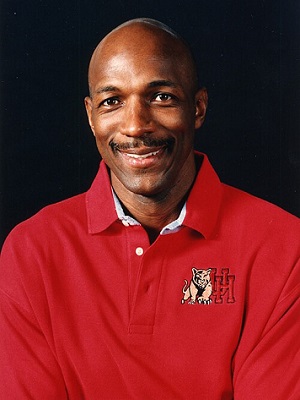
June 22 …
William Madison McDonald — widely known as “Goose Neck Bill” — was born on June 22, 1866 in Kaufman County, TX to parents who had been enslaved prior to the end of the American Civil War.
Raised during Reconstruction, he pursued education through local common schools before attending Roger Williams University (Tennessee) in Nashville, an institution founded by the American Baptist Home Mission Society. He later continued his studies at Bishop College and Prairie View Normal School, receiving training that prepared him for a career in education and leadership.
McDonald began his professional career as a teacher in Texas’s segregated school system, first working in rural schools in Kaufman County. He later became principal of a school in Forney and subsequently served as principal in Terrell, where he was recognized for strengthening academic instruction and expanding access to education for African American students. During this period, he also married Nannie (or Nanny) McDonald, and the couple established a family while he was building his early career. Historical records indicate that they had children, though details about them are limited in surviving sources.
Alongside his work in education, McDonald became deeply involved in African American fraternal organizations, which were central to community advancement in the late 19th and early 20th centuries. He held leadership roles in Prince Hall Freemasonry and was also a prominent member of the Grand United Order of Odd Fellows, as well as the Knights of Pythias (African American). Through these organizations, he helped promote mutual aid, insurance programs, and economic cooperation, building networks that would later support his business ventures.
In 1906, McDonald co-founded the Fraternal Bank and Trust Company in Fort Worth, one of the most important African American financial institutions in Texas. Drawing on his fraternal connections, he expanded into banking, real estate, and insurance, accumulating substantial wealth and becoming one of the most prominent Black businessmen in the state. He also emerged as a powerful political figure within the Republican Party during the Jim Crow era, using his influence to secure patronage positions and advocate for African American participation in public life.
William Madison McDonald died on July 5, 1950, leaving a legacy as an educator, fraternal leader, businessman, and political strategist. His life reflects the ways African American leaders combined education, family life, mutual aid networks, and economic enterprise to build resilience and influence in a segregated society.
Footnotes:
- Texas State Historical Association, “William Madison McDonald,” Handbook of Texas Online.
- BlackPast.org, “William Madison McDonald (1866–1950).”
- Juliet E.K. Walker, The History of Black Business in America, University of North Carolina Press.
- Loren Schweninger, Black Property Owners in the South, 1790–1915, University of Illinois Press.
- Records on African American fraternal organizations, including Prince Hall Masons, Grand United Order of Odd Fellows, and Knights of Pythias.
June 23 …
Wilma Rudolph was a trailblazing Black athlete and Olympic champion whose recovery from childhood illness and international success reshaped American sports, inspired generations of women and people of color, and left a lasting mark on culture and civic life.
Born June 23, 1940 in Saint Bethlehem near Clarksville, TN, Rudolph was the twentieth of 22 children. As a child, she faced significant health challenges, including polio, scarlet fever, and pneumonia, which led her to wear a leg brace and seek regular therapy. Her mother, Blanche Rudolph, played a vital role in her recovery, firmly believing that Wilma would walk again.
Rudolph attended Burt High School in Clarksville and later enrolled at Tennessee State University (TSU). There, she studied education and trained under the legendary coach Ed Temple as part of the TSU “Tigerbelles” program.
Rudolph’s athletic achievements were remarkable. At just 16, she won a bronze medal in the 4×100 m relay at the 1956 Melbourne Olympics. In Rome in 1960, she made history as the first American woman to win three gold medals in a single Olympiad (100 m, 200 m, and 4×100 m relay), setting both Olympic and world records and earning the title of “the fastest woman in the world.”
Rudolph shared the stage with contemporaries like Cassius Clay (Muhammad Ali), Rafer Johnson, and fellow track stars from the Tigerbelles, with her coach Ed Temple being instrumental in the development of numerous top Black women athletes. Her prominence made her a symbol of civil rights and women’s athletic opportunities. She advocated for an integrated homecoming parade in Clarksville and leveraged her influence to promote youth athletics after retiring in 1962.
Following her competitive career, Rudolph completed her degree at TSU, took on roles as a teacher, coach, and youth-program director. She also established the Wilma Rudolph Foundation to support amateur athletics.
Rudlolph’s numerous accolades include multiple Associated Press Female Athlete of the Year awards (1960–61), AAU Sullivan Award (1961), and induction into both the National Track & Field Hall of Fame and the U.S. Olympic Hall of Fame (1983). Later recognitions included a U.S. postage stamp and facilities named in her honor at TSU.
The journey of Wilma Rudolph — overcoming disabilities, breaking racial and gender barriers, and mentoring young athletes — solidified her legacy in American sports history and the broader fight for equity in education, society, and culture.

June 23 …
The National Center for Civil and Human Rights in Atlanta is a major cultural institution that connects the history of the Civil Rights Movement with contemporary global human rights struggles.
The Center opened its doors to the public on June 23, 2014 after over a decade of meticulous planning, with its roots tracing back to discussions that began in 2001 and formal development efforts between 2005 and 2007. Key visionaries — like Evelyn Lowery, Andrew Young, Juanita Abernathy, and John Lewis — initially conceived the idea, aiming to create a space that would celebrate Atlanta’s pivotal role in the Civil Rights Movement.
Former Atlanta mayor Shirley Franklin played a crucial role in actualizing the concept, while corporate and philanthropic partners — including The Coca-Cola Company, which donated the land — and notable donors like Arthur Blank, provided vital financial support. Construction kicked off in 2012 after facing delays due to the Great Recession, and the project was ultimately realized as a dedicated museum in the Pemberton Place district of downtown Atlanta.
From the beginning, the Center has aimed to inspire visitors to engage with critical issues of justice, equality, and human dignity by connecting historical narratives to contemporary activism. Its exhibitions prominently feature original documents from Martin Luther King Jr., immersive experiences like sit-in simulations, and global human rights case studies, highlighting the ongoing relevance of past struggles to today’s social justice movements.
The Center also serves as an educational and advocacy hub, offering training programs for students, nonprofit leaders, and law enforcement, as well as initiatives focused on diversity, equity, and inclusion. In 2022, it was officially incorporated into the African American Civil Rights Network, underscoring its national historical importance and aligning it with broader preservation and education efforts.
The Center attracts a diverse range of visitors, including students, educators, tourists, scholars, and community advocates, reflecting its dual role as both a museum and a civic space. It is consistently recognized as one of Atlanta’s key cultural attractions, drawing significant numbers of local and international visitors interested in civil rights history.
The Center’s influence extends beyond in-person visits through digital education programs, public events, and leadership initiatives that engage thousands more participants. It also has garnered acclaim for its contributions to public history and social engagement, receiving recognition within the African American Civil Rights Network and praise for its immersive storytelling techniques.
Continued investment — including a major expansion totaling over $50 million completed in 2025 — highlights the evolving mission of the National Center for Civil and Human Rights as a leading institution shaping national dialogues on civil rights, democracy, and social justice in the United States.
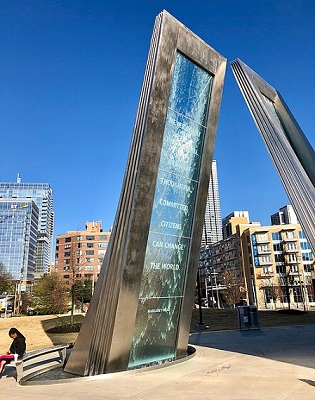
June 24 …
Danielle Spencer was an actress best known for playing Dee Thomas on the ABC sitcom What’s Happening!! and its syndicated sequel What’s Happening Now!!, later building a second career as a veterinarian.
Born on June 24, 1965 in Trenton, NJ and raised in the Bronx, Spencer’s journey in acting began in her childhood when, at the age of 11, she was cast on What’s Happening!! as the witty younger sister Dee. She performed on stage in New York with a repertory company co-founded by her stepfather, Tim Pelt, who served as an early mentor in her artistic career.
In September 1977, Spencer endured a life-altering car accident that claimed Pelt’s life and left her in a coma for weeks. This traumatic event not only shaped her life, but also led to long-term health issues, including spinal complications that necessitated multiple surgeries decades later.
After stepping away from regular acting roles, Spencer pursued a focused education, attending the University of California with coursework at UCLA and UC Davis. She earned a bachelor’s degree in the sciences and completed her Doctor of Veterinary Medicine at Tuskegee University in 1993, later becoming a licensed veterinarian in the mid-1990s.
Spencer practiced veterinary medicine in California and Virginia and occasionally shared her expertise in media segments focused on pet care. She also penned a memoir titled Through the Fire: Journal of a Child Star, which details her experiences as a young Black performer and her journey of recovery from trauma.
On television, Spencer’s portrayal of Dee Thomas — known for her deadpan delivery and memorable catchphrases like “Ooooh, I’m gonna tell Mama!” — made her a recognizable figure in a 1970s sitcom that focused on Black teenagers and expanded on-screen representations of Black family and youth life.
Spencer collaborated with contemporaries such as Ernest Thomas, Haywood Nelson, and Fred Rerun Berry, maintaining connections with her co-stars through reunions and public tributes. Her later identity as “Dr. Dee” and her advocacy for animal welfare established her as a role model for child actors transitioning to new careers and for Black women pursuing STEM and veterinary paths.
Spencer’s awards and recognition, though modest, were meaningful. The cast of What’s Happening!! received accolades at the TV Land Awards in 2006, where she won a lighthearted character award. She was honored in obituaries and tributes highlighting her contributions to both entertainment and veterinary services, earning praise from peers like Haywood Nelson for her resilience and dedication.
Ultimately, the most enduring legacy of Danielle Spencer is the cultural impact of Dee Thomas — an early, strong-voiced Black girl on mainstream television — who played a pivotal role in evolving portrayals of Black youth and paved the way for future performers.
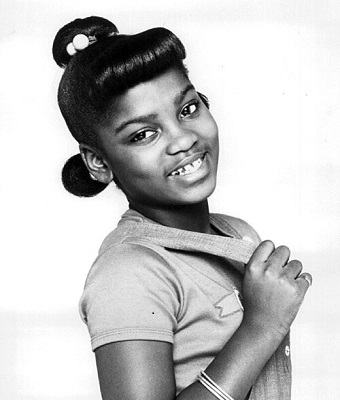
June 25 …
John Morton-Finney was a towering figure in American civil rights history whose extraordinary longevity, intellectual discipline, and devotion to justice made him a symbol of perseverance and principle in the struggle for equality under the law.
Living to the remarkable age of 107, he witnessed over a century of transformation in America. Through his roles as an attorney, educator, military officer, and community leader, he played a crucial part in expanding opportunities for African Americans in law, education, and public life.
Born on June 25, 1889 in Uniontown, KY, Morton-Finney grew up in a nation still grappling with the legacies of Reconstruction and the emergence of Jim Crow laws. Undeterred by racial barriers, he pursued education, earning a bachelor’s degree from Lincoln University — one of the nation’s historically Black colleges known for nurturing generations of Black leadership.
Morton-Finney went on to earn a law degree from the Indiana University Robert H. McKinney School of Law and, decades later, another law degree from Butler University, reportedly making him one of the oldest individuals to graduate with a law degree, completing it in his seventies. His academic journey showcased not only intellectual dedication, but also an unwavering belief in lifelong learning. During World War I, he served as an officer in the U.S. Army, an exceptional achievement for a Black man of his time, underscoring his commitment to service and civic duty.
As a civil rights attorney in Indianapolis, Morton-Finney earned a reputation for challenging segregation and discriminatory practices in education and public facilities. He represented Black teachers in equal pay lawsuits and fought to dismantle the inequities within Indiana’s segregated school system.
A dedicated member of the NAACP, he wielded the courts as a tool for reform during a time when legal advocacy was integral to the broader Civil Rights Movement championed by figures like Thurgood Marshall. Although his work was primarily at the state and local level, his efforts aligned with national campaigns that resulted in landmark decisions redefining American law. Morton-Finney was part of a network of Black attorneys and activists across the Midwest advocating for equal pay, school desegregation, and voting rights, all committed to achieving constitutional equality.
Beyond his legal career, Morton-Finney was a significant educator, teaching in Indianapolis public schools for decades and mentoring young people who would later pursue their own professional paths. He believed education served as a shield against discrimination and a ladder to opportunity, guided by the examples set by earlier Black intellectuals and abolitionists whose writings inspired him.
Through his teaching and legal mentorship, Morton-Finney fostered a legacy of discipline, scholarship, and civic involvement in his protégés. His dignified presence and insistence on excellence earned him respect as a valued elder in both the legal and educational realms.
Morton-Finney’s long life culminated in widespread recognition, with numerous civic honors from bar associations, educational institutions, and community organizations celebrating his groundbreaking work in civil rights and his military service. In his later years, he was lauded as one of America’s oldest practicing attorneys and as a living link between the post–Civil War generation and the contemporary Civil Rights Movement.
The legacy of John Morton-Finney lives on, not only in the cases he championed but also in the broader American narrative of resilience against injustice, showcasing how one individual, equipped with education and conviction, could shape law, culture, and society through more than a century of change.
June 25 …
Tamir Rice was a 12-year-old boy whose death became a powerful symbol in national conversations about policing, race, and the treatment of children in the United States.
Born on June 25, 2002 in Cleveland, OH, Rice was raised by his mother, Samaria Rice, in a close family environment. He was characterized as playful, energetic, and imaginative, displaying interests typical of a young boy his age. He had a love for games, outdoor activities, and spending time with friends, and his upbringing encapsulated everyday childhood experiences enriched by family ties and a supportive neighborhood community.
Rice was a student within the Cleveland school system, attending local schools as he was still in the nascent stages of his education. His childhood milestones revolved around growth and development — acquiring knowledge in school, forging friendships, and discovering his passions. Those who knew him recognized the potential in his curiosity and vibrant personality, hinting at a promising future yet to unfold.
On November 22, 2014, Rice was fatally shot by a police officer at a Cleveland park while holding a toy pellet gun. Officers responded to a 911 call that reported someone with a gun, with the caller indicating it might not be real. Within moments of their arrival, the officer shot Rice. The incident sparked national outrage and protests.
Although a grand jury opted not to indict the involved officers, the city later reached a civil settlement with Rice’s family. No criminal charges were filed against the officers.
Though Rice’s life was tragically short, it came to symbolize broader themes of childhood, innocence, and vulnerability. In the years following his death, he became an emblem of how systemic issues can impact even the youngest members of society.
Rice’s name frequently surfaces in discussions surrounding implicit bias, policing practices, and societal perceptions of Black children. the goal is to foster a deeper understanding of how race can influence experiences from an early age.
The death of Tamir Rice profoundly affected his family and community, becoming part of a larger movement for justice that fueled ongoing activism and reform efforts linked to Black Lives Matter. His death has left an indelible mark on American social justice, culture, and history.
About the Photo:
- Family photo of Tamir Rice.

June 26 …
George Walker (Vaudevillian) was an actor and producer, and one half of the groundbreaking comedy team Williams & Walker, whose stage work and business initiatives helped transform Black presence on American stages around the turn of the 20th century.
Born on June 26, 1873 in Lawrence, KS, Walker began his career as a performer at a young age by participating in minstrel and medicine shows before settling in San Francisco in the early 1890s. In 1893, he met Afro-Bahamian entertainer Bert Williams, with whom he teamed to form a vaudeville act. They eventually established a production company, appropriately named the Williams and Walker Company.
In 1899, Walker married the talented dancer and choreographer Aida Overton, who became a vital collaborator and significantly influenced the company’s choreography and staging. His early experiences with traveling minstrel troupes and practical training in the vaudeville scene shaped his stage persona as the flamboyant “dandy” and honed his managerial skills.
Walker achieved his most notable successes alongside Bert Williams, with whom he popularized the cakewalk, crafted hit vaudeville sketches and musical comedies such as “Clorindy,” “The Policy Players,” “Sons of Ham,” “In Dahomey,” “Abyssinia,” and “Bandanna Land.” They produced the first full-length Black-produced musical to be staged at a major Broadway venue — In Dahomey in 1902–1903 — which also enjoyed a successful run in London, culminating in a royal command performance before King Edward VII.
Walker took on much of the business and production responsibilities for the Williams and Walker Company, spearheaded initiatives to organize Black performers and aided in creating the infrastructure necessary for the advancement of Black artists’ careers. This included early efforts towards establishing an actors’ society and founding The Frogs, a professional fraternity for Black entertainers.
Walker’s influences and collaborators included composer Will Marion Cook, poet-lyricist Paul Laurence Dunbar, and songwriter Alex Rogers, with Bert Williams standing out as his closest contemporary and creative partner. Mentors and allies in the burgeoning Black musical scene included figures like Bob Cole and J.R. Freeman, along with a wider community of Black vaudevillians and composers of that era.
Among Walker’s contemporaries in vaudeville and musical theatre were Ernest Hogan and various performers from the Keith, Koster & Bial and Broadway circuits. His wife, Aida Overton Walker, was not only a collaborator, but also an artistic peer. His company and The Frogs provided vital networking, mentoring, and professional opportunities that fostered younger Black performers and encouraged elevated production standards.
Walker’s career garnered significant recognition during his lifetime. He and Williams emerged as some of the first major Black recording artists. The success of “In Dahomey” and its subsequent London engagement attracted critical acclaim — notably from some British reviewers and personalities — helped to bring mainstream visibility to Black musical theatre. Also, Walker and his troupe were recorded as freemasons during a 1904 initiation in Scotland.
Walker’s life and career were tragically cut short due to illness after contracting syphilis. He withdrew from performing in 1909 and died in 1911.
The legacy of George Walker (Vaudevillian) continues through the elevated professional standards for Black performers, greater exposure for mixed-race audiences to Black talent, and the foundational groundwork he established for future generations of Black entertainers and producers.
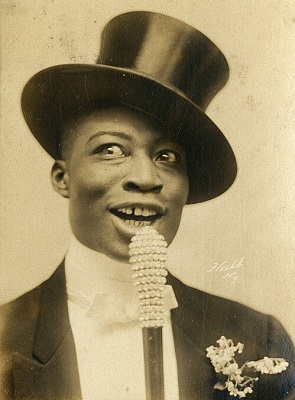
June 26 …
Derek Jeter is widely regarded as one of the greatest baseball players of his generation, known not only for his stellar achievements on the field, but also for his contributions to sports, culture, and social justice.
As the long-time captain of the New York Yankees, Jeter’s career spanned two decades. He became a symbol of leadership, consistency, and excellence in Major League Baseball.
Born on June 26, 1974 in Pequannock, NJ, Jeter grew up in Michigan, where his father served as a substance abuse counselor and his mother worked as an accountant. From a young age, he demonstrated a remarkable talent for baseball, excelling in the sport throughout his childhood.
Jeter attended Central High School in Kalamazoo, where he earned national recognition as one of the top baseball players in the country. His skills attracted the attention of scouts, and he was selected by the New York Yankees as the sixth overall pick in the 1992 MLB Draft. His upbringing, steeped in discipline, a strong work ethic, and academic focus, laid the foundation for his athletic career and personal life.
Jeter’s professional journey soared when he made his Major League debut with the Yankees in 1995, quickly establishing himself as a vital player on the team. Over the next two decades, he became a hallmark of Yankees baseball, winning five World Series titles, five Gold Glove awards, and receiving 14 All-Star selections.
Jeter’s leadership both on and off the field led to his appointment as team captain in 2003, while his exceptional postseason performances solidified his legacy as one of MLB’s most clutch players. His contributions to the Yankees’ successes, exemplary professionalism, and ability to thrive under pressure endeared him to fans throughout the baseball community.
As a prominent figure in baseball during a time of both achievements and challenges, Jeter developed camaraderie and competition with contemporaries such as Alex Rodriguez, David Ortiz, and Ken Griffey Jr., battling in numerous high-stakes games. His sustained excellence and integrity made him a role model for young athletes worldwide.
Beyond his sports achievements, Jeter has made a significant impact on society and social justice. After retiring, he focused on various business opportunities, including his role as a co-owner of the Miami Marlins, and used his platform to advocate for increased diversity in baseball.
Jeter founded the Turn 2 Foundation to promote healthy lifestyles and support youth programs emphasizing education and community service. As an outspoken advocate for racial equality and opportunity, he leveraged his influence to address systemic barriers in sports and society.
In 2020, Jeter was inducted into the Baseball Hall of Fame. This further solidified his status as an influential figure in sports media and business.
Jeter’s impact reaches beyond his own career, as he has mentored emerging baseball talents like Gleyber Torres and Gary Sanchez, who have acknowledged his influence on their journeys. His unwavering commitment to excellence, leadership, and integrity has set a benchmark for athletes in baseball and other sports.
The life and career of Derek Jeter embody perseverance, dedication, grace under pressure, and a steadfast commitment to using his platform for positive change in American sports and society.
June 27 …
Paul Laurence Dunbar emerged to become one of the most influential voices in American literature at the turn of the 20th century.
Born on June 27, 1872 in Dayton, OH, to parents who had been enslaved in Kentucky prior to emancipation, Dunbar grew up immersed in the rich narratives and traditions of Black American life, which would become central to his writing. As a student, he stood out as the sole African American in his high school class, excelling as class poet, editor of the school newspaper, and president of the literary society — early indicators of the remarkable literary talent that would soon capture national attention.
Dunbar’s formative influences ranged from the Romantic poets he deeply admired — such as Keats, Wordsworth, Whittier, and Longfellow — to the vibrant oral traditions of African American speech and song that he internalized at home and in his community. Initially aspired to pursue law, he was redirected by racial discrimination and financial limitations, eventually finding work as an elevator operator.
Despite the challenges, Dunbar continued to write and sell his early poetry collection, Oak and Ivy, to passengers in order to finance its publication. Encouragement from local figures like poet James Newton Matthews, along with a supportive letter from James Whitcomb Riley, helped introduce his work to a wider audience, paving the way for greater recognition.
Dunbar’s second collection in 1895, Majors and Minors, propelled Dunbar to national prominence, in part due to the enthusiastic, albeit complex, endorsement from influential critic William Dean Howells. The review brought his poetry to readers both in the United States and abroad.
Demonstrating remarkable versatility, Dunbar wrote both in standard English and in African American dialect, captivating audiences while igniting debates about representation and stereotypes. His dialect poems, infused with the rhythms and voices of everyday Black life, showcased dignity and depth, while his standard verse delved into universal themes of human emotion and resilience.
Dunbar’s work resonated on an international scale; a six-month reading tour in England enhanced his reputation, and influential poems like “We Wear the Mask” and “Sympathy” — the latter containing the profound line “I know why the caged bird sings” — secured his lasting place in the literary consciousness of future generations. Collaborations with musicians and playwrights, including operettas and song lyrics, reflected his far-reaching impact on American cultural life and foreshadowed developments in musical theater. Composers such as William Grant Still and Florence Price brought his poetry to life through music, ensuring that his words transcended the printed page.
Although Dunbar’s life was tragically cut short due to tuberculosis in 1906 at the age of 33, his prolific output included hundreds of poems, numerous short stories, novels, essays, and song lyrics. His fiction, particularly The Sport of the Gods, gave early voice to the challenges faced by African American families migrating northward amidst social and economic upheaval.
Dunbar’s literary accomplishments helped pave the way for the Harlem Renaissance, inspiring later writers like Langston Hughes, Zora Neale Hurston, Maya Angelou, Nikki Giovanni, and James Weldon Johnson, who drew from his example to assert a Black literary identity in the national discourse.
Prominent figures such as Frederick Douglass, who referred to Dunbar as “one of the sweetest songsters his race has produced,” and the novelist and critic Howells, who praised his poetic mastery, were among those who championed his work. Support from patrons like attorney Charles A. Thatcher and psychiatrist Henry A. Tobey in his early career provided the financial and logistical support that helped bring Dunbar’s work into print and into the public eye, illustrating a network of mentors and supporters dedicated to his success.
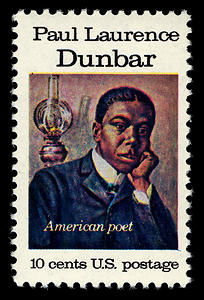
United States postage stamp of 1975 depicting Dunbar
In the years following his death, Dunbar has received enduring honors and recognition. Schools, libraries, and cultural institutions across the country bear his name, and his Dayton home has been preserved as a historical site celebrating his life and legacy. His influence is evident in the titles and themes of later works, most famously in I Know Why the Caged Bird Sings by Maya Angelou, which draws directly from his poetry. Literary scholars continue to study and celebrate Dunbar’s accomplishments, establishing his work as a foundational chapter in American literature.
Dunbar redefined American letters by articulating the intricacies of Black experience with artistry, compassion, and technical skill. He was the first African American writer to achieve widespread national acclaim and to sustain himself through his writing, breaking barriers for those who came after him.
The legacy of Paul Laurence Dunbar endures not only in the writings he left behind, but also in the generations of artists and readers inspired by his vision — a voice that bridged cultures and expanded the possibilities of American literature.
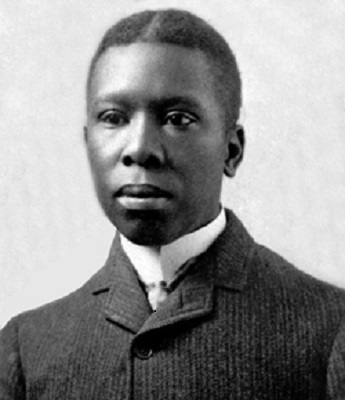
June 27 …
The International African American Museum (IAAM) in Charleston, SC stands as a monumental institution dedicated to preserving, celebrating, and educating the public about the profound contributions of African Americans to the history, culture, and fabric of the United States.
After 20 years of planning by a group of community leaders, scholars, and philanthropists, the museum opened its doors to the public on June 27, 2023.
Located on the historic grounds of the former Gadsden’s Wharf — one of the largest slave trade ports in the nation — the museum serves as a poignant reminder of Charleston’s pivotal role in the transatlantic slave trade and the enduring resilience of African Americans. Its mission is to illuminate the narratives of African American life, history, and culture, while fostering reflection, understanding, and reconciliation.
The museum’s establishment was a collaborative effort by local and national leaders who recognized the necessity of a space dedicated to exploring African American narratives through art, history, and cultural artifacts. It arose from the recognition that Charleston, as a critical entry point for enslaved Africans, needed an institution to confront the complex legacies of the African American experience.
Inspired by the broader movement to preserve African American history and culture across the United States, the IAAM draws influence from significant cultural institutions like the National Museum of African American History and Culture in Washington, DC, and the Smithsonian’s National Museum of African Art. Its exhibits showcase the rich and diverse history of African Americans, addressing the horrors of the transatlantic slave trade alongside the cultural, political, and social contributions made throughout American history.
The museum celebrates the resilience and creativity of African Americans through art, historical artifacts, and multimedia exhibits that capture both adversity and triumph. Since its opening, the IAAM has garnered acclaim for shaping public discourse around race, history, and ongoing struggles for racial justice, receiving awards for its design and commitment to educational outreach.
The International African American Museum stands as both a tribute to the past and a progressive space that continues to make a significant impact on Charleston, the region, and the nation.
June 27 …
George Theophilus Walker was a composer, pianist, and educator whose wide-ranging output and pioneering achievements made him a central figure in 20th-century American classical music and a pathbreaker for Black composers in concert music.
Born on June 27, 1922 in Washington, DC, Walker displayed his musical talent from a young age, beginning his piano studies with his mother before advancing through private music schools and higher education. He attained a Bachelor of Music from the Oberlin Conservatory in 1946 and a Master of Music from the Curtis Institute of Music in 1950. He later completed his doctoral studies at the Eastman School of Music, where he earned a Ph.D. in 1962.
Walker’s rigorous classical training was enhanced by exposure to American musical styles and the modernist movements of mid-20th century composition. He studied composition with esteemed teachers like Rudolf Serkin (his piano coach), Rosario Scalero, and other influential figures at these institutions.
Walker’s oeuvre encompasses solo, chamber, vocal, choral, and orchestral works noted for their expressive lyricism, intricate counterpoint, and occasional modernist harmonies. Among his significant compositions are the Piano Sonata (1946), the Violin Concerto (1946–47), the Lyric for Strings (originally composed in 1946 and revised in the 1990s), and Symphony No. 1 (1982).
In 1996, Walker became the first African American to win the Pulitzer Prize for Music for his piece “Lilacs,” for voice and orchestra, which sets verses from Walt Whitman. This prestigious accolade culminated a distinguished career marked by commissions from prominent orchestras and performances by leading soloists and ensembles. He also gained a dedicated teaching career at several institutions, including Smith College, Rutgers University, and the University of Delaware, where he inspired younger composers and performers.
Walker’s influences stemmed from both European and American educators, including Scalero and Serkin, and his contemporaries included notable American composers such as Samuel Barber, Aaron Copland, and William Schuman, who were also shaping the mid-century American classical landscape. His music was championed by contemporary performers and conductors, including members of the Guarneri Quartet and orchestras that presented his works.
Throughout his career, Walker received numerous honors and accolades, including the Pulitzer Prize for Music in 1996, a nomination for the National Medal of Arts, honorary degrees from various universities, ASCAP awards, and commissions from multiple foundations and orchestras. His piece “Lyric for Strings” has become a staple of the American concert repertoire and is often regarded as a defining early achievement.
The legacy of George Theophilus Walker is reflected in the growing visibility and acceptance of Black composers in American concert life. This encompasses the expansion of the repertoire embracing lyrical modernism and his decades of teaching that shaped performers and composers who continued to diversify and enrich the American musical landscape.
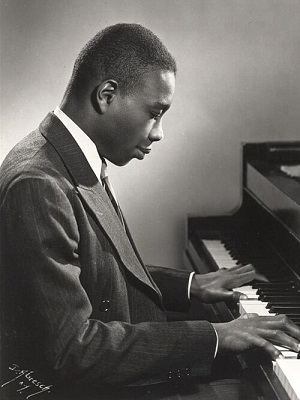
June 27 …
David Scott (Politician) was an influential politician whose decades of public service left a lasting impact on Georgia, Congress, and national debates surrounding agriculture, economic opportunity, civil rights, and social equity.
As one of the most influential African American lawmakers from the South in the early 21st century, Scott played a vital role in shaping federal policy while symbolizing the growing political significance of metropolitan Atlanta in American governance and culture.
Born on June 27, 1945 in Aynor, SC, Scott spent parts of his formative years in various states before firmly establishing his roots in Georgia. He graduated from Morehouse College in Atlanta, an esteemed institution renowned for cultivating generations of Black political and civic leaders, and later obtained a master’s degree from the Wharton School of the University of Pennsylvania.
Scott’s education in economics and business greatly informed his pragmatic and fiscally focused political philosophy. From an early age, he was inspired by figures linked to the Civil Rights Movement and the advancement of African American political representation in the South. Icons like Martin Luther King Jr., Andrew Young, and Shirley Chisholm instilled in him the belief that true political progress necessitated both activism and legislative compromise.
Scott embarked on his political journey in the Georgia House of Representatives before serving many years in the Georgia State Senate, ultimately securing a seat in the U.S. House of Representatives in 2002. Throughout his congressional tenure, he garnered national recognition for his contributions to agricultural policy, food assistance initiatives, financial reform, and economic development.
In 2021, Scott made history as the first African American chairman of the House Agriculture Committee, a milestone considered both symbolically and politically significant due to the committee’s influential role in shaping rural America. He championed farmers, nutrition assistance programs, and rural investments while advocating for voting rights protections, healthcare access, and infrastructure improvements.
Scott’s contemporaries included fellow Georgia lawmakers like John Lewis, Sanford Bishop, Hank Johnson, and Nikema Williams, along with national Democratic leaders such as Hakeem Jeffries and James Clyburn.
Throughout his public life, Scott was known as a pragmatic Democrat who frequently sought bipartisan collaboration while steadfastly upholding civil rights and economic equity. He admired public figures like John F. Kennedy and Martin Luther King Jr. for their leadership amidst national divisions and societal change.
Scott also served as a mentor to younger Georgia Democrats and local officials, who viewed his extensive career as a testament to persistence and institutional knowledge. His legislative approach reflected a blend of Southern political traditions and the broader legacies of the Civil Rights Movement.
Beyond his political achievements, Scott’s career embodied the growing political influence of African Americans in Georgia, a state that underwent a remarkable transformation during his lifetime. It evolved from a hub of segregation-era politics to a key player in modern American democracy.
Scott received numerous accolades throughout his career from agricultural organizations, civic groups, educational institutions, and civil rights advocates. He was often recognized for his unwavering support of farmers, minority-owned businesses, and underserved communities, earning respect from colleagues for his longevity and leadership within Congress.
Following Scott’s passing in April 2026, tributes from political leaders across Georgia and the nation celebrated his nearly five decades of elected service and his vital role in enhancing African American representation in federal policymaking.
The legacy of David Scott (Politician) remains intertwined with his efforts to connect economic policy with social justice and his historic position as a Black Southern lawmaker who significantly influenced modern American political history.

June 28 …
Alex Habersham is an American publisher, entrepreneur, and community advocate whose work in media and business promotion has contributed to the economic visibility and civic empowerment of African American communities in Middle Georgia.
Born on June 28, 1942 in Macon, GA, Habersham cultivated a passion for entrepreneurship, communications, and community development from an early age, ultimately leading him into the realms of publishing and advertising. He earned a bachelor’s degree from Savannah State University, then built a career as a high school teacher for several years in Savannah and Macon.
As a young entrepreneur, Habersham drew inspiration from the rich legacy of the Black press and the economic self-help philosophies promoted by leaders like Booker T. Washington and Marcus Garvey. He dedicated himself to creating platforms that amplify Black-owned businesses and bolster local economic networks.
One of his early ventures was to found what is now considered one of the oldest privately-held record shops in the United States. That establishment — Habersham Records — is now owned and operated by his younger sister.
Today, Habersham is best known as the founder and publisher of the Macon-Middle Georgia Black Pages, a regional directory and resource guide launched in 1991 to spotlight African American businesses, services, and institutions across Middle Georgia. This publication is a pivotal economic development resource, linking consumers with Black-owned enterprises and fostering community investment in local businesses.
Under his direction, the Macon-Middle Georgia Black Pages has acted as a bridge between minority entrepreneurs, corporate advertisers, and the general public. This enterprise also offers marketing services, networking opportunities, and promotional avenues for small businesses.
Beyond publishing, Habersham has championed initiatives to enhance Black economic development, including leading the Central Georgia Coalition of Black Business. The organization aims to improve opportunities and visibility for minority-owned businesses. He also is involved and serves with several local and regional civic organizations, including the International Cherry Blossom Festival.
Through years of civic engagement, Habersham has emerged as a respected voice in regional dialogues surrounding economic equity, media representation, and community development. His work has highlighted the necessity for media outlets that reflect the perspectives and achievements of African American communities, while his business initiatives have helped numerous entrepreneurs increase their visibility in the marketplace.
Habersham’s contributions have received local recognition, including the Citizen of the Year award from the Lambda Phi Chapter of Omega Psi Phi Fraternity in 2024, honoring his leadership and enduring impact on community growth and economic opportunities in Middle Georgia.
The life’s work of Alex Habersham is a testament to decades of experience in mentorship, marketing, communications, and grassroots business advocacy. He stands alongside a generation of African American entrepreneurs and publishers striving to enhance minority representation in both media and commerce.
June 28 …
The Organization of Afro-American Unity (OAAU) was an influential Black nationalist and Pan-African organization that sought to internationalize the struggle for African American human rights and connect people of African descent across the Western Hemisphere with the newly independent nations of Africa.
Founded and announced by Malcolm X on June 28, 1964 at Harlem’s Audubon Ballroom, the organization drew inspiration from the Organization of African Unity and was influenced by Malcolm’s travels in Africa and his Hajj experience that same year. Collaborating with historians like John Henrik Clarke and writer John Oliver Killens, Malcolm drafted the organization’s Basic Aims and Objectives.
The organization aimed to restore connections with Africa, educate about African history and culture, promote economic development and self-reliance, advocate for political organization and community empowerment, and uphold the right to self-defense. Malcolm envisioned a structured, membership-driven organization that would mobilize grassroots initiatives and present the struggles of African Americans to international bodies like the United Nations.
Key figures and early leaders included Malcolm as the founder and chairman, aides Abdullah Abdur-Razzaq (James 67X) and Ella Little-Collins (who took leadership following Malcolm’s assassination on February 21, 1965), intellectual allies such as John Henrik Clarke and John Oliver Killens, alongside a network of activists operating in Harlem and within African and Caribbean diasporic communities. They included Albert Cleage Jr., Gloria Richardson, and Jesse Gray, among others.
The organization was influenced by Pan-Africanist sentiments, anti-colonial movements emerging in Africa during the late 1950s and early 1960s, and nonsectarian Black nationalist organizing strategies. Its outreach targeted non-Muslim African Americans (with an explicit focus on the 22 million non-Muslim Black individuals in the U.S.), students, community leaders, diasporic organizations, sympathetic African governments, international anti-colonial entities, and civil-rights and Black power activists exploring new frameworks for addressing the struggle for rights.
Historically, the organization’s most significant contribution was its conceptual and rhetorical reframing of the African American struggle as part of a broader global human rights and Pan-African initiative. It placed emphasis on cultural reclamation and education while promoting political and economic self-organization.
Although its existence was short-lived and the assassination of Malcolm X limited its capacity to establish a lasting national infrastructure, the OAAU’s charter, speeches, and programs have influenced subsequent Black nationalist, Pan-African, and Afrocentric movements. It played a key role in legitimizing transnational approaches to racial justice and created an intellectual bridge between mid-century civil rights activism and later Black Power and diasporic solidarity efforts.
The Organization of Afro-American Unity has been recognized in historical research, commemorations of Malcolm X, archival collections, and events celebrating anniversaries that highlight the OAAU’s contribution to expanding the dialogue on African American rights and fostering Pan-African unity.
June 29 …
Stokely Carmichael — also known as Kwame Ture — was a powerful force in the American Civil Rights Movement and Black Power Movement of the 1960s.
Born on June 29, 1941 in Port of Spain, Trinidad & Tobago, Carmichael immigrated to the United States at age 11, settling in the Bronx, NY. As a student at Howard University, Carmichael became deeply involved in the struggle for racial justice, joining the Student Nonviolent Coordinating Committee (SNCC) and participating in sit-ins, Freedom Rides, and voter registration drives in the Deep South. His activism placed him on the front lines of the movement, where he quickly gained a reputation for his courage, charisma, and sharp intellect.
Carmichael played a crucial role in the 1965 Selma to Montgomery marches and was arrested multiple times for his civil rights work. He rose through the ranks of SNCC and became its chairman in 1966.
That same year, during a march in Mississippi, he popularized the phrase “Black Power,” which would become a rallying cry for a new generation of activists. The slogan emphasized racial pride, self-determination, and the need for Black people to build political and economic strength on their own terms. While controversial at the time, it marked a pivotal shift from the nonviolent integrationist approach to one rooted in empowerment and autonomy.
As Carmichael’s political philosophy evolved, he began to distance himself from the nonviolent tactics championed by leaders like Martin Luther King Jr. He believed that true liberation could not be achieved through appeals to the moral conscience of white America, but rather through organized, independent Black political and social power.
Under Carmichael’s leadership, SNCC moved away from interracial cooperation and embraced a more radical, Pan-Africanist ideology. This transformation signaled a broader shift within the Civil Rights Movement, reflecting the growing frustration among young activists with the slow pace of change and persistent violence.
In the late 1960s, Carmichael left SNCC and aligned himself with the Black Panther Party, briefly serving as their Prime Minister before disagreements led him to part ways. He soon moved to Guinea, West Africa, where he adopted the name Kwame Ture in honor of African leaders Kwame Nkrumah and Sékou Touré.
From abroad, he continued to advocate for global Black liberation and Pan-African unity, speaking out against colonialism, capitalism, and imperialism. His international activism connected the struggles of African Americans with those of oppressed people around the world.
Carmichael’s legacy is one of fearless leadership, visionary thinking, and uncompromising commitment to Black freedom. Though often misunderstood or mischaracterized in his time, his ideas have endured, influencing later movements and conversations around race, power, and justice. He challenged the boundaries of traditional civil rights activism and encouraged Black people to see themselves not just as victims of oppression, but as powerful agents of change.
Through his speeches, writings, and global work, Stokely Carmichael helped reshape the narrative of resistance and inspired generations to demand liberation on their own terms.

June 30 …
Margot Lee Shetterly is an acclaimed American author, entrepreneur, and researcher whose work has significantly reshaped public understanding of African American contributions to science, technology, and history.
Born on June 30, 1969 in Hampton, VA, Shetterly grew up in a community rich with Black intellectual and professional excellence — her father was a NASA research scientist and her mother was an English professor. This environment sparked her early awareness of the profound yet often overlooked roles African Americans played in shaping the nation’s scientific progress, an awareness that would later inspire her most influential work.
Before her emergence as a celebrated author, Shetterly built a successful career in business and media. She worked in investment banking at J.P. Morgan and later held strategic and marketing roles in the publishing and digital industries. These experiences equipped her with a sharp analytical mindset and a deep understanding of how narratives are constructed and disseminated. Her background in business gave her a unique perspective on the power of data, stories, and representation — an intersection she would explore with remarkable clarity in her writing.
Shetterly’s most transformative contribution came with the publication of her 2016 book, Hidden Figures: The American Dream and the Untold Story of the Black Women Mathematicians Who Helped Win the Space Race. The book uncovered the remarkable stories of African American women who worked as “human computers” at NASA, performing critical calculations that enabled the United States’ early space missions. These women — Katherine Johnson, Dorothy Vaughan, Mary Jackson, Christine Darden, and many others — had long been left out of mainstream historical accounts, and Shetterly’s meticulous research and compelling storytelling brought them the recognition they deserved.
Hidden Figures became a cultural phenomenon, spending more than a year on the New York Times bestseller list and inspiring a major Hollywood film adaptation — starring Taraji P. Henson, Octavia Spencer, and Janelle Monáe — that further elevated the stories of these pioneering women. Beyond its commercial success, the book had a profound educational impact, prompting schools, museums, and institutions to reevaluate how they teach science and history. Shetterly’s work helped expand the national narrative to include voices that had been marginalized, making space for broader and more inclusive understandings of American achievement.
Through her writing and advocacy, Margot Lee Shetterly has made lasting contributions to both American business and historical scholarship. By illuminating the hidden histories of Black women in STEM, she has sparked critical conversations about race, gender, and recognition in professional spaces. Her work serves not only as a corrective to historical omission but also as an inspiration to future generations of writers, researchers, and innovators committed to telling the full story of America.
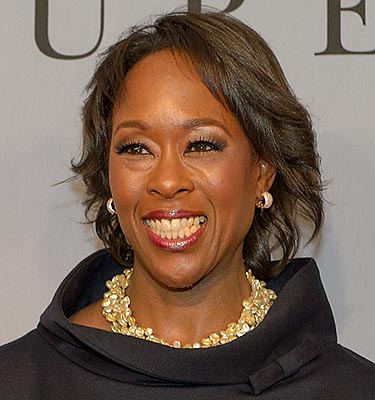
June 30 …
Lena Horne was a legendary American singer, actress, and civil rights activist whose extraordinary talent and unwavering commitment to justice made her a defining figure in 20th-century American culture.
Born Lena Mary Calhoun Horne on June 30, 1917 in Brooklyn, NY, Horne began performing at an early age, joining the chorus line at the Cotton Club in Harlem when she was just 16. Her beauty, elegance, and charisma quickly set her apart in the segregated entertainment world, and she soon transitioned from nightclubs to national stages, becoming one of the first Black women to break through the racial barriers of Hollywood and mainstream show business.
Horne’s ascent in Hollywood during the 1940s was groundbreaking but fraught with limitations. Signed to a contract with MGM, she became the first African American woman to secure a long-term contract with a major studio. She appeared in a number of films, including Cabin in the Sky and Stormy Weather, and was often cast in musical numbers that could be easily cut for southern audiences.
Despite Horne’s undeniable talent, Hollywood’s racial policies prevented her from being offered leading roles in integrated casts or romantic storylines. Still, her presence on screen challenged stereotypes and opened doors for future generations of Black actresses.
Frustrated by the discrimination she faced in the film industry, Horne increasingly focused on her music career, where she found greater autonomy and expression. Her smoky voice and impeccable timing made her a star on the concert stage and in nightclubs, and she released a series of successful albums that cemented her status as a top-tier vocalist.
Horne’s renditions of songs like “Stormy Weather” and “Love Me or Leave Me” became classics, admired for their emotional depth and technical precision. Her artistry elevated American popular music and brought a sophisticated, uncompromising Black female presence to the forefront of the industry.

Horne posing with the Tuskegee Airmen in Tuskegee, AL during World War II.
During World War II, Horne refused to perform for segregated audiences and later joined civil rights marches and rallies alongside leaders like Medgar Evers and Martin Luther King Jr. Her refusal to stay silent about inequality earned her admiration as well as backlash, including government surveillance during the McCarthy era due to her associations with progressive causes.
Horne was also vocal about the narrow expectations placed on Black entertainers in an industry that often demanded compromise. She rejected stereotypical roles and insisted on being portrayed with dignity, even when it meant fewer opportunities. Her strength of character and refusal to be tokenized made her a role model for younger artists who would follow in her footsteps. At a time when few Black women had the power to shape their public image, Horne insisted on agency, making her a pioneering figure in the fight for representation in media.
Horne’s influence extended into the later decades of her life, with acclaimed concert performances, television specials, and a celebrated Broadway one-woman show, Lena Horne: The Lady and Her Music, which won a Tony Award in 1981. Even as the entertainment landscape changed, she remained a symbol of class, talent, and resistance. She continued to inspire audiences with her performances well into her later years, and her legacy was honored with numerous awards, including a Kennedy Center Honor and the NAACP Spingarn Medal.
Horne’s personal journey — marked by both triumph and pain — reflected the broader struggles of African Americans in the 20th century. She endured racism, industry marginalization, and political persecution, yet emerged as a beacon of resilience and pride. Her ability to navigate the complex intersections of race, gender, and celebrity with integrity and grace made her not just a star, but a transformative figure in American life.
Horne’s contributions to film, music, civil rights, and American history are immeasurable. She was a trailblazer who refused to be confined by the limitations of her era, using her gifts to entertain, enlighten, and elevate. In doing so, she redefined what it meant to be a Black woman in the spotlight and left an indelible mark on the cultural and social fabric of the United States.
The legacy of Lena Horne continues to resonate as a testament to the power of talent fused with purpose.
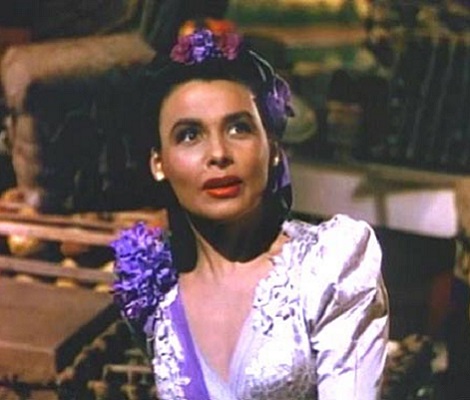
June 30 …
The Martin Luther King Jr. Center for Nonviolent Social Change — commonly known as The King Center — stands as a lasting testament to the principles of nonviolence, equality, and justice championed by Dr. Martin Luther King Jr. and continued by Coretta Scott King, serving as one of the most enduring institutions in American history dedicated to social justice and civil rights.
Founded on June 30, 1968 in Atlanta, GA — shortly after Dr. King’s assassination — the Center emerged during a pivotal time when the nation was confronting grief, social turmoil, and the pressing need to uphold the ideals that drove the Civil Rights Movement. Its mission centers on educating, inspiring, and empowering individuals and communities to foster peaceful change, serving as both a living tribute and a catalyst for transformation.
Established by Scott King, the Center was envisioned as an organization dedicated to continuing her husband’s legacy of nonviolent resistance while expanding its impact beyond the struggles of the 1960s. A formidable leader and advocate in her own right, she nurtured the Center into an institution that addressed global human rights issues as extensions of the initial Civil Rights Movement.
Scott King collaborated closely with civil rights veterans and emerging leaders to design programs, community outreach, and educational initiatives based on Dr. King’s teachings. Her leadership ensured that the Center remained forward-looking, adapting the principles of nonviolence to evolving social contexts.
The ideological foundation of the Center draws significantly from Mahatma Gandhi’s teachings and the theology of nonviolent direct action, combining spiritual conviction with practical strategies for social change. Fueled by the Civil Rights Movement’s momentum and the mid-20th-century global peace movement, it became a focal point for reflection and activism.
It offered resources on nonviolent philosophy, provided educators with human rights curricula, and facilitated dialogues that encouraged participants to explore systemic inequality from both historical and contemporary perspectives. Renowned civil rights figures like Ralph Abernathy, Andrew Young, and Jesse Jackson frequently collaborated with the Center, contributing their voices and experiences to its programs and public initiatives.
Through the years, the Center has made significant contributions across various domains: education, policy advocacy, community organizing, and cultural celebration. Its annual MLK Day observances have garnered national attention and participation, reinforcing the holiday’s significance as a day of service and reflection.
Through partnerships with schools and universities, the Center has integrated the history and philosophy of nonviolence into educational curricula, cultivating new generations of socially conscious leaders. Its global outreach has connected activists and educators worldwide, situating American civil rights history within a broader narrative of human rights struggles.
Although the Center did not initially pursue traditional awards, its contributions have been recognized nationally, including the establishment of MLK Day as a federal holiday and the posthumous awarding of the Presidential Medal of Freedom to both Martin Luther King Jr. and Coretta Scott King.
The institution has been celebrated in exhibitions, documentaries, and scholarly works as a cornerstone of civil rights remembrance and as an influential participant in ongoing discussions about race, justice, and equality. Its archives, public programs, and leadership training resources serve as essential references for historians, activists, and policymakers.
Today, The King Center remains a vibrant presence in American society, connecting past and present struggles for justice. Its influence is evident in community initiatives, national dialogues on equity, and the ongoing mobilization of citizens committed to peaceful change.
By upholding the principles of nonviolence and amplifying the voices of those fighting for freedom, the Martin Luther King Jr. Center for Nonviolent Social Change has ensured that the King legacy remains a living tradition — one that continues to shape cultural understandings of justice, inspire social movements, and pave the way for a more inclusive future in American society.
June 30 …
Alice B. Russell was an actress, producer, and creative partner to pioneering filmmaker Oscar Micheaux whose work helped shape independent Black cinema and broaden representations of Black life on screen.
Born on June 30, 1889 in Maxton, NC, Russell — daughter of Robert Russell, a notable newspaper editor and political figure — grew up in a household rich in literacy and civic engagement, providing her with an exceptional cultural and intellectual foundation for a Black woman of her time. Although her formal education is not thoroughly documented beyond family and community schooling, her 1926 marriage license identifies her as a “concert soloist,” indicating a background in performance that evolved into film after her marriage to Micheaux that same year.
Russell’s main achievements are rooted in her extensive creative and production work with the Micheaux company. She acted in several films from the late silent era up to the 1940s, including titles like The Broken Violin, Wages of Sin, God’s Stepchildren, Birthright, and The Betrayal.
Russell also held producing credits for films such as Darktown Revue, Murder in Harlem, and Birthright, while also taking on various roles in on-set and distribution efforts — often credited as A. Burton Russell or “presenter.”
Russell’s contributions behind the camera were instrumental in allowing Micheaux to maintain an independent production-distribution circuit that offered alternative and dignified portrayals of Black characters and addressed social issues often overlooked by mainstream Hollywood. The Betrayal (1948) — the final Micheaux feature — premiered on Broadway, marking the end of a significant era in race filmmaking, a period in which Russell played a key role.
Russell’s influences and collaborators emerged from the Black literary, journalistic, and theatrical landscape of the early 20th century. Her father’s editorial work likely shaped her narrative inclinations and social awareness, while her relationship with Micheaux — both as a spouse and creative partner — provided a professional framework for her film endeavors.
Russell was part of a network of early Black — and women — filmmakers and creators focused on race films and cultural uplift. Actors from Micheaux’s repertory company, including Leroy Collins and Carman Newsome, acknowledged Russell’s editorial and supervisory contributions. Her contemporary African-American female filmmakers included Eloyce King Patrick Gist, Maria P. Williams, Tressie Souders, Madame E. Toussaint, and a slew of other creative businesswomen.
Despite receiving limited formal public recognition during her lifetime and much of her work remaining under-credited in mainstream film history, Russell’s contributions have gained increasing appreciation in modern scholarship and by film institutions. Film historians, the Women Film Pioneers Project, the American Film Institute, and contemporary retrospectives now regard her as a crucial collaborator in the creation of socially conscious, independent Black cinema.
The legacy of Alice B. Russell continues through the preservation of several Oscar Micheaux films that highlight her acting and production roles, as well as the growing acknowledgment of women of color who worked behind the scenes during Hollywood’s exclusionary years.
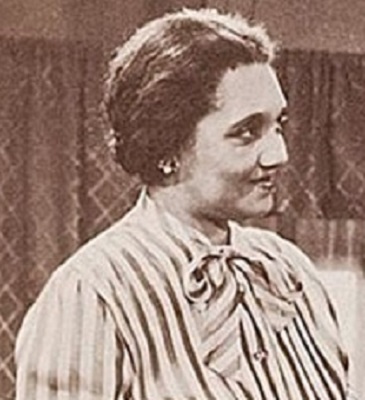
On This Date...
June 3 … Charles Drew was a pioneering African American physician, surgeon, and medical researcher whose work revolutionized the field…
June 3 … Josephine Baker was an American-born dancer, singer, and actress whose career was centered primarily in Europe, mostly…
June 3 … Irene Morgan v. Commonwealth of Virginia — also known as Morgan v. Virginia — was a landmark…
June 3 … Curtis Mayfield was a singer-songwriter, guitarist, and producer whose socially conscious soul and funk music—rooted in gospel…


~~ View All Birthdays ~~

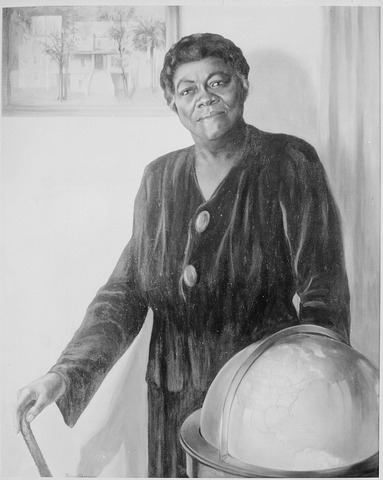
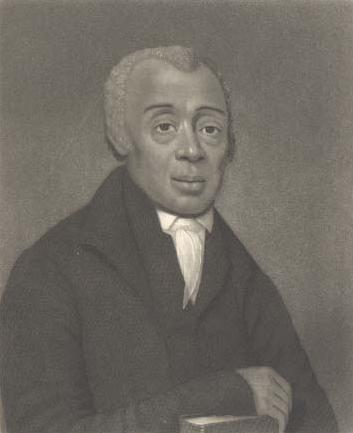


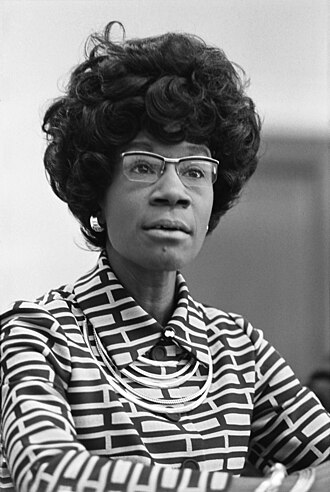


~~ View All Heroes ~~


~~ View All Holidays ~~


~~ View All Notables ~~


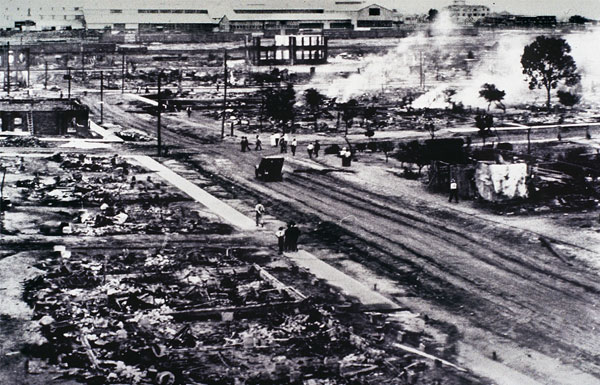

~~ View All Observances ~~


The Dorothy I. Height Building, headquarters of the National Council of Negro Women at 633 Pennsylvania Ave. NW in Washington, D.C. **


~~ View All Places ~~
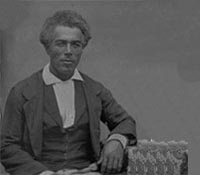
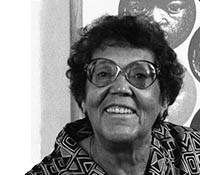
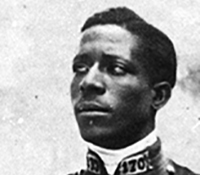


ABOUT
The National BLACK Calendar features Significant People, Notable Dates, and Important Places in African American history — across the generations.
CONTACT
info at nationalblackcalendar.com
htttps://www.nationalblackcalendar.com
htttps://www.nationalblackcalendar.com
copyright © 2024- MarieSquared LLC — all rights reserved | Privacy Policy
site by coInnovate | sdg
error: Welcome to #NatlBLACK