Niagara Movement


July 11 …
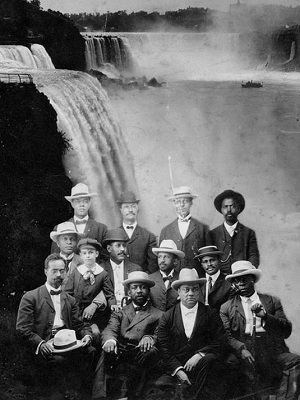
The Niagara Movement — founded on July 11, 1905 — was a bold and uncompromising call for civil rights at a time when African Americans were being systematically denied full citizenship in the United States.
The initial meeting took place near Niagara Falls, on the Canadian side, because no hotel on the American side would accommodate the Black delegates.
Spearheaded by W.E.B. Du Bois and William Monroe Trotter, the movement emerged in direct opposition to the slow, conciliatory approach to racial uplift advocated by leaders like Booker T. Washington. Convened near Niagara Falls — on the Canadian side due to the racial segregation of American hotels — the group of 29 Black men gathered to declare that African Americans would no longer accept second-class status in their own country.
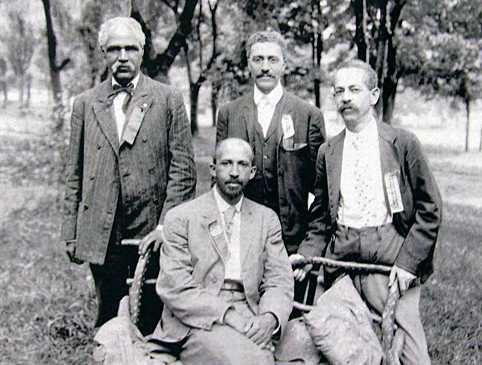
Leaders of the movement: W.E.B. Du Bois (seated) and (standing left to right), J.R. Clifford (who organized the second meeting), L.M. Hershaw, and F.H.M. Murray at Harpers Ferry.
Unlike more moderate efforts of the time, the organization took a confrontational stance against racism, segregation, and the Jim Crow laws that were entrenching white supremacy in the South. It also emphasized the importance of higher education and intellectual development over vocational training, reflecting Du Bois’s belief that a well-educated “Talented Tenth” could lead the struggle for justice and equality.
Although the organization struggled with internal divisions and opposition from more conservative Black leaders, it marked a turning point in African American activism. It was the first significant Black-led organization to advocate for a comprehensive civil rights agenda.
The organization held annual meetings, issued public statements, and attempted to organize chapters around the country, though it faced challenges in expanding its base due to limited resources and intense resistance.
By 1909, the organization had largely faded, but its legacy was far from over. It had laid the groundwork for many of its core members — including Du Bois — who would go on to help found the National Association for the Advancement of Colored People. The NAACP carried forward the Niagara Movement’s vision, becoming one of the most enduring and influential civil rights organizations in American history.
Ultimately, the Niagara Movement’s greatest contribution to American history was its uncompromising insistence on full equality and its role in shifting the national dialogue toward civil rights. It challenged the prevailing norms of racial accommodation and laid the groundwork for the legal and political battles that would define the Civil Rights Movement of the 20th century.
Though short-lived, the spirit of resistance and demand for justice of the Niagara Movement continues to echo through the ongoing struggle for racial equality in America.