Mardi Gras Indians


February 17 …
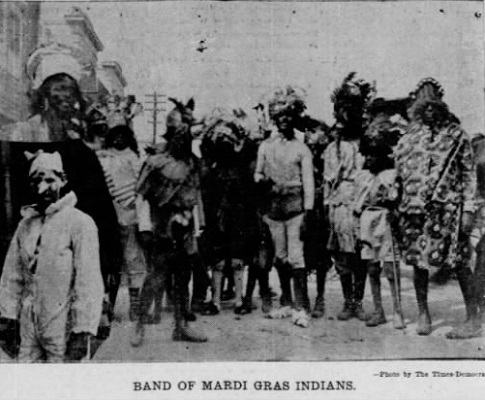
The Mardi Gras Indians are vibrant and enduring communities of African American Carnival revelers rooted in the heart of New Orleans.
The exact date of their first celebrations is not known. However, the first archived records of enslaved Africans in Louisiana dressing as Indigenous people in a celebratory dance called Mardi Gras — also called Shrove Tuesday or Fat Tuesday — were documented in 1746. Mardi Gras Day in that year fell on Tuesday, February 17, 1746.
Known for their elaborate suits and participation in Mardi Gras, this rich tradition emerged from the resilience and creativity of African American communities who forged powerful responses to systemic exclusion, cultural erasure, and the need for collective memory. The subculture began to take shape in the 19th century when groups — often referred to as “tribes” — came together outside the prevailing Mardi Gras organizations that systematically barred Black individuals from participating.
These tribes serve not only as a celebration of cultural identity, but also as a poignant homage to the historical alliances that formed between enslaved Africans and Indigenous peoples who played a crucial role in their survival in the Gulf South. By adopting elements from Indigenous cultures and masking as “Indians,” participants express gratitude and solidarity, transforming these sentiments into a dynamic, public, ritualized art form that stakes a claim for dignity and historical presence in American culture.
The influences that shape their culture stretch across continents and centuries, creating a rich tapestry of shared heritage. West and Central African aesthetics, Caribbean carnival traditions, and vivid Native American imagery converge in the elaborate suits worn by the Indians, along with the rhythmic chants and collective movements that define their performances.
The music is a distinctive blend of African-derived call-and-response patterns, interwoven with traditional New Orleans percussion techniques, resulting in a sound that has not only defined the genre, but has also significantly influenced the development of funk, jazz, and hip-hop. In terms of dance, the movements reflect this fusion as well — rounded footwork, sudden shifts in direction, and expressive gestures that echo African social dance traditions dynamically engage with the streets and the passionate crowds, creating an immersive experience.
One of the most striking features of this tradition is “masking,” which entails the annual creation and unveiling of hand-sewn suits that are breathtakingly adorned with feathers, rhinestones, beads, and intricate appliqué designs. These suits transcend the notion of mere costumes. They are revered as sacred artworks, often taking an entire year to meticulously craft and are never worn twice.
Masking is most famously showcased on Mardi Gras Day, but it also takes place during significant cultural events like St. Joseph’s Night and Super Sunday, transforming local neighborhoods into vibrant, moving galleries filled with color, meaning, and sound. Encounters between different tribes are meticulously ritualized, focusing on verbal dexterity, visual opulence, and spirited dance rather than physical confrontation, underscoring the importance of cultural expression over conflict.
The social structure of the communities is intricately organized, reflecting both African communal practices and Indigenous warrior hierarchies. Each tribe is presided over by a Big Chief, whose leadership is determined not merely by authority, but by artistic excellence, community leadership, and extensive knowledge of tradition. There are also crucial supporting roles — such as Spy Boy, Flag Boy, and Wild Man — each responsible for communication, protection, and ceremonial display during vibrant street processions. This hierarchical structure not only fosters discipline, but also ensures the continuity of cultural practices, allowing intricate knowledge to be passed down through generations, usually through apprenticeship rather than through written documentation.
Mardi Gras Indians’ impact on American dance and performance is profound, though it often goes unrecognized. Their unique movement styles and communal choreography have significantly influenced second line dancing, the early performance styles of jazz, and later street dances that embrace improvisation and confidence known as swagger. The emphasis placed on individual expression within a unified rhythm foreshadows modern freestyle dance traditions. Importantly, these performance styles are not merely staged for external enjoyment. They embody relational and responsive elements that are deeply rooted in community geography, helping to shape the role of dance as a medium of social communication across American cities.
As visual artists, these Carnival revelers stand as some of the most innovative folk artists in the United States. Their intricate beadwork and elaborate suit designs rival fine art in both complexity and narrative depth, telling powerful stories of resistance, cultural pride, and myth through primarily handmade means. While museums have begun to collect these magnificent suits, their true power lies in the movements they inspire — art that breathes, dances, and speaks. This dynamic expression challenges the conventional boundaries separating craft, fine art, and performance, urging a reevaluation of how American art history is understood and defined.
Their legacy within popular culture is profound, as their chants and rhythmic traditions resonate in the works of numerous artists, including the Neville Brothers, Dr. John, and more contemporary hip-hop and R&B performers who draw inspiration from the rich identity of New Orleans. References to their unique culture emerge within film, fashion, and global carnival imagery, often symbolizing resilience and creativity.
More than just a visual spectacle, the Mardi Gras Indians represent a self-sustaining cultural ecosystem — one that actively preserves history, fosters the creation of new art, and continues to shape the landscape of American culture, reverberating from the local streets to the broader national consciousness.