Morgan v. Virginia


June 3 …
Irene Morgan v. Commonwealth of Virginia — also known as Morgan v. Virginia — was a landmark U.S. Supreme Court case in 1946 that challenged racial segregation in interstate bus travel.
The Court’s decision — released on June 3, 1946 — dealt a substantial blow to the segregationist policies of the South, representing a pivotal moment in the Civil Rights Movement. This case and its eventual ruling became integral to the struggle for equality, underscoring the judicial system’s role in addressing racial discrimination in America.
The case began in 1944 when Irene Morgan, an African American woman, was arrested in Virginia for sitting in a “whites-only” section of a bus while traveling through Middlesex County, VA. A member of the National Association for the Advancement of Colored People (NAACP), Morgan challenged the state’s segregation laws, claiming they violated the Interstate Commerce Act, which mandated federal regulation of interstate travel.
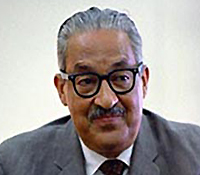
Key participants included Morgan as the plaintiff, the state of Virginia as the defendant, and the federal government, which sought to ensure that state-imposed segregation did not disrupt interstate commerce. The case was argued by William H. Hastie, former governor of the U.S. Virgin Islands and subsequently a judge on the U.S. Court of Appeals for the Third Circuit. Co-counsel Thurgood Marshall, representing the NAACP, would later be appointed as a justice of the U.S. Supreme Court.
The core issue of the case was whether state segregation laws on interstate buses infringed upon federal laws governing interstate commerce. The NAACP, which had been actively opposing segregation across various sectors, played a crucial role in advancing this legal challenge.
Although Morgan’s case was modest in comparison to later landmark cases like Brown v. Board of Education, it highlighted the detrimental effects of state-imposed segregation on African Americans’ rights and mobility. This case not only exposed the injustices faced by African Americans in the South but also illustrated the necessity for federal intervention in protecting civil rights.
The Supreme Court ruled in favor of Morgan, stating that segregation on interstate buses was a violation of the Interstate Commerce Act. The ruling, announced on April 3, 1946, had significant implications. It weakened the legitimacy of state-sponsored racial segregation in transportation and compelled the federal government to adopt stronger measures to ensure equality in interstate travel.
While the case did not eliminate segregation in all public spheres, it established a legal precedent for future civil rights litigation, especially in transportation. Furthermore, it marked the beginning of a broader shift in public opinion and judicial philosophy regarding racial segregation, influencing landmark civil rights rulings in the 1950s and 1960s.
The case represents a crucial turning point in the broader Civil Rights Movement in the United States. This case provided African Americans with a significant legal victory in their battle against institutionalized racism, generating momentum that would ultimately lead to the desegregation of schools, public facilities, and beyond.
Even though the case did not immediately bring about widespread change, it energized the Civil Rights Movement by demonstrating the courts could be effective instruments for social justice.
Additionally, the decision in Morgan v. Virginia intensified pressure on Congress to enact civil rights legislation, eventually resulting in pivotal laws such as the Civil Rights Act of 1964. Though Morgan’s victory is often overshadowed by other civil rights milestones, it played an essential role in dismantling segregation and advancing the broader pursuit of racial equality in America.