Maria P. Williams

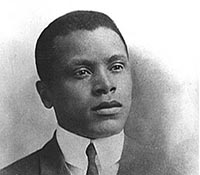

January 1 …
Maria P. Williams was a pioneering author, scriptwriter, newspaper editor, and film producer who made significant contributions to early American cinema.
As one of the pioneering African American women in film production, Williams played a pivotal role in shaping the nascent film industry, particularly concerning social justice and representation. Her contributions not only influenced the evolution of cinema but also sparked broader cultural changes, establishing her as a significant figure in American film, literature, and social history.
Born on January 1, 1866 in Versaille, MO during the post-Reconstruction era — a time marked by racial tension and segregation — Williams navigated a landscape where opportunities for African Americans, especially women, were severely restricted. Her academic journey led her to study literature and the arts, despite limited resources available to African American women at the time. However, she honed her craft as an editor and producer.
Armed with this education and a passion for storytelling, she moved into the world of film and literature. Williams quickly gained recognition for her keen eye for detail, narrative structure, and her ability to bring powerful stories to the screen. Her passion for history, social justice, and representation led her to carve out a space for herself within industries where diversity was often lacking.
In 1891, Williams was editor-in-chief of a Kansas City weekly newspaper. Her experienced gained in this position inspired her to found, in 1896, her own independent newspaper, “The Woman’s Voice,” where she served as writer and editor.
In 1916, Williams married a local businessman and movie theater owner, Jesse L. Williams. She co-managed the theater with her husband and served as the company’s secretary and treasurer. The couple also formed the Western Film Producing Company and Booking Exchange. Working in these businesses enabled Williams to gain invaluable expertise in the release and distribution of films for African-American audiences.
Williams’ involvement in early cinema — a burgeoning medium that was swiftly becoming a cornerstone of American culture — saw her sharpen her skills as a writer, editor and film producer by the early 20th century. This enabled her to make meaningfully contributions to films that highlighted issues of race and social justice.
Among her most significant achievements was writing the script for and producing “The Flames of Wrath,” a silent crime drama that positioned her as one of the first African American women to produce a feature film. Released in 1923, the film explored themes of justice and vengeance, providing a nuanced representation of race relations at a time when such subjects were often overlooked or misrepresented in mainstream cinema.
Williams’ adeptness as an editor crafted a compelling narrative that was both socially relevant and artistically innovative. Although “The Flames of Wrath” did not garner widespread commercial success, its production signified Williams’ vision and determination to present stories that were rarely seen on screen.
Throughout her career, Williams collaborated with and was inspired by prominent figures who shared her dedication to racial equality and artistic expression. Some of her contemporaries in the production of early cinema were Eloyce King Patrick Gist, Zora Neale Hurston, Tressie Souders, and Madame E. Toussaint Welcome, and multiple Black women film pioneers.
She fostered relationships with African American intellectuals like W.E.B. Du Bois, whose advocacy for social justice resonated with her own values. Additionally, she drew inspiration from contemporaries like Oscar Micheaux, another African American filmmaker addressing race issues in America.
While Williams and Micheaux did not work directly together, their mutual respect and shared objectives solidified their importance in the advancement of African American cinema. Williams’ endeavors were instrumental in creating a platform for Black voices in an industry predominantly led by white filmmakers.
In recognition of her pioneering work, Williams earned multiple accolades throughout her career. Despite the racial and gender discrimination of her era, her achievements were acknowledged by early African American cultural institutions and film organizations. She also played a crucial role in mentoring and inspiring future generations of filmmakers and writers, helping to cultivate a legacy of diversity and inclusion in the arts.
The contributions of Maria P. Williams to American cinema, literature, and society continue to resonate, making her an essential figure in the history of film and the broader movement for racial and gender equity in the arts.