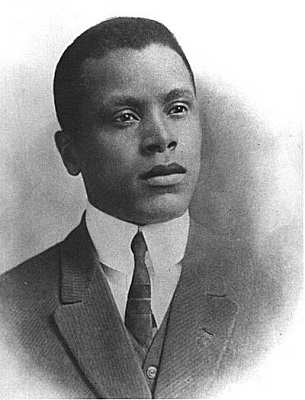
Oscar Micheaux
January 2 …
Oscar Micheaux was a pioneering African American filmmaker and novelist who made a significant impact on the film industry during the early 20th century.
Born on January 2, 1884 in Metropolis, IL, Micheaux’s journey to becoming a renowned director was unconventional, especially at a time when opportunities for Black people in Hollywood were extremely limited. He is often credited as the first African American to produce and direct a full-length feature film. His career spanned from 1919 to the 1940s, and he directed over 40 films, making him a key figure in early African American cinema.
Micheaux’s filmmaking career began with his first feature, The Homesteader (1919), which was based on his own novel. The film explored the life of an African American homesteader, focusing on issues of race and identity. Micheaux’s films often dealt with themes such as racial prejudice, the complexities of Black identity, and the struggle for equality. At a time when Hollywood was dominated by stereotypical portrayals of Black characters in minstrel shows and “race films,” Micheaux sought to create stories that reflected the reality of African American life, with dignity and depth. His works were revolutionary for their portrayal of Black characters as complex individuals, challenging the pervasive racial stereotypes that were common in mainstream cinema.
Throughout his career, Micheaux faced many obstacles, including limited financial resources and a lack of institutional support. Despite these challenges, he became known for his relentless determination and innovative approach to filmmaking. He funded his own films, often working with small budgets and producing movies independently. Micheaux’s production company, the Micheaux Film Corporation, allowed him to have complete creative control over his work, enabling him to tell the stories that he felt were important. His films were shown in theaters across the United States, particularly to Black audiences who had long been ignored by Hollywood.
Micheaux’s body of work includes a variety of genres, from dramas to musicals, and even adaptations of classic literature. One of his most famous films, Within Our Gates (1920), is considered one of the earliest surviving race films, addressing themes such as racism, violence, and Black empowerment. The film was made in response to D.W. Griffith’s controversial film The Birth of a Nation, which depicted Black Americans in a highly negative and racist light. Within Our Gates countered this narrative, offering a portrayal of Black life that was both nuanced and assertive. Despite facing censorship and backlash from both white audiences and the Black establishment, Micheaux’s films provided an important counterpoint to mainstream cinema’s depictions of African Americans.
Oscar Micheaux’s legacy has only grown in stature over time. He is now regarded as one of the most important figures in the history of American cinema, and his work has influenced generations of filmmakers. His dedication to telling authentic stories about Black life at a time when the industry largely ignored or misrepresented African Americans was groundbreaking.
Today, the files of Oscar Micheaux are celebrated for their historical significance, and his role in shaping African American cinema continues to inspire new generations of filmmakers. His work remains a testament to the power of storytelling and the importance of representing all voices in the cultural landscape.