

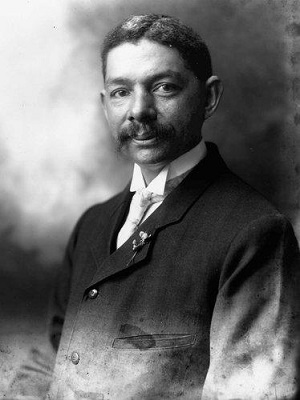
Robert Robinson Taylor
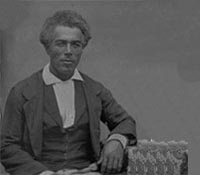
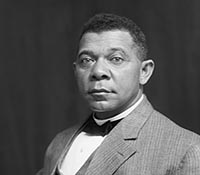
June 8 …
Robert Robinson Taylor was a pioneering American architect and educator whose career helped shape the built environment of historically Black institutions while opening doors for African Americans in the architectural profession.
Born on June 8, 1868 in Wilmington, NC, Taylor was the son of Henry Taylor, a skilled craftsman and builder, and Emily Still Taylor, a formerly enslaved woman. Growing up in a family immersed in the building trades introduced him to carpentry, design, and construction from an early age, igniting a passion that would shape his career. He pursued higher education at the Massachusetts Institute of Technology, enrolling in the architecture program in the late 19th century.
In 1892, he made history as the first African American graduate of MIT and the first formally trained Black architect in the United States. During his time at MIT, he experienced a pivotal period in American architectural education influenced by the Beaux-Arts tradition, learning from renowned professors and designers whose focus on technical rigor and classical principles informed his professional perspective.
Shortly after graduation, Taylor was invited by educator Booker T. Washington to join the faculty at Tuskegee Institute in Alabama. There, he established and led architecture and construction programs, training countless students in design, drafting, engineering, and building trades. His approach combined academic knowledge with hands-on construction, overseeing the design and construction of many of Tuskegee’s early campus buildings and helping to forge its architectural identity.
Taylor also played a vital role in developing structures at other historically Black institutions, including Hampton Institute. This demonstrated the significance of architecture and technical education in advancing African American communities during the late 19th and early 20th centuries.
Taylor’s career unfolded alongside a remarkable generation of Black educators, intellectuals, and reformers who aimed to broaden educational and professional opportunities following Reconstruction. He collaborated closely with Booker T. Washington and engaged with other prominent figures in Black educational leadership, such as W.E.B. Du Bois and George Washington Carver, who also taught at Tuskegee for many years.
His teaching and mentorship inspired numerous students who later entered the fields of architecture, engineering, and construction, creating a vital professional pathway at a time when opportunities for African Americans were severely restricted. Taylor’s legacy lives on through the many campus buildings he designed and the architecture and engineering programs he helped establish.
The contributions of Robert Robinson Taylor have been recognized in various ways, including accolades from MIT and the naming of the Robert R. Taylor School of Architecture and Construction Science at Tuskegee University, underscoring his enduring impact on American architecture, education, and cultural history.
