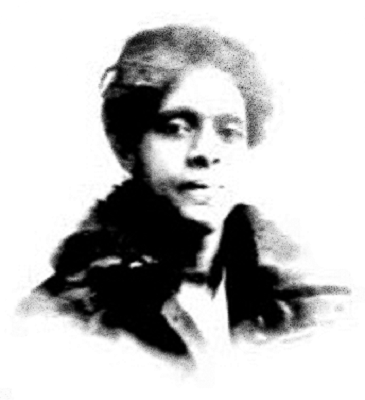
Addie Waites Hunton





June 11 …
Addie Waites Hunton was an influential African American educator, organizer, and civil rights activist whose work spanned the late 19th and early 20th centuries. She is especially noted for her leadership in Black women’s organizations, her international humanitarian service during World War I, and her advocacy for racial and gender equality in the United States.
Born on June 11, 1866 in Norfolk, VA, Hunton was among the first generation of Black women to receive a formal higher education after the Civil War. She graduated from Spelman Seminary (now Spelman College) in 1889. Her education prepared her for a career in teaching and leadership at a time when educational opportunities for African Americans — especially women — were severely limited. She later taught and engaged in institutional and community uplift efforts, aligning with the broader Black women’s club movement.
Hunton became a prominent figure in the National Association of Colored Women (NACW), an organization dedicated to improving social conditions for African Americans through education, suffrage advocacy, and community reform. Her work emphasized racial uplift and women’s leadership, reflecting the NACW’s motto, “Lifting as We Climb.”
During World War I, Hunton expanded her activism internationally. She was among the first Black women to serve overseas with the Young Men’s Christian Association (YMCA), where she worked in France, providing support services to African American soldiers. Her experiences revealed the stark realities of racial discrimination within the U.S. military, even abroad. Along with Kathryn Magnolia Johnson, she later co-authored Two Colored Women with the American Expeditionary Forces (1920), a significant firsthand account documenting the contributions and struggles of Black troops during the war.
In the postwar years, Hunton continued her activism, working with the National Association for the Advancement of Colored People (NAACP) and focusing on issues such as racial violence, education, and political rights. She also engaged with international peace and women’s movements, reflecting her broader commitment to global justice.
The legacy of Addie Waites Hunton rests on her multifaceted contributions as an educator, organizer, and witness to history. She helped shape the trajectory of African American women’s activism in the early 20th century, linking local reform efforts to national and international struggles for equality. Her life exemplifies the expanding roles of Black women in public leadership during a transformative era in American history.
Selected Sources:
- Hunton, Addie W., and Kathryn Magnolia Johnson. Two Colored Women with the American Expeditionary Forces. Brooklyn, NY: Brooklyn Eagle Press, 1920.
- Lemons, J. Stanley. “The Woman Citizen in the Progressive Era: Addie Waites Hunton and Black Women’s Activism.” Journal of Negro History 62, no. 1 (1977): 45–57.
- Shaw, Stephanie J. “Black Club Women and the Creation of the National Association of Colored Women.” Journal of Women’s History 3, no. 2 (1991): 10–25.