

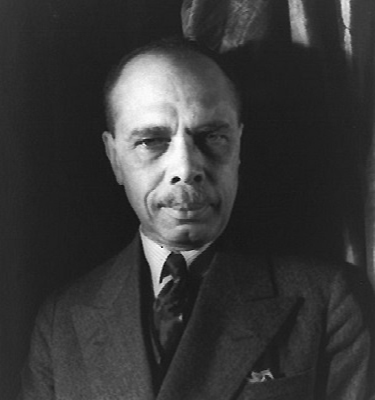
James Weldon Johnson



June 17 …
James Weldon Johnson was a towering figure in American history whose multifaceted career as a writer, educator, diplomat, and civil rights leader helped shape the cultural and political landscape of the early 20th century.
Born on June 17, 1871 in Jacksonville, FL, Johnson was raised in a household that emphasized education and cultural pride. He graduated from Atlanta University in 1894, later becoming the first African American to pass the Florida bar exam since Reconstruction. From an early age, he showed an unrelenting commitment to intellectual and artistic achievement, which he used as a platform for broader social change.
In the world of literature, Johnson made a lasting impact through his poetry, fiction, and journalism. He co-authored the famous song “Lift Every Voice and Sing,” which he wrote in 1900 with his brother J. Rosamond Johnson. The hymn would go on to be known as the Black National Anthem, a cherished anthem of the African American community and a rallying cry during the civil rights movement.
Johnson’s literary contributions reached a broader audience with the publication of The Autobiography of an Ex-Colored Man, a groundbreaking novel that explored issues of race, identity, and passing in America. His work laid important foundations for the Harlem Renaissance and challenged the conventions of American literature by centering Black voices and experiences.
Johnson’s influence extended well beyond the written word. In 1906, he was appointed U.S. consul to Venezuela and later to Nicaragua, becoming one of the first African Americans to hold such diplomatic posts. His work abroad gave him a broader view of racial issues on a global scale and deepened his conviction that the fight for civil rights in the United States was both urgent and universal. His diplomatic service also demonstrated that African Americans were fully capable of representing the nation with dignity and professionalism, countering the prevailing racist assumptions of the era.
After returning to the United States, Johnson threw himself into the struggle for civil rights with renewed vigor. In 1916, he joined the National Association for the Advancement of Colored People (NAACP) and quickly rose through its ranks to become the first Black executive secretary in 1920.
Under Johnson’s leadership, the NAACP expanded its influence, increased its membership, and intensified its efforts to combat lynching and racial violence. He spearheaded national anti-lynching campaigns and worked tirelessly to lobby Congress for federal legislation, laying the groundwork for future civil rights victories.
Johnson’s activism was marked by an emphasis on self-respect, education, and cultural pride. He believed that civil rights were not only a matter of legal recognition, but also of moral and cultural affirmation.
Johnson often wrote and spoke about the necessity of presenting African Americans not as victims, but as contributors to American society — intellectually, artistically, and civically. His vision was one of integration not merely into the political fabric of the nation, but into its cultural soul.
Throughout his life, Johnson remained a committed educator, serving as a professor of creative literature and writing at Fisk University and New York University. He mentored young writers and thinkers, and he championed the idea that education was the cornerstone of both individual advancement and collective liberation.
Johnson’s influence on generations of Black intellectuals and activists cannot be overstated. Through his teaching, he cultivated a new wave of voices that would carry the torch of civil rights into the mid-20th century.
Johnson died in a tragic car accident on June 26, 1938, but his legacy endures in countless ways. As a man who bridged the worlds of literature, diplomacy, education, and activism, he demonstrated the power of intellect and art to advance justice. His life was a testament to the belief that cultural expression and civic engagement are inseparable in the pursuit of equality.
James Weldon Johnson helped reframe the American narrative to include African Americans not on the margins, but at the center of its story, and his contributions continue to inspire those fighting for a more inclusive and just society.
