Romare Bearden

September 2 …
Romare Bearden was a seminal artist, writer, and cultural organizer whose collages, paintings, and scholarship reshaped visual representations of Black life and helped define mid-20th-century American art.
Born on September 2, 1911 in Charlotte, NC and raised in Harlem and Pittsburgh, Bearden was the only child of Richard Howard and Bessye Bearden. After his mother became the New York editor for The Chicago Defender, he did some writing for the newpaper. He later pursued his studies at Lincoln University and Boston University before obtaining his degree from New York University in 1935.
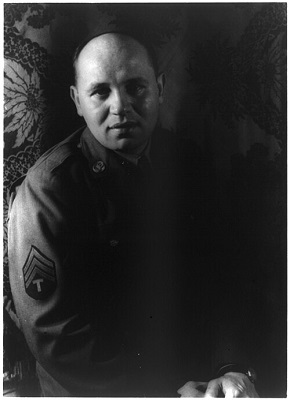
Bearden took art classes at the Art Students League under George Grosz, served in World War II, and later utilized the GI Bill to study at the Sorbonne. This diverse education — which melded formal training with independent study and rich exposure to literature, music, and global art — greatly informed his multifaceted artistic practice.
Bearden’s achievements span a range of media and genres. He began as a political cartoonist and illustrator and transitioned through painting and abstraction in the 1940s and 1950s. He gained lasting fame for his richly textured photomontages and collages from the 1960s onwards, which blended African motifs, jazz rhythms, Southern memories, and urban experiences.
Additionally, Bearden designed sets and costumes for dance performances and collaborated with Alvin Ailey. He coauthored books on art and history, and helped organize significant exhibitions that showcased Black artists on national and international stages.
Intellectually and socially, Bearden was pivotal in various artistic networks. He was a founding member of the 306 Group and later of Spiral, a Harlem artists’ collective aimed at discussing the responsibilities of Black artists during the civil rights era.
Bearden drew inspiration from mentors like George Grosz and Stuart Davis, and collaborated with contemporaries such as Jacob Lawrence and Hale Woodruff, as well as writers and musicians, including Langston Hughes and Duke Ellington. Bearden actively supported emerging artists through teaching, lectures, and by co-founding the Romare Bearden Foundation with his wife, Nanette, which aimed to nurture new talent.
Bearden received widespread recognition and numerous accolades throughout his career, including election to the American Academy of Arts and Letters in 1966 and the National Institute and Academy of Arts and Letters in 1972. He was awarded a Guggenheim Fellowship in 1970, received Ford Foundation support, and was honored with the Medal of the State of North Carolina in 1976 and the Frederick Douglass Medal from the Urban League in 1978. In 1987, he received the National Medal of Arts.
Retrospectives at major institutions like MoMA, The Whitney, and the National Gallery of Art, along with posthumous exhibitions, have solidified the status of Romare Bearden as one of the nation’s most influential modern artists, whose work has profoundly transformed American art, literature, music discourse, and cultural history.