


Alvin Ailey
January 5 …
Alvin Ailey was a visionary choreographer and cultural ambassador whose groundbreaking work transformed modern dance and secured a permanent place for African American artistry at the center of American concert performance.
Through emotionally resonant choreography and a steadfast commitment to showcasing Black life on stage, he broadened the vocabulary of modern dance and transformed global perceptions of American culture.
Born on January 5, 1931 in Rogers, TX, Ailey grew up during the Great Depression in the segregated South, which was rife with racial and economic challenges. After relocating to Los Angeles as a teenager, he experienced performances by the Ballet Russe de Monte Carlo and the expressive modern dance of Katherine Dunham, igniting his artistic passion.
Ailey — as well as his classmate and friend Carmen De Lavallade — trained under choreographer Lester Horton, whose integrated dance company introduced Ailey to ballet, modern technique, Native American dance forms, and theatrical staging. Horton emerged as Ailey’s main mentor, instilling both discipline and artistic ambition.
Following Horton’s death in 1953, Ailey briefly took over the company, gaining crucial experience in choreography and direction. He also studied acting, drawing inspiration from theatrical artists and musicians who influenced his understanding of drama, musicality, and narrative structure.
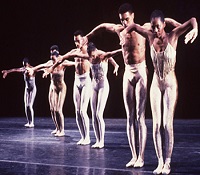
In 1958, Ailey established the Alvin Ailey American Dance Theater in New York City, envisioning a repertory company that would honor the richness of African American cultural expression while welcoming dancers from all backgrounds. His signature piece, Revelations (1960), was inspired by the spirituals, gospel, and blues music he cherished from childhood church services in Texas. The work became one of the most performed pieces in modern dance, celebrated for its emotional depth, technical precision, and communal spirit.
Ailey’s choreography fused modern dance, ballet, jazz, and vernacular movement, placing him alongside contemporaries like Martha Graham and George Balanchine as a pivotal figure in 20th-century dance. However, his voice was unique in its focus on Black spiritual endurance, joy, and resilience, making the stage a powerful platform for cultural affirmation during the civil rights movement.
Beyond choreography, Ailey served as a mentor and institution builder. He worked with and nurtured countless dancers through the Ailey School and his company, creating opportunities for artists who may have otherwise been marginalized. Among those who continued his legacy, artistic directors and performers— Judith Jamison (his muse), Sylvia Waters, Tracy Inman, Melanie Person, Carmen De Lavallade, and many others — who expanded the company’s global presence and educational initiatives.
Ailey admired earlier Black pioneers like Katherine Dunham and drew inspiration from jazz musicians and gospel singers whose artistry mirrored his commitment to emotional authenticity. Through extensive international tours, partly sponsored by the U.S. State Department, his company emerged as a cultural ambassador, presenting an image of America that celebrated diversity, creativity, and democratic ideals.
Ailey’s accomplishments garnered numerous accolades. In 1977, he received the Spingarn Medal from the NAACP, honoring exceptional achievement by an African American. In 1988, he was celebrated with the Kennedy Center Honors, recognizing his lifetime contributions to American culture. Following his death in 1989, his legacy continued to be acknowledged, culminating in a posthumous Presidential Medal of Freedom awarded in 2014.
Today, his company remains one of the most esteemed institutions in modern dance, and the choreography of Alvin Ailey lives on as a powerful testament to the ability of movement to narrate stories of struggle, faith, and transcendence throughout American history.
