

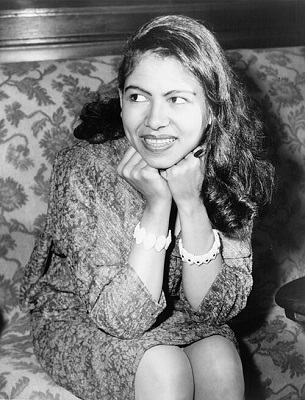
Philippa Schuyler


August 2 …
Philippa Schuyler was an American concert pianist, composer, writer, and journalist whose life as a child prodigy and later international artist and correspondent made her a memorable—and often troubled—figure in mid-20th-century culture.
Born on August 2, 1931 in Harlem to journalist George Schuyler and Josephine Cogdell Schuyler, the younger Schuyler was nurtured under intensive and unconventional parental guidance and private tutoring, which cultivated her early brilliance. A child prodigy, she could read and write by the age of two, performed in public recitals and radio broadcasts by four, and played at the New York World’s Fair by eight.
Primarily educated by tutors and mentors in music, she emerged as a gifted composer and pianist. Her childhood acclaim attracted national attention and invitations to collaborate with major orchestras.
Schuyler’s achievements spanned across performance, composition, and writing. She composed works such as “Manhattan Nocturne” and “Rhapsody of Youth,” made a significant debut with a symphony orchestra in 1946, and toured internationally as a concert pianist. Additionally, she authored several impactful books and articles while also working as a journalist and foreign correspondent. This included Adventures in Black and White in 1960, Who Killed the Congo? in 1962, Jungle Saints in 1963, and Kingdom of Dreams 1966.
Schuyler’s performances reached international leaders. She lectured widely, speaking multiple languages, which added a distinctly cosmopolitan touch to American cultural life.
Her influences and mentors included her parents — George Schuyler, whose journalism and conservative perspective shaped her worldview and opportunities, and Josephine Schuyler, who served as her manager and teacher. She was also supported by a network of mid-century musicians and promoters dedicated to nurturing child prodigies.
While Schuyler may not have left a clearly documented legacy of named protégés, her public persona deeply influenced discussions about race, talent, and the challenges faced by prodigies. Throughout her career, she navigated between concert halls, missionary work, and journalism, engaging with key figures in both diplomacy and the arts.
Schuyler’s life garnered diverse recognition and posthumous honors. Initially celebrated as a child prodigy with glowing reviews and performances in esteemed venues, she later gained acclaim for her writings and international performances.
Schuyler’s suffered an untimely death in a U.S. Army helicopter crash near Da Nang in 1967 while serving as a correspondent and lay missionary, and was commemorated at a well-attended funeral at St. Patrick’s Cathedral.
The tragedy also resulted in the establishment of the Philippa Schuyler Memorial Foundation and a New York school named in her honor, solidifying the complex legacy of Philippa Schuyler in American music, literature, and collective memory.
