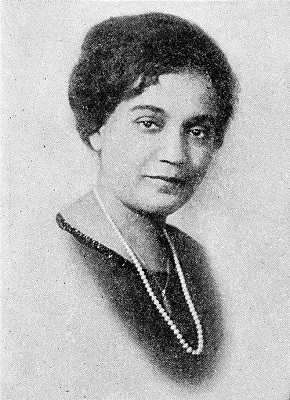
Jessie Redmon Fauset


April 27 …
Jessie Redmon Fauset was a writer, editor, educator, and cultural architect whose quiet yet profound influence helped shape American literature and the intellectual foundations of the Harlem Renaissance.
Born on April 27, 1882 in in Camden County, NJ and raised in a family that prioritized education and refinement, Fauset emerged with a determination to challenge the limited portrayals of Black life prevalent in American literature, advocating for complexity, dignity, and artistic excellence instead.
Fauset’s achievements are deeply intertwined with her role as literary editor for The Crisis, the NAACP’s magazine, where she collaborated closely with W.E.B. Du Bois and played a pivotal role in introducing a new generation of Black writers to a national audience. Through her editorial vision, she nurtured and published emerging voices who would come to define the Harlem Renaissance, including poets, fiction writers, and essayists whose works explored themes of race, identity, and modernity.
Additionally, Fauset was a talented novelist and poet, creating works that thoughtfully examined middle-class Black life, colorism, gender expectations, and the psychological implications of racism. As a novelist, Fauset broke new ground by focusing on educated Black protagonists who navigated love, ambition, and moral dilemmas within American society.
Her narratives transcended mere caricatures and protests, instead offering carefully crafted stories that asserted Black humanity through the lens of everyday experiences. This literary approach served as both an artistic and political assertion, reinforcing her belief that representation itself wielded cultural power.
Alongside Fauset’s creative endeavors, she remained devoted to education, teaching French and mentoring students, thereby extending her impact beyond literature. She drew intellectual inspiration from classical European literature, French culture, and the ideals of racial uplift that influenced early 20th-century Black thought.
W.E.B. Du Bois was a significant mentor and collaborator, while her contemporaries included Langston Hughes, Jean Toomer, Countee Cullen, Claude McKay, and Zora Neale Hurston — many of whom benefited from her editorial guidance, even as later literary histories downplayed her contributions. Her influences reflected her conviction that African American literature deserved a prominent place within the broader landscape of world culture.
Although Fauset did not receive widespread acclaim during her lifetime, her legacy has steadily grown as scholars and readers revisit the foundations of the Harlem Renaissance. Today, she is acknowledged as one of its key architects — a woman whose editorial work, literary contributions, and cultural vision facilitated a flourishing of Black artistic expression.
Jessie Redmon Fauset holds a crucial position in American history as a builder of literary community and a guardian of artistic integrity, with an enduring influence on how American culture perceives race, art, and intellectual life.