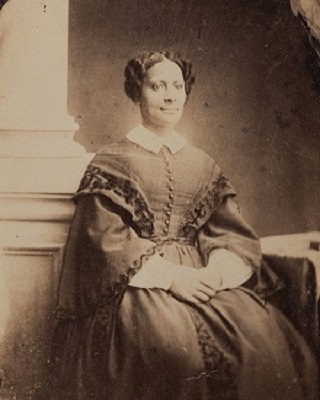
Sarah Parker Remond

June 6 …
Sarah Parker Remond was a pioneering African American abolitionist, lecturer, and physician whose life exemplified resistance to racial and gender oppression in the 19th century.
Born on June 6, 1826 in Salem, MA into a prosperous and politically active Black family, Remond was raised in an environment that valued education, civic engagement, and the pursuit of justice. Her parents, who operated a successful catering business, ensured that their children, including her brother Charles Lenox Remond, received quality education — an uncommon opportunity for African Americans at the time. From a young age, Remond was exposed to the pressing issues of slavery and racial inequality, which ignited in her a lifelong passion for advocacy.
Remond began her public life as an anti-slavery lecturer in her teenage years, becoming one of the few Black women of her era to address mixed audiences on the abolitionist circuit. Her eloquence, moral clarity, and personal conviction distinguished her as a powerful orator. She denounced slavery not only as a system of physical bondage but as a moral stain on the American conscience, often drawing attention to the hypocrisy of a nation founded on liberty while enslaving millions. She traveled extensively throughout the United States and Europe, challenging audiences to confront the brutal realities of slavery and racism.
Her activism extended beyond the podium. Remond was deeply involved in several abolitionist organizations, including the American Anti-Slavery Society, and she worked closely with prominent figures like Frederick Douglass and William Lloyd Garrison. She also fiercely advocated for women’s rights, believing that the liberation of women and the abolition of slavery were intertwined struggles. Remond’s dual commitment to racial and gender justice placed her at the forefront of intersecting social movements, well ahead of her time in articulating what would later be understood as an intersectional approach to activism.
Frustrated by the limited opportunities and pervasive discrimination she faced in the United States, Remond eventually moved to England and later to Italy. In England, she continued her abolitionist work and enrolled at Bedford College, an institution that offered women access to higher education. Her time in Europe not only broadened her intellectual horizons but also offered her a level of respect and opportunity that was largely unavailable to Black women in America. Ultimately, she settled in Florence, where she earned a medical degree and practiced as a physician — an extraordinary achievement for a Black woman in the 19th century.
Remond’s life abroad did not diminish her commitment to justice. She remained engaged in international debates around race, slavery, and colonialism and became part of a transatlantic community of reformers who saw these issues as part of a broader human rights struggle. She challenged white supremacy not just in American institutions, but also in the broader framework of Western imperialism, advocating for a more humane and equitable global society. Her ability to navigate and influence multiple cultural and political landscapes speaks to her intellectual agility and unwavering dedication to justice.
Though often overlooked in mainstream historical narratives, Remond’s contributions to American society are profound. She broke barriers in education, medicine, and public discourse, and her life serves as a powerful testament to the resilience and brilliance of Black women in the face of systemic oppression.
By using her voice, intellect, and compassion across continents, Sarah Parker Remond not only advanced the cause of abolition but also broadened the scope of what it meant to fight for freedom. Her legacy continues to inspire new generations committed to justice, equity, and the global struggle for human rights.