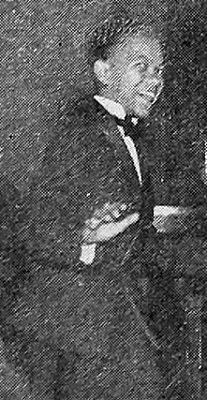
Harold Nicholas
March 27 …
Harold Nicholas was one of the most influential dancers in American history, best known as the younger half of the Nicholas Brothers, whose artistry transformed tap dance and redefined movement in film and live performance.
Born on March 27, 1921 in Winston-Salem, NC, Nicholas was raised in a family deeply embedded in music and performance before relocating to Los Angeles. His father, Ulysses D. Nicholas, was a professional drummer for renowned jazz orchestras, while his mother, Viola Harden Nicholas, was a classically trained pianist. This rich musical backdrop immersed Harold in rhythm, harmony, and disciplined musicianship from a tender age.
By early childhood, Harold began performing on stage, exhibiting a natural ease and musicality that set him apart from even the most experienced professionals. In 1932 when he as 11 years old, Harold and his older brother, Fayard Nicholas, became the featured act at the Cotton Club in New York City.
Although primarily self-taught, Harold’s development was shaped by a wide range of experiences that he absorbed with remarkable intuition. He studied the intricate movements of seasoned tap dancers, the phrasing of jazz musicians, and the graceful lines of ballet, which he later pursued formally to enhance his strength, alignment, and elevation.
Fayard served as both a close collaborator and mentor, guiding Harold through complex choreography while encouraging individuality and expressive freedom. Harold’s dancing became renowned for its extraordinary athleticism, characterized by explosive jumps, midair splits, and gravity-defying landings, all delivered with a lightness that rendered even the most challenging steps seemingly effortless.
Harold’s mentorship extended beyond family; he also learned from veteran performers in vaudeville, Broadway revues, and Hollywood musicals. Collaborating with major bandleaders and entertainers afforded him direct exposure to musical sophistication, professional discipline, and the pressures of live performance. These experiences allowed Harold to mature swiftly, developing a commanding stage presence and a deep appreciation for timing, ensemble work, and storytelling through movement.
The contributions of Harold to American entertainment are most vividly illustrated in the iconic film performances of the Nicholas Brothers, which feature some of the most celebrated dance sequences ever captured on screen. His remarkable physicality pushed the boundaries of tap dance, seamlessly blending speed, power, and precision with balletic grace and acrobatic flair. At a time when Black performers often faced marginalization or limited roles, Harold’s artistry helped elevate dance as a serious art form and illuminated the creativity of Black artists within mainstream American culture.
The Nicholas Brothers appeared in over 60 films, showcasing their signature staircase routine and earning the title of the greatest tap dancers of their era, celebrated as the best in history. Their performance in “Jumpin’ Jive” — alongside Cab Calloway and his orchestra in the 1943 film Stormy Weather — is frequently regarded as one of the greatest dance routines ever recorded.
Throughout his career and later life, Harold received numerous accolades recognizing his lasting influence on dance and cultural history, often alongside Fayard. These honors celebrated not only their technical mastery but also the brothers’ role in advancing racial representation and artistic innovation in American entertainment.
The legacy of Harold Nicholas continues to resonate in the language of modern tap and jazz dance, where athleticism merges with musicality, inspiring generations of dancers who continue to view his work as a standard of excellence, creativity, and expressive freedom.