
December 25 …
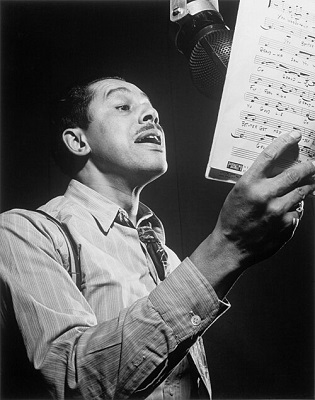
Cab Calloway was an iconic American bandleader, singer, and entertainer whose exuberant style, musical innovation, and charismatic presence left an indelible mark on American music, entertainment, culture, and history.
Born Cabell Calloway III on December 25, 1907 in Rochester, NY, he grew up surrounded by music and performance. Influenced by vocal training and the encouragement of his sister, Blanche Calloway — herself a talented jazz singer — along with mentors like Louis Armstrong, who guided him in developing his scat singing technique, he quickly rose through the ranks of the jazz and swing scene.
Calloway’s ascent to fame began in the late 1920s and early 1930s when he assumed leadership of what would become Calloway & His Orchestra, celebrated as one of the most prominent big bands of the swing era. The group became a staple at Harlem’s iconic Cotton Club, where they alternated performances with Duke Ellington’s orchestra and reached audiences nationwide — an impressive feat for an African American ensemble at the time.
His breakthrough came with the release of “Minnie the Moocher” in 1931, featuring call-and-response scat vocals that became a million-selling hit. This earned him the nickname “The Hi-De-Ho Man.”
As a bandleader and performer, Calloway crafted a vibrant stage persona that combined exceptional musicianship with theatricality. Known for his high-energy shows, distinctive white tuxedos, and lively dancing, he made jazz and swing accessible to broader audiences both in the U.S. and abroad. Through extensive touring across the U.S., Canada, and Europe, his orchestra showcased top musicians of the era, including trumpeters like Dizzy Gillespie and saxophonists like Chu Berry, serving as a launchpad that influenced future generations of jazz luminaries.
Calloway’s influence transcended music, extending into film, theater, and cultural life. He appeared in films such as Stormy Weather and The Big Broadcast, and starred in stage productions, including the Gershwin opera Porgy and Bess. A career resurgence came with his appearance in The Blues Brothers, where his performance of “Minnie the Moocher” introduced him to a new audience. His bestselling work, The New Cab Calloway’s Hepster’s Dictionary, helped popularize jive slang and contributed to the cultural lexicon of the swing era.
Throughout his career and beyond, Calloway received many accolades for his impact on American arts and culture, including the National Medal of Arts in 1993 and an honorary doctorate from the University of Rochester that same year. Posthumously, “Minnie the Moocher” was inducted into the Grammy Hall of Fame and added to the Library of Congress National Recording Registry. Calloway also received a Grammy Lifetime Achievement Award and was inducted into various jazz and big band halls of fame.
Cab Calloway’s influence on American culture endures through the decades. His captivating performances helped dismantle racial barriers in entertainment, his musical innovations shaped the evolution of jazz and swing, and his dynamic persona inspired artists across genres, from rhythm and blues to hip-hop.
The legacy of Cab Calloway is further honored by institutions like the Cab Calloway School of the Arts in Wilmington, DE. By marrying musical prowess with showmanship and cultural expression, he not only entertained millions, but also elevated African American artistry on both national and global stages, leaving an indelible mark on the cultural history of the United States.