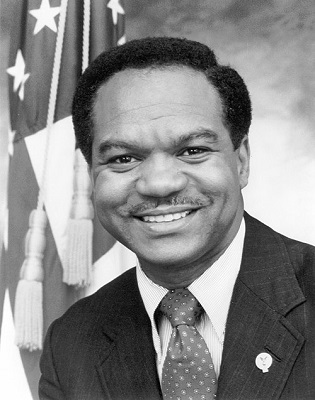
Walter Fauntroy


February 6 …
Walter Fauntroy is a pivotal figure in American civil rights and political history, known for bridging grassroots activism with legislative power as a longtime representative of Washington, D.C.
Born on February 6, 1933 in Washington, DC, Fauntroy grew up in a deeply religious family, which profoundly influenced his moral and social perspectives. His father was a pastor, and he would later be ordained as a minister himself.
Fauntroy studied at Virginia Union University before obtaining a divinity degree from Yale Divinity School. His theological training and dedication to social justice led him to connect with prominent figures in the Civil Rights Movement, most notably Martin Luther King Jr., who became both a mentor and close collaborator.
Fauntroy’s early career saw him as the director of the Washington bureau of the Southern Christian Leadership Conference. This positioned him at the forefront of major civil rights efforts. He played a pivotal role in organizing the historic March On Washington for Jobs and Freedom, where Dr. King delivered his legendary “I Have a Dream” speech.
In 1971, Fauntroy became the first congressional delegate from Washington, DC, serving in the United States House of Representatives for 20 years. Although his position did not grant a full vote on the House floor, he effectively leveraged it to advocate for D.C. home rule, civil rights legislation, and economic development.
Fauntroy collaborated with contemporaries such as John Lewis, Andrew Young, and Jesse Jackson. He belonged to the generation of civil rights activists who had transitioned into political leadership.
Throughout his career, Fauntroy remained actively involved in both domestic and international issues, including efforts to combat apartheid in South Africa and promote human rights globally. His political philosophy was shaped by Dr. King’s nonviolent activism and the broader Black freedom struggle, linking him with figures like Ralph David Abernathy.
Fauntroy’s leadership laid a foundation for future Black politicians and D.C. leaders, contributing to a legacy that includes expanded political representation and civic engagement. His work also intersected with cultural movements of the time, reflecting the growing influence of civil rights activism on American media, education, and public discourse.
Fauntroy has received numerous accolades recognizing his contributions to civil rights and public service, including tributes from civic and educational institutions, as well as recognition for his efforts in advancing democracy in the nation’s capital. His legacy is intertwined with the ongoing battle for D.C. statehood and voting rights, alongside the broader narrative of African American political empowerment in the 20th century.
Walter Fauntroy continues to symbolize the connection between faith, activism, and governance, exemplifying how moral conviction can lead to enduring institutional change in American society.