

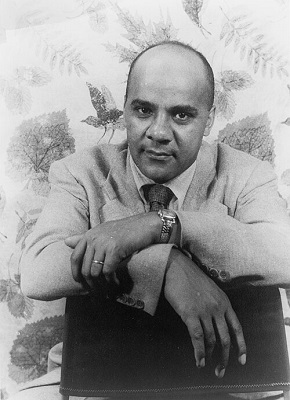
John Oliver Killens



January 14 …
John Oliver Killens was a pioneering novelist, activist, and educator whose work fused literature with social purpose, helping to shape the intellectual and cultural foundations of the Black Arts Movement and modern African American literary tradition.
Born on January 14, 1916 in Macon, GA, Killens was raised in the segregated South, where the harsh realities of Jim Crow profoundly shaped his perspective and literary voice. His father inspired him to explore the work of writers like Langston Hughes, while his mother, an active member of a literary club, introduced him to poetry and the rich tapestry of Black cultural traditions.
The stories his great-grandmother shared about slavery further deepened his understanding of African American history and folklore. These formative influences, coupled with his admiration for writers such as Richard Wright, instilled in Killens a conviction that literature should echo the struggles and resilience of Black life.
Killens pursued higher education at various historically Black colleges, including Edward Waters College and Morris Brown College, ultimately earning his bachelor’s degree from Howard University while working for the National Labor Relations Board. He continued his studies in writing at Columbia University and New York University and briefly attended Terrell Law School.
Killens’s education was interrupted by his service in the U.S. Army during World War II, where he faced racial discrimination that later informed his fiction, particularly in his novel And Then We Heard the Thunder. These academic and life experiences forged his dual identity as both a writer and a socially engaged intellectual dedicated to justice.
As a writer, Killens gained recognition with his 1954 debut novel Youngblood, a compelling depiction of a Black family grappling with systemic racism in the American South, which earned him a Pulitzer Prize nomination. He followed this success with influential works such as ’Sippi, The Cotillion, and Black Man’s Burden, skillfully weaving storytelling with political critique.
Beyond his publications, he co-founded the Harlem Writers Guild alongside notable figures like John Henrik Clarke and Rosa Guy, fostering a new generation of Black writers. He was also connected with major civil rights leaders such as Martin Luther King Jr., later aligning his ideas with Malcolm X, showcasing his engagement with Black nationalism and liberation movements.
Killens’s active participation in the Montgomery Bus Boycott and the co-founding of the Organization of Afro-American Unity further highlight his significant role in shaping American social and political discourse.
Killens’s impact extended into education and mentorship; he taught at esteemed institutions like Fisk University, Columbia University, Howard University, and Medgar Evers College, where he established the National Black Writers Conference in 1986. Through his guidance, he mentored influential writers such as Ntozake Shange and Nikki Giovanni, nurturing new voices in African American literature.
Among his contemporaries and collaborators were notable figures like Ossie Davis, Margaret Walker, and Arna Bontemps, all integral to the broader Black Arts Movement. Often regarded as a “spiritual father” of this movement, Killens asserted that art must fulfill a political and cultural role, a philosophy that influenced both his peers and protégés.
Though he never won a Pulitzer Prize despite multiple nominations, Killens achieved enduring recognition through his leadership in literary initiatives, his role in founding the Harlem Writers Guild, and his legacy in American education and culture. His establishment of significant literary conferences and the impact he had on generations of writers solidified his status as a pivotal figure in 20th-century American history.
Today, John Oliver Killens work continues to serve as a vital bridge between literature and activism, embodying his lifelong commitment to using storytelling as a means of cultural affirmation, historical truth, and social change.
