


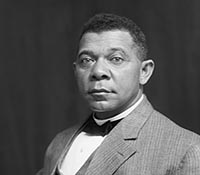

January 1 …
John Henrik Clarke was a pioneering historian and educator whose lifelong work advanced Africana studies and reshaped how African and African-diasporic histories are taught and understood.
Born John Henry Clark into a sharecropping family on January 1, 1915 in Union Springs, AL, he left the rural South in 1933 to settle in Harlem, where he pursued self-education in lieu of formal schooling, as he did not complete high school. His work in domestic service provided him with opportunities for extensive reading, and he became actively involved in the intellectual circles of Harlem.
Under the mentorship of Arturo Alfonso Schomburg, Clarke engaged in studies at institutions such as New York University and the New School for Social Research. He studied informally at these institutions all while cultivating a rigorous independent scholarship grounded in Pan-Africanism.
Clarke’s notable achievements include founding the African Heritage Studies Association in 1969 and co-founding the Black Caucus of the African Studies Association. He played a significant role in developing Africana curricula, teaching at Hunter College and Cornell’s Africana Studies and Research Center, and publishing various influential works, including African People in World History and My Life in Search of Africa.
Clarke also served as a journalist in post-independence Ghana and delivered lectures widely across Africa and the United States, making substantial contributions to the institutionalization of Black studies programs at universities. His advocacy emphasized Africa’s centrality to world history, challenging Western-centric narratives.
Clarke’s intellectual development was profoundly influenced by mentors such as Arturo Schomburg and scholars like William Leo Hansberry. He drew inspiration from pivotal figures including W.E.B. Du Bois, Marcus Garvey, and later Cheikh Anta Diop. His contemporaries included John Oliver Killens, Julian Mayfield, Malcolm X, and other prominent Black intellectuals and activists of the mid-20th century.
Later in life and posthumously, Clarke received institutional recognition: in 1985, the Africana Studies and Research Center at Cornell named its library in his honor. He was awarded the Carter G. Woodson Medal by the Association for the Study of Afro-American Life and History in 1995, and his contributions were celebrated in the documentary “John Henrik Clarke: A Great and Mighty Walk” (1996).
The writings, teaching, and efforts of John Henrik Clarke in institution-building remain central to his lasting legacy in American education, culture, and historical scholarship.
