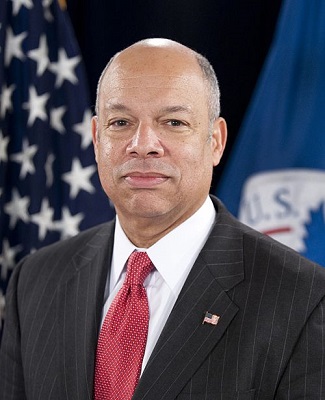
Jeh Johnson


September 11
Jeh Johnson is a distinguished American lawyer, public servant, and former government official whose legal expertise and leadership have significantly shaped national security policy and civil rights in the United States.
Born on September 11, 1957 in New York City, Johnson was raised in a family with deep ties to African American history and culture — his grandfather, Charles S. Johnson, was a prominent sociologist and the first Black president of Fisk University. Jeh Johnson graduated from Morehouse College and went on to earn his law degree from Columbia Law School, launching a legal career marked by a commitment to justice, constitutional integrity, and public service.
Johnson first gained national attention during the Clinton administration, serving as General Counsel of the Department of the Air Force. In that role, he provided legal advice on a range of issues, including military operations and personnel policies, and helped shape the legal framework surrounding the armed forces during a time of post-Cold War transformation.
His deep understanding of the intersection between military policy and constitutional law laid the groundwork for his future roles in government. Throughout his career, Johnson consistently emphasized the importance of adhering to democratic values, even in matters of national defense.
Under President Barack Obama, Johnson held two pivotal roles that would define his legacy. First, as General Counsel for the Department of Defense, he became a key architect of the legal rationale used to support counterterrorism operations, including drone strikes and military detention policies. He also played an instrumental role in the successful repeal of the “Don’t Ask, Don’t Tell” policy, helping to end the official discrimination against LGBTQ individuals in the U.S. military.
Later, as Secretary of Homeland Security from 2013 to 2017, Johnson oversaw a department with sweeping authority over immigration, cybersecurity, disaster response, and counterterrorism, balancing the need for security with the protection of civil liberties.
During his tenure as Secretary of Homeland Security, Johnson faced some of the most complex challenges in domestic policy, including the rise of homegrown terrorism, increasing cybersecurity threats, and debates over immigration reform. He led efforts to enhance border security while also advocating for humane treatment of immigrants and the establishment of legal pathways to citizenship. Under his leadership, the Department of Homeland Security took steps to improve transparency and public engagement, reinforcing Johnson’s belief that national security must be grounded in accountability and trust. His leadership was widely respected for its clarity, composure, and principled approach during times of political and social tension.
Jeh Johnson’s contributions to American law and politics reflect a career dedicated to public service, ethical leadership, and the defense of democratic institutions. He has brought a steady and thoughtful voice to some of the most critical legal and policy debates of the 21st century, demonstrating how the law can be a tool for both security and justice.
As a Black American holding some of the highest offices in national security, he also broke racial barriers and served as a role model for future generations of leaders. The work of Jeh Johnson continues to influence discussions on constitutional law, civil rights, and national defense, leaving an enduring mark on American history.