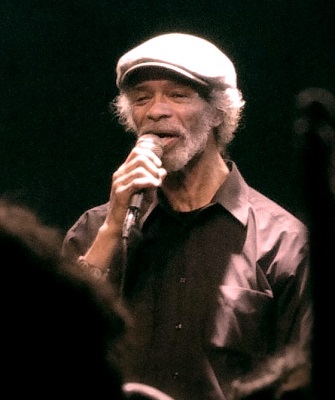
Gil Scott-Heron


April 1 …
Gil Scott-Heron was a groundbreaking poet, musician, and social critic whose work profoundly influenced American culture, particularly in the realms of music, literature, and political thought.
Born on April 1, 1949 in Chicago and raised in Tennessee (and later the Bronx, NY), Scott-Heron came of age during the height of the civil rights movement. His sharp intellect and deep sense of social awareness fueled his unique fusion of spoken word poetry and jazz, funk, and soul music. His work gave voice to the struggles and resilience of Black America and helped lay the foundation for future genres like hip-hop and neo-soul.
Scott-Heron is perhaps best known for his 1970 piece The Revolution Will Not Be Televised, a spoken-word track that challenged the passivity of media and consumer culture in the face of racial and political unrest. The song quickly became an anthem of Black consciousness and resistance, capturing the urgency of the era and pushing audiences to recognize that real change happens not on screens but in the streets and in the hearts of people. Through his poetic lyrics and rhythmic delivery, Scott-Heron brought the tradition of protest poetry into modern music, bridging the gap between activism and art.
Throughout the 1970s and 1980s, Scott-Heron continued to release music that tackled pressing social issues — racism, poverty, addiction, political corruption — with a powerful blend of insight and raw honesty. Albums like Pieces of a Man, Winter in America, and From South Africa to South Carolina paired soulful melodies with sharp critiques of American society.
His collaborations with musician Brian Jackson were especially influential, offering both beauty and truth to audiences hungry for voices that spoke to their realities. His work provided a soundtrack for the struggle, one that didn’t shy away from pain but also celebrated resilience and hope.
Scott-Heron’s impact extended far beyond his own recordings. He is widely credited as one of the founding fathers of hip-hop, with his rhythmic spoken delivery and focus on social commentary serving as a blueprint for generations of rappers and lyricists. Artists such as Public Enemy, Mos Def, Common, and Kendrick Lamar have cited him as a major influence. While Scott-Heron resisted being labeled a rapper, his artistic legacy lives on in the way hip-hop uses words and rhythm as tools of resistance and storytelling.
Despite personal struggles with addiction and health issues later in life, Scott-Heron remained a vital cultural figure until his death in 2011. His work continues to resonate with those seeking truth through art and remains deeply relevant in conversations around race, justice, and identity in America.
More than just a musician or poet, Gil Scott-Heron was a prophetic voice whose fearless expression challenged complacency and inspired action. His legacy is one of unapologetic truth-telling — a revolutionary spirit that still echoes through the sounds and struggles of today.