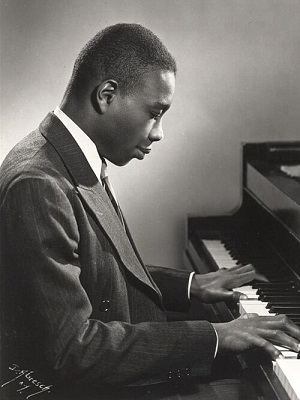
George Theophilus Walker
June 27 …
George Theophilus Walker was a composer, pianist, and educator whose wide-ranging output and pioneering achievements made him a central figure in 20th-century American classical music and a pathbreaker for Black composers in concert music.
Born on June 27, 1922 in Washington, DC, Walker displayed his musical talent from a young age, beginning his piano studies with his mother before advancing through private music schools and higher education. He attained a Bachelor of Music from the Oberlin Conservatory in 1946 and a Master of Music from the Curtis Institute of Music in 1950. He later completed his doctoral studies at the Eastman School of Music, where he earned a Ph.D. in 1962.
Walker’s rigorous classical training was enhanced by exposure to American musical styles and the modernist movements of mid-20th century composition. He studied composition with esteemed teachers like Rudolf Serkin (his piano coach), Rosario Scalero, and other influential figures at these institutions.
Walker’s oeuvre encompasses solo, chamber, vocal, choral, and orchestral works noted for their expressive lyricism, intricate counterpoint, and occasional modernist harmonies. Among his significant compositions are the Piano Sonata (1946), the Violin Concerto (1946–47), the Lyric for Strings (originally composed in 1946 and revised in the 1990s), and Symphony No. 1 (1982).
In 1996, Walker became the first African American to win the Pulitzer Prize for Music for his piece “Lilacs,” for voice and orchestra, which sets verses from Walt Whitman. This prestigious accolade culminated a distinguished career marked by commissions from prominent orchestras and performances by leading soloists and ensembles. He also gained a dedicated teaching career at several institutions, including Smith College, Rutgers University, and the University of Delaware, where he inspired younger composers and performers.
Walker’s influences stemmed from both European and American educators, including Scalero and Serkin, and his contemporaries included notable American composers such as Samuel Barber, Aaron Copland, and William Schuman, who were also shaping the mid-century American classical landscape. His music was championed by contemporary performers and conductors, including members of the Guarneri Quartet and orchestras that presented his works.
Throughout his career, Walker received numerous honors and accolades, including the Pulitzer Prize for Music in 1996, a nomination for the National Medal of Arts, honorary degrees from various universities, ASCAP awards, and commissions from multiple foundations and orchestras. His piece “Lyric for Strings” has become a staple of the American concert repertoire and is often regarded as a defining early achievement.
The legacy of George Theophilus Walker is reflected in the growing visibility and acceptance of Black composers in American concert life. This encompasses the expansion of the repertoire embracing lyrical modernism and his decades of teaching that shaped performers and composers who continued to diversify and enrich the American musical landscape.