


December 21 …
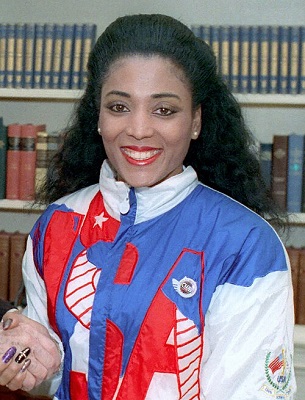
Florence Griffith Joyner — affectionately known as Flo-Jo — was one of the most electrifying and influential figures in the history of American athletics, earning a place in sports history as the fastest woman ever recorded and a global icon of style, speed, and determination.
Born Delorez Florence Griffith on December 21, 1959 in Los Angeles, Griffith recognized her gift for speed early in life and pursued track and field through high school and college, first at California State University at Northridge and later at UCLA, where she trained under coach Bob Kersee. Her remarkable talent on the track, coupled with her distinctive fashion sense and public persona, would eventaully establish her as a transcendent figure whose influence reached far beyond the finish line and into American culture and society.
In the early stages of her career, Griffith earned a silver medal in the 200-meter sprint at the 1984 Summer Olympics in Los Angeles, marking her emergence as a world-class competitor. After a brief semi-retirement, Griffith returned to full-time training and married fellow Olympian Al Joyner in 1987. His support and coaching greatly contributed to the preparation for her most defining competitive years.
Griffith Joyner’s athletic pinnacle arrived at the 1988 U.S. Olympic Trials and the Seoul Olympics, where she astonished the world by setting world records in both the 100-meter (10.49 seconds) and 200-meter (21.34 seconds) sprints — a feat that remains unmatched decades later. She captured three gold medals and one silver medal for the United States, rewriting the record books and elevating women’s sprinting on a global stage, gaining prestige alongside fierce competitors like Evelyn Ashford and teammate Valerie Brisco-Hooks.
Her legacy extended beyond medals and records. Griffith Joyner infused the sport with a bold personal style that captivated fans around the globe. Renowned for her eye-catching racing outfits, long decorated fingernails, and charismatic presence on television and magazine covers, she helped enhance the visibility and appeal of track and field to a wider audience.
Griffith Joyner’s influence also reached off the track through her design work — creating basketball uniforms and athletic apparel — and her advocacy for fitness. She served as co-chair of the President’s Council on Physical Fitness and Sports and founded her named Youth Foundation to promote children’s development through sport and education.
Recognized with numerous accolades that reflected her exceptional talent and influence, Griffith Joyner was named “Associated Press Female Athlete of the Year” and Track and Field Magazine’s “Athlete of the Year.” She received the prestigious Sullivan Award as the nation’s outstanding amateur athlete in 1988. Griffith Joyner was later inducted into the National Track & Field Hall of Fame, solidifying her place among the greatest athletes in American history.
Though the life of Florence Griffith Joyner was tragically cut short at age 38, her groundbreaking role as a sporting icon and cultural figure continues to inspire generations of athletes and fans alike.
