

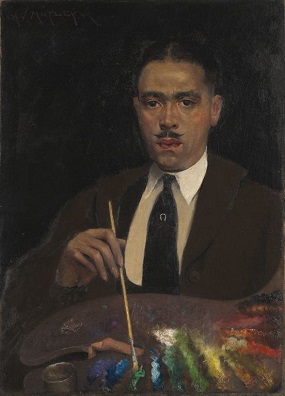
Archibald Motley
October 7 …
Archibald Motley was a pioneering African American painter whose vivid portrayals of urban Black life captured the energy, complexity, and diversity of American society during the early to mid-20th century, making him a central figure of the Harlem Renaissance and a key contributor to American art and cultural history.
Born on October 7, 1891 in New Orleans, Motley relocated with his family to Chicago at a young age, where he was immersed in a racially diverse community that would later serve as a significant source of inspiration for his art. He studied painting at the Chicago Art Institute, where he was profoundly influenced by European modernist movements, particularly French Impressionism and Post-Impressionism.
Additionally, he drew inspiration from African American folk culture and the vibrant ambiance of Bronzeville, Chicago’s predominantly Black neighborhood. Among his early mentors was Karl Buehr, a German-born painter who emphasized color and technique, as well as peers at the Art Institute who encouraged his innovative use of color and form.
Motley’s prolific career encompassed portraits, figure studies, and genre scenes that illuminated both the joyous and complex aspects of African American urban life. Works such as Nightlife and The Octoroon Girl exemplify his ability to blend realism with stylized, vibrant color palettes that express mood, energy, and social context.
Through his portrayals of jazz clubs, social gatherings, and daily life in Chicago, Motley celebrated African American identity while challenging stereotypes and enriching the artistic narrative of the nation. He was contemporaneous with artists like Aaron Douglas, Palmer Hayden, and William H. Johnson, all exploring African American life and identity through modernist lenses.
Motley’s art was widely exhibited in galleries and museums across the United States, gaining recognition for its technical brilliance and cultural relevance. His work remains a crucial reference for understanding the intersections of race, culture, and modernism in American art.
Motley’s influences extended beyond his mentors and peers to embrace the rich musical landscape of jazz and blues, the social dynamics of Chicago’s nightlife, and the literary works of Harlem Renaissance figures like Langston Hughes and Zora Neale Hurston. His interactions with both Black and white audiences allowed him to confront racial biases and celebrate African American culture during a time marked by segregation and discrimination.
Although he did not establish a large formal group of protégés, his work inspired younger generations of Black artists to explore urban realism and socially engaged themes, prompting an examination of race and modernity in American art.
Throughout his career, Motley received numerous accolades for his contributions to American art and culture, including awards from the Harmon Foundation, which supported African American artists, and posthumous exhibitions that have reaffirmed his significance within the history of American modernism and African American cultural expression.
Today, the paintings of Archibald Motley are housed in major collections, including the Whitney Museum of American Art and the Art Institute of Chicago, ensuring that his vibrant portrayals of urban life and his celebration of African American identity continue to educate, inspire, and resonate with audiences around the world.
