
Contact Time Mon - Sat:9.00 - 18.00
Phone Number (+89) 530 - 352 - 3027
Contact Email info@sitename.com

Birthdays
Happy Birthday To These Individuals...

Heroes
Giants And Champions -- Living Or Deceased...

Holidays
Federally Designated Days Of Commemoration...

Justice
Legal Equity, Righting Wrongs, Ensuring Equitable Outcomes...

Notables
Noteworthy People, Events, And Contributions...

Observances
Acknowledging People Or Occurences...

Places
Spots, Buildings, Venues, Towns, Or Locales...


The National Black Calendar (NatlBLACK) is the premier source of holidays and observances important to the African American community! Lorem ipsum dolor sit amet, consectetur adipiscing elit. Ut elit tellus, luctus nec ullamcorper mattis, pulvinar dapibus leo.
Review NatlBLACK days by Type:
• Birthdays
• Heroes
• Holidays
• Notables
• Observances
Submit a suggestion for consideration by clicking here.
Review NatlBLACK days by Type:
• Birthdays
• Heroes
• Holidays
• Notables
• Observances
Submit a suggestion for consideration by clicking here.
~~ Nikole Hannah-Jones,
Investigative Journalist
Featured This Month
May 1 …
Founded in 1875 by formerly enslaved, Dr. William Hooper Councill, Alabama A&M University (AAMU) is a public, 1890 Land-grant Institution in Normal, AL, which offers bachelors, master’s, educational specialist and doctoral level degrees in the arts, sciences, business, engineering, education, agriculture and technology.
The school opened as the Huntsville Normal School, on May 1, 1875, at a church on Eustis Street instructing 61 teaching students.
This historically Black institution located a short distance from downtown Huntsville, AL, while founded as a “normal school” began in 1939, with State Board of Education permission, offering coursework at the senior college level. AAMU became fully accredited by the Southern Association of Colleges and Schools in 1963. It adopted its present name in 1969.
The 21st century occasioned significant developments for AAMU. In 2002, a new School of Engineering and Technology was established and led by Purdue University faculty member, Edward Barnette, the first president of the National Society of Black Engineers (NSBE). Fully accredited, the engineering school offered programs in civil, electrical, industrial, and mechanical engineering and graduate degrees in electrical and mechanical engineering.
AAMU’s 21st century occasioned extracurricular developments as well. In 2006, the AAMU Marching Maroon & White Band led the iconic Tournament of Roses Parade in Pasadena, CA. The band’s distinguished history extends back to the late 1890s and early 1900s when it was conducted by the famous Alabama composer, musician, and band leader, W.C. Handy. The University Choir made numerous regional and national appearances, and AAMU’s athletic programs gained national notoriety especially in volleyball and men’s soccer.
Distinguished alumni of AAMU include Jesse Mandela Barnes (2008), the lieutenant governor of Wisconsin; Joseph Lowery (attended), Civil Rights Leader and third president of the Southern Christian Leadership Conference; and Sun Ra (attended) the prolific, experimental jazz pianist/composer, noted for his early use of electronic keyboards and synthesizers.

May …
The Legal Rights Association (LRA) emerged in mid-19th-century New York City as one of the earliest organized efforts in the United States to use the legal system as a tool for racial equality, marking a critical step in the long struggle for civil rights.
Founded in May 1855 — by Thomas L. Jennings, James McCune Smith, James W.C. Pennington, Charles Bennett Ray, and other Black activists, church leaders, and professionals — the organization emerged in direct response to pervasive racial discrimination, particularly the segregation in public transportation. It embodied a burgeoning belief that American law could be challenged, reformed, and made to align with its professed ideals.
The Association’s most notable achievements stemmed from its strategic use of litigation to confront racial exclusion. Leveraging the success of the Elizabeth Jennings Graham streetcar case, the Association sponsored and financed lawsuits against transit companies enforcing segregation. These cases consistently pressured streetcar operators and municipal authorities, facilitating the eventual desegregation of New York City’s public transportation by the late 1850s. This legal strategy was groundbreaking for its time and laid the groundwork for future civil rights organizations that would view courts as platforms for social change.
The Association was significantly influenced by the abolitionist movement and Black-led institutions, such as churches, mutual aid societies, and literary organizations that nurtured political awareness and collective action. Rather than depending on a single mentor, the Association drew inspiration from shared ideals espoused by abolitionist thinkers who advocated for moral persuasion, constitutional rights, and civic engagement.
Its philosophy regarded the courtroom as a public arena where Black citizenship and dignity could be asserted in tangible, enforceable manners.
Among those associated with LRA were key figures from Black New York’s reform movement. Notable leaders, supporters, ministers, activists, and legal allies willing to argue contentious cases in challenging courts. They were part of a broader network that encompassed educators, business owners, and writers, many of whom shared mutual commitments to abolition, suffrage, and racial advancement.
The Association valued ideals over celebrity, striving for equal protection under the law, access to public life, and the conviction that justice could be pursued through perseverance.
Although the LRA did not receive formal accolades during its existence, its legacy is enduringly recognized in American history. It is now acknowledged as a precursor to later legal advocacy organizations and an early example of coordinated civil rights litigation. Its efforts contributed to a cultural shift in America, promoting the understanding that discrimination was not merely a social injustice but a legal one that could be confronted and overturned.
By advancing equality through the courts, the Legal Rights Association paved a pathway for future generations, demonstrating that organized legal resistance could serve as a powerful catalyst for social transformation.

May …
The Colored American Magazine was groundbreaking as the first monthly publication in the United States that covered African-American culture. It was first issued in May 1900 — the exact date is unknown — and ran through 1904, played a foundational role in shaping Black cultural expression, political thought, and literary life in early 20th-century America.
The magazine was established by a collective of African American entrepreneurs and intellectuals — Walter W. Wallace, Jesse W. Watkins, Harper S. Fortune, and Walter Alexander Johnson — who created the Colored Co-Operative Publishing Company to produce a periodical focused on documenting African American life, achievements, and history. From its inception, the publication sought to empower Black voices during a time when mainstream media often overlooked or misrepresented the contributions of African Americans to society.
Central to the magazine’s early success was Pauline Hopkins, a prolific writer, novelist, playwright, and editor whose influence significantly shaped the publication’s tone and content. She was the magazine’s leading editor from 1902 to 1904, utilizing its pages to feature fiction, serialized novels, essays, and biographical sketches that celebrated Black accomplishments and examined race, gender, and history from an African American perspective.
Under Hopkins’s direction, the magazine became one of the first American publications to highlight the experiences of Black women, nurture Black literary culture, and document neglected chapters of African American history.
The magazine was deeply influenced by its cultural and political context, particularly the fight against segregation and disenfranchisement following the Plessy v. Ferguson decision, as well as the broader Black literary renaissance that aimed to create spaces for African American artistic and intellectual expression.
Its contributors included a diverse array of writers, thinkers, and activists who leveraged the platform to challenge negative stereotypes, showcase poetry and fiction from Black authors. Their support helped to celebrate notable achievements in fields such as medicine, education, business, and the arts.
The magazine’s readership was nationwide, primarily attracting educated Black middle-class audiences across the United States who sought dignified representations of their culture and thoughtful discourse on contemporary political issues. With a peak circulation that possibly reached into the tens of thousands and an expanding network of agents and subscribers, the publication laid the foundation for subsequent influential Black publications like The Crisis and Ebony, extending its impact well beyond its years in print.
Though it did not earn formal accolades during its existence, the legacy of The Colored American Magazine as a pioneering Black periodical that shaped American culture and history continues to resonate, influencing the Black press and American literature to this day.

May 1 …
Max Robinson was a trailblazing television journalist whose presence on the national news desk marked a turning point in American broadcasting, expanding opportunities for African Americans in mainstream media while reshaping the cultural authority of network news.
Born on May 1, 1939 in Richmond, VA and raised in a racially segregated society that severely limited Black representation on television, Robinson — the elder brother of attorney and activist Randall Robinson — cultivated an early interest in storytelling and current events. He attended Virginia Union University and began his career in local radio, later transitioning to television with a determination to address the lack of Black journalists in prominent news roles.
Inspired by trailblazers in broadcast journalism and motivated by the civil rights movement, he aimed for both professional success and systemic change within the industry. His early career was characterized by both achievements and challenges.
While working at a local station in Portsmouth, VA, his image was initially obscured on air due to station managers’ concerns about potential audience backlash to a Black news anchor. Undaunted, he continued to thrive, moving to stations in Washington, DC, and eventually gaining national recognition.
Robinson was one of 44 African-American journalists who met in 1975 to form the National Association of Black Journalists. Their meeting was for the express purpose of founding an organization to support providing quality programs and services to and advocate on behalf of black journalists.
In 1978, he made history as the first African-American broadcast network news anchor in the United States when he became the first African American to co-anchor ABC’s flagship evening newscast. At ABC News, he joined a distinguished team alongside contemporaries like Peter Jennings and Frank Reynolds, positioning himself at the forefront of American broadcast journalism during a highly competitive era.
Robinson’s reporting was marked by intellectual sharpness and passionate conviction. He was known for his expressive delivery and readiness to address issues of race and inequality head-on. Unlike some peers who maintained a strictly neutral demeanor, Robinson occasionally revealed his frustration with injustice, reflecting the complex tensions of reporting in the post–civil rights era.
He worked alongside prominent journalists like Tom Brokaw and Dan Rather, who were also shaping network news. However, Robinson’s perspective as a Black anchor brought a new dimension to the anchor desk, challenging traditional notions of who could embody trusted news.
Beyond his achievements on air, Robinson played a crucial role in enhancing representation in journalism and mentoring younger reporters of color. His national visibility conveyed a powerful message during a time when American institutions were confronting issues of diversity and inclusion.
Robinson respected earlier barrier-breaking journalists and civil rights leaders who showed courage under fire, striving to embody similar resilience in the newsroom. Through public engagements and professional advocacy, Robinson highlighted journalism’s responsibility not only to inform but also to reflect the full diversity of the nation it served.
Throughout his illustrious career, Robinson received numerous accolades, including Emmy Awards and recognition from journalism organizations for his reporting excellence. Although his later years were marked by personal struggles and health challenges, his groundbreaking achievement as the first African American network evening news anchor solidified his place in American history.
Max Robinson left a legacy that extended beyond individual broadcasts. He redefined the image of authority in American television journalism and paved the way for future generations of journalists, ensuring that the narrative of American news would be more inclusive, representative, and culturally resonant.
May …
The Lincoln School for Nurses — also known as Lincoln Hospital and Nursing Home School for Nurses and Lincoln Hospital School of Nursing — was a pioneering nursing institution that played a vital role in expanding professional healthcare training for African American women and helped shape the landscape of American medicine, social justice, and community empowerment.
The school was founded in May 1898 in the Bronx, NY at the site of what was then the Colored Home and Hospital, and later became Lincoln Hospital, in response to the exclusion of Black women from most nursing programs of the era. It was the first purpose-built nursing school for African American women in the United States, created to provide education and clinical training at a time when opportunities for Black nurses were extremely limited.
The first class graduated in 1900 with just six students, but the school quickly grew in reputation and enrollment. It attracted young women from across the United States, the Caribbean, and Africa who sought professional nursing careers that would otherwise have been out of reach.
Driven by a mission to meet both healthcare needs and racial barriers in professional education, the school became an influential institution whose alumni made significant contributions to nursing practice and public health.
Key participants included graduates such as Adah Belle Thoms, who served as acting director and became a leader in the movement to integrate nursing into mainstream professional associations, and many others who later became educators, military nurses, and public health advocates. Thoms and other members of the school’s Alumnae Association, formed in 1905, helped organize the historic National Association of Colored Graduate Nurses. This organization advocated for Black nurses’ inclusion in national military and professional corps.
Over its more than six decades of operation, a total of 1,864 women completed its training, contributing to hospitals, military service, education, and community health programs throughout the country.
The school left a lasting legacy in American healthcare, civil rights, and cultural history by expanding access to professional nursing training and challenging racial discrimination in medical education. Its alumni served with distinction in both peacetime and wartime, including some who became the first African American women in branches of military nursing, university faculty, and healthcare leadership.
Though the school closed in 1961, its impact continues to be remembered through archival collections, commemorative reunions, and its influence on subsequent generations of nurses and healthcare professionals.
For its contributions to professional nursing and racial equity, the Lincoln School for Nurses and its graduates have been recognized in historical exhibits and nursing scholarship as foundational to the integration and advancement of Black women in American medicine.
May 1 …
The Memphis Massacre was one of the earliest and most shocking outbreaks of racial violence during the Reconstruction era, revealing the deep resistance among white Southerners to the newly emerging freedom and political participation of formerly enslaved African Americans.
The massacre occurred between May 1 and May 3, 1866, less than a year after the Civil War ended. The city underwent significant demographic shifts as thousands of formerly enslaved individuals arrived in search of work, safety, and federal protection.
Many African American men had served in the Union army during the war and later became part of the occupying forces. This led to rising tensions between these Black soldiers, local Black residents, and the predominantly Irish American police force responsible for city law enforcement.
The situation escalated on May 1 when a confrontation erupted between Black Union veterans and white police officers, rapidly evolving into a violent conflict that spread throughout Black neighborhoods. White mobs — consisting of both police and civilians — began attacking African American communities with alarming ferocity, reflecting a broader resentment towards Reconstruction policies and Black citizenship.
Over three days of violence, white mobs rampaged through Black neighborhoods, destroying homes, churches, and schools. Local officials faced widespread criticism for their inability to control the violence, with some even participating.
The victims were predominantly African Americans, including newly freed families, laborers, women, and children. At least 46 Black individuals lost their lives, dozens more were injured, and many women were assaulted.
Churches and schools established for freedpeople, including those supported by the Freedmens Bureau, were set ablaze. The attackers included local police officers, firefighters, and civilian mobs, demonstrating the terrifying combination of institutional power and mob violence directed at the Black community.
The repercussions of the massacre extended far beyond Memphis, significantly impacting American political history. Reports of the violence angered many Northern leaders and galvanized radical Republicans in Congress to protect the rights of freedpeople.
Federal investigations helped garner support for more robust Reconstruction legislation, including the passage of the Fourteenth Amendment to the U.S. Constitution, which ensured citizenship and equal protection under the law.
The violence temporarily reasserted white dominance in Memphis. However, it also highlighted the peril African Americans confronted in the postwar South and influenced national discussions around civil rights, federal protection, and racial justice.
The Memphis Massacre became a pivotal historical example for lawmakers, historians, and civil rights advocates in their ongoing struggle for freedom and equality in the United States following emancipation.
May 1 …
The Corps d’Afrique was a Union Army formation of Black troops raised in Louisiana during the American Civil War that helped pioneer large-scale African American military service and influenced postwar debates about citizenship and civil rights.
The formal establishment of the Corps was initiated by Major General Nathaniel P. Banks’s General Orders No. 40 on May 1, 1863, which restructured existing Black regiments into a corps-sized formation. Its origins can be traced back to earlier Louisiana Native Guard units that were mustered in late 1862 following the fall of New Orleans.
Throughout 1863, the Corps expanded by incorporating regiments formed under Major General Benjamin F. Butler and Brigadier General Daniel Ullman. By the spring of 1864, most units within the Corps were redesignated as United States Colored Troops (USCT), marking the end of the Corps as a separate administrative entity in April 1864.
Key figures in the organization and command of the Corps included Nathaniel P. Banks, Benjamin F. Butler, and Daniel Ullman. Prominent Black leaders associated with the predecessor units and the Corps were André Cailloux, P.B.S. Pinchback, Major Francis E. Dumas, and First Lieutenant Charles S. Sauvinet, while numerous white field officers commanded regiments following Banks’s reorganization.
The Corps and its earlier iterations participated in operations within the Department of the Gulf, significantly contributing manpower and labor during the Siege of Port Hudson (1863) as well as engaging in various coastal and engineering tasks throughout Louisiana. The backdrop of this endeavor involved stakeholders such as the Union War Department and the Department of the Gulf, which sought additional manpower, local free people of color, and escaped enslaved individuals who provided recruits.
Northern abolitionists and Black community leaders advocated for armed service, while white military and civic authorities influenced the composition and command of the Corps through their support and resistance.
The primary beneficiaries of this initiative were the Union war effort, which gained additional troops and labor, and African American enlistees, who acquired military experience and a degree of recognition that empowered them in their postwar fight for rights. However, many of the promised rewards and full equality remained unfulfilled.
Honors and public acknowledgment included battlefield commendations for bravery. Notably, the heroism and funeral of André Cailloux became a poignant symbol.
The enduring legacy of the Corps d’Afrique regiments as they transitioned into USCT units. Their service laid the groundwork for future Black federal military service and reinforced arguments for citizenship and political inclusion during the Reconstruction era.
May 1 …
Billy Pitts — a financial expert in investments and insurance — has built a life centered around service, financial stewardship, and community engagement.
Born on May 1, 1949 in Macon, GA, Pitts completed his education in Wilkinson County, then earned a B.A. in Economics from Johnson C. Smith University. He subsequently embarked on a career in the insurance and financial services sector, dedicating decades to assisting individuals and families in planning for their futures.
As owner of The Mutual Financial Group and special marketing developer for the Principal Financial Network, Pitts integrates insurance expertise with comprehensive financial planning. He holds licenses as a Principal Registered Investment Advisor, Securities Series 6 and 63, Variable Annuities, and Property & Casualty Insurance. He is also a graduate of the National Life Underwriters Training Council.
With a remarkable 22-year tenure at MetLife where he established the leading agency in Georgia, Pitts is a trusted resource for multiple generations within families, as parents who once seek his advice return with their children and grandchildren. He develops enduring relationships grounded in consistency, transparent communications, and a fiduciary approach that prioritizes clients’ aspirations over quick sales.
Colleagues and clients commend Pitts for his calm demeanor under pressure, meticulous attention to detail, and commitment to demystifying complex financial concepts so that individuals can make informed decisions. He guides his clients in risk management, while also advising on retirement planning, education funding, and estate matters that foster generational wealth.
Pitts’ professional achievements have earned him several accolades. He is recognized in Who’s Who in Executives and Businesses and was named one of the top 40 producers in the United States. He has been a member of the Million Dollar Round Table for 29 years, a distinction as a top sales producer, where he later achieved life membership. He also was honored as Agent of the Year by the Macon Association of Life Underwriters.
Pitts dedicates considerable time and leadership to civic and cultural endeavors. He serves as president of 100 Black Men and chairs various boards. This includes his chairmanships of the Central Georgia Technical College Foundation Board of Trustees, Macon Economic Development Commission, and Tubman Museum Board of Directors, where he supports the institution’s mission to celebrate African American art, history, and culture.
Pitts founded the Macon–Middle Georgia United Negro College Fund campaign and was a founding member of the Center for Racial Understanding. He co-founded BOLD Group, a multiracial coalition of business owners dedicated to improving the local community. He also is a former member of the Riverside Optimist Club, where he was named Optimist of the Year.
Pitts mentors younger professionals entering the industry by sharing best practices and ethical standards, and collaborates with Tubman Museum staff and volunteers to sustain programs and enhance awareness. He stays active and attends ommunity events, provides counsel to friends and family, and continues to support local nonprofits.
The legacy of Billy Pitts embodies a blend of professional service and civic engagement — a career dedicated to helping individuals secure their financial futures, coupled with a lifelong commitment to enriching the cultural fabric of his community.
May 2 …
The Langston City Herald — established in the town of Langston in Oklahoma — was a foundational African American newspaper whose pages helped shape the social, cultural, and historical landscape of the Black experience in the Oklahoma Territory during the 1890s and beyond.
As the first weekly Black newspaper in the Territory, it served as an essential source of information, advocacy, community building, and the dissemination of ideas among African Americans migrating westward after Reconstruction. Its presence symbolized the aspirations and resilience of a burgeoning Black population striving for autonomy and opportunity in a rapidly evolving nation.
Founded in 1891 by the visionary Black leader Edward P. McCabe, the Herald was utilized to promote Black settlement in the then Oklahoma Territory, particularly in Langston, a town he and others established as a refuge for African Americans. From its inaugural issue on May 2, 1891, the paper was rooted in journalism and activism, part of the broader tradition of the Black press as a catalyst for community solidarity, education, and political engagement.
The newspaper consistently featured local news, national events, advertisements, and commentary addressing matters significant to African Americans in the South and Southeast, helping to connect readers with opportunities in the West. Its masthead slogan — “Without Fear, Favor, or Prejudice, We Are For The Right, And Ask No Question Save ‘Justice’” — encapsulated its commitment to fairness and advocacy for equal rights amid a society still confronting the legacies of slavery and discrimination.
The Herald’s impact extended far beyond Langston. With a circulation that reached thousands in its first year, it significantly encouraged Black homesteading and migration to the Oklahoma Territory, often publishing plat maps and appeals that highlighted the region’s agricultural promise and potential for freedom and prosperity.
One of the paper’s mottos — “Come Prepared or Not At All” — is featured in the 1993 novel Paradise by Toni Morrison.
Although the Herald ceased publication around 1898, its legacy endures as a testament to the power of the Black press in shaping American society and history. Through its role in promoting settlement, educating readers, and providing a platform for Black voices during a time of significant social change, the Herald made substantial contributions to cultural and community development in the American West.
Issues of the Langston City Herald are now preserved in digital archives, serving as invaluable resources for historians, educators, and those seeking to understand the political activism and cultural life of African Americans during a pivotal era in the nation’s history.
May 2 …
Roscoe Lee Browne was a distinguished actor and voice artist whose resonant baritone, eloquent presence, and commanding stagecraft left an indelible mark across theater, film, television, and spoken-word performance.
Born on May 2, 1922 in Woodbury, NJ, Browne grew up in a family that cherished education and culture, nurtured by his parents, Joseph and Lula Browne. He served in the U.S. Army during World War II and later earned a bachelor’s degree from Lincoln University in Pennsylvania.
Browne’s passion for literature and drama led him to further studies in Italy at the University of Florence. Early in his professional life, he taught English and coached track, experiences that shaped his disciplined approach and profound love for language. This also informed his meticulous performance style and deep appreciation for classical literature and language.
Browne’s accomplishments were diverse, spanning the stage, screen, and audio work. On Broadway and in regional theater, he earned acclaim for classical roles and verse-speaking parts. He gained recognition in television and film for his performances in productions such as The Cowboys (1972), as well as guest roles on series like The Cosby Show and The Twilight Zone.
In 1986, Browne received an Emmy Award for Outstanding Individual Achievement in Informational Programming for his narration of the documentary The Long Walk Home. He was also honored with the NAACP Image Award, along with various other nominations, awards, and lifetime achievements from theater organizations celebrating his contributions to the dramatic arts and spoken-word performance.
Browne was influenced by the classical theatrical tradition, particularly Shakespeare and Greek drama, which shaped his vocal technique and delivery. He collaborated with notable contemporaries such as James Earl Jones, Sidney Poitier, and Cicely Tyson, collectively enhancing the visibility of African American performers in mid-20th-century American theater and film.
Although Browne did not establish a formal school, his performances, readings, and workshops inspired many younger actors, including Avery Brooks and Danny Glover. He admired peers who embodied gravitas and intellect in their performances, reflecting his reverence for poets, orators, and classical actors who prioritized diction and presence.
Beyond his numerous accolades, Browne’s cultural and societal impact was profound. His commanding voice and refined articulation brought literary and historical texts to wider audiences, normalizing complex and dignified portrayals of Black characters in mainstream entertainment and paving the way for greater representation in both classical and contemporary roles.
Roscoe Lee Browne continued to perform and lecture throughout his later life, leaving behind a legacy as one of the 20th century’s most eloquent voices in American performance before his passing on April 11, 2007.

May 2 …
Jesse Gray was a pioneering activist and politician whose tireless advocacy for housing rights and racial justice left a lasting imprint on New York City and the broader American Civil Rights Movement.
Born on May 2, 1923 — some sources cite May 2, 1929 — near Baton Rouge, LA, Gray relocated to Harlem, NY, where he confronted the stark realities of urban inequality and systemic racism. His upbringing in the segregated South fueled his keen awareness of racial injustice, which he carried with him into his activism in northern cities.
While his formal education details are sparse, Gray’s extensive experience as a community organizer, coupled with his self-directed learning through reading and interaction with civic leaders, profoundly shaped his understanding of politics, law, and social justice.
In the 1960s, Gray emerged as a prominent leader of tenant rights movements in Harlem, notably orchestrating rent strikes against exploitative housing practices. He established the Harlem Tenants Council, rallying thousands of residents to demand fair treatment from landlords and city officials.
In addition to his grassroots efforts, Gray actively participated in local politics, running for office to influence policies that affected the African American community. His activism transcended housing, addressing broader issues such as education, employment, and civil rights, underscoring his comprehensive commitment to social justice.
Throughout his career, Gray collaborated with prominent civil rights figures, including Adam Clayton Powell Jr. and local leaders like Percy Sutton. His contemporaries in the pursuit of urban justice included figures such as Alvin H. Reid and Julius Lester.
Gray’s work inspired a new generation of community organizers in Harlem. He held civil rights leaders like Martin Luther King Jr. and Malcolm X in high regard for their courageous approaches to social change.
Gray’s enduring legacy is evident in the tangible advancements in housing rights and tenant protections in New York City, as well as in the vibrant spirit of community activism he fostered. The communities he uplifted credit him for amplifying the voices of marginalized populations.
The contributions of Jesse Gray to Harlem continue to serve as a benchmark for grassroots organizing and civic engagement, establishing his place in American history as a steadfast champion of civil rights, social justice, and cultural empowerment.

May 3 …
Estelle Massey Osborne was a pioneering nurse, educator, and civil rights advocate whose career reshaped American healthcare by expanding educational and professional opportunities for African American nurses.
Born on May 3, 1901 in Palestine, TX, Osborne came of age during a time of strict segregation that severely restricted access to advanced medical training for Black women. Driven by a desire to succeed, she pursued a nursing education at a time when most African American nurses were confined to segregated hospitals and inadequate training programs. Her ambition, intellectual discipline, and belief in professional equality propelled her past these barriers, establishing her as one of the most significant nursing leaders of the twentieth century.
In 1943, Osborne made history by becoming the first African American nurse to earn a master’s degree in nursing education from Teachers College, Columbia University. This milestone was groundbreaking, not only for its academic significance but also as a challenge to discriminatory beliefs about who could lead in healthcare education.
Inspired by pioneers like Mary Eliza Mahoney and Adah Belle Thoms, and collaborating with contemporaries such as Mabel Keaton Staupers, Osborne firmly believed that higher education was crucial for dismantling racial barriers in nursing. This academic achievement empowered her to advocate effectively for enhanced training standards and leadership opportunities for Black nurses across the nation.
During World War II, Osborne was instrumental in efforts to integrate the U.S. Army Nurse Corps. At a time when racial quotas limited the number of Black nurses allowed to serve, she worked alongside Staupers and the National Association of Colored Graduate Nurses (NACGN) to drive policy changes.
Her influence extended into federal service when she took on the role of nursing consultant for the U.S. Public Health Service, becoming one of the first African American nurses to hold such a position. In this capacity, she affected recruitment policies, championed advanced education, and sought to improve working conditions for nurses nationwide. Her administrative acumen and diplomatic approach made her a formidable advocate within institutions that had long resisted integration.
Osborne also forged new paths in hospital administration. In 1948, she joined the faculty of the New York University Division of Nursing, becoming its first Black faculty member. Subsequently, she served as Associate Director of Nursing at the Veterans Administration Hospital in New York, achieving one of the highest-ranking positions occupied by an African American nurse at the time.
Through these roles, she not only mentored younger nurses but also emphasized professional excellence as both a means of advancement and resistance against discrimination. Her contemporaries in nursing reform included notable figures such as Lavinia Dock and Isabel Hampton Robb, whose earlier efforts had professionalized nursing; however, Osborne’s contributions uniquely focused on addressing racial equity within that evolving framework.
Throughout her life, Osborne received numerous accolades acknowledging her profound impact. She was inducted into the American Nurses Association Hall of Fame and recognized by various civic and professional organizations for her leadership in promoting diversity within nursing. Additionally, she was awarded the Mary Mahoney Award for her dedication to creating equal opportunities in the profession.
Upon her retirement, Osborne left behind a transformed educational and professional landscape, granting African American nurses improved access to advanced degrees, federal positions, and leadership opportunities.
The legacy of Estelle Massey Osborne continues to resonate not only in policy changes and institutional advancements but also in the countless nurses who have benefited from her vision, courage, and unwavering commitment to justice within the American healthcare system.
May 3 …
James Brown was a singular force in American music whose electrifying performances, groundbreaking sound, and relentless creativity helped define and transform soul, funk, and popular culture for more than four decades.
Born on May 3, 1933 in Barnwell, SC, Brown’s remarkable journey — tracing his challenging childhood in Georgia and South Carolina to his rise to global superstardom — reflects the evolution of Black artistic expression amid significant social change. His musical odyssey began within the gospel and R&B traditions that served as the foundation of mid-century African American music.
Influenced by early rhythm and blues artists and the captivating showmanship of musicians such as Little Richard and Ray Charles, he created a unique style characterized by powerful vocals, intricate rhythms, and a dynamic stage presence.
Collaborators like saxophonist Bobby Byrd and members of The Famous Flames played a crucial role in shaping his distinctive sound and supporting his ascent from small venues to national prominence. As his band transformed, Brown assembled a tighter, more refined ensemble that later defined the funk genre, laying down syncopated grooves that emphasized the downbeat and formed the basis for numerous future musical styles.
In the 1960s, Brown emerged as a prominent figure in soul music, producing hits that became anthems of style, community pride, and emotional depth. Songs such as “Papa’s Got a Brand New Bag,” “I Got You (I Feel Good),” and “It’s a Man’s Man’s Man’s World” highlighted his capacity to fuse raw energy with sophisticated musicality. Amid a period of intense social upheaval, his music resonated across racial and cultural boundaries, serving both as a soundtrack for celebration and a voice for resilience.
Renowned as the “Godfather of Soul,” Brown’s influence transcended both stage and studio. His groundbreaking contributions to rhythm, performance style, and artistic autonomy reshaped the modern music landscape and established him as a pivotal figure in 20th-century American entertainment. While contemporaries like Aretha Franklin, Sam Cooke, and Wilson Pickett also innovated in soul, Brown’s commitment to rhythmic experimentation and commanding stage presence distinguished him as a pioneering force that anticipated the ascent of funk.
Brown’s influence extended offstage as well. In the late 1960s and early 1970s, during the Civil Rights Movement’s push for greater recognition and empowerment of African Americans, he used his platform to champion messages of self-respect and political consciousness. His poignant performance in Boston after the assassination of Dr. Martin Luther King Jr. was credited with helping to calm a tense city, underscoring music’s cultural power in shaping community sentiments and civic life. This fusion of artistry and activism informed his approach to both performance and public engagement, motivating generations of artists to see their work as a blend of cultural expression and social responsibility.
Throughout his illustrious career, Brown received numerous accolades and recognition. He won multiple Grammy Awards, including a Lifetime Achievement Award, and garnered honors from various institutions that celebrated his musical creativity and lasting impact. His induction into the Rock and Roll Hall of Fame and numerous other accolades confirmed his vital role in shaping American music.
Beyond formal awards, Brown’s influence permeated the works of later musicians across genres — from hip-hop and dance music to rock and R&B — as artists sampled his rhythms, emulated his vocal style, and embraced his dedication to performance excellence.
James Brown’s cultural legacy is immeasurable. By pioneering funk and broadening the expressive scope of soul music, he laid the foundation for artistic movements that continue to evolve. His unwavering commitment to rhythm, innovative approach to band leadership, and fierce independence as an artist established new benchmarks for creative control within the music industry.
The legacy of James Brown endures not only through his recordings and performances, but also in the numerous musicians he inspired, the rhythms that resonate in contemporary music, and the lasting conviction that entertainment can serve as both deeply personal and universally transformative.

May 4 …
Kimora Lee Simmons is a multifaceted entrepreneur, model, and fashion designer whose influential contributions to American fashion and culture have left an indelible mark on the industry.
Born on May 4, 1975 in St. Louis, MO, Simmons was raised in a multicultural environment that ignited her passion for fashion early on. With a Japanese immigrant mother and an African American father, she developed a unique perspective on beauty and style.
Upon moving to Los Angeles, Simmons kickstarted her modeling career, ultimately signing with prestigious modeling agencies. She gained significant prominence in the 1990s by walking the runway for renowned brands, establishing herself as a key figure in the fashion industry.
A major turning point in her career came in 1999 when she launched her own clothing line, Baby Phat, under the Phat Farm umbrella established by her then-husband, Russell Simmons. The brand quickly became a cultural phenomenon, merging streetwear with high fashion, captivating a diverse audience and redefining urban fashion.
Through her innovative designs and effective marketing strategies, Simmons paved the way for aspiring Black designers and enhanced the visibility of women of color in the fashion sphere. Her ability to resonate with consumers through relatable branding and community engagement solidified Baby Phat’s reputation as a lifestyle brand.
Inspired by icons like Naomi Campbell and Tyra Banks, Simmons often references her peers as pivotal sources of inspiration and mentorship. She has collaborated with various artists and designers, showcasing her versatility and distinct aesthetic.
Beyond fashion, she actively mentors young women in business through initiatives aimed at empowering them to realize their entrepreneurial aspirations. Her commitment to mentorship and empowerment demonstrates her awareness of the challenges women face in the industry.
Throughout her career, Simmons has garnered numerous awards for her contributions to fashion and entrepreneurship, including the FFA Women’s Business Enterprise Award, and has been recognized in various prestigious lists, such as “Most Powerful Women in Business.” Her impact extends beyond fashion, as she has engaged in philanthropy, supporting causes like women’s health and education, further amplifying her influence on American culture.
Simmons’s legacy lies in her ability to break traditional barriers in the fashion industry while championing diversity and representation. Through her innovative designs, entrepreneurial drive, and dedication to social change, she has emerged as an influential figure in fashion and broader cultural discussions surrounding women’s empowerment and identity.
The journey of Kimora Lee Simmons serves as an inspiration to countless aspiring creators and entrepreneurs, illustrating the transformative power of combining passion with purpose.

May 5 …
African World Heritage Day is a day declared by United Nations Educational, Scientific and Cultural Organization (UNESCO) to celebrate the cultural and natural heritage of Africa. The day is celebrated on May 5 each year.
Proclaimed by the 38th session of the General Conference of UNESCO, “African World Heritage Day” is an opportunity for people around the world, and particularly Africans, to celebrate the continent’s unique cultural and natural heritage. UNESCO declared the day in 2015.
May 5 …
The Chicago Defender stands as one of the most influential newspapers in American history, a publication that not only chronicled events, but actively shaped the course of Black migration, civil rights advocacy, cultural expression, and the evolution of modern journalism.
Founded on May 5, 1905 by Robert S. Abbott, a Georgia-born attorney turned journalist after facing racial barriers in law, the newspaper began in a modest rented room with limited resources. Through determination, a daring editorial vision, and a deep understanding of audience needs, Abbott transformed the Defender into a powerful entity.
Influenced by his studies at Hampton Institute and the philosophies of racial uplift espoused by leaders like Booker T. Washington, Abbott saw the newspaper as both a business opportunity and a means for collective progress.
From its early days, the Defender stood out with bold reporting on lynching, segregation, and racial violence, publishing stark accounts often overlooked or downplayed by mainstream white newspapers. It also played a pivotal role in the Great Migration, inspiring Southern Black readers to move to Northern cities by printing train schedules, job listings, and compelling depictions of opportunity.
Despite efforts by Southern authorities to impede its distribution, the newspaper reached a wide audience, often transported surreptitiously by railway porters who recognized its transformative message. Thus, the Defender grew beyond Chicago to become a national publication, garnering readership across urban North and rural South.
Since its inception in the early 20th century, the Defender emerged as a national voice for African Americans, blending investigative journalism, political activism, and entrepreneurial spirit to confront racial injustice and redefine the role of the press. As it flourished, the newspaper became a vital platform for Black culture and political participation.
It showcased the emergence of jazz, literature, and theater during the early twentieth century, contributing to the Harlem Renaissance and highlighting key developments within Chicago’s Black community. The newspaper reported on and supported campaigns led by figures like Ida B. Wells, later amplifying the nascent civil rights leadership that would shape mid-century advocacy. Other writing talents like Langston Hughes, Ethel Payne, Gwendolyn Brooks, Willard Motley, L. Alex Wilson, and Louis Lomax wrote for the paper at different times.
Under the guidance of Abbott’s successors, including Alexander L. Jackson and John H. Sengstacke, the Defender modernized its operations, broadened its advertising reach, and stayed committed to its editorial mission of racial equality.
The Defender’s readership spanned working-class migrants, professionals, clergy, soldiers, artists, and entrepreneurs, weaving a unifying thread through diverse Black communities. It shared practical information on housing, employment, and civic engagement while celebrating personal milestones and achievements.
Its editorial pages provided insights on national elections, wartime service, labor rights, and desegregation, helping readers navigate their roles within the larger American society. Through unwavering advocacy, it enhanced civic participation and fostered a sense of shared identity among African Americans facing both adversity and opportunity.
Over the years, the Defender garnered significant recognition for its journalistic excellence and historical significance, receiving accolades from press associations and journalism organizations for its investigative reporting, editorial leadership, and community service. However, more enduring than any single award is its esteemed status as a cornerstone of the Black press and a transformative institution in American media history.
By marrying business savvy with moral integrity, The Chicago Defender not only documented history, but also played an active role in shaping it, leaving a lasting legacy that continues to influence discussions on race, media, and democracy in the United States.
May 6 …
Buck Colbert Franklin was an influential lawyer and civil rights advocate whose legal career and community leadership helped define justice, resilience, and Black empowerment in the early 20th-century United States.
Practicing law during an era rife with racial discrimination and violent repercussions against Black advancement, Franklin devoted his life to safeguarding the rights of marginalized communities, defending property and civil liberties, and championing equality under the law. Beyond his courtroom endeavors, he mentored others, documented crucial historical accounts, and influenced the cultural memory of one of America’s most harrowing events — the Tulsa Race Massacre — through legal advocacy and personal storytelling.
Born on May 6, 1879 near Homer in what is now Pontotoc County, OK, Franklin was the son of David Franklin, a former slave and Union Army veteran, and Millie Colbert Franklin, who had African American and Choctaw roots. Growing up on his family’s ranch, he cultivated a sense of independence, resilience, and community awareness from an early age.
After attending various schools, including Dawes Academy and Roger Williams University, he followed his mentor, teacher John Hope, to Atlanta Baptist College — now known as Morehouse College — where he completed his education in 1903. That same year, he married Mollie Lee Parker.
Initially, Franklin juggled teaching and farming, while pursuing his legal studies through apprenticeships and correspondence courses, showcasing his determination and commitment to self-directed growth. He gained admission to the Oklahoma Bar in December 1907, marking the beginning of an extraordinary legal career that spanned over five decades.
In the early years of his practice, Franklin served the all-Black town of Rentiesville in Oklahoma, where his son historian John Hope Franklin was born. The elder Franklin founded the Rentiesville News newspaper and acted as postmaster general. His legal work involved defending land and mineral rights for Native Americans and freedmen, establishing him as a defender of economic and civil rights for some of the most vulnerable individuals in the area.
In 1921, Franklin relocated to Tulsa’s thriving Greenwood District — known as “Black Wall Street” — where he practiced law with partners I.H. Spears and T.O. Chappelle. Shortly after his arrival, he witnessed and survived the Tulsa Race Massacre, during which white mobs wreaked havoc on homes and businesses, specifically targeting Black residents. In the aftermath, with his office destroyed and his community shattered, he set up a makeshift law practice in a Red Cross tent, tirelessly advocating for the rights of Greenwood residents seeking to rebuild their lives.
One of Franklin’s most significant legal victories came when he challenged a municipal ordinance that sought to prevent Black Tulsans from reconstructing their properties by mandating expensive fireproof construction. Representing Joe Lockard and others, Franklin argued successfully before county judges that the city could not deny property rights without due process, a ruling that enabled residents to commence reconstruction.
He also handled numerous insurance claims and other civil matters for survivors, later presenting cases before the Oklahoma Supreme Court, including a successful challenge against the use of all-white juries in criminal trials. He collaborated with fellow African American attorneys such as I.H. Spears and civil rights-oriented lawyers throughout Oklahoma, all striving to enhance legal protections in spite of systemic racism.
Franklin’s impact extended beyond the legal realm into historical preservation and education. He chronicled his experiences in a manuscript that provided a firsthand account of the devastation in Greenwood — a poignant reflection of the violence and resilience of the Black community. This manuscript was later published posthumously as My Life and an Era: The Autobiography of Buck Colbert Franklin.
His legacy is commemorated through initiatives like the Buck Colbert Franklin Legal Clinic at the University of Tulsa College of Law, which offers free legal services and hosts an annual Civil Rights Lecture in his name, ensuring that his unwavering commitment to justice continues to inspire future generations of lawyers and advocates.
Posthumously, Franklin received accolades such as the W. Thomas Coffman Community Service Award, a testament to his lifelong dedication to service and civil rights.
The influence of Buck Colbert Franklin can be felt not only in the laws he helped develop and the clients he served, but also in the ongoing quest for equity and dignity in American society.

May 6 …
Gloria Richardson was a bold and uncompromising civil rights leader whose work in Cambridge, MD advanced economic justice and local community control while challenging mainstream civil-rights strategies.
Born on May 6, 1922 in Baltimore, Richardson was raised in a middle-class Black family and attended segregated schools before pursuing studies in economics and sociology at Morgan State College and later at the New School for Social Research. Her early experiences with community disparities and her education fostered a pragmatic commitment to the economic and political empowerment of Black communities.
Upon returning to Maryland, she became actively involved in local civic life, distinguished by her organizational skills and her readiness to challenge entrenched power structures, setting her apart from many of her contemporaries who were primarily focused on desegregation efforts.
Richardson’s most significant accomplishments were linked to her leadership of the Cambridge Movement, later known as the Cambridge Nonviolent Action Committee, which she spearheaded starting in 1962. She emphasized jobs, housing, and police reform alongside desegregation, organizing strikes, demonstrations, and negotiations that attracted national attention and prompted federal intervention. She advocated for community control over institutions and resources.
In 1963, Richardson’s activism played a key role in negotiations that facilitated the involvement of federal mediators and resulted in incremental reforms. She worked with — and at times clashed with — national civil rights organizations, arguing for tactics that addressed local needs rather than rigidly adhering to nonviolence doctrines when community survival was at stake.
Richardson was influenced by the traditions of grassroots Black activism and local leaders in Dorchester County. She engaged with national figures such as Bayard Rustin and James Farmer, and collaborated with civil rights contemporaries, including Medgar Evers, Stokely Carmichael, and Martin Luther King Jr.
Although Richardson often disagreed with mainstream strategies and rhetoric, her alliances with local organizers and younger activists helped foster a generation of community leaders. While specific named protégés are rarely documented, her direct mentorship of Cambridge activists significantly impacted later generations of Black community organizers and women leaders.
Later in life, Richardson received recognition for her courage and leadership. She has been the subject of scholarly studies, featured in oral histories and documentaries, and honored by local and academic institutions that acknowledge her role in advancing civil rights beyond desegregation to include economic justice.
The legacy of Gloria Richardson continues to serve as a powerful example of the insistence on dignity, self-determination, and the importance of socioeconomic demands in the ongoing struggle for racial equality.
May 6 …
Willie Mays is one of the greatest baseball players in American history, celebrated for transcendent athleticism, all-around excellence, and a lasting cultural impact on sports and society.
Born on May 6, 1931 in Westfield (now Fairfield), AL, Mays was raised in a large family that relocated to Birmingham during his childhood. He attended Industrial High School in Birmingham.
Mays played semiprofessional baseball in the Negro American League with the Birmingham Black Barons before signing with the New York Giants organization. His formative years and informal education in baseball came through neighborhood games, barnstorming, and valuable mentorship from seasoned players in the Negro leagues.
Mays’s on-field achievements are remarkable — a 24-time All-Star, two-time National League Most Valuable Player (1954 and 1965), recipient of 12 Gold Glove Awards, National League Rookie of the Year (1951), over 3,000 career hits, and 660 home runs. His regular-season OPS and WAR place him among the all-time greats.
Mays is celebrated for iconic moments, most famously “The Catch” in the 1954 World Series, and for seamlessly combining power, speed, defense, and base running in a manner few have matched.
Mays served in the U.S. Army during the Korean War, missing part of the 1952–1953 seasons. He returned to baseball after his military service to continue his Hall of Fame career with the San Francisco Giants following their move to the West Coast.
Throughout his career, Mays was influenced and mentored by veterans from the Negro leagues, such as Satchel Paige, from whom he learned greatly, as well as teammates in the Giants organization like Monte Irvin and Alvin Dark. His contemporaries included legends such as Mickey Mantle, Hank Aaron, Roberto Clemente, and Ernie Banks — players who defined the golden age of baseball.
Mays informally mentored younger players during and after his career, and figures like Bobby Bonds (his teammate and father of Barry Bonds) acknowledged his example and guidance. In his youth, he idolized stars of the Negro leagues and admired white major leaguers he followed on the radio and watched in person.
Mays’s honors and accolades are extensive and well-deserved. He was inducted into the National Baseball Hall of Fame in 1979 on the first ballot, won two NL MVP Awards, received 12 Gold Gloves. He also earned Rookie of the Year honors, as well as 24 All-Star selections and numerous team and league records for single-season and career achievements.
Mays was awarded the Presidential Medal of Freedom in 2015.
Beyond his statistics, the cultural significance of Willie Mays — breaking barriers as a Black superstar during the integration era, enhancing the prestige of the center field position, and serving as an ambassador for the game — ensures his enduring legacy in American sports, popular culture, and history.

May 7 …
Mary Eliza Mahoney was a pioneering nurse, civil rights advocate, and trailblazer in American healthcare whose professional excellence and activism reshaped the role of African American women in medicine and public life.
Born on May 7, 1845 in Boston to parents who migrated north from North Carolina in pursuit of freedom and opportunity, Mahoney grew up in a community that championed education and abolitionist principles. As a teenager, she started her career at the New England Hospital for Women and Children, initially as a maid and later as a cook and washerwoman, all the while observing the nurses and physicians around her.
The hospital was one of the few establishments dedicated to training women in medicine and nursing. Surrounded by pioneering female physicians and reformers advocating for women’s opportunities, Mahoney cultivated the discipline and ambition that would characterize her career. In 1878, at the age of 33, Mahoney was accepted into the hospital’s demanding nursing program, where, out of 42 students, only four completed the curriculum.
In 1879, she made history as the first African American woman in the United States to attain a professional nursing license. The program required grueling 16-hour workdays and held high academic and clinical expectations. Mahoney’s success stood as a testament to her tenacity in overcoming both racial and gender obstacles.
Following her graduation, she primarily served as a private-duty nurse, gaining respect for her professionalism, efficiency, and unwavering adherence to standards. Her efforts played a crucial role in elevating nursing as a respectable profession during a time when it was still fighting to be acknowledged as skilled medical labor rather than merely domestic service.
Mahoney’s influence reached far beyond patient care. She emerged as a leading advocate for racial equality within the nursing field, boldly addressing discrimination that marginalized Black nurses from professional associations and job opportunities.
In 1908, she helped found — with Martha Minerva Franklin and Adah Belle Thoms — the National Association of Colored Graduate Nurses (NACGN), an organization committed to supporting Black nurses and advocating for equitable access to training and employment.
Among her allies in nursing reform were notable figures like Lavinia Dock and Isabel Hampton Robb, who were leaders in the wider movement to professionalize nursing, though mainstream organizations often excluded African American members. Mahoney’s leadership provided a vital counterbalance, ensuring that Black nurses had a unified voice.
Mahoney was also a supporter of women’s suffrage and one of the first women in Boston to register to vote following the ratification of the 19th Amendment in 1920, exemplifying her dedication to civic as well as professional advancement.
Throughout her life, Mahoney received recognition for her integrity and contributions. She was inducted into the American Nurses Association Hall of Fame and later into the National Women’s Hall of Fame, honors that celebrated her pioneering status and enduring influence on healthcare and civil rights.
In 1936, the American Nurses Association established an Award in her name, which continues to honor individuals who promote diversity and inclusion within the profession. These recognitions speak to the lasting impact of her work in forging pathways for nurses of color and reinforcing the ethical foundation of nursing practice.
Mahoney retired from nursing after decades of dedicated service and passed away on January 4, 1926. Her legacy endures through the professional standards she upheld, the organizations she helped establish, and the generations of nurses who followed in her footsteps. At a time when African American women faced deep-rooted discrimination in nearly every aspect of public life, Mahoney carved out a place of distinction in American medicine and utilized her success to advocate for broader societal change.
Today, Mary Eliza Mahoney is remembered not just as the first professionally trained Black nurse in the United States, but also as a transformative figure whose life contributed to redefining healthcare, expanding civil rights, and enriching the moral and cultural fabric of American history.

May 8 …
Phillis Wheatley was one of the first African American women to achieve literary acclaim in the 18th century, leaving an indelible mark on American literature, culture, and society.
Reportedly born on May 8, 1753 in West Africa, Wheatley was enslaved and brought to Boston at a young age, where the Wheatley family purchased her. The Wheatleys quickly recognized her intelligence and potential, providing her with an education that was extraordinary for someone in her position. She adeptly mastered the English language and began composing poetry, drawing inspiration from classical writers like Virgil and Horace, as well as biblical themes.
Wheatley’s perspective as an African woman living in a society founded on slavery made her work groundbreaking, not only in its literary excellence, but also in challenging the racial boundaries of her time. Her achievements soon gained the attention of the colonial elite and intellectuals across Europe.
In 1773, Wheatley published Poems on Various Subjects, Religious and Moral, making her the first African American woman to have a poetry book published. The collection contained works that ranged from religious reflections to eloquent tributes to notable figures, including George Washington.
Wheatley’s ability to merge classical poetic forms with personal experiences captivated both critics and admirers. She was welcomed into the social circles of Boston’s elite, where she mingled with prominent figures such as John Hancock and Reverend Samuel Mather, who praised her talent and championed her work.
Her writing not only reshaped the literary landscape, but also significantly influenced conversations surrounding race, slavery, and liberty. Her poems challenged the prevailing belief that African Americans lacked intellectual capacity, using her own life as a testament to the potential of Black individuals in a society that sought to marginalize them.
One of her most renowned poems, “On Being Brought from Africa to America,” reflects on her forced journey into slavery while conveying a message of hope and redemption. Her eloquence in addressing the injustices of slavery was groundbreaking, allowing her to challenge power in ways few had attempted before.
As Wheatley’s fame spread across the Atlantic, she corresponded with prominent intellectuals of her time, including Rev. George Whitefield, and received mentorship from influential figures like Nathaniel Wheatley, a patron of the Wheatley family. Her poetry was also acknowledged by contemporaries such as the prominent African American writer Jupiter Hammon.
Wheatley’s contributions played a vital role in the early Black literary tradition, influencing later African American poets who would build upon her legacy. Though she did not have formal protégés, her impact on Black literary culture was profound, serving as a symbol of intellectual and artistic achievement for generations of Black writers and thinkers.
Despite her success, Wheatley encountered significant challenges throughout her life and career. She was never fully accepted by the intellectual elite, and her works often remained overshadowed by the racial prejudices of the era.
After her emancipation, she struggled with financial instability, as her works fell out of favor. Nonetheless, Wheatley’s contributions to American literature remain monumental, representing a beacon of Black intellectual achievement during a time when such accomplishments were rare.
Although Phillis Wheatley received posthumous recognition, she stands today as a pioneering figure in the ongoing discussions about race, identity, and the ability of literature to transcend societal boundaries.

May 8 …
Mary Lou Williams was a pioneering jazz pianist, composer, and arranger whose innovative contributions significantly shaped American music, particularly in the realms of jazz and swing.
Born on May 8, 1910 in Atlanta, Williams grew up in a musical family that nurtured her love for the piano. After moving to Pittsburgh, she began performing in clubs as a teenager, refining her skills and creating a distinctive style that merged jazz, blues, and classical music.
Despite significant obstacles as a Black woman in a male-dominated industry, her talent garnered swift recognition. She performed with prominent bands in the 1930s, including those of Andy Kirk and Duke Ellington.
Williams’s career flourished as she gained acclaim for her extraordinary abilities as both a performer and a composer. She crafted numerous jazz standards, such as “In the Land of Oo-Bla-Dee” and “Zodiac Suite,” the latter illustrating her remarkable talent for integrating classical structures with jazz improvisation.
Her compositions were celebrated for their complexity and emotional resonance, reflecting her mastery of the genre. In addition to her performance career, she became a sought-after arranger for artists like Benny Goodman and Thelonious Monk, further solidifying her influence in the jazz world.
Inspired by jazz legends such as Art Tatum and Louis Armstrong, Williams also appreciated the vital contributions of African American women like Billie Holiday and Ella Fitzgerald. Throughout her career, she mentored many young musicians, including Bud Powell and Dizzy Gillespie, fostering the next generation of jazz artists. Her commitment to mentorship exemplified her desire to uplift emerging talent in a challenging industry.
Throughout her life, Williams received numerous accolades for her musical contributions, including a special award from the National Academy of Recording Arts and Sciences in 1981. She was also awarded a Guggenheim Fellowship for her innovative work as a composer.
In her later years, she dedicated herself to spirituality and education, emphasizing the healing power of music through jazz programs in churches and community centers.
Williams’s legacy continues to resonate within American culture, as she stands as a symbol of resilience and innovation in jazz history. Her groundbreaking work has inspired countless musicians and scholars, underscoring the essential role of women in the development of jazz.
Through her artistry and advocacy, Mary Lou Williams not only transformed the genre but also left an indelible mark on the cultural landscape, paving the way for future generations to follow in her footsteps.

May 8 …
Varnum’s Regiment — officially designated as the 1st Rhode Island Regiment — is one of the most historically significant units of the American Revolution, noted for its early integration of Black soldiers and its distinguished service in key battles that helped define the emerging United States.
The regiment was organized on May 8, 1775 as part of Rhode Island’s initial response to the American Revolutionary War. However, its most significant reorganization occurred in early 1778 when the Rhode Island General Assembly approved the enlistment of both enslaved and free Black men in exchange for their freedom.
This pivotal decision made the unit one of the first racially integrated regiments in American military history. This reflected both the urgent need for manpower and changing perceptions regarding Black involvement in the war effort, especially as British forces began offering freedom to those who joined their ranks.
Key leadership figures included Christopher Greene, who commanded the unit and was integral to its discipline and battlefield effectiveness. Other important leaders were James Mitchell Varnum, an advocate for the enlistment of Black soldiers, and Samuel Ward Jr., who also played a significant role. The soldiers themselves — many of whom were formerly enslaved — were vital participants, as their service was directly linked to promises of emancipation, marking their involvement as a crucial military and social turning point.
The regiment’s achievements were prominently displayed during the Battle of Rhode Island, where it played a vital defensive role in countering British assaults. Despite facing experienced troops, the regiment stood firm with remarkable bravery and effectiveness, earning the respect of other Continental forces.
The unit continued to serve in subsequent campaigns, contributing to the overall success of the Continental Army. Its performance challenged prevailing biases against Black soldiers and showcased their capabilities and dedication under fire.
The legacy of Varnum’s Regiment extends well beyond the war itself. Its service fostered gradual changes in attitudes toward African American military participation and laid the groundwork for future integrated units in U.S. history. Although it did not receive formal honors in the contemporary sense, it is commemorated in historical memory through monuments, scholarly recognition, and its lasting reputation as a trailblazer for inclusion.
The 1st Rhode Island Regiment is a powerful symbol of both the struggle for American independence and the concurrent fight for freedom and equality among those who served within its ranks.

May 8 …
Ahmaud Arbery was 25 years old when his life and killing became a major turning point in national conversations about racial injustice and vigilantism in the United States.
Born on May 8, 1994 in Brunswick, GA, Arbery grew up in a close-knit family that emphasized faith, athletics, and perseverance. His father, Marcus Arbery Sr., was a former high school football player, and sports significantly influenced Ahmaud’s upbringing.
Friends and family remembered Ahmaud as energetic and determined, with a keen interest in physical fitness and outdoor activities, especially running. His life encapsulated the dualities of opportunity and challenge faced by young Black men in the South, particularly in navigating economic pressures while seeking stability.
Arbery attended Brunswick High School, where he gained recognition as a talented football player. After graduation, he enrolled at South Georgia Technical College, where he continued to pursue athletics and explore various career options.
Although he did not finish a college degree, Arbery worked multiple jobs and maintained a strong commitment to physical activity. Running became an integral part of his daily routine, serving both as exercise and a means of personal discipline, and he was frequently seen jogging through his neighborhood.
Arbery’s achievements stemmed from his athletic talent and resilience. While not widely known beyond his local community during his life, his dedication to fitness and relentless pursuit of self-improvement mirrored a larger narrative of ambition. Those who knew him often spoke of his determination to rebuild his life and maintain a positive trajectory despite facing challenges.
On February 23, 2020 — while jogging in a residential area near Satilla Shores — Arbery was pursued and fatally shot. Three men chased him in vehicles, claiming they suspected him of criminal activity, although Arbery was unarmed.
The incident initially gained little media attention until a video of the event was released months later, igniting national outrage. The three men were subsequently arrested, convicted of murder in state court, and later found guilty of federal hate crimes. They received life sentences.
Arbery’s death had significant repercussions across American society, contributing to a larger reckoning with racial injustice in 2020 alongside other high-profile cases. His name became a rallying cry during protests, enhancing public awareness of racial profiling and the misuse of “citizen’s arrest” laws, which were later revised in Georgia. For his family and close friends, the loss was profound, motivating them to become advocates for justice and reform.
Ultimately, the case of Ahmaud Arbery helped galvanize a national movement for accountability, reshaped legal frameworks, and left a lasting mark on American social justice, culture, and history.
About The Photo:
- Street sign named “Honorary Ahmaud Arbery St” at the corner of Albany Street and L Street in Brunswick, GA U.S. (Photo by Jud McCranie)

May 9 …
Ralph Boston was a pioneering track and field athlete whose achievements in the long jump helped redefine the boundaries of human performance and opened doors for future generations of Black athletes.
Born on May 9, 1939 in Laurel, MS, Boston grew up in the segregated South, where opportunities for African Americans were limited and racial inequality was deeply entrenched. Despite these barriers, he developed a passion for sports and quickly showed a natural talent for track and field. His athletic gifts earned him a scholarship to Tennessee State University, where he would begin his journey toward international acclaim.
Boston’s breakthrough came in 1960 when he broke the world record in the long jump that had been held by Jesse Owens since 1935. This moment was symbolic not only because he surpassed a legendary figure but also because it reflected the continuity of Black excellence in American athletics during a time of social and political upheaval.
Later that year, Boston competed in the Rome Olympics and won the gold medal in the long jump, establishing himself as the best in the world and a national hero. His calm demeanor, athletic grace, and sportsmanship made him an admired figure both in the U.S. and abroad.
Over the next several years, Boston continued to dominate the long jump, consistently ranking at the top of the world standings. He won silver in the 1964 Tokyo Olympics and bronze in the 1968 Mexico City Olympics, becoming the first athlete to medal in the long jump at three consecutive Olympic Games.
This rare achievement placed Boston among the elite in track and field history and demonstrated both longevity and consistency at the highest levels of competition. His Olympic career also unfolded alongside the Civil Rights Movement, and his presence on the world stage stood as a powerful counter-narrative to the discrimination and racism still deeply rooted in American society.
Beyond his own athletic feats, Boston played an important role in mentoring younger athletes and supporting the development of track and field in the United States. He was known for his professionalism and willingness to share techniques and advice, including with competitors.
Notably, Boston was a mentor to Bob Beamon, who famously shattered Boston’s own long jump record at the 1968 Olympics with a leap that stunned the world. His reaction to Beamon’s record-breaking jump — cheering and celebrating despite having his own mark eclipsed — embodied his character and sportsmanship.
After retiring from competition, Boston remained active in sports and public service. He worked in sports broadcasting, university administration, and with various youth programs, using his platform to encourage education, discipline, and personal achievement.
Boston became a role model for generations of athletes, not only for his success on the field, but for the way he carried himself off it. His legacy also includes his contributions to racial progress, as his visibility and grace under pressure helped challenge stereotypes and foster respect for African American athletes during a time of social change.
Boston’s life and career exemplify the blend of athletic brilliance and quiet leadership that has marked many of the most influential figures in American sports history. He rose from modest beginnings in the Jim Crow South to become a global symbol of excellence and integrity. Through his performances, mentorship, and enduring influence, he helped to shape the culture of track and field and contributed to the broader movement for civil rights and racial equality in the United States.
The story of Ralph Boston is a testament to what is possible through talent, determination, and the will to uplift others.

May 9 …
The Arkansas State Press was a groundbreaking African American newspaper whose fearless journalism and advocacy made it a vital force in the struggle for civil rights, social justice, and cultural affirmation in mid-20th-century America.
The newspaper’s inaugural issue was released on May 9, 1941, proudly proclaiming its mission “for honesty“for honesty, justice, and fair play.” Founded during a time of profound segregation and racial hostility, the paper emerged as a powerful voice for Black Arkansans and a pioneering example of activist journalism across the nation. It harnessed the influence of the press to confront injustice, document inequality, and unite communities in the pursuit of systemic change.
Established in Little Rock, AR by L.C. Bates and Daisy Gatson Bates — a couple deeply devoted to racial justice — the newspaper transformed from a struggling weekly into a dynamic publication. L.C. took on the roles of editor and manager, leveraging his journalistic expertise and strategic foresight, while Daisy co-published and produced compelling editorials grounded in civil rights advocacy.
From its first issue, the paper marked a significant shift from timid coverage to proactive engagement with the day’s most urgent social issues. The Bateses envisioned the newspaper not just as a source of news, but as a vital tool for community empowerment and political awareness.
Under the couple’s stewardship, the Press garnered a substantial readership among African American communities throughout Arkansas and beyond, establishing itself as one of the most impactful Black newspapers in the South. It highlighted issues such as lynching, employment and housing discrimination, voter suppression, and educational inequities while also celebrating Black accomplishments in culture, business, and sports.
During the pivotal Little Rock Central High School integration crisis in 1957, the Press was at the forefront, documenting the challenges faced by the Little Rock Nine and advocating for the full realization of Brown v. Board of Education. Its courageous stance attracted both admiration and fierce opposition. Segregationist advertisers withdrew their support, and threats from white supremacists underscored the dangers faced by the newspaper and its staff in their pursuit of truth.
Although financial challenges led to the cessation of the in October 1959, its legacy remains impactful. Historians, civil rights scholars, and cultural institutions have recognized the paper’s significant contributions to the racial equality movement, preserving its archives as essential records of grassroots organizing and media activism.
The Bateses’ efforts helped redefine the role of the Black press in American history — not merely as chroniclers of events, but as shapers of public awareness and catalysts for social change. The spirit of the Arkansas State Press continues to inspire journalists and advocates dedicated to justice, representation, and community empowerment.
May 9 …
The town of Tatums in Oklahoma is a small, but historically significant community whose origins as an All-Black town place it within a unique and influential chapter of American history centered on African American self-determination and community building.
Tatums was founded in 1895 in Indian Territory by Lee Tatum and his wife Mary, who established the settlement after applying for a post office that same year. The town was incorporated on May 9, 1896, originally situated in Pickens County of the Chickasaw Nation before Oklahoma gained statehood in 1907.
Lee Tatum became the first postmaster, operated a grocery store, and served as a U.S. marshal, making him a pivotal figure in the town’s early governance. Unlike many railroad towns, Tatums grew independently of major rail lines, thriving instead through local initiative and word-of-mouth migration. Its early developments included a hotel, blacksmith shop, cotton gin, sawmill, and subsequently a motor garage, which together illustrated a gradually expanding rural economy.
Tatums holds a significant place in history as one of over 50 historically All-Black towns established in Oklahoma between the late 19th and early 20th centuries. These towns were founded by African Americans seeking autonomy, land ownership, and refuge from racial oppression in the South. Tatums fostered a rich internal culture, centered around institutions such as churches, schools, and local businesses. The Bethel Missionary Baptist Church, completed in 1919, was later listed on the National Register of Historic Places.
Education was a primary focus, exemplified by a Rosenwald-funded brick school built between 1925 and 1926, which symbolized national efforts to enhance Black education in rural areas.
In 1927, Tatums briefly gained recognition in American cultural history when the silent film “Black Gold” was produced there, involving local residents and spotlighting the town’s connection to early Black filmmaking. The discovery of oil in the 1920s brought a wave of temporary prosperity, enriching several landowners and bolstering the local economy.
Demographically, Tatums has remained small yet culturally significant, with a population of 111 residents as of 2020, predominantly identifying as African American, in line with the town’s historical roots. Although earlier decades saw larger populations, like many rural communities, Tatums experienced a decline during the Great Depression and throughout the 20h century as residents moved to larger cities during the Great Migration and beyond. Nevertheless, many former residents and their descendants have maintained connections to the town, with some returning later in life.
While Tatums has not produced widely recognized national figures, individuals like Henry Taylor, known for hosting travelers, alongside local leaders and educators, have played vital roles in sustaining the town’s social fabric. Though Tatums has not achieved major national accolades, its legacy is preserved through historic recognition and cultural continuity.
The Bethel Missionary Baptist Church’s designation on the National Register of Historic Places serves as formal acknowledgment of its historical significance. Tatums itself is recognized as one of the few surviving All-Black towns in Oklahoma. Today, events such as annual Black History celebrations continue to honor its heritage, cementing its place in American cultural memory.
The enduring significance of the town of Tatums in Oklahoma lies in its representation of a broader movement where African Americans built independent communities, contributing to the nation’s social, cultural, and historical development through resilience, collaboration, and a steadfast commitment to self-governance.
May 10 …
The National Pan-Hellenic Council (NPHC) was formed as a permanent organization on May 10, 1930 at Howard University in Washington, DC during a pivotal time in American history.
As African Americans faced entrenched segregation and systemic exclusion from many aspects of mainstream life — including collegiate Greek-letter organizations — students at historically Black colleges and universities (HBCUs) began forming their own fraternities and sororities. These organizations centered around scholarship, leadership, service, and racial uplift. The formation of the organization brought together several of these groups to coordinate efforts, share resources, and strengthen their collective impact on college campuses and within Black communities.
At its inception, the organization included Alpha Kappa Alpha Sorority, Inc., Delta Sigma Theta Sorority, Inc., Zeta Phi Beta Sorority, Inc., and Kappa Alpha Psi Fraternity, Inc., with others joining in subsequent years. The council was established to foster cooperative action, maintain high standards among affiliate organizations, and advocate for the broader social and political interests of African Americans.
The Council quickly became a unifying force for Black Greek-letter organizations, creating a framework for collaboration in service projects, educational outreach, and civil rights activism.
Throughout the 20th century, the organization played an essential role in shaping African American student life and civic engagement. During the Civil Rights Movement, many of its members were at the forefront of protests, legal battles, and grassroots organizing. Fraternity and sorority members used their platforms to educate, mobilize, and challenge the status quo. Their influence was felt not just on college campuses but in neighborhoods, courtrooms, and legislative halls across the country. The council fostered a sense of responsibility and leadership in young African Americans, many of whom became national figures.
Education has always been a core value of the organization. Member organizations have awarded millions in scholarships, supported under-resourced schools, and implemented mentoring and literacy programs nationwide. Their work has helped increase access to higher education for countless students who might otherwise be left behind. Initiatives like college readiness workshops, career development seminars, and STEM engagement programs demonstrate the council’s ongoing commitment to academic achievement and lifelong learning.
The cultural imprint of the organization is also profound. From iconic step shows and probates to distinctive calls and colors, the traditions of Black Greek life have become symbolic expressions of pride, heritage, and unity. These practices are not only meaningful to members but have also enriched American cultural life through music, film, literature, and fashion. The council’s emphasis on legacy and community-building has created networks that span generations, providing lifelong fellowship and support among members.
Today, NPHC continues to address pressing social issues such as voter suppression, mental health disparities, and economic inequality. With a foundation rooted in resilience and service, the council and its member organizations remain committed to advancing justice and opportunity for African Americans.
By bridging historical legacy with contemporary advocacy, the National Pan-Hellenic Council is a testament to the power of organized community action in shaping a more equitable society.
Also see Divine Nine for more information about the member organizations.
May 10 …
P.B.S. Pinchback was a pioneering figure in American history, whose life story reflects the transformative possibilities of Reconstruction-era politics and the resilience of African Americans in the post-Civil War United States.
As a publisher, politician, and military leader, Pinchback made remarkable contributions to society, particularly in advocating for the rights of Black Americans and promoting education and self-determination. His involvement in both politics and publishing marked him as one of the most influential Black public figures of his era, illustrating the potential for African Americans to transform American politics and culture.
Born Pinckney Benton Pinchback Stewart on May 10, 1837 in Macon, GA to a free Black mother and a white father, Pinchback’s early life was shaped by the intricate realities of race in the antebellum South. His family relocated to New Orleans, where he pursued an education in local public schools, striving to overcome the obstacles faced by African Americans in the segregated South.
His experiences during the Civil War, serving in the Union Army, further solidified his commitment to fighting for racial equality.
Following the war, Pinchback became actively involved in Louisiana’s Reconstruction politics, eventually rising to prominence as a state legislator and making history as the first Black governor of Louisiana — albeit briefly in 1872 after the removal of the governor-elect — and second lieutenant governor (after Oscar Dunn) in the United States. He was one of the most prominent African-American officeholders after the Civil War.
Throughout his career, Pinchback harnessed his influence in both the political and publishing realms to advocate for civil rights and the inclusion of African Americans in society. He played a key role in establishing the “Louisiana Sentinel,” an influential African American newspaper that championed Black rights, education, and self-empowerment.
Through his publishing efforts, Pinchback amplified the voices of Black Americans facing increasing racial discrimination and the erosion of Reconstruction-era advancements. His support for Black-owned businesses, educational institutions, and civil rights organizations positioned him as a pivotal figure in the quest for a more equitable and just American society.
Inspired by the intellectuals and activists of his era, particularly those advocating for equality and the upliftment of Black Americans, Pinchback admired leaders like Frederick Douglass, whose advocacy for Black rights significantly influenced his approach to public service. As a contemporary of other notable African American politicians during Reconstruction, such as Blanche K. Bruce and Hiram Revels, Pinchback’s work was deeply intertwined with broader political and social movements of the time.
He and his wife Nina were the maternal grandparents of poet and novelist Jean Toomer, who prominent as a writer during the Harlem Renaissance. Pinchback also took on the role of mentor to other young African American leaders, instilling the importance of education, political engagement, and community empowerment.
While his governorship was brief and faced political challenges, his legacy in both Louisiana and national politics serves as an enduring example of Black leadership in American governance.
The contributions of P.B.S. Pinchback have been recognized posthumously, highlighting the significant role he played in shaping the political landscape of the Reconstruction era.

May 10 …
Jayne Cortez was a powerful poet, performance artist, and cultural organizer whose work fused poetry, music, and political resistance, making her a distinctive voice in late 20th-century African American literature and the international Black Arts Movement.
Born Sallie Jayne Richardson on May 10, 1934 in Fort Huachuca, AZ, Cortez spent a significant part of her youth in Los Angeles, immersed in a culturally rich environment shaped by Black migration and the social changes of the postwar era. Cortez attended local schools in Los Angeles before pursuing studies in theater and literature at Los Angeles City College and California State University, Los Angeles. During these formative years, she developed a passion for experimental performance, jazz culture, and African diasporic political thought, all of which became central to her poetic expression.
Cortez rose to prominence in the 1960s as a vital figure within the Black Arts Movement, seamlessly blending spoken word poetry with live jazz accompaniment. In 1975, she founded the literary publishing collective Bola Press to promote innovative poetry and support writers who might otherwise struggle to find a platform.
Her work drew profound inspiration from jazz musicians like John Coltrane and Ornette Coleman (to whom she was married from 1954 to 1964), whose improvisational styles influenced her performance technique. Additionally, she was shaped by the works of political and literary icons such as Langston Hughes and Amiri Baraka.
For a time, Cortez moved to New York City, where she became engaged in a dynamic network of poets, musicians, and artists pushing the boundaries of Black cultural expression.
Throughout her career, Cortez collaborated with numerous notable artists and writers. She formed the jazz-poetry ensemble The Firespitters, performing internationally and merging her poetry with avant-garde jazz instrumentation. Her contemporaries included poets like Sonia Sanchez, Nikki Giovanni, Haki R. Madhubuti, and Askia Touré, all of whom contributed significantly to the cultural and political momentum of the Black Arts movement.
Cortez was also active within civil rights and Black nationalist circles, maintaining strong connections with jazz musicians, visual artists, and younger poets who viewed her as a mentor. Her work frequently explored themes of colonialism, environmental devastation, gender politics, and global Black liberation.
Cortez published a number of influential poetry collections and gained acclaim for her electrifying performances that intertwined poetry with music and political activism. Her contributions were acknowledged with such honors as the American Book Award and the Langston Hughes Medal for poetry, along with international recognition for her role in cultural exchange and literary innovation.
Cortez also played a pivotal role in organizing and leading the Watts Repertory Theater Company. She later directed the Organization of Women Writers of Africa, extending her influence beyond the United States.
By the time of her death in 2012, Jayne Cortez had solidified her legacy as one of the most dynamic voices in American performance poetry, leaving behind a remarkable body of work that intertwined literature, jazz, activism, and global Black cultural expression.
May 10 …
Judith Jamison is an iconic dancer, choreographer, and artistic director whose influential contributions to dance have profoundly shaped the landscape of modern and African American dance.
Born on May 10, 1943 in Philadelphia, Jamison was immersed in the arts from a young age, with her mother nurturing her passion for dance and performance. She attended the Philadelphia High School for Creative and Performing Arts before receiving formal training at the Alvin Ailey American Dance Theater, where she refined her technique and embraced the significance of cultural expression in her art. Her unwavering dedication and extraordinary talent quickly propelled her into the spotlight.
As a principal dancer with the Alvin Ailey American Dance Theater, Jamison garnered national and international acclaim. Her performances in iconic pieces like Revelations highlighted her remarkable ability to convey deep emotion and connect with audiences through her movements.
Following her retirement from the stage, she became the company’s artistic director in 1989, solidifying her legacy by nurturing the next generation of dancers. Under her guidance, the company expanded its repertoire and outreach, ensuring that Ailey’s vision of celebrating African American culture through dance continued to thrive.
Throughout her career, Jamison has been influenced by and collaborated with remarkable figures, including her mentor and idol, Alvin Ailey. She has also drawn inspiration from legendary artists such as Martha Graham and Katherine Dunham, who emphasized storytelling through movement.
Actively mentoring young dancers and choreographers, she has guided them through the complexities of the dance world, encouraging their unique artistic expressions. Two of those young dancers — Janelle Ginestra and Desmond Richardson — have gone on to have successful careers in dance, reflecting Jamison’s influence in nurturing new talent within the field.
Her significant contributions to dance have earned her prestigious accolades, including the Dance Magazine Award and the Kennedy Center Honors, which recognize her influence and commitment to fostering diversity in the arts. Additionally, she has engaged in various initiatives to promote dance education within schools and communities, advocating for the transformative power of dance as a means of expression and social change. Through master classes and workshops, she continues to inspire both aspiring dancers and audiences.
Jamison’s legacy as a transformative figure in American dance extends beyond her performances and choreography. By championing the inclusion of African American culture in the broader dance narrative, she has paved the way for future generations.
The dedication of Judith Jamison to artistry, mentorship, and advocacy demonstrates her lifelong commitment to the profound impact of dance on society, culture, and history, cementing her status as an essential figure in the landscape of American arts.
May 10 …
The Pittsburgh Courier was one of the leading African American newspapers of the 20th century, shaping Black public opinion, politics, and culture across the United States.
Founded in Pittsburgh by Edwin Harleston in 1907 as a weekly publication, the Courier was formally incorporated on May 10, 1910 by and expanded under the editorial leadership of Robert Lee Vann. Under Vann’s stewardship, the newspaper evolved from a local newspaper into a prominent national voice.
The Courier became a mass-circulation weekly that ardently supported civil rights, labor equality, and full citizenship for Black Americans. Under Vann’s guidance, the paper professionalized its operations, increased its news bureaus and advertising efforts, and established extensive distribution networks that reached urban Black readers across the North, Midwest, and South during the Great Migration.
The Courier’s newsroom became a hub for a diverse array of writers, columnists, and editors, fostering a blend of investigative journalism, opinion pieces, arts coverage, and sports reporting. Notable figures included columnist George Schuyler, editors William R. Nunn and Ira Lewis, and columnists like Eugene Gordon and Wendell Smith, alongside essays and commentary from prominent Black intellectuals and activists of the time.
The newspaper’s reporting shed light on employment discrimination, housing injustices, and lynching while advocating for Black businesses, education, and institutions. The sports and cultural sections spotlighted athletes such as Joe Louis and celebrated Black artistic endeavors.
The Courier’s impact extended into the realm of politics and public policy, where it championed anti-lynching legislation, fair employment practices — such as the “Double V” campaign during World War II, which advocated for victory abroad and over racism at home. It played a key role in shifting Black political allegiance towards the Democratic Party in the 1930s and 1940s by highlighting Republican indifference and endorsing New Deal and wartime reforms.
Its readership, primarily consisting of middle-class and working-class African Americans in urban centers, depended on the Courier for national news from a Black perspective, job and migration information, and a platform to empower community leaders and activists.
The Courier garnered accolades as one of the premier institutions of the Black press, peaking in circulation during the 1930s and 1940s with several hundred thousand copies. It has been recognized by historians as an essential source on Black urban life and politics, with its editorial campaigns influencing federal appointments and policy discussions.
Although it faced financial challenges and competitive pressures after the death of Robert Lee Vann and beyond 1966, the legacy of the Pittsburgh Courier persists through its archives, academic research, and the model it established for advocacy journalism that merges investigative integrity with a steadfast commitment to advancing racial justice and civic inclusion.

May 10 …
Shirley Franklin is a politician best known for serving as the first female mayor of Atlanta and for her transformative leadership in urban governance and public administration.
Born on May 10, 1945 in Philadelphia, Shirley Franklin was raised in a family that prioritized education and civic involvement. She earned her Bachelor’s degree in political science from Howard University, where she developed a strong foundation in political theory and civic responsibility. She later obtained a Master’s degree in public administration from the Kennedy School of Government at Harvard University.
The combination of historically grounded and elite academic training prepared her to adeptly navigate complex governmental systems and advocate for innovative solutions in urban policy, finance, and infrastructure management.
Franklin’s tenure as mayor of Atlanta from 2002 to 2010 was marked by historic and impactful achievements. She guided the city through a significant financial recovery, launching the “Clean Water Atlanta” initiative to address years of infrastructure neglect and environmental compliance challenges.
Her leadership focused on fiscal responsibility, transparency, and sustainable development, positioning Atlanta as a model of urban revitalization. She also spearheaded economic development projects that enhanced business opportunities, attracted investments, and strengthened community services.
Influenced by political figures such as Maynard Jackson, Atlanta’s first African American mayor, Franklin developed a commitment to inclusive governance. She was contemporaries with other trailblazing women in politics, including Annise Parker and Kathy Whitmire, and has inspired emerging public leaders in Georgia and beyond. Her mentorship of young administrators and participation in civic leadership programs have nurtured the next generation of public servants.
Franklin has frequently expressed admiration for leaders like Shirley Chisholm, whose pioneering efforts in national politics paved the way for women and African Americans in government.
Franklin’s contributions have garnered numerous honors and accolades. She received the John F. Kennedy Profile in Courage Award, was named one of TIME magazine’s “100 Most Influential People,” and earned honorary doctorates from several universities.
The impact of Shirley Franklin not only includes significant advancements in Atlanta’s infrastructure and fiscal health, but also a broader cultural landscape, as she redefined the role of women in political leadership and showcased the power of effective, ethical governance in shaping society.

May 11 …
Louis Farrakhan is a prominent and controversial religious leader whose influence on society, social justice, culture, and history spans decades, primarily through his leadership of the Nation of Islam and his advocacy for African American empowerment, economic self-sufficiency, and community organization.
Renowned for his compelling oratory and exceptional organizational skills, Farrakhan has significantly influenced the conversation surrounding race, religion, and social justice in the United States. His legacy is a complex tapestry of profound impact and vigorous debate within American culture.
Born Louis Eugene Walcott on May 11, 1933 in The Bronx, NY, Farrakhan was raised in a working-class family that instilled in him values of faith, discipline, and resilience. He attended public schools in New York, showcasing early talent in music and academics, later pursuing studies at Boston University while engaging in public speaking and performance.
His formative years were shaped by his exposure to African American culture, religious traditions, and the civil rights struggles around him, which later informed his leadership style that emphasizes spiritual elevation and social activism. Influenced by figures within the Nation of Islam and Black nationalist thought, he saw them as exemplars of integrating faith, culture, and community advocacy.
Farrakhan’s formal involvement with the Nation of Islam began in the 1950s, where he quickly ascended the ranks due to his eloquence and organizational skills. Under the mentorship of key leaders like Elijah Muhammad, he embraced teachings centered on self-reliance, moral discipline, and racial pride.
His contemporaries included civil rights icons such as Malcolm X, whose early work within the Nation paralleled Farrakhan’s efforts, along with leaders of the Black Power Movement, with whom he often shared platforms and ideologies. His work, particularly in Chicago and on a national scale, encompassed organizing educational programs, businesses, and social initiatives to enhance the economic, spiritual, and cultural lives of African Americans.
Apart from his religious leadership, Farrakhan gained widespread recognition for organizing significant events, such as the Million Man March in 1995, which drew hundreds of thousands of African American men to commit to civic responsibility, community service, and solidarity.
His speeches and writings meld historical analysis with religious inspiration and commentary on pressing social issues, critically shaping debates on race, inequality, and cultural identity. Although his rhetoric has sparked controversy and criticism, including accusations of antisemitism and divisiveness, supporters argue that he has cultivated community engagement, economic initiatives, and political consciousness within Black communities.
Farrakhan’s achievements have garnered both formal and informal recognition, reflected in his lasting national influence, invitations to speak at universities and civic events, and honors from various organizations dedicated to community development. His protégés include rising leaders within the Nation of Islam and activists inspired by his blend of organizational discipline, oratory prowess, and cultural advocacy.
He draws inspiration from figures like Elijah Muhammad, Malcolm X, and historical African leaders, merging religious, cultural, and social thought in his leadership approach.
Louis Farrakhan remains a pivotal figure in American religious life and social discourse, his contributions continuing to provoke thought, dialogue, and examination of the intersections between faith, race, and social justice in the United States.
May 11 …
The town of Rentiesville in Oklahoma is a small but historically rich town in McIntosh County that stands as one of the few surviving all-Black towns established in the early 20th century.
Established in 1903, the town was founded by African American settlers in search of autonomy, community, and economic opportunity at a time when segregation and discrimination restricted such prospects elsewhere in the United States. Residents celebrated the opening of its post office on May 11, 1904.
Deeply rooted in Black heritage and resilience, the story of Rentiesville embodies the broader narrative of African American self-determination and cultural life in the American Heartland.
The town is named after William Rentie, a local landowner and the community’s first lawman. Its organization was aided by prominent community leaders who played vital roles in establishing the townsite company that guided its development. Originally owned by Rentie and Phoebe McIntosh, Rentiesville quickly expanded to include the post office, schools, churches, and various businesses, including general stores, a cotton gin, and a sawmill.
Rentiesville was strategically positioned along the Missouri–Kansas–Texas Railroad as a flag stop, It emerged as a hub of agricultural and entrepreneurial activity for its African American residents, seeking stability and prosperity within the segregated landscape of Indian Territory.
Throughout the years, the town has made significant contributions to American society and culture through its notable residents and rich cultural heritage. It is the birthplace of esteemed historian Dr. John Hope Franklin, whose groundbreaking scholarship revolutionized the study of African American history, and blues musician D.C. Minner, who was inducted into the Oklahoma Jazz Hall of Fame and founded the long-running Dusk ’til Dawn Blues Festival — an event that attracts musicians and enthusiasts from across the nation each year.
The town of Rentiesville in Oklahoma also hosts the Oklahoma Blues Hall of Fame, celebrating the state’s musical legacy, and remains a vital center for preserving the history of all-Black towns, fostering civic pride, and promoting cultural festivities, despite fluctuations in its population over time.

May 12 …
Norman Whitfield was a pioneering songwriter and producer whose innovative work in the Motown era revolutionized the sound of R&B, soul, and pop music, leaving a lasting imprint on American music history.
Born on May 12, 1940 in Harlem, NY, Whitfield’s musical journey began in his formative years, shaped by the gospel and jazz traditions that surrounded him. His career took off in the early 1960s when he joined Motown Records. He quickly distinguished himself as one of the label’s most innovative and influential producers. His unique ability to merge socially conscious themes with groundbreaking production techniques elevated the Motown sound, rendering it culturally and politically significant during a time of profound social change.
Whitfield’s most notable contributions came through his work with The Temptations, for whom he crafted a series of iconic hits such as “Papa Was a Rolling Stone,” “Cloud Nine,” and “I Can’t Get Next to You.” These tracks represented a bold shift from the polished, pop-oriented sound for which Motown was initially celebrated, incorporating elements of funk, psychedelic rock, and socially conscious lyrics that mirrored the turbulent social landscape of the 1960s and 1970s.
His productions for The Temptations played a pivotal role in the evolution of soul music, laying the foundation for the rise of funk and influencing countless artists and producers. Through his work, Whitfield not only expanded the boundaries of the genre but also elevated the political and cultural consciousness of the music, giving voice to the struggles of African Americans during the civil rights movement.
Whitfield’s influences were diverse, stemming from his experiences as a Black man in America and a variety of musical genres. He drew inspiration from contemporaries like Berry Gordy, Motown’s founder, who nurtured his talents and provided crucial guidance. Additionally, he was influenced by Jazz, Blues, R&B, and the emerging Rock and Funk movements of the 1960s and 1970s.
As a central figure in Motown’s songwriting and production team, Whitfield collaborated with notable artists like Smokey Robinson, Stevie Wonder, and Marvin Gaye, all of whom reshaped the American musical landscape together. This collective effort pushed boundaries and generated a sound that resonated on both national and international levels.
Whitfield’s legacy is marked not only by his groundbreaking contributions to Motown but also by his enduring impact on American music overall. His work garnered numerous accolades, including multiple Grammy nominations and wins, and he was inducted into the Songwriters Hall of Fame for his remarkable songwriting achievements.
Whitfield’s knack for melding complex arrangements, experimental sounds, and politically relevant lyrics rendered his work timeless, continually influencing generations of musicians and producers. His innovative approach to production, characterized by extended instrumental sections, rich arrangements, and dramatic dynamics, set a new standard for soul and R&B, inspiring artists for years to come.
As a cultural trailblazer, the contributions of Norman Whitfield remain an essential part of the American musical canon, with his legacy echoing through the work of contemporary artists across various genres.
May 12 …
Daryl Waters is a composer, arranger, conductor, and musical director whose versatile work across Broadway, television, and concert stages has helped shape contemporary musical theater and Black musical storytelling.
Born on May 12, 1956 in Cleveland, OH, Waters is a talented musician who honed his skills as a pianist, arranger, and musical director. His formal education includes training at Howard University, complemented by workshops and theatrical apprenticeships.
Early in his career, Waters established himself in Off-Broadway and regional theater as a sensitive accompanist and innovative arranger. This paved the way for opportunities for him in larger Broadway productions and national tours.
Waters achieved mainstream success as the co-composer, arranger, and musical director for the 1996 Broadway revival of “The Wiz,” as well as for the groundbreaking musical “Bring in ’Da Noise, Bring in ’Da Funk.” His unique blend of rhythmic sophistication and the fusion of gospel, jazz, R&B, and hip-hop were essential to both the sound and narrative of these shows.
Since then, Waters has served as musical director, arranger, or orchestrator for a multitude of Broadway and Off-Broadway productions, television specials, and recordings. He seamlessly integrates contemporary Black musical idioms into theatrical orchestration and ensemble performances.
Waters’ influences and mentors embody the rich Black American musical tradition, including gospel pianists, church music directors, jazz arrangers, and theater composers who adeptly combined vernacular styles with theatrical forms.
Waters has collaborated with artists like Eartha Kitt, Sammy Davis Jr., Nell Carter, and others. His contemporary collaborators include Jennifer Holliday, Leslie Uggams, and Savion Glover, with whom he worked on “Bring in ’Da Noise,” and director George C. Wolfe, alongside various performers from those productions.
As a musical director and educator, Waters has nurtured younger musicians and arrangers in rehearsal spaces and workshops, with many aspiring theater musicians crediting his mentorship and rigorous musicianship as pivotal to their development.
Waters has received numerous honors, including Tony nominations and recognition from Drama Desk for his work on significant productions. His arrangements and musical leadership have been integral to shows that garnered broader industry accolades.
The contributions of Daryl Waters have greatly enriched American musical theater, validating Black popular musical languages on Broadway stages and training a generation of theatrical musicians in rhythmically driven and hybrid approaches that continue to shape theater music and popular entertainment today.
May 13 …
Paris Davis is a retired United States Army officer whose life story reflects uncommon resilience, leadership, and devotion to his fellow soldiers.
Born on May 13, 1939 in Cleveland, OH, Davis grew up during a time of intense racial segregation in America, an experience that profoundly shaped his character and fueled his determination to serve. He graduated from Southern University and went on to earn his commission as an Army officer at a time when systemic barriers limited opportunities for Black servicemen.
From the beginning of his military career, Davis distinguished himself not only through his tactical acumen, but also through a deep sense of responsibility for the soldiers under his command. During the Vietnam War, Davis served as a captain in the 5th Special Forces Group (Airborne).
In June 1965, while leading the 5th Special Forces Group on a mission deep within hostile territory, his unit was ambushed by a much larger enemy force. Despite sustaining multiple wounds, Davis continually exposed himself to heavy enemy fire to rescue injured comrades, engaging in hand-to-hand combat and personally carrying wounded soldiers to safety during the 19-hour firefight with the North Vietnamese.
Davis refused medical evacuation until every member of his team was accounted for, embodying the Special Forces creed of leaving no one behind. Despite multiple gunshot wounds and a grenade attack, he acted to save and succeeded in saving his comrades. His valorous actions that night became legendary among those who served alongside him.
Although initially recommended for the Medal of Honor, Davis’s recognition was delayed for decades due to the reported loss of his nomination paperwork.
On March 3, 2023 — nearly 60 years after the battle — Colonel Paris D. Davis, U.S. Army (Retired) was finally awarded the Medal of Honor, presented to him by President Joe Biden in a White House ceremony that rectified a long-standing injustice. Davis was honored for “conspicuous gallantry and intrepidity at the risk of his own life above and beyond the call of duty.”
This award not only honored Colonel Davis’s extraordinary heroism, but also brought to light the broader struggle for equal recognition faced by many Black service members. He is an inductee in the Army Ranger Hall of Fame since 2019, and also received the Silver Star and Purple Heart for his efforts in this action prior to finally becoming one of only 65 Medal of Honor winners.
Today, the legacy of Paris Davis serves as a powerful testament to courage under fire and unwavering loyalty to those he led.

May 13 …
Joseph Deighton Gibson Jr., was a radio disc jockey, music executive, and cultural pioneer whose work across radio, publishing, and music business conventions helped shape the landscape of Black music and broadcasting in the 20th century.
Eventually known to generations of listeners and industry insiders as “Jockey Jack” and later “Jack The Rapper,” Gibson was born in Chicago on May 13, 1920. He pioneered radio content that resonated profoundly with African American audiences, subsequently amplifying Black talent and voices in the industry on a national scale. His contributions ranged from early radio innovations to influential gatherings that shaped American urban music culture, and he is regarded as the father of the Black appeal radio format.
Gibson’s career commenced during the golden era of Black radio, where he honed his skills under the mentorship of pioneering DJ Al Benson in Chicago. Benson’s engaging, swing-infused style allowed Gibson to cultivate his on-air persona at stations like WJJD and later at WERD in Atlanta, the first radio station in the U.S. owned and operated by a Black individual. At WERD, Gibson not only served as a host but also crafted programming that integrated rhythm and blues with culturally rich street vernacular, creating a deep connection with listeners and advancing a radio format appealing to Black audiences.
As a contemporary of other trailblazing broadcasters such as Lavada (Dr. Hepcat) Durst and Holmes Daddy-O Daylie, Gibson helped establish rhythmic talking and vibrant DJ personas that later influenced modern rap and hip-hop styles. Alongside his peers in Black-appeal radio, he challenged the mainstream music establishment’s resistance to R&B and urban sounds, advocating for artists and genres that mirrored the experiences of Black Americans.
In addition to his impact on radio programming, Gibson made significant contributions through leadership roles in the music industry. In 1955, he founded the National Association of Radio Announcers for Black DJs, which later evolved into the National Association of Television and Radio Announcers, promoting professional development and recognition for broadcasters.
In the 1960s, he transitioned to executive roles at Motown and STAX Records, collaborating with icons like The Supremes, Marvin Gaye, The Jackson Five, and Stevie Wonder, helping them reach broader audiences and advance their careers.
Gibson’s publication, Jack the Rapper’s Mello Yello, became the oldest and most widely circulated Black radio and music trade magazine in America, providing commentary, charts, and industry insights.
Perhaps Gibson’s most enduring legacy was the annual “Jack the Rapper Family Affair,” a convention he initiated in 1977 that became a vital gathering for broadcasters, artists, label executives, and music professionals. This event served as a hub for networking, talent showcasing, and discussions on trends in Black and urban music, influencing careers and industry practices for two decades.
Gibson’s contributions earned him numerous accolades, including honors from the Smithsonian Institution, induction into various broadcasting halls of fame, and recognition in the Black Radio Hall of Fame.
By bridging radio, music, and cultural advocacy, Joseph Deighton Gibson Jr. helped shape a vibrant and influential chapter in American music and media history.
May 13 …
Stevie Wonder is one of the most influential musicians in American history, a singer, songwriter, multi-instrumentalist, and producer whose artistry reshaped popular music while advancing social consciousness through song.
Born Stevland Hardaway Judkins on May 13, 1950 in Saginaw, MI, Wonder has been blind since shortly after birth, yet he showcased remarkable musical talent from a young age. Discovered at 11 and signed to Motown’s Tamla label, he quickly earned the nickname “Little Stevie Wonder,” captivating audiences with his harmonica skills and soulful voice. His early achievements hinted at a career that would span decades and reshape the landscape of American music.
Mentored by Motown founder Berry Gordy and producer Clarence Paul, Wonder thrived within the iconic Motown system while gradually asserting his creative independence. By the 1970s, he had negotiated unparalleled artistic freedom over his recordings, leading to a series of groundbreaking albums that fused soul, funk, jazz, pop, and electronic experimentation.
Albums like Talking Book, Innervisions, and Songs in the Key of Life expanded lyrical themes to address love, spirituality, systemic injustice, and political critique while pioneering the use of synthesizers in mainstream R&B. His innovative arrangements and melodic sophistication propelled popular music into new artistic realms.
Wonder drew inspiration from a broad array of influences, including the gospel traditions of his youth and the artistry of Ray Charles, whose blend of soul and rhythm and blues embodied expressive freedom. He also embraced the songwriting genius of Smokey Robinson and the dynamic performances of James Brown.
His contemporaries, such as Marvin Gaye and Aretha Franklin, similarly infused soul music with a sense of political urgency and emotional depth, together defining a golden era of Black artistry that resonated across racial and national lines.
Beyond his entertainment contributions, Wonder’s impact on American society has been significant. He played a crucial role in the campaign to establish MLK Day as a national holiday, notably through his song “Happy Birthday,” which became an anthem for the movement. Consistently using his platform to advocate for civil rights, disability rights, anti-apartheid efforts, and humanitarian initiatives, Wonder demonstrated that musicians could influence legislation and shift public consciousness.
His remarkable achievements have garnered exceptional recognition. Wonder has won 25 Grammy Awards, including a Grammy Lifetime Achievement Award, making him one of the most awarded artists in Grammy history. He has also received an Academy Award for Best Original Song for “I Just Called to Say I Love You,” been inducted into the Rock and Roll Hall of Fame, awarded the Presidential Medal of Freedom, and earned numerous honorary degrees. These honors reflect not only his commercial success but also the respect he commands among peers for his lasting artistic and cultural contributions.
As a composer and performer, Wonder shattered technical and social barriers, becoming a symbol of artistic possibility for individuals with disabilities and a beacon of creative autonomy. His expertise with multiple instruments — piano, harmonica, drums, and synthesizer — allowed him to produce recordings largely on his own, redefining the role of the singer-songwriter-producer in modern music. His melodic creativity and harmonic depth have influenced countless artists across genres, from R&B and hip-hop to pop and jazz.
Stevie Wonder’s legacy is intertwined with the broader narrative of American culture. His music has provided a soundtrack to pivotal decades of social change, offering both celebration and critique.
By blending innovation with empathy, technical mastery with social vision, Stevie Wonder has elevated popular music to a force for unity and reflection. Over more than half a century, his voice has remained a constant in the American experience — uplifting, challenging, and inspiring audiences around the globe.
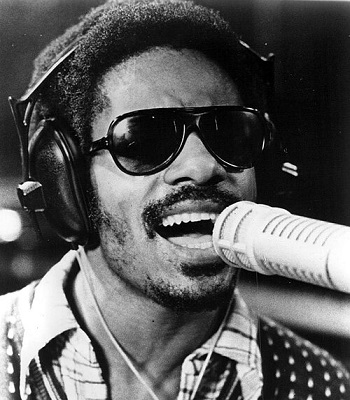
May 13 …
Alcorn State University is a public historically Black land-grant research university near Lorman, MS.
Founded May 13, 1871, Alcorn University was the first Black land-grant college established in the United States. Mississippi’s Reconstructionist legislature, dominated by Republicans sympathetic to the cause of educating the formerly enslaved, established the college on the site of Oakland College, a college that had gone defunct at the Civil War.
United States Senator from Mississippi (1870-71) Hiram R. Revels, the first African American to serve in either house of the United States Congress, resigned his seat to serve as Alcorn’s first president.
In 1878, Alcorn University became Alcorn Agricultural and Mechanical College. The college was initially exclusively for men, but beginning in 1895 women were admitted. A women’s dormitory was built in 1902.
Over time, facilities increased from three historic buildings to more than 80 structures. The original purchase of 225 acres of land grew to a campus of more than 1,700 acres. The student body grew from 179 mostly local male students at its founding, to today more than 2,933 students from all over the world.
In 1974, Alcorn Agricultural and Mechanical College was renamed Alcorn State University, representing the development of its programs. The university consistently ranks among the top 25 HBCUs in the nation according to the annual U.S. News & World Report HBCU rankings.
Notable alumni include Medgar Evers (1948), NAACP field secretary and assassinated civil rights activist; Alex Haley (attended), author of Roots: The Saga of an American Family and The Autobiography of Malcolm X; and actor Michael Clarke Duncan (attended) of The Green Mile fame.
Sources:
- “Alcorn State University is Founded.” African American Registry.

May 13 …
Joe Louis was one of the most dominant heavyweight champions in boxing history and a transformative cultural figure whose career reshaped American attitudes toward race, heroism, and national identity.
Born Joseph Louis Barrow on May 13, 1914 in LaFayette, AL and raised in Detroit after his family migrated north during the Great Migration, Louis was raised in humble circumstances that instilled in him a strong sense of discipline and resilience. Despite limited formal education, attending vocational school while juggling various jobs, he discovered his passion for boxing during his teenage years.
With the mentorship of trainer Jack Blackburn, Louis honed a precise and powerful fighting style that prioritized efficiency and composure. His early career was astutely managed by promoters like Mike Jacobs, who skillfully crafted his public persona in light of the prevailing racial climate.
Louis swiftly ascended the ranks to become heavyweight champion in 1937, initiating a historic reign that extended nearly 12 years — the longest in the division’s history. His most notable fights included a rematch victory over Max Schmeling in 1938, which held significant global political implications during World War II. This triumph transformed Louis into a symbol of American strength and unity, elevating him to the status of a national hero.
Over the course of his career, Louis successfully defended his title 25 times against prominent opponents such as Jersey Joe Walcott and Billy Conn, earning admiration for his skill and grace.
Beyond the boxing ring, Louis profoundly influenced American society and culture, especially in terms of race relations. At a time when segregation was prevalent, his achievements challenged stereotypes and helped foster greater acceptance of Black athletes as national icons. He also served in the U.S. Army during World War II and participated in exhibition matches to boost troop morale, further solidifying his status as a patriotic icon.
Louis was a contemporary of figures like Jesse Owens, and he left a lasting impact on future fighters — including Muhammad Ali — who recognized him as a foundational figure in boxing history. His career established high standards for professionalism and public behavior that shaped the expectations of subsequent athletes.
Louis received a multitude of accolades. He was inducted into the International Boxing Hall of Fame and received a posthumous Congressional Gold Medal honoring his contributions to the nation.
Despite facing personal and financial challenges in later years, Joe Louis remains an enduring symbol of excellence and resilience, whose legacy continues to inspire sports, culture, and the ongoing pursuit of equality in American history.

May 14 …
Engineer and inventor extraordinaire, Marion Rogers Croak — born on May 14, 1955 — is one of the first two Black women to be inducted into the National Inventors Hall of Fame.
It is an honor in part for Croak’s patent regarding VoIP (Voice over Internet Protocol) technology. Her invention allows users to make calls over the internet instead of a phone line. Today, the widespread use of VoIP technology is vital for remote work and conferencing for services like Zoom, Skype, and many others.
After attending college at Princeton University and USC, Croak joined AT&T Bell Laboratories in 1982, where she worked in a variety of positions for over three decades, culminating her tenure there as Senior Vice President of Research and Development. She is currently Vice President of Engineering at Google and holds more than 200 patents.
On October 21, 2020, Dr. Croak, USPTO Director Andrei Iancu, and an online audience discussed her decades of work on advanced technologies for voice and data networks and the internet. The following is a video of that discussion.
Read more about Dr. Marion Rogers Croak on the Amazing Black History” website.

May 14 …
Clara Stanton Jones was a trailblazing librarian, educator, and civic leader whose work reshaped American libraries and broadened access to knowledge, leaving an enduring mark on government, literature, culture, and history.
Born on May 14, 1913 in St. Louis, MO, Jones grew up during a time marked by racial and gender challenges, fostering an early appreciation for education and the transformative impact of libraries. This passion fueled her lifelong dedication to public service and intellectual equity.
Jones’s most significant achievements emerged during her historic tenure as the first African American director of a major city library system in the United States, when she led the Detroit Public Library in the 1970s. Under her guidance, the library expanded its community programs, enhanced literacy initiatives, and prioritized inclusivity within its collections and services. She also championed the professional development of librarians, advocating for diversity in the field and ensuring that public libraries became hubs for cultural engagement, civic participation, and lifelong learning.
In 1976, Jones became the first African-American president of the American Library Association, where she encouraged librarians to raise the awareness of library patrons and staff to problems of racism and sexism.
In addition to her administrative successes, Jones became a pioneering voice for literature and access to information, promoting libraries as vital civic institutions that preserve history, culture, and community memory. She advocated for the inclusion of African American authors, local histories, and marginalized narratives in library collections, helping to reshape public understanding of American literature and cultural heritage.
Her influence extended nationally through her involvement with the American Library Association, where she served as president and enacted policies that bolstered professional standards while advocating for equity and access.
Drawing inspiration from mentors in education and librarianship who emphasized service, professionalism, and intellectual curiosity, Jones aligned herself with notable library leaders and civil rights advocates like E.J. Josey and Eliza Atkins Gleason, as well as contemporaries dedicated to educational and cultural equity.
In 1984, Jones and Aileen Clarke Hernandez, former President of the National Organization for Women, founded the Black Women Stirring the Waters, a discussion group based in the San Francisco Bay Area.
Her intellectual role models included educators, writers, and civic leaders who regarded knowledge as a tool for empowerment, outlining a vision for libraries as catalysts for public life and democratic engagement.
Jones received numerous accolades acknowledging her leadership and transformative contributions, including awards from the American Library Association and civic organizations committed to literacy and cultural preservation. Beyond formal recognition, her legacy endures through the inclusive, dynamic, and socially conscious model of librarianship she championed.
The work of Clara Stanton Jones continues to shape library practices, public education, and cultural stewardship, securing her place as a pivotal figure in American history who bridged governance, literature, and community empowerment.

May 14 …
Sidney Bechet was one of the earliest great soloists in jazz, a virtuoso clarinetist and soprano saxophonist whose bold tone and improvisational brilliance helped define the sound of early New Orleans jazz and carry it to audiences around the world.
Born on May 14, 1897 in New Orleans to a Creole family deeply rooted in the city’s musical heritage, Bechet was immersed in music from a young age. He began playing the clarinet early on, exhibiting remarkable talent despite limited formal education. Inspired by the vibrant sounds of New Orleans, Bechet drew influence from established musicians like Buddy Bolden and Freddie Keppard, sharing stages with the likes of King Oliver and Louis Armstrong during the nascent years of jazz.
As a teenager, he was already performing professionally in dance halls and parades. His early experiences with touring bands expanded his musical horizons, and during a trip to Europe in the late 1910s, he discovered the soprano saxophone, an instrument that would become emblematic of his unique musical voice.
Bechet’s career flourished during the pivotal decades of jazz as he traveled between the United States and Europe, where he played in various ensembles and led his own groups. His powerful vibrato, emotional depth, and bold improvisations established him as one of the first jazz musicians to gain recognition for a distinct solo style.
Throughout the 1920s, he recorded landmark performances, including collaborations with pianist and composer Duke Ellington and tracks like “Wild Cat Blues.” These events showcased his exceptional melodic creativity.
During the interwar years, Bechet remained a key figure in traditional jazz, playing a crucial role in popularizing New Orleans-style music on an international scale. His innovative artistry inspired generations of clarinetists and saxophonists, establishing the soprano saxophone as a respected jazz instrument and shaping the improvisational techniques of early jazz.
In the later stages of his career, Bechet settled primarily in France, where he achieved tremendous popularity and became a celebrated cultural figure. His music resonated deeply with European audiences during the postwar jazz revival, leading to extensive recording and touring, and establishing him as one of the most revered American jazz musicians abroad.
His contemporaries — Louis Armstrong, Jelly Roll Morton, and Duke Ellington — shaped the early jazz landscape alongside him. Many younger musicians admired his expressive phrasing and commanding sound, using them as benchmarks for their own improvisation.
Bechet’s legacy is honored through numerous posthumous accolades, including induction into the Jazz Hall of Fame and the Grammy Lifetime Achievement Award.
Sidney Bechet is remembered as a foundational figure who helped transform jazz into a global musical language and a lasting symbol of American cultural ingenuity.

May 14 …
Tamara Dobson was a distinctive and trailblazing figure in 1970s cinema whose commanding screen presence and iconic roles helped redefine the image of Black women in action films and popular culture.
Born on May 14, 1947 in Baltimore, Dobson was raised in a working-class family, developing her artistic talents from an early age. She attended the Maryland Institute College of Art, where she earned a degree in fashion illustration.
Before venturing into film, Dobson established a successful career as a fashion model, gracing the pages of major publications like Vogue and starring in prominent advertising campaigns that showcased her striking 6-foot-2-inch stature and unique style. Her transition to acting coincided with a time of expanding — but still limited — opportunities for Black actresses, drawing inspiration from trailblazers like Dorothy Dandridge and Pam Grier, who were transforming the representation of Black women on screen.
Dobson’s most notable achievement was her role in the 1973 film, Cleopatra Jones, where she portrayed a glamorous, intelligent, and physically formidable government agent. She reprised this role in its sequel, becoming one of the defining faces of the Blaxploitation era, alongside contemporaries such as Pam Grier, Richard Roundtree, and Fred Williamson.
Unlike many films of the genre, Dobson’s performance emphasized strength, intellect, and dignity — and avoiding excessive sexualization in helping to redefine the archetype of female action heroes. She also made appearances in films like Come Back Charleston Blue and Chained Heat, as well as in the television series Buck Rogers in the 25th Century. Through them, she showcased her versatility across various genres.
Dobson’s influence can be seen in the work of countless performers who followed. Her depiction of a stylish, self-assured Black heroine laid the groundwork for later actresses like Angela Bassett and Halle Berry, along with contemporary action stars who blend strength and sophistication.
During her career, Dobson collaborated with actors such as Bernie Casey and Shelley Winters, contributing to a creative atmosphere shaped by writers and producers like Max Julien, who helped establish the genre’s tone. Her career also highlighted the systemic challenges faced by many actors connected to the Blaxploitation movement, which often limited their longevity in the industry.
Although Dobson did not receive major mainstream awards, she was uniquely recognized as the “Tallest Leading Lady in Film” by Guinness World Records, achieving enduring cultural significance for her iconic role. More importantly, her legacy lies in her cultural impact. She played a key role in expanding the visual and narrative possibilities for Black women in American entertainment during a pivotal era in U.S. history.
Through her contributions, Tamara Dobson helped instigate a broader evolution in film and television that challenged stereotypes, reflected shifting social dynamics, and left a lasting mark on American cultural identity.
May 15 …
Holmes Daddy-O Daylie was a seminal radio disc jockey whose vibrant personality, rhythmic broadcast delivery, and deep commitment to jazz and Black-appeal radio helped transform American music culture and paved the way for future voices in broadcasting, influencing the sound and style of popular music in the mid-20th century. He became the first African American to host a regularly scheduled show on a major Chicago network-owned station,
Born on May 15, 1920, Daylie moved to Chicago as a child and later enrolled in radio classes to hone the craft that would define his career. He began his journey at stations like WAAF, WAIT, WMAQ, and WGN, where his charismatic on-air presence and innovative use of rhymed patter made him a beloved figure among both Black and white audiences. His unique style — melding bebop jazz with lively, poetic commentary — not only showcased his profound musical knowledge but also brought the emerging bebop sound into mainstream awareness during an era dominated by swing.
Daylie drew inspiration from Chicago’s vibrant jazz scene and his contemporaries in Black-appeal radio, such as Al Benson and Jocko Henderson, who shared the use of fresh vernacular and dynamic personalities to resonate with listeners. These pioneers collectively forged a new broadcast language that reflected the rhythms and cultural sensibilities of Black America, laying the groundwork for hip-hop’s emphasis on lyrical creativity and rhythmic expression.
Dizzy Gillespie acknowledged Daylie’s role in popularizing bebop vernacular among modern jazz listeners. And in 1958, Cannonball Adderley honored him with the composition “One for Daddy-O,” a testament to his influence within the jazz community.
Beyond his stylistic contributions, Daylie played a vital role in supporting emerging artists and shaping their careers. He used his platform to promote acts like the Ramsey Lewis Trio, facilitating their audition with Chess Records in the 1950s and amplifying their work on his show, which in turn sparked public interest and bookings.
Beyond the realm of music, he was an active participant in civic life, engaging with organizations such as the NAACP, the Urban League, and Operation PUSH, reflecting his belief that radio could serve as not only entertainment but also as a catalyst for community uplift and social progress.
Throughout his career, Daylie shattered barriers and earned recognition for his contributions to broadcasting. He was inducted into the Black Radio Hall of Fame in 1990, celebrating his pioneering role in American radio.
The influence of Daddy-O Daylie continued to resonate long after his retirement in 1988, as the stylistic innovations and cultural bridges he built on the airwaves left a lasting impact on the evolution of American music and radio culture following his passing in 2003.
May 15 …
Alvin Poussaint is a distinguished psychiatrist and advocate whose pioneering work in mental health, education, and civil rights has significantly influenced American healthcare and society.
Born on May 15, 1934 in Easy Harlem, NY, Poussaint was raised in a family that emphasized education and resilience, Heexcelled academically and went on to earn his undergraduate degree from Columbia University in 1956. He immediately enrolled in medical school at Cornell Medical School, and he was the only African American admitted during that year. He received his Doctor of Medicine degree in 1960.
Early in his career, Poussaint recognized the urgent need for culturally competent mental health care and dedicated himself to addressing the psychological toll of racism on African Americans.
Poussaint’s achievements in psychiatry are noteworthy. He has held faculty positions at several esteemed institutions, notably at Harvard Medical School, where he became the first African American to obtain a full professorship in psychiatry.
His research and writings have explored the intersection of race and mental health, highlighting the necessity of understanding cultural contexts in therapeutic practices. One of his most influential works, Being Black: A Psychoanalytic Perspective, delves into the challenges faced by African Americans and advocates for mental health services tailored to their needs.
Throughout his journey, Poussaint has been shaped by the insights of notable figures such as Dr. Kenneth Clark, whose work examined the impact of segregation on children’s self-esteem. He has also served as a mentor to many young psychiatrists and medical students, urging them to prioritize social justice and community engagement in their work.
Poussaint’s collaborations with contemporaries like Dr. Joy DeGruy and Dr. Francis Collins underscore his commitment to advancing mental health care and championing marginalized communities. His contributions have garnered multiple accolades, including recognition from the American Psychiatric Association and the National Medical Association, which have honored him for his dedication to mental health and civil rights.
Poussaint’s efforts have initiated policy changes in mental health care and increased awareness of the psychological effects of systemic racism. As a public intellectual, he has also participated in documentaries and discussions that emphasize the importance of mental health within the African American community.
The legacy of Alvin Poussaint as a pioneer in psychiatry and social justice continues to leave a profound impact, shaping the future of American healthcare and inspiring generations to strive for equity and understanding.
May 16 …
John Conyers was a towering figure in American political life whose more than half-century in Congress left an enduring imprint on civil rights, progressive policymaking, and the moral vocabulary of modern U.S. governance.
Born in Detroit on May 16, 1929 to a working-class family with strong labor ties, Conyers grew up deeply engaged with the social issues that later shaped his political focus. He attended Northwestern High School and subsequently served in the U.S. Army during the Korean War, where he received commendations for his service.
Upon returning home, he pursued higher education at Wayne State University, earning both his bachelor’s and law degrees, and became a member of the bar. His early career included serving as a legislative assistant to John Dingell, a mentorship that honed his legislative instincts and provided access to national politics. Conyers also collaborated with labor unions and worked within Michigan’s workers’ compensation system, grounding his perspective in labor rights and economic justice.
Elected to Congress in 1964, Conyers became one of the longest-serving members in U.S. history and the longest-serving African American in Congress. He was a founding member of the Congressional Black Caucus and emerged as one of its most influential voices.
Conyers’ legislative contributions were vast. He was a pivotal sponsor of the legislation that established Martin Luther King Jr. Day, an early and resolute advocate for reparations for descendants of enslaved individuals, and a strong proponent of universal healthcare through proposals like the United States National Health Care Act. He also played a significant role in shaping civil rights legislation, voting protections, and police accountability measures, demonstrating his lifelong dedication to justice for marginalized communities.
Throughout his career, Conyers was influenced by and worked alongside key figures in American political and civil rights history. He operated within the legacy of leaders such as Martin Luther King Jr., translating their vision into federal policy, and collaborated with contemporaries like Rosa Parks, who notably served on his congressional staff for decades.
Conyers also engaged politically with figures such as Lyndon B. Johnson during the Civil Rights Movement and later with colleagues like Nancy Pelosi and Barack Obama, who he supported early in their national careers. He mentored younger lawmakers within progressive circles and the Congressional Black Caucus, contributing to a lineage of Black political leadership that continues into the 21st century.
Conyers’ lengthy tenure brought both recognition and complexity. He served as chair of the House Judiciary Committee and House Oversight Committee, eventually becoming the Dean of the House, symbolizing seniority and institutional memory. Among his accolades was the Spingarn Medal, awarded by the NAACP for outstanding achievement by an African American.
Conyers was widely regarded as a principled, if sometimes controversial, liberal voice who consistently challenged political norms in the pursuit of equity.
The legacy of John Conyers is intricately woven into the broader narrative of American history — from the Civil Rights Movement to ongoing discussions about justice and democracy — marking him as both a participant in and an architect of transformative change.

May 16 …
Redd Holt was a vital force in mid-20th-century American music whose rhythmic sensibility helped bring jazz into closer dialogue with popular culture.
Born Isaac Holt on May 16, 1932 in Chicago, he was raised in a city that thrived at the intersection of jazz, blues, and gospel, all of which profoundly influenced his musical identity. Instead of following a traditional academic path, he honed his craft through firsthand experience in Chicago’s vibrant clubs and performance venues, learning from seasoned musicians.
That dynamic environment served as Holt’s primary education, emphasizing the importance of discipline, timing, and adaptability. Early in his career, he drew inspiration from groundbreaking drummers like Max Roach and Art Blakey, whose innovations in bebop and hard bop shaped Holt’s own rhythmic and ensemble playing.
Holt’s most noteworthy achievements emerged from his role as a founding member of the Ramsey Lewis Trio, where he collaborated with pianist Ramsey Lewis and bassist Eldee Young. The trio garnered significant commercial success, particularly with the live recording of The ‘In’ Crowd, which not only charted in the pop realm, but also earned a Grammy Award, marking a rare instance of jazz gaining mainstream recognition.
Holt’s crisp, groove-oriented drumming was pivotal to this triumph, making intricate jazz structures feel accessible while maintaining their sophistication. After leaving the trio, he teamed up with Young to create Young-Holt Unlimited, further exploring the fusion of jazz with soul and rhythm and blues, thus contributing to the evolving musical landscape of late 1960s and early 1970s America.
Within the broader musical sphere, Holt collaborated with a vibrant group of contemporaries who were redefining genre boundaries. His work paralleled that of artists blending jazz with popular styles, and he maintained a creative kinship with figures like Ramsey Lewis while also influencing younger rhythm-section players looking to combine technical precision with commercial appeal. His recordings served as essential references for emerging drummers interested in groove-oriented jazz. His artistic journey reflects a deep respect for earlier innovators like Roach and Blakey, while his own career laid the groundwork for future generations exploring jazz fusion, soul-jazz, and crossover genres.
Holt’s contributions, though sometimes overlooked in mainstream historical accounts, carried profound cultural significance. His involvement in Grammy-recognized projects with the Ramsey Lewis Trio brought prestige and visibility, while his work with Young-Holt Unlimited achieved commercial success that showcased jazz’s versatility within popular music.
Beyond accolades, the legacy of Redd Holt is rooted in reshaping how jazz could resonate within American entertainment — not limited to elite venues but interwoven into everyday listening experiences. Through this transformation, he played an essential role in broadening the cultural influence of jazz, impacting not just musicians but also the overall evolution of American musical taste and identity.
May 16 …
Janet Jackson is an iconic figure in American music whose artistry, stagecraft, and advocacy have left a profound impact on popular culture, entertainment, and social discourse.
Born on May 16, 1966 in Gary, IN, Jackson is the youngest of the 10 siblings in the iconic Jackson family, where she was immersed in music and performance from a young age. Growing up alongside monumental figures like Michael Jackson and La Toya Jackson, she studied dance, acting, and singing, gaining invaluable experience from performing in her siblings’ shows and on television. After her family moved to the Los Angeles area to pursue entertainment careers, she received a well-rounded education in the arts, combining formal lessons with hands-on learning that shaped her versatile stage presence.
Jackson’s career is marked by extraordinary accomplishments, including record-breaking albums, global tours, and groundbreaking music videos. The release of her 1986 album, Control, positioned her as a beacon of independence and empowerment, merging innovative pop and R&B sounds with socially conscious themes. She followed this success with Rhythm Nation 1814, an album that blended dance and pop music with powerful messages about racial and gender equality, school violence, and unity.
Jackson has received numerous accolades, including multiple Grammy Awards, American Music Awards, and MTV Video Music Awards. She was inducted into the Rock and Roll Hall of Fame in 2019, highlighting her commercial success and lasting influence. Her choreography, stage production, and narrative integration in music videos redefined live performance in popular music, establishing benchmarks that many artists strive to achieve.
Jackson’s artistic influences stem from her family and a broader tapestry of musical traditions. She has credited her older brother Michael Jackson as a significant creative force in her life, while also embracing inspirations from legends such as Diana Ross, Tina Turner, and Chaka Khan.
Working alongside contemporaries like Whitney Houston, Madonna, and Prince, Jackson played a pivotal role in the evolution of pop and R&B throughout the 1980s and 1990s. In turn, she has inspired a new generation of artists, including Britney Spears, Beyoncé, and Rihanna, who recognize her groundbreaking innovations in music, choreography, and performance as foundational to their own artistry.
Beyond her achievements in entertainment, Jackson has made a substantial impact on society and culture through her advocacy and socially conscious work. Her music explores issues of racial and gender equality, sexual autonomy, and empowerment, providing a voice for underrepresented communities. Her candid engagement with media and her outspoken commentary on censorship and industry challenges have influenced public discourse surrounding free expression, race, and gender in the arts.
Through decades of pioneering efforts, the contributions of Janet Jackson have transformed American music, impacted global popular culture, and left an enduring legacy on the intersection of performance, music, and social commentary.

May 17 …
Vertner Woodson Tandy was a pioneering architect, civic leader, and one of the seven founders of Alpha Phi Alpha Fraternity, Inc., the first intercollegiate Greek-letter fraternity established for African American men.
Born on May 17, 1885 in Lexington, KY, Tandy emerged from the post-Reconstruction South during a time when opportunities for Black professionals were severely limited. Despite these challenges, he would go on to leave a lasting imprint on American history through his leadership in education, fraternal life, and architecture.
Tandy’s academic journey was a testament to his perseverance and intellect. He began his collegiate studies at Tuskegee Institute and later transferred to Cornell University, where he made history as the university’s first African American architecture graduate.
While at Cornell, Tandy helped establish Alpha Phi Alpha in 1906, alongside six other students, to support the social, academic, and cultural development of Black men in predominantly white institutions. The fraternity would later grow into a national organization with a legacy of leadership and service in African American communities.
Following his graduation, Tandy became the first registered African American architect in the state of New York. His groundbreaking achievements in architecture included not just professional recognition, but also the creation of physical spaces that reflected the aspirations and dignity of African Americans in the early 20th century. In partnership with fellow Black architect George Washington Foster, Tandy co-founded the architectural firm Tandy & Foster, which would design some of the most iconic buildings serving Black communities during the Harlem Renaissance.
Among Tandy’s most notable architectural works is Villa Lewaro, the lavish mansion of entrepreneur and philanthropist Madam C.J. Walker in Irvington, NY. This Italianate-style estate stood as a powerful symbol of Black achievement and independence and remains a historic landmark today.
Tandy’s designs often blended classical elegance with modern functionality, offering an aesthetic that communicated both pride and progress in the Black experience. His architectural contributions helped shape the cultural identity of Black America during a period of intense racial segregation and discrimination.
Beyond his architectural accomplishments, Tandy was active in civic life and continued to advocate for racial equality and the advancement of African Americans. His involvement in Alpha Phi Alpha remained strong throughout his life, and he served as the fraternity’s first treasurer.
Tandy was also involved in other professional and social organizations, using his influence to open doors for younger generations of Black professionals. Through both his leadership and example, he emphasized the importance of excellence, self-determination, and community uplift.
Tandy died in 1949, but his legacy endures in the institutions he helped build, the lives he touched, and the buildings that still stand as monuments to his vision. As a barrier-breaking architect and a foundational figure in Black Greek life, he contributed profoundly to American architecture, culture, and history.
The life’s work of Vertner Woodson Tandy remains an inspiration for those who believe in the power of intellect, courage, and service to transform society.

May 17 …
The Cecil Williams South Carolina Civil Rights Museum — located in Orangeburg, SC — officially opened to the public on May 17, 2019. That date was chosen to coincide with the 65th anniversary of the landmark U.S. Supreme Court decision in Brown v. Board of Education, which declared racial segregation in public schools unconstitutional.
The museum was founded by photographer and civil rights documentarian Cecil J. Williams, who transformed his former residence and photography studio into a space dedicated to preserving and sharing the state’s pivotal role in the civil rights movement. Initially, the museum occupied that 3,500-square-foot building on Lake Drive designed by Williams.
The museum showcases over 500 photographs and more than 200 artifacts that highlighted significant events such as the Orangeburg Massacre and the Briggs v. Elliott case. Williams’ extensive collection provided an intimate and comprehensive look at the struggles and triumphs of the civil rights era in South Carolina.
In June 2024, the museum began preparations to relocate to a new, larger facility in downtown Orangeburg, aiming to expand its capacity and reach. The new location, situated at the corner of Russell Street and Boulevard Street, is part of the Railroad Corner redevelopment project, strategically placed across from South Carolina State University and Claflin University. The expanded museum is expected to cover between 10,400 and 14,000 square feet, significantly increasing its exhibition space and allowing for a more immersive visitor experience.
The move to a larger venue reflects the museum’s growing prominence and the increasing interest in South Carolina’s civil rights history. By relocating to a more accessible and visible location, the museum aims to attract a broader audience, including students, educators, and tourists, thereby fostering a deeper understanding of the state’s contributions to the national civil rights movement.
As of May 2025, the museum continues to operate in its original location while preparations for the new facility are underway. The anticipated opening of the expanded museum is set for the end of 2025, promising to offer an enriched experience that honors the legacy of those who fought for equality and justice in South Carolina.
For more information on visiting the Cecil Williams South Carolina Civil Rights Museum, including tour arrangements and updates on the new location, please visit the official website.
May 17 …
Taj Mahal is a revered musician whose expansive career has reshaped the boundaries of American roots music.
Born Henry Saint Clair Fredericks Jr. on May 17, 1942 in Harlem, NY and raised in a musical household with a jazz pianist mother and a Caribbean-born father who was a jazz arranger and music educator, Mahal was immersed in a richly diverse sonic environment from an early age. This eclectic foundation influenced his lifelong exploration of blues, folk, jazz, reggae, calypso, and African music. Rather than confining himself to one genre, he embraced a global perspective that honored tradition while boldly innovating within it.
Emerging in the 1960s during a critical era of American cultural change, Mahal introduced audiences to a new understanding of the blues. He infused the genre with elements drawn from African and Caribbean rhythms, adding depth and global texture to an art form that had long been narrowly defined in the public eye.
Albums like The Natch’l Blues and Giant Step/De Ole Folks at Home revealed his ability to reinterpret and expand the blues while staying deeply rooted in its emotional core. His distinctive voice, slide guitar work, and mastery of various instruments brought fresh energy to American folk and blues traditions, appealing to both purists and progressive listeners.
Mahal’s contributions extend beyond his musical talent — he has also been a cultural historian and preservationist. Through his music, he has illuminated the African roots of American blues, drawing connections between continents and generations. He brought often-overlooked cultural influences to the forefront, celebrating the complexity of African American identity through sound.
Mahal’s collaborations with musicians from Mali, India, and the Caribbean further demonstrated his belief that music is a universal language that bridges gaps and tells untold stories. This commitment to cultural dialogue made him a pioneer in world music long before the term gained mainstream popularity.
Throughout his career, Mahal remained committed to education and cultural advocacy. He has performed at schools, participated in music workshops, and used his visibility to support arts programs that nurture young talent and preserve folk traditions.
Mahal’s efforts earned him critical recognition, including multiple Grammy Awards and a National Heritage Fellowship from the National Endowment for the Arts. Despite his accolades, Mahal has always stayed grounded in a mission larger than fame — bringing people together through the healing power of music and honoring the legacy of those who came before him.
Mahal’s influence on American music and culture is profound and enduring. He has not only expanded the definition of the blues but also deepened its significance by reconnecting it to its diasporic roots. His genre-defying work has inspired generations of musicians to explore the intersections of tradition and innovation.
By blending artistry with cultural consciousness, Taj Mahal has become a bridge between past and present, local and global. His music continues to resonate with authenticity, reminding the world that the blues, in all its forms, is a living, breathing testament to the human spirit.

May 17 …
Frederick McKinley Jones was an inventor, entrepreneur, and engineer who has been called the “Father of Refrigerated Transportation” and the “King of Cool.”
Born on May 17, 1893 in Cincinnati, OH, Jones grew up in an environment that offered scant formal encouragement for scientific achievement. Orphaned at a young age and largely self-taught, he left school early but demonstrated an extraordinary aptitude for mechanics, electronics, and problem-solving.
Jones’ curiosity blossomed through hands-on experiences instead of traditional classrooms. He learned by dismantling and rebuilding machines, studying technical manuals, and experimenting tirelessly. This unconventional journey instilled a unique independence of thought that would later characterize his inventive career and secure his place among the most influential American innovators of the 20th century.
Jones’ early influences stemmed from practical necessity and exposure to emerging technologies, particularly in engines, electrical systems, and radio communication. During World War I, he served as a mechanic, honing his technical skills and enhancing his ability to innovate under pressure.
After the war, Jones worked as an auto mechanic in Minnesota and ultimately as an engineer for a company that produced sound equipment for motion pictures. There, he made significant advancements to synchronized sound systems for films, helping to provide reliable audio to early “talking pictures” and showcasing his talent for bridging mechanical and electrical engineering at a time when the two fields were merging rapidly.
Jones’ most transformative contributions emerged from his partnership with businessman Joseph A. Numero, with whom he co-founded an enterprise that would eventually become Thermo King.
Jones invented the first practical automatic refrigeration system for long-haul trucks, a groundbreaking achievement that fundamentally altered American industry. Before this invention, fresh food, medical supplies, and perishable goods could not be transported over long distances without spoilage. Mobile refrigeration revolutionized agriculture, grocery distribution, and military logistics, enabling nationwide food networks and significantly expanding consumer access to fresh produce and frozen foods across the United States.
During World War II, Jones’ refrigeration systems were vital in preserving blood, plasma, and medicine for troops overseas, directly contributing to improved survival rates. His work exemplified how innovation could serve both commercial efficiency and humanitarian needs. The wide range of his patents reflects a mind driven by an unwavering desire to enhance systems impacting everyday life rather than being confined to a single problem.
A prolific inventor, Jones held more than 60 patents throughout his lifetime, primarily related to refrigeration technology, but also encompassing engines, electrical devices, and medical equipment — including 40 for refrigeration technology and another for a superior sound system for projectors that revolutionized the cinema industry. Other patents that Jones received are for a ticket dispensing machine, design for air conditioning unit, two-cycle engine, automatic refrigeration system for long-haul trucks, starter generator, rotary compressor, thermostat, temperature control system, and many more.
Despite working during a time of entrenched racial discrimination, Jones earned widespread respect in engineering and industrial circles. He received numerous accolades, both contemporaneously and posthumously, as noted below…
- He was honored with the Eli Whitney Medal by the United States Patent Office for his inventive accomplishments. (1944)
- He received the Merit Award from one of the Phillis Wheatley Clubs (Cleveland, OH) for “outstanding achievements which serve as an inspiration to youth.” (1953)
- He became the first African American elected to the National Academy of Engineering, recognizing both his technical excellence and his enduring influence on the profession. (1965)
- He was awarded the National Medal of Technology and Innovation “for … development of refrigeration technology … which revolutionized the preservation and distribution of food and other perishables…,” further solidifying his legacy as a pioneer of American innovation. (1991)
- He was inducted into the National Inventors Hall of Fame and recognized for his contributions to refrigeration technology. (2007)
Jones’ impact extends far beyond his inventions. He embodies the cultural and historical significance of perseverance and ingenuity in overcoming systemic barriers and redefining possibilities. His work not only transformed industries but also challenged prevailing assumptions about who could be an inventor, engineer, and industrial leader in America.
Today, the legacy of Frederick McKinley Jones persists in the refrigerated supply chains that support modern life and in the broader narrative of American innovation shaped by diverse, often overlooked contributors.
May 18 …
Alexander Miles was an inventor and entrepreneur, recognized for receiving a patent for his innovative system for automatically opening and closing elevator doors.
Miles was born on May 18, 1838 in Pickaway County, OH during a time of profound racial inequality and limited opportunities for African Americans. Though historical records provide few details about his early years, it is clear that he grew up in a society where Black Americans faced systemic discrimination in nearly every aspect of life. Despite these challenges, Miles would go on to make a lasting mark on American innovation, using his creativity and determination to overcome the limitations imposed by the era in which he lived.
Miles eventually moved to Duluth, MN, where he built a life as both an entrepreneur and an inventor. He opened a successful barbershop and invested in real estate, becoming one of the few African Americans in the region to achieve economic success during the post-Civil War period. His ability to thrive in business despite widespread racial barriers is a testament to his ambition and resourcefulness. But it was his keen sense of observation and problem-solving that would lead him to his most enduring contribution to technology.
During the 19th century, elevators were becoming more common in public buildings, but they remained dangerous. Passengers often had to manually open and close both the elevator and shaft doors, leading to frequent and sometimes fatal accidents. Miles, concerned for the safety of others — especially after a frightening incident involving his young daughter — recognized the need for a more reliable, automated system. His concern for public welfare motivated him to innovate where others had not yet found a solution.
In 1887, Miles patented a mechanism that automated the opening and closing of elevator doors in coordination with the elevator’s movement. This invention greatly reduced the risk of people falling into open shafts, a common hazard at the time. His design used a flexible belt attached to the elevator that triggered the shaft doors to open and close as the elevator arrived and departed. This breakthrough improved elevator safety and laid the groundwork for the automatic door systems still in use today.
Miles’s invention came at a critical time in American history, as urban centers were expanding and multi-story buildings were becoming increasingly common. Safe and reliable elevators were essential for this growth, and his work helped make tall buildings more practical and accessible. Though not widely recognized during his lifetime, his contribution to the evolution of vertical transportation helped shape the infrastructure of modern cities and contributed to the safety standards we now take for granted.
Beyond his technical achievements, Miles holds an important place in American cultural history. As a Black inventor who secured a U.S. patent during a time when African Americans faced numerous legal and social obstacles, he broke through barriers that excluded many others. His success challenged the prevailing assumptions about race and intellectual ability, offering a powerful example of Black excellence in innovation. He has since become a symbol of resilience and creativity in the face of adversity.
Miles died in 1918, but his legacy endures in the technology that protects elevator passengers every day and in the broader story of African American contributions to science and industry. His life is a reminder that innovation is not bound by circumstance, and that even in an era of deep injustice, individuals like Miles found ways to shape the future.
The story of Alexander Miles enriches the tapestry of American history and continues to inspire future generations to pursue progress through ingenuity and determination.

May 18 …
The Morton Theatre in Athens, GA is a historic landmark that has played a vital role in the development of African American culture, arts, and entertainment in the United States.
Opened on May 18, 1910, the Theatre is one of the oldest surviving vaudeville theaters in the nation, symbolizing African American entrepreneurship and resilience in an era of racial segregation. The venue hosted a diverse array of performances, ranging from vaudeville acts to jazz and blues concerts, leaving a significant mark on both the local community and the wider cultural landscape of America.
Founded by Monroe Bowers Morton, an enterprising African American businessman, the Theatre was created as a space for the Black community to celebrate their culture.

Morton Building, circa 1914 (photo courtesy of Hargrett Library; author unknown)
The tenants included the Ellington D. Harris Drug Company (the first African American owned drugstore in Athens), the practice of Dr. Blanche Thompson (the first black surgeon in Athens), the dental practice of Dr. Ida Mae Hiram (Georgia’s first licensed African American female dentist), and Dr. William H. Harris (one of the founders of the Georgia State Medical Association of Colored Physicians, Dentists and Druggists).
The Theatre quickly became a cornerstone of the Black community, attracting national performers and audience members. During its early years, the Theatre thrived as a hub for live performances — featuring renowned artists like Duke Ellington, Cab Calloway, Bessie Smith, Ma Rainey, and Louis Armstrong — providing a vital platform for Black talent at a time when most mainstream venues were segregated.
For many years, the Theatre flourished, drawing a diverse audience and nurturing an appreciation for the arts within the African American community. However, as vaudeville’s popularity declined, it adapted by transitioning to film presentations while continuing to serve as a cultural gathering place.
By the mid-20th century, the building faced deterioration and was eventually closed following a fire. Despite these setbacks, the Morton Theatre’s legacy persevered. In the 1980s, local preservationists, city officials, and residents joined forces to restore the building, which reopened as a performing arts venue in 1993, securing its role as a vital cultural institution.
Today, the Theatre stands proudly as a testament to African American history and the remarkable contributions of Monroe Morton. Now listed on the National Register of Historic Places for its architectural and cultural significance, the Theatre continues to receive recognition for its contributions to the arts — including educational programs, performances, and community outreach initiatives.
Through its rich history and ongoing presence, the Morton Theatre has not only shaped the cultural landscape of Athens but has also enhanced the understanding of African American history and artistic achievement throughout the United States.

May 19 …
Malcolm X — born Malcolm Little on May 19, 1925 in Omaha, NE — was one of the most powerful and transformative voices in the Civil Rights Movement.
Malcolm X’s early life was marked by hardship, with the violent death of his father, the institutionalized racism faced by his family, and the eventual disintegration of his home. These experiences shaped his worldview, pushing him toward a path of self-discovery and activism.
In his youth, Malcolm became involved in crime and was eventually incarcerated, where he began to study and convert to the Nation of Islam. This spiritual awakening and subsequent change in his life laid the foundation for his later work as an outspoken advocate for Black empowerment and civil rights.
As a leader within the Nation of Islam, Malcolm gained national attention for his fiery speeches and unapologetic stance on racial justice. He promoted Black pride, self-reliance, and a rejection of the oppressive systems that kept African Americans in a state of subjugation.
Malcolm X’s famous mantra, “By any means necessary,” encapsulated his belief in the right to fight for freedom and equality, even if it meant resorting to more radical measures. Unlike other civil rights leaders of his time, he was critical of nonviolence and integration, arguing instead for the creation of separate Black institutions that could support and uplift the African American community.
Malcolm X’s life took a dramatic turn after he left the Nation of Islam in 1964, following ideological differences and a transformative pilgrimage to Mecca. This journey broadened his perspective on race and religion, as he witnessed Muslims of all races coming together in unity. His new vision for racial justice became more inclusive, recognizing the importance of alliances across racial lines in the fight for global human rights.
Tragically, the life of Malcolm X was cut short when he was assassinated on February 21, 1965, just months after founding the Organization of Afro-American Unity. Despite his untimely death, his legacy as a symbol of resistance, empowerment, and self-determination continues to inspire generations in the ongoing struggle for racial justice

May 19 …
Lorraine Hansberry was a groundbreaking playwright, author, and activist whose work helped shape American literature and culture in profound ways.
Born on May 19, 1930 in Chicago, IL and raised in a politically active family that fought against segregation and racial injustice, Hansberry developed a strong sense of social responsibility from an early age. Her father, Carl Hansberry, famously challenged restrictive housing covenants in a case that reached the U.S. Supreme Court (“Hansberry v. Lee”), an experience that deeply influenced her writing and commitment to civil rights.
Hansberry made history in 1959 when her play A Raisin in the Sun debuted on Broadway. At just 29 years old, she became the first African American woman to have a play produced on the Broadway stage. The play — centered on a working-class Black family striving for a better life on Chicago’s South Side — was revolutionary in its honest portrayal of Black life, hopes, and struggles. It broke away from stereotypical depictions and instead presented complex, dignified characters grappling with real social and economic challenges. A Raisin in the Sun quickly became a critical and commercial success, helping to shift the way African Americans were portrayed in American theater.
More than a playwright, Hansberry was also an influential intellectual and activist. She used her platform to speak out against racism, colonialism, and gender inequality, often engaging in public debates and contributing essays to progressive publications like The Nation and Freedom.
She was deeply involved in Civil Rights Movements and aligned herself with other Black cultural leaders, including James Baldwin, Nina Simone, and Paul Robeson. Her activism informed her art, and her art, in turn, became a powerful vehicle for social critique and change.
Hansberry’s commitment to social justice extended to her exploration of gender and sexuality. While she was married to fellow writer Robert Nemiroff, she privately identified as a lesbian and wrote letters under a pseudonym to lesbian publications. Although she did not publicly come out during her lifetime, her writings on identity, feminism, and oppression reflected a deep awareness of intersectionality long before the term was widely used. These themes would later inspire feminist and LGBTQ+ interpretations of her work, affirming her as a forerunner in multiple social justice movements.
Tragically, Hansberry’s life was cut short when she died of pancreatic cancer at the age of 34 in 1965. Despite her brief life, her influence has only grown in the decades since.
Hansberry’s pioneering voice opened doors for generations of Black playwrights and writers, including August Wilson, Suzan-Lori Parks, and Dominique Morisseau. Her vision of using theater as a platform for truth-telling and transformation remains a cornerstone of American drama and continues to be taught, performed, and celebrated worldwide.
Hansberry’s contributions to literature and culture reflect a fierce intellect and an unshakable belief in the power of art to inspire change. She once said, “The thing that makes you exceptional, if you are at all, is inevitably that which must also make you lonely.”
The courage of Lorraine Hansberry to speak out, challenge norms, and tell untold stories made her a trailblazer — not only in theater but in the broader fight for human dignity and justice in American history.
May 19 …
Malcolm X Day — observed on May 19 — honors the birth of Malcolm X (1925–1965), one of the most influential figures of the 20th-century Black freedom struggle.
Unlike nationally recognized holidays, such as Martin Luther King Jr. Day, Malcolm X Day remains largely local and community-driven, reflecting both the grassroots nature of its origins and the evolving public understanding of his legacy.
The observance developed in the decades after Malcolm X’s 1965 assassination, particularly during the rise of the Black Power and Black Studies movements in the 1970s. Activists sought to formalize recognition of his contributions to Black self-determination, political consciousness, and global human rights. A major milestone came in 1979, when Berkeley, California, officially established Malcolm X Day, making it one of the first U.S. cities to institutionalize the observance.
Today, Malcolm X Day is officially recognized in Berkeley and informally observed in cities such as Oakland and New York City, where Malcolm X lived and worked. These commemorations emphasize education, reflection, and civic engagement, often linking his ideas to contemporary struggles for justice.
In Berkeley, events typically include public lectures, panel discussions, and cultural performances organized by community groups and local institutions. Programs explore Malcolm X’s intellectual evolution — from his early advocacy of Black nationalism to his later embrace of Pan-Africanism and international human rights — while examining the continued relevance of his thought.
In Oakland, observances often center on youth engagement and community empowerment. Local organizations host teach-ins, film screenings, spoken word performances, and leadership workshops, connecting Malcolm X’s message of self-determination to present-day activism and civic participation.
In New York City, particularly in Harlem, commemorations focus on historical reflection and scholarship. Institutions such as the Schomburg Center for Research in Black Culture present lectures, exhibitions, and archival programs examining his life, including his later international work and evolving political vision. Community rallies and public discussions also highlight the global dimensions of his legacy.
Across these settings, the observance functions as more than a memorial. It serves as a living platform for education, dialogue, and activism, preserving a legacy that challenges injustice while encouraging critical thought and collective action.
Though not federally recognized, Malcolm X Day continues to expand in visibility, sustained by communities committed to honoring Malcolm X’s enduring impact on American and global history.
Footnotes:
- City of Berkeley, California. “Resolution Establishing Malcolm X Day.” Berkeley City Council, 1979.
- City of Berkeley. “Malcolm X Day Proclamation and Annual Observance Materials.” Berkeley, CA: City Office of the Mayor, various years.
- Marable, Manning. “Malcolm X: A Life of Reinvention.” New York: Viking, 2011.
- New York City Council. “Resolutions and Proclamations Recognizing Malcolm X.” New York, NY: various years.

May 20 …
James McEachin was a multifaceted artist and storyteller whose life in front of and behind the camera, on the page, and in service to his country helped shape American culture, broaden representation in entertainment, and give voice to the experiences of veterans and everyday citizens.
Born on May 20, 1930 in Rennert, NC, McEachin grew up in a segregated America that shaped his worldview long before he entered show business. Before pursuing creative arts, he answered the call of duty, enlisting in the United States Army as a young man and serving in the Korean War, where he was wounded in combat and survived an ambush that claimed many of his comrades.
McEachin’s military experiences profoundly influenced his later work and advocacy. He was ultimately recognized with awards including the Silver Star and Purple Heart for his valor and sacrifice, honors he formally received later in life after participating in a veterans history project.
After his military service, McEachin’s early civilian life included roles as a fireman and police officer in Hackensack, NJ before he pursued creative work in California. Known early in his career as “Jimmy Mack,” he worked in the music industry as a songwriter, producer, and record label owner, collaborating with artists such as Otis Redding and the doo-wop group The Furys.
McEachin’s transition into acting began in the 1960s when he signed a contract with Universal, subsequently appearing in a wide range of television series and films. McEachin often portrayed principled figures — lawyers, police officers, and professionals — bringing dignity and depth to roles in shows like Mannix, Hawaii Five-O, All in the Family, and in his starring turn as Harry Tenafly, one of the few African American detective leads in 1970s television. He also appeared in films alongside major actors including Clint Eastwood and John Wayne.
In the twilight of his acting career, McEachin expanded his artistic influence through writing. His literary works include the military history Farewell to the Mockingbirds and novels such as The Heroin Factor and Tell Me a Tale: A Novel of the Old South, earning accolades like the Benjamin Franklin Award for Best Fiction and Best Audio, and the ForeWord Magazine Book of the Year Award.
McEachin also produced the award-winning audio tribute Voices: A Tribute to the American Veteran and created the short film Old Glory, which won Best Narrative Short at the GI Film Festival. Through these works, McEachin explored themes of American identity, racial injustice, and the sacrifices of servicemen and women, enriching both literary and film culture.
McEachin’s influences and peers spanned multiple creative communities. In film and television, he worked amid the broader movement for greater representation of African Americans on screen alongside contemporaries like Sidney Poitier and actors from socially conscious dramas of the era.
McEachin’s military service and advocacy connected him with veteran communities and programs such as the American Veterans Center. His one-man play Above the Call; Beyond the Duty and his frequent engagements with veteran audiences inspired many performers and public speakers.
Honors such as his Distinguished Achievement Award from Morgan State University and his appointment as a U.S. Army Reserve Ambassador underscored his impact on both artistic and civic life.
The legacy of James McEachin lies in his portrayal of complex, courageous characters, his commitment to truthful storytelling, and his steadfast dedication to honoring the service and humanity of others.

May 20 …
Michael Brown (Ferguson) was an 18-year-old whose death became a defining moment in modern discussions about policing, race, and protest.
Brown was born on May 20, 1996 and grew up in the St. Louise, MO suburb of Ferguson, which was marked by economic and racial disparities that shaped many residents’ daily experiences. He was raised by his parents, Lesley McSpadden and Michael Brown Sr., in a family that emphasized perseverance and the hope for upward mobility.
Brown’s friends and relatives characterized him as a quiet, tall young man still navigating his journey into adulthood. He possessed a personality that combined reserve with moments of humor and warmth.
Brown attended Normandy High School, where he completed his studies and graduated just weeks before his tragic death. He had aspirations to further his education at Vatterott College, planning to study a technical trade. This decision reflected a practical approach to securing a stable future through vocational training, a path increasingly chosen by young Americans seeking opportunities beyond traditional four-year college routes.
While Brown’s achievements were modest, they held significant meaning at his life stage. Graduating high school and preparing for further training marked important milestones, and those close to him viewed these steps as the beginning of his transition into adulthood. Although Brown’s life may not have been widely recognized beyond his community before 2014, it ultimately came to symbolize the aspirations and challenges faced by many young Black men navigating structural inequalities in American society.
On August 9, 2014, Brown was fatally shot by a police officer during an encounter on a residential street in Ferguson. The incident triggered immediate local unrest, escalating into sustained protests after his body was left in the street for hours, raising critical questions about the circumstances of the shooting.
A grand jury later chose not to indict the officer, and a subsequent federal investigation did not result in civil rights charges against him, although it did uncover patterns of discriminatory policing practices in Ferguson. Brown’s death had a profound impact on his family and community, igniting grief and activism, and serving as a catalyst for a nationwide protest movement that significantly enhanced the visibility and influence of Black Lives Matter.
Michael Brown (Ferguson) reshaped public discourse, inspired policy debates and reforms, and left a lasting mark on American social justice, culture, and history.
About The Photo:
- Bronze plaque in memory of Michael Brown on sidewalk where shooting incident occurred. (Photo by LittleT889)

May 21 …
Regina M. Anderson was a trailblazing playwright, librarian, and cultural organizer whose work helped shape the Harlem Renaissance and expand the role of African Americans in the arts and public service.
Born on May 21, 1901 in Chicago to a racially diverse family, Anderson identified strongly with her African American heritage and used her unique perspective to bridge cultural communities. She was among the first African American women to achieve a leadership role in New York’s public library system and played a pivotal role in fostering Black intellectual and artistic life during one of its most vibrant eras.
After graduating from Wilberforce University and later earning a master’s degree in library science, Anderson moved to New York City, where she began working at the New York Public Library. Her Harlem apartment quickly became a hub for artists, writers, and activists — many of whom would become central figures in the Harlem Renaissance. She helped host some of the earliest gatherings of this movement, providing a space where creatives such as Langston Hughes, Zora Neale Hurston, and Alain Locke could share ideas and collaborate. Her influence as a cultural facilitator made her one of the unsung architects of this period.
In addition to her work behind the scenes, Anderson was a talented writer in her own right. She co-wrote “Climbing Jacob’s Ladder,” one of the first plays by a Black woman to be produced off-Broadway, which explored African American history and the struggle for racial dignity.
Anderson’s plays often examined issues of racial identity, social justice, and empowerment, adding depth and dimension to African American theater. Through her writing, Anderson challenged prevailing narratives and provided a platform for Black voices during a time when mainstream American theater largely ignored them.
As a librarian, Anderson broke racial barriers and redefined what public cultural institutions could be. She became the first African American librarian to be promoted to a branch head in the New York Public Library system. Her tenure was marked by a deep commitment to education, literacy, and community engagement. She organized lectures, exhibitions, and readings that celebrated Black culture and history, effectively using the library as a stage for intellectual empowerment and social change. Her work helped legitimize African American literature and art within academic and public spheres.
Anderson’s contributions extended well beyond the Harlem Renaissance. She remained an advocate for cultural access and representation throughout her life, mentoring young artists and serving on advisory boards that supported the arts and civil rights. Though often overshadowed by more prominent figures, her impact was foundational — she was the connective tissue that helped a generation of Black creatives find community, voice, and recognition. Her dedication to both creativity and public service set a model for socially engaged cultural leadership.
Anderson’s legacy is one of quiet strength and lasting influence. As a playwright, she gave voice to untold stories — as a librarian, she opened doors for countless others.
The life’s work of Regina M. Anderson helped redefine American culture by ensuring that Black stories were seen, heard, and preserved. Today, her story stands as a reminder that cultural revolutions are often made not just by those in the spotlight, but by those who build the stage and invite others to speak.

May 21 …
Fats Waller was a prodigious pianist, composer, and entertainer whose wit and musical brilliance helped define the sound of early jazz and stride piano.
Born Thomas Wright Waller on May 21, 1904 in New York City and raised in a musical family in Harlem, Waller began playing the organ at his father’s church and quickly demonstrated an exceptional ear for music. As a teenager, he studied under the legendary stride pianist James P. Johnson, mastering the intricate, syncopated piano style that would become his trademark. By his early twenties, he had established himself as one of the most technically gifted and creatively expressive pianists in the country.
Waller’s contributions to American music were both profound and far-reaching. As a composer, he penned jazz standards that became foundational to the genre, including “Ain’t Misbehavin’,” “Honeysuckle Rose,” and “Keepin’ Out of Mischief Now.” These songs, often co-written with lyricist Andy Razaf, combined sophisticated harmonies with catchy melodies and playful lyricism.
Waller’s compositions bridged the worlds of jazz, Tin Pan Alley, and American popular song, influencing everyone from Duke Ellington to Nat King Cole. Waller’s ability to fuse deep musical knowledge with mass appeal made him one of the first truly crossover artists in American popular culture.
Beyond his technical brilliance, Waller was a masterful entertainer, known for his charismatic stage presence and sense of humor. His radio broadcasts, films, and recordings reached millions during the 1930s and early 1940s, offering both escape and joy during the difficult years of the Great Depression.
While Waller’s comedic persona was central to his popularity, it sometimes masked the depth of his musical artistry. Beneath the jokes and grins was a pianist of extraordinary dexterity, capable of lightning — fast runs, complex improvisations, and subtle emotional shading — all delivered with a light touch that belied the difficulty of his playing.
Culturally, Waller played a vital role in advancing the visibility of African American musicians at a time when racial barriers were entrenched in American society. His success in predominantly white media spaces — radio, film, and the recording industry — challenged stereotypes and offered a broader image of Black excellence and creativity.
While Waller often worked within the confines of racial expectations in the entertainment industry, his artistry consistently transcended those limitations, earning the respect of audiences and musicians across racial lines. He became a beloved national figure whose music reflected the spirit and resilience of his era.
Waller’s influence did not end with his untimely death in 1943 at the age of 39. His recordings continue to inspire pianists and jazz musicians around the world, and his songs remain staples in the American songbook. More than just a performer, Waller helped shape the trajectory of American music with his joyful yet technically masterful style.
The work of Fats Waller captured the complexity of the Black experience in the early 20th century — full of struggle, creativity, laughter, and sophistication. In doing so, he secured his place as one of the essential architects of American musical history.

May 22 …
The United States Colored Troops (USCT) were a significant force in the Union Army during the American Civil War, representing a powerful shift in both military strategy and the nation’s evolving view of African American citizenship. Their regiments were precursors to the Buffalo Soldiers.
Established by the Bureau of Colored Troops on May 22, 1863, following the Emancipation Proclamation, the USCT encompassed over 180,000 Black soldiers and thousands of Black sailors who served in segregated regiments. These men, many of whom were formerly enslaved, volunteered not only to fight for the Union cause but also to stake a claim to their own freedom and humanity. Their enlistment was a crucial step toward redefining the role of African Americans in American society.
The formation of the USCT was met with resistance and skepticism. Many white Americans, including military officials, doubted whether Black soldiers could perform effectively in combat. Despite this, USCT regiments went on to prove their valor in major battles such as the Siege of Petersburg, the Battle of Fort Wagner, and the Battle of Nashville.
Their discipline and courage under fire gained the respect of allies and even some former doubters. The soldiers endured harsher conditions, lower pay, and greater danger — particularly if captured by Confederate forces who often refused to treat them as legitimate combatants — but they continued to serve with distinction and resolve.
Beyond the battlefield, the presence of Black soldiers in Union uniforms had powerful symbolic meaning. Their participation challenged the Confederacy’s ideological foundation and began to shift Northern perceptions of African American capabilities and rights.
The sight of armed Black men fighting for their country under the U.S. flag was a profound image that pushed the boundaries of what freedom and equality could mean in practice. It helped create momentum for the passage of the 13th Amendment, which abolished slavery, and laid moral and political groundwork for future civil rights progress.
The USCT also had a lasting impact on African American communities and leadership. Veterans of these regiments often returned home with a stronger sense of purpose and a claim to citizenship that would inform later efforts in Reconstruction and beyond. Many became local leaders, educators, ministers, and activists.
Their service inspired organizations and political movements that would continue to push for full equality in the decades to come. The military experience also helped forge a sense of shared identity and pride within the African American population, reinforcing the notion that they were not just beneficiaries of freedom, but active agents in achieving it.
The contributions of the USCT remain a vital chapter in American history. Their courage on the battlefield and their determination to fight for liberty played an essential role in securing Union victory and transforming the moral landscape of the nation. By demanding the right to serve, they helped redefine what it meant to be American and laid a foundation for the continuing struggle for racial justice.
Today, the legacy of the United States Colored Troops endures as a testament to sacrifice, resilience, and the unyielding pursuit of freedom in the face of profound adversity.
May 21 …
Ona Judge Staines — also known as Oney Judge — was an enslaved woman who courageously escaped on May 21, 1796 from the household of President George Washington. In doing so, she became a powerful symbol of resistance, self-determination, and the contradictions at the heart of early American liberty.
Born around 1773 at Mount Vernon in Virginia, Judge was the daughter of Betty, an enslaved seamstress, and Andrew Judge, a white English indentured servant. As a young girl, she was chosen to serve Martha Washington and eventually became a personal attendant in the presidential households in New York and Philadelphia. This role placed her at the heart of the new nation’s political life while highlighting the harsh truth that the ideals of freedom proclaimed by the Revolution did not apply to everyone living under its banner.
While residing in Philadelphia, the nation’s capital at the time, Judge learned about Pennsylvania’s gradual abolition law, which provided a legal avenue to freedom for enslaved individuals who established residency in the state. Aware of the law, the Washington household rotated enslaved servants out of Pennsylvania to prevent them from qualifying for emancipation.
In 1796, after discovering she was to be given as a wedding gift to Martha Washington’s granddaughter, Judge made the brave decision to escape. With the support of Philadelphia’s free Black community, she fled to Portsmouth, NH. Her escape was a deliberate act of resistance, characterized by careful planning, courage, and reliance on a network of allies who risked their own safety to help her.
In New Hampshire, Judge married a free Black sailor named Jack Staines and built a family life, though it was fraught with economic struggles and the looming threat of recapture. George Washington made multiple attempts to reclaim her, including appeals to federal officials and personal visits, but she resolutely refused to return, even when offered a pardon.
Judge’s unwavering spirit placed her among a broader generation of African Americans challenging slavery through escape and defiance, alongside contemporaries such as her fellow fugitives in the North and later activists like Frederick Douglass and Harriet Tubman, who continued the fight against oppression. Although she lived long before the organized abolitionist movement reached its zenith, her actions foreshadowed the moral reckoning that would come to shape 19th-century America.
In her later years, Judge gave interviews detailing her escape and refusal to return to slavery, offering rare first-person accounts from an enslaved woman connected to the presidential household. Her narrative illuminated the disconnect between the founding generation’s rhetoric of liberty and the enduring reality of human bondage at the highest levels of government.
Through her quiet, yet resolute defiance, Oney Judge made her mark on American history — not through public office or formal recognition, but by asserting her own humanity.
Today, the life of Ona Judge Staines remains a vital part of the nation’s cultural memory, reminding Americans that the quest for freedom has often hinged on the bravery of those who have been denied it.
May 21 …
Loretta Lynch is a distinguished attorney whose career in public service culminated in her historic tenure as the first African American woman to serve as Attorney General of the United States, a role in which she helped shape modern conversations about justice, civil rights, and the rule of law.
Born on May 21, 1959 in Greensboro, NC and raised in a family deeply committed to faith and community leadership, Lynch cultivated an early appreciation for fairness and civic responsibility. Her journey from Harvard Law School to leading the nation’s highest law enforcement office exemplifies a career marked by rigor, discretion, and unwavering dedication to institutional integrity.
Lynch first rose to national prominence as the U.S. Attorney for the Eastern District of New York, a role she held twice under Presidents Bill Clinton and Barack Obama. In this capacity, she managed high-profile prosecutions involving terrorism, public corruption, civil rights violations, and financial crimes. Her office achieved significant convictions in cases related to international terrorism plots and police brutality, solidifying her reputation as a meticulous and impartial prosecutor.
Colleagues frequently praised her calm and methodical leadership style, earning her respect across political divides. Throughout her federal career, she collaborated with contemporaries like Eric Holder, whom she succeeded as Attorney General, and other senior Justice Department officials as they navigated complex challenges in national security and civil rights.
Nominated by Barack Obama in 2014 and confirmed in 2015, Lynch took the helm of the Department of Justice during a period marked by heightened national tension surrounding policing, voting rights, cybersecurity, and public trust in institutions. As Attorney General, she focused on strengthening relationships between law enforcement and communities, defending voting access, and combating violent extremism.
Additionally, she tackled issues of corporate accountability and data security, emphasizing the Department’s evolving role in the digital age. Her tenure required balancing independence with executive responsibility, especially during politically sensitive investigations that tested public confidence in federal law enforcement.
Lynch has credited her parents, especially her father, a Baptist minister, as key influences in shaping her moral compass and sense of service. Professionally, she drew inspiration from generations of civil rights lawyers who wielded the law as an instrument for change, reflecting the broader legacy of the civil rights movement.
Throughout her career, she has worked alongside peers who expanded representation in federal leadership, signaling a gradual diversification of the American legal establishment. Her ascent to the nation’s top legal office symbolizes not only personal achievement but also broader social progress, resonating deeply with young attorneys and aspiring public servants.
Over her career, Lynch has received numerous accolades recognizing her legal expertise and public service, including awards from bar associations and civic organizations for her leadership and commitment to justice. Her historic confirmation as Attorney General marked a significant milestone in American history, underscoring the evolving inclusivity of federal leadership.
After leaving office, she returned to private practice and public speaking, continuing to engage in discussions about governance, accountability, and the preservation of democratic ideals.
The legacy of Loretta Lynch lies not only in the cases she prosecuted or the policies she advanced but also in the example she set as a principled and measured steward of the law during a pivotal moment in American history.

May 21 …
Isaiah T. Montgomery was a Reconstruction-era political leader, entrepreneur, and town founder best known as the principal founder of the town of Mound Bayou in Mississippi — one of the most significant all-Black towns in the United States.
Born into slavery on May 21, 1847 in Davis Island, MS, Montgomery was the son of Benjamin Montgomery, who managed the plantation of Joseph Davis, brother of Jefferson Davis. The younger Montgomery was fortunate to receive an education uncommon for enslaved children, learning to read, write, and understand business under his father’s tutelage.
After the Civil War, the Montgomery family briefly owned and operated the former Davis plantation, gaining vital experience in large-scale agriculture and commerce before economic challenges forced them to sell. These formative experiences instilled in Montgomery a belief in land ownership, entrepreneurship, and political advocacy as essential means for Black advancement.
In 1887, Montgomery co-founded — along with his cousin Benjamin T. Green — Mound Bayou in the Mississippi Delta, envisioning it as a self-governing, economically independent Black community shielded from the violence and disenfranchisement pervasive in the South. He sought to establish a space for African American self-determination amid the oppressive conditions of Jim Crow Mississippi.
As mayor and a prominent political figure, Montgomery championed agricultural development, banking, education, and small business growth. Mound Bayou became a symbol of Black autonomy, attracting settlers, investors, and national attention. His efforts echoed those of contemporaries like Booker T. Washington, whose philosophy of economic self-sufficiency and adaptation to segregationist politics resonated with Montgomery. Washington viewed Mound Bayou as a practical model of Black enterprise, and the two men maintained a relationship based on shared strategic goals.
Montgomery’s political career, however, was not without controversy. As a delegate to the Mississippi constitutional convention of 1890, he voted in favor of a new state constitution that effectively disenfranchised most Black voters through poll taxes, literacy tests, and other measures. He justified his support as a pragmatic concession aimed at preserving limited political and economic stability for communities like Mound Bayou amidst rising white supremacy.
Critics of the time and since have denounced this choice as a capitulation to injustice, while supporters argue that he was navigating a treacherous political landscape with few alternatives. His position set him apart from more confrontational activists of his era and highlighted the deep divisions within Black leadership during the rise of Jim Crow.
Despite the backlash, Montgomery’s accomplishments in town-building and business development garnered recognition during his lifetime. The town of Mound Bayou in Mississippi thrived for decades as a center of Black enterprise, education, and civic life, attracting visits from national leaders and serving as a model for other independent Black communities.
Montgomery’s life embodied both the aspirations and contradictions of Black leadership in the post–Civil War South, leaving a complex legacy in American business, social justice, and political history. Although Montgomery did not receive formal national accolades in an era hostile to Black political achievement, his leadership ensured a lasting legacy in regional and national history.
The life of Isaiah T. Montgomery the challenging decisions faced by African American leaders in the late 19th century and highlights his significant contributions to the narrative of Black institution-building, economic resilience, and the enduring struggle for equality in the United States.

May 22 …
Composer, bandleader, poet, and philosopher, Sun Ra was one of the most groundbreaking and mysterious figures in 20th century music.
Born Herman Poole Blount on May 22, 1914 in Birmingham, AL, Ra defied easy categorization. He claimed to be an angelic being from Saturn, sent to Earth to spread cosmic truth through music. While many dismissed his persona as eccentric, it was a carefully constructed mythology rooted in deep critiques of racism, history, and human limitation. His commitment to visionary thought set him apart in both sound and message.
Musically, Ra revolutionized jazz by pushing its boundaries into the realm of the unknown. He led the Arkestra, an ever-changing ensemble that moved freely between swing, bebop, avant-garde jazz, and experimental electronic music.
Ra was one of the first musicians to use synthesizers and electronic instruments in jazz. He incorporated them in ways that expanded the genre’s sonic palette.
Ra’s compositions often rejected traditional structures, embracing chaos, atonality, and free improvisation to reflect a universe in constant motion. Through this, he pioneered what would later be recognized as space jazz and laid groundwork for future experimental genres.
Beyond sound, Ra’s contribution to American culture was philosophical and political. He used music not just as art but as a medium for radical reimagining. He viewed the stage as a platform for transformation, offering audiences an escape from Earth-bound limitations and encouraging them to envision higher forms of existence.
His mythology, which blended ancient Egyptian symbolism with futuristic themes, was a powerful form of Afrofuturism — a concept that would later be explored by artists like Octavia Butler and George Clinton. By asserting an origin beyond Earth, Ra symbolically freed himself and his followers from the constraints of American racial history.
Ra’s performances were theatrical spectacles, combining elaborate costumes, cosmic imagery, and choreographed movement. These shows were more than entertainment. They were living rituals designed to awaken consciousness. His use of multimedia elements — costume, dance, lighting, and spoken word — anticipated performance art movements and music video aesthetics decades ahead of their time. In this way, he not only influenced the direction of jazz but also helped shape the broader contours of American performance art and experimental culture.
Ra also pioneered independent music production. Long before the digital age enabled artists to self-release, he founded his own label, Saturn Records, to distribute his recordings. This DIY ethic allowed him complete creative control and helped define the model for later underground and independent music movements. In resisting industry norms and racial expectations, Sun Ra modeled artistic self-sufficiency and freedom—principles that continue to resonate in hip-hop, punk, and experimental scenes.
Even after his death in 1993, Ra’s influence remains profound. The Arkestra continues to perform under the leadership of Marshall Allen, preserving and evolving his legacy. More than a musician, Ra was a cultural prophet who challenged America to reimagine itself — not just socially and politically, but spiritually and cosmically.
The work of Sun Ra remains a testament to the power of imagination to challenge oppression, transcend boundaries, and envision new futures. In the galaxy of American cultural icons, he shines as a singular, luminous force.

May 22 …
Bernard Shaw was a pioneering broadcast journalist whose calm authority and unwavering commitment to factual reporting helped define the modern era of 24-hour television news in the United States.
Born on May 22, 1940 in Chicago and raised in Washington, DC, Shaw developed a passion for journalism early on while delivering newspapers and tuning into radio broadcasts. He pursued his studies at the University of Illinois at Chicago before enlisting in the U.S. Marine Corps, an experience that honed his discipline and composure in high-pressure situations.
Inspired by pioneering figures like Edward R. Murrow, Shaw entered the news industry with a mission to infuse clarity, dignity, and integrity into an evolving media landscape. Starting his career in local radio and television, he made his way to national platforms such as CBS News and ABC News, where he covered significant events and established a reputation for incisive reporting.
In 1980, he took a bold step by becoming the principal anchor for the newly launched CNN, embracing the challenge of joining an untested cable network. This decision marked a historic turning point.
Shaw emerged as the face of CNN’s credibility in straight news and helped to legitimize cable news as a vital force in American journalism. His steady presence during presidential elections, political conventions, and international crises solidified his status as one of the most trusted voices in broadcast news during the late twentieth century.
Shaw’s defining moment arrived during the Persian Gulf War in 1991, when he reported live from Baghdad amidst falling bombs. Together with colleagues like Peter Arnett and John Holliman, he provided real-time coverage that brought the immediacy of modern warfare into homes around the globe.
His composed narration amid extraordinary danger not only elevated CNN’s international profile but also reshaped expectations for live reporting. This broadcast demonstrated the profound impact of television on public understanding of global events, marking a pivotal moment in media history and solidifying Shaw’s legacy as a courageous and composed journalist.
Throughout his esteemed career, Shaw interviewed presidents, challenged political leaders, and moderated debates with a balanced yet firm approach. Working alongside notable contemporaries such as Dan Rather, Tom Brokaw, and Peter Jennings, he forged a unique identity rooted in restraint and credibility rather than sensationalism.
As one of the first prominent African American network news anchors, Shaw broke racial barriers in broadcast journalism, advancing representation in a field traditionally dominated by white voices. His professionalism and visibility broadened cultural perceptions of authority and trust in American media, inspiring younger generations of journalists who recognized him as a model of excellence.
Shaw’s accomplishments garnered widespread recognition, including multiple Emmy Awards, Peabody Award, and lifetime achievement honors from journalism organizations. He was inducted into the Broadcasting & Cable Hall of Fame and received accolades for both his reporting and contributions to diversity in media.
After retiring from CNN in 2001, Shaw remained an influential voice in discussions about press freedom and journalistic standards.
Upon his passing in 2022, tributes to his life of Bernard Shaw highlighted not only his groundbreaking role in television news, but also his lasting contributions to American society and culture. And they recognized his steadfast commitment to truth-telling that shaped public discourse during some of the most consequential moments in modern history.

May 23 …
Pauline Hopkins was a pioneering journalist, novelist, playwright, and editor whose work in the late 19th and early 20th centuries significantly shaped American literature, culture, and the publishing landscape.
Born on May 23, 1859 in Portland, ME, Hopkins emerged as one of the first Black women to write and publish acclaimed fiction that tackled race, gender, and social justice, creating a space for African American voices in a literary landscape largely dominated by white authors. She skillfully combined her literary talent with activism, using her writing to delve into the complexities of African American identity and the lasting effects of slavery while engaging with contemporary social and political issues.
Beginning her career in journalism at a time when opportunities for African American women were scarce, she became a significant contributor and editor for influential publications, particularly The Colored American Magazine, which she transformed into a platform for Black literature, history, and culture. Through her editorial guidance, she supported the careers of emerging Black writers and championed racial uplift, publishing poetry, essays, serialized novels, and critical reviews.
Her novels, such as Contending Forces and Of One Blood, confronted issues of racial injustice, African heritage, and the interplay of race and gender, weaving together romance, mystery, and social critique in innovative ways for her era.
Hopkins drew inspiration from a wide array of sources, including African American intellectuals, abolitionist writers, and the broader literary movements of her time. She was influenced by figures like Frederick Douglass and Ida B. Wells, and she admired writers such as Frances Ellen Watkins Harper and Harriet Beecher Stowe for their ability to blend moral purpose with literary skill.
Hopkins’ contemporaries included other African American literary figures like W.E.B. Du Bois, who were instrumental in cultivating cultural and political consciousness through literature, as well as white authors whose social novels served as models for weaving storytelling with social critique. Her work reflected a profound awareness of literature’s power to shape cultural narratives and challenge prevailing stereotypes.
Beyond her literary achievements, Hopkins was a passionate advocate for African American history and cultural preservation. She meticulously infused her fiction with historical research, illuminating the achievements and struggles of Black Americans and their African heritage. Through her magazine and public lectures, she underscored the significance of education, civic engagement, and self-representation in combating racial discrimination.
Although Hopkins didn’t receive formal accolades during her lifetime, her influence was acknowledged by peers and later scholars as foundational to the Harlem Renaissance and the broader evolution of African American literature. Her legacy persists in her expansion of opportunities for Black women writers and editors in American publishing.
Pauline Hopkins’ contributions to American literature extend beyond her writings to her role as a cultural curator and mentor. By nurturing talent, challenging societal norms, and highlighting African American experiences in her fiction and journalism, she helped shape the literary and cultural landscape of her time.
The work of Hopkins stands as a testament to the power of storytelling as a means of social change and historical preservation, and her influence is evident in generations of writers who followed her path.
Today, Pauline Hopkins is celebrated as a trailblazer whose intellect, artistry, and activism continue to inspire scholarship, literature, and public discourse surrounding race, gender, and the enduring effects of history.

May 23 …
Ryan Coogler is a prominent filmmaker whose work has significantly advanced representation and storytelling in American cinema, particularly in relation to the African American experience.
Born on May 23, 1986 in Oakland, CA, Coogler was raised in a nurturing family that prioritized education and community values. Growing up in a culturally vibrant environment, he developed a passion for storytelling early on. His experiences in Oakland, particularly witnessing the social and economic struggles of his community, profoundly shaped his artistic vision and commitment to exploring themes of race, identity, and resilience in his films.
Coogler pursued his studies at California State University, Sacramento, earning a degree in Communications before completing a Master of Fine Arts in Film Production at the University of Southern California. His early works, particularly the short film “Locks,” highlighted his talent as a storyteller.
Coogler gained widespread acclaim with his debut feature, Fruitvale Station, in 2013, which poignantly illustrated the heartbreaking events surrounding the police shooting of Oscar Grant. The film received significant praise and accolades, including the Grand Jury Prize at the Sundance Film Festival, establishing Coogler as a filmmaker with a powerful voice.
His success continued with Creed in 2015, where he reinvigorated the Rocky franchise while delving into themes of legacy and identity through a Black cultural lens. However, it was the groundbreaking superhero film Black Panther in 2018 that truly captured the world’s attention, breaking box office records and receiving numerous accolades, including several Academy Award nominations.
Coogler’s skill in merging visual spectacle with culturally significant themes has positioned him as a leading voice in Hollywood and a crucial figure in conversations about representation in the industry.
In a historic moment at the 2026 Academy Awards, Coogler won his first Oscar for Best Original Screenplay for his film Sinners. This achievement marked a pivotal milestone in his career, making him only the second African American filmmaker to win in this category, following “Get Out by Jordan Peele in 2018.
Sinners, a vampire thriller, not only received widespread acclaim, but also garnered a record-setting 16 nominations, the most ever for a single film in Oscar history. Of the four awards won by the film, its director of photography, Autumn Durald Arkapaw, also made history as the first woman and first woman of color to win the award for Best Cinematography.
Coogler has expressed admiration for the trailblazing legacies of iconic figures like Sidney Poitier and Denzel Washington, who have paved the way for future generations. He draws inspiration from these predecessors, emphasizing the importance of creating meaningful work over chasing accolades. This philosophy is evident in his films, which challenge societal norms and delve into often overlooked narratives.
Throughout his career, Coogler has been influenced by and collaborated with notable filmmakers like Steven Spielberg and Spike Lee, who have encouraged him to challenge mainstream cinematic narratives. He also actively mentors young filmmakers, demonstrating his commitment to uplifting emerging talents, including Zinzi Evans, his producer and wife.
Collaborations with contemporaries such as Ava DuVernay and Jordan Peele underscore a collective effort among Black filmmakers to expand the scope of film. His other accolades, including the BAFTA Rising Star Award, highlight his influence and dedication to authentic storytelling that resonates with diverse audiences.
Following his Oscar win, Coogler’s reputation continues to ascend, placing him among a group of influential filmmakers reshaping Hollywood. His unique voice not only enriches the fabric of American cinema but also paves the way for budding filmmakers, underscoring the necessity of diverse narratives in mainstream entertainment.
The success of Ryan Coogler has cemented his status as a formidable storyteller, leaving an enduring impact on both film and culture.
May 23 …
Scatman Crothers was a multifaceted entertainer whose work as a musician, actor, and voice artist helped expand opportunities for Black performers while leaving a lasting imprint on film, television, and popular culture.
Born Benjamin Sherman Crothers on May 23, 1910 in Terre Haute, IN, Crothers was raised in humble beginnings and honed his musical abilities through self-teaching, mastering the drums, guitar, and later piano as a teenager. His nickname originated in the early 1930s during a radio audition, showcasing his talent in scat singing — a jazz vocal improvisational style.
Crothers began his career in speakeasies and on radio shows, ultimately forming his own band and touring the Midwest before moving to California, where he became a regular performer in nightclubs and on air. Inspired by jazz culture and artists like Slim Gaillard, with whom he performed, Crothers developed a unique style that blended musical versatility with comedic timing, elements that would define his future endeavors.
In the 1950s, Crothers transitioned into film and television, embarking on a career that spanned over six decades. He appeared in iconic films like The Shining, where he portrayed Dick Hallorann, and One Flew Over the Cuckoo’s Nest alongside Jack Nicholson, with whom he collaborated multiple times.
On television, he gained fame as Louie the Garbage Man in Chico and the Man, becoming one of the first Black performers to have a regular spot on a Los Angeles television program. His voice acting also broadened his reach, featuring in The Aristocats and the animated series Hong Kong Phooey and The Transformers, which helped shape children’s entertainment for generations.
Crothers’s contemporaries included notable entertainers such as Redd Foxx and Sammy Davis Jr. All three of them similarly adapted to the changing landscape of mid-20th-century American entertainment.
Throughout his career, Crothers’s impact extended far beyond performance. Working in an era marked by racial discrimination, he consciously chose to avoid roles that perpetuated negative stereotypes, helping to bridge racial divides in the entertainment industry.
Crothers’s collaborations with figures like Bob Hope on USO tours and performances at notable venues like the Apollo Theater connected him to the broader fabric of American culture. His groundbreaking presence influenced subsequent generations of Black actors and voice performers who reaped the benefits of the opportunities he helped pave.
Crothers’s career intersected with significant cultural shifts, including the rise of television, the growth of animated media, and the increasing visibility of Black entertainers in Hollywood.
Recognizing his achievements, Crothers received several honors, including a Saturn Award for Best Supporting Actor for his role in The Shining, a star on the Hollywood Walk of Fame in 1981, an NAACP Image Award, and posthumous induction into the Black Filmmakers Hall of Fame.
The legacy of Scatman Crothers lives on not just through the accolades, but through his lasting influence on American entertainment, where his versatility, dignity, and artistry continue to reshape representation and expand the cultural narrative of film and television history.

May 23 …
Maritcha Remond Lyons was a pioneering educator, author, and suffragist whose work significantly shaped American education, social justice, and the cultural advancement of Black communities in the late 19th and early 20th centuries.
Born on May 23, 1848 in 1848 in New York City, Lyons was raised in a free Black family that valued education, self-improvement, and civic duty. She attended public schools in New York, where her academic excellence sparked a lifelong commitment to teaching and community service. Growing up in a racially segregated society fueled her desire to enhance educational opportunities for African Americans, particularly girls and young women, during an era marked by systemic barriers to quality education.
Lyons became a respected public school teacher in New York City and advanced to leadership roles, where she influenced curriculum development and mentored fellow educators. An accomplished historian and writer, she chronicled the contributions and struggles of African Americans in her community.
Lyons was an active suffragist, collaborating with organizations that advocated for women’s voting rights and civil equality. She stood alongside contemporaries — like Mary Church Terrell, Anna Julia Cooper, and Charlotte Forten Grimké — united in their pursuit of racial and gender justice.
In addition to her teaching, writing and activism, Lyons co-founded the White Rose Mission in 1897 with Victoria Earle Matthews. The organization provided housing, vocational training, and social guidance for young African American women migrating to New York City, helping them navigate discrimination and unsafe living conditions. The mission became a model for social reform, fostering empowerment, self-sufficiency, and leadership among its beneficiaries, and reflecting Lyons’ commitment to both education and social justice.
The influences in Lyons’ life included educators, community leaders, and African American activists, all highlighting the importance of knowledge, civic engagement, and cultural pride. She, in turn, became a mentor to young teachers and students, fostering a new generation of African American educators and advocates. She found inspiration in figures like Frances Ellen Watkins Harper and Frederick Douglass, sharing their belief in education and social reform as means of empowerment.
Lyons received recognition from local women’s clubs, educational associations, and civic organizations for her unwavering commitment to teaching, historical scholarship, and activism. Although formal accolades for African American women were scarce in her time, her legacy lives on through her writings, her impact on New York’s public schools, and her contributions to suffrage and civil rights.
The life of Maritcha Remond Lyons stands as a testament to the transformative power of education, mentorship, and community leadership in shaping society, culture, and American history.

May 25 …
Marshall Allen is a towering figure in American music whose career spans over seven decades.
Born on May 25, 1924 in Louisville, KY, Allen is best known as the longtime saxophonist and current leader of the Sun Ra Arkestra. He has played a critical role in preserving and advancing one of the most visionary legacies in jazz history. His deep commitment to innovation, collaboration, and spiritual expression through music has made him an influential yet often underappreciated contributor to the evolution of American art and culture.
Allen joined Arkestra in 1958 and quickly became an integral part of its sound. His searing alto saxophone style — fiery, fragmented, and emotionally raw — helped define the Arkestra’s blend of traditional jazz and avant-garde experimentation.
In addition to his saxophone work, Allen pioneered the use of the Electronic Valve Instrument (EVI), a hybrid wind-synthesizer that allowed him to produce cosmic textures and surreal soundscapes. His embrace of unconventional techniques and instruments helped push jazz into more exploratory realms and inspired countless musicians across genres.
Beyond his role as a performer, Allen has served as a guardian of Sun Ra’s philosophy and musical vision since the founder’s death in 1993. Under his leadership, the Arkestra has remained active, continuing to tour and release new recordings while staying true to its roots in improvisation, mythology, and Afrofuturism. Rather than preserving Sun Ra’s music in a static, museum-like fashion, Allen has kept it alive as a dynamic, living force—infusing it with new energy while maintaining its core spiritual and cultural principles.
Allen’s impact extends beyond the boundaries of jazz. His work embodies values that resonate throughout American culture: self-determination, radical creativity, and resistance to convention. By refusing to conform to mainstream expectations, he has helped keep experimental music vital and accessible to new generations.
dedication to performance well into his 90s also serves as a powerful testament to artistic longevity and purpose, making him a living bridge between multiple eras of American music history.
Allen’s contributions may not always receive widespread recognition, but his influence is deep and enduring. As both a steward and innovator, he has ensured that the cosmic flame of the Arkestra continues to burn brightly. In doing so, he has not only honored the legacy of Sun Ra but has carved out his own place in the constellation of American cultural pioneers.
The work of Marshall Allen challenges the limits of genre, age, and expectation — reminding us that true creativity knows no boundaries.

May 25 …
Leslie Uggams is a celebrated singer, actress, and trailblazer whose dynamic career has spanned stage, screen, and song, making her a vital figure in entertainment and cultural history.
Born on May 25, 1943 in Harlem, NY, Uggams was raised in a musical family and displayed prodigious talent at a young age. She began performing professionally as a child, making early appearances on radio and television, including “The Lawrence Welk Show” and “Name That Tune.” Her training at the prestigious Juilliard School refined her craft, but her natural charisma and powerhouse voice quickly set her apart as a star in the making.
Uggams first gained national recognition in the early 1960s as a regular performer on “Sing Along with Mitch,” becoming one of the first Black artists to appear in a leading role on a nationally broadcast television variety show. Her presence on prime-time television during a time of racial segregation was groundbreaking and challenged prevailing norms about who could be seen and celebrated in American homes.
In 1969, she broke even more ground by hosting “The Leslie Uggams Show,” making her one of the first African American women to lead a network television variety program. Her elegance, warmth, and versatility made her a beloved figure and a symbol of progress during a critical era in the fight for civil rights.
As a singer, Uggams built a successful recording and live performance career rooted in gospel, jazz, and Broadway standards. Her concerts and albums highlighted her range and emotional depth, and she toured internationally to acclaim.
On Broadway, Uggams starred in major productions such as “Hallelujah, Baby!” — a role that earned her the 1968 Tony Award for Best Actress in a Musical. The production, which explored African American history and identity across generations, was not only a professional triumph but also a cultural statement. She brought dignity and richness to every role she inhabited, using her performances to celebrate Black life and challenge stereotypes.
Uggams also made significant contributions to dramatic television. Her portrayal of Kizzy Reynolds in the landmark 1977 miniseries Roots earned her an Emmy nomination and brought her critical acclaim. The role placed her at the center of one of the most significant cultural moments in American television history, helping to educate audiences about the legacy of slavery and the enduring strength of Black families. She continued to appear in acclaimed productions over the decades, including roles in series like Empire and Deadpool, showing her remarkable adaptability and enduring appeal across generations and genres.
LUggams’ legacy is defined by her pioneering spirit, her excellence as a performer, and her steadfast dedication to breaking barriers for African Americans in entertainment. She helped pave the way for future generations of Black artists by challenging norms and expanding the possibilities of visibility and success.
The contributions of Leslie Uggams to American music and television are deeply intertwined with the cultural shifts of the 20th century, and her body of work continues to inspire and empower. Through every note sung and every character portrayed, she has left an indelible mark on the fabric of American cultural history.

May 25 …
Bill Bojangles Robinson was one of the most iconic figures in American entertainment and a transformative force in the art of tap dance.
Born Luther Robinson on May 25, 1878 in Richmond, VA, Robinson was orphaned at a young age and raised by his grandmother. His early life was marked by hardship, but his natural rhythm and charisma set him apart from the beginning. He started dancing professionally as a child, performing in local minstrel shows and vaudeville circuits. From those humble beginnings, he would go on to revolutionize American dance, elevate tap to a respected art form, and break barriers for Black performers in an era defined by segregation and discrimination.
In the early stages of his career, Robinson gained recognition on the vaudeville stage, where he stood out for his precision, lightness, and distinctive upright style. Unlike the flat-footed, shuffling dance styles common at the time, he developed a more percussive, clear-tapping technique that highlighted intricate rhythms and syncopations.
Robinson’s signature move — dancing up and down a flight of stairs — became legendary, a dazzling display of speed, control, and showmanship that audiences had never seen before. His performances captivated both Black and white audiences, earning him the nickname “The King of Tap.” His artistry transformed tap dance from a form of novelty entertainment into a respected and expressive discipline.
Robinson’s contributions extended beyond the stage to Hollywood, where he became one of the first Black performers to achieve stardom in mainstream film. His partnership with child actress Shirley Temple in the 1930s produced some of the most memorable dance sequences in cinematic history, including their iconic staircase routine in The Little Colonel. Their onscreen chemistry and graceful movements broke racial taboos by depicting an affectionate, equal partnership between a Black man and a white child — a revolutionary image during the Jim Crow era. Through his film work, Robinson not only showcased his immense talent but also challenged stereotypes, offering audiences a vision of dignity and artistry rarely afforded to African American performers of the time.
Beyond his fame as a dancer and actor, Robinson was a trailblazer for Black entertainers in the broader cultural landscape. He was among the first African Americans to headline in white vaudeville theaters and to hold leading roles in Broadway productions.
Robinson’s success opened doors for other Black performers who had long been denied opportunities due to racial segregation in the entertainment industry. Robinson also served as a mentor and inspiration to later generations of dancers, including the Nicholas Brothers, Sammy Davis Jr., and Gregory Hines, all of whom cited him as a foundational influence on their craft.
Outside of performance, Robinson was known for his generosity and commitment to his community. He used his fame to advocate for racial equality and support charitable causes, often donating money to schools, hospitals, and struggling artists. He was instrumental in helping to improve race relations in the entertainment industry and was affectionately regarded as an ambassador of goodwill.
Robinson was named the first honorary president of the Negro Actors Guild of America by its founders — Fredi Washington, W.C. Handy, Ethel Waters, and Paul Robeson. During his lifetime, Robinson was honored with numerous tributes, including a special day declared in his honor — Bill “Bojangles” Robinson Day — celebrated annually in cities across the United States, beginning in his hometown of Richmond.
Robinson’s legacy is woven into the very fabric of American performing arts. His artistry elevated tap dance to an international stage, influencing music, theater, and film for generations. He bridged racial divides through his craft, using movement and rhythm as a universal language of joy and excellence.
The life of Bill Bojangles Robinson is a testament to perseverance, creativity, and the transformative power of art in breaking barriers. When he died in 1949, thousands gathered to honor him, recognizing not only a master entertainer but a cultural pioneer whose footsteps continue to echo through the rhythm of American history.

May 25 …
Octavia Spencer is an Academy Award–winning actress and producer whose career has reshaped expectations for Black women in film and television while expanding the emotional and narrative range of supporting and leading roles in contemporary entertainment.
Born on May 25, 1970 in Montgomery, AL, Spencer grew up in a large working-class family, predominantly raised by her mother, who worked as a maid — an experience that would later shape some of Spencer’s most impactful roles. She attended Auburn University, where she earned a degree in English with minors in journalism and theater, despite initially considering acting to be impractical.
Spencer’s early introduction to the film industry came through an internship on The Long Walk Home, featuring Whoopi Goldberg, which inspired her and provided a pathway into Hollywood. She also formed a close friendship with filmmaker Tate Taylor, who would play a crucial role in her career.
Spencer began her career with minor roles in film and television throughout the late 1990s and 2000s, including her debut in A Time to Kill, but her breakthrough arrived with The Help in 2011, directed by Taylor and co-starring Viola Davis and Emma Stone. Her portrayal of Minny Jackson garnered her the Academy Award for Best Supporting Actress, along with a Golden Globe Award and BAFTA Award. This solidified her status as one of the most respected character actresses of her generation.
Spencer continued to build an impressive body of work with performances in Hidden Figures in 2016 — alongside Taraji P. Henson and Janelle Monáe — and The Shape of Water in 2017. She earned additional Oscar nominations for both films, and has a long list of credits in other films.
Throughout her career, Spencer has drawn inspiration from a generation of performers who have navigated Hollywood’s racial barriers, including icons like Whoopi Goldberg, while also standing alongside contemporaries such as Viola Davis, Taraji P. Henson, and Regina King. Her collaboration with Tate Taylor is notable for its creative synergy, founded on mutual support and shared artistic vision.
Beyond acting, Spencer has enriched cultural life as the author of the Randi Rhodes, Ninja Detective children’s book series, increasing representation for young readers. Although not formally linked to well-known protégés, her career trajectory and advocacy for inclusive storytelling have influenced emerging performers, particularly Black women seeking complex and dignified roles in mainstream media.
Spencer’s impact goes beyond her on-screen performances, holding broader cultural and historical significance as she has redefined the potential for Black actresses in Hollywood through her consistent portrayal of intelligent, resilient, and multidimensional characters. Her accolades include multiple Screen Actors Guild Awards, Critics’ Choice Awards, and a star on the Hollywood Walk of Fame, in addition to receiving her Academy Award and the Pell Award for Lifetime Achievement in the Arts in 2024.
By transitioning from background roles to award-winning prominence, Octavia Spencer has become a symbol of perseverance and artistic excellence — contributing to ongoing changes in American film, television, and cultural representation — while helping to shape a more inclusive narrative within the entertainment industry.

May …
Memorial Day is a federal holiday — observed on the last Monday of May — dedicated to honoring military personnel who have lost their lives while serving in the Armed Forces.
Originally known as Decoration Day after the Civil War, it began as a time for families and communities to place flowers and flags on the graves of fallen soldiers. Over time it became an official day of remembrance marked by ceremonies at cemeteries and war memorials, speeches by public officials, and moments of silence — most notably the National Moment of Remembrance at 3:00 p.m. local time, when Americans are encouraged to pause for a minute to reflect on the sacrifices of service members.
In addition to remembrance activities, Memorial Day has also become associated with the start of summer, with many people observing the holiday through parades, family gatherings, and recreational events.
While barbecues and sales are common, the holiday’s core purpose remains solemn — to recognize and remember those who gave their lives in military service. In that spirit, #NatlBLACK honors and thanks the following African American troops who served this country.
1st Kansas
32nd and 33rd WAACs
54th Massachusetts
6888th Postal Battalion
761st Tank Battalion
Black Guards of Maine
Bucks of America
Buffalo Soldiers
Corps d’Afrique
D’Aquin’s Battalion
Golden Thirteen
Harlem Hellfighters
Montford Point Marines
Royal Ethiopian Regiment
The Triple Nickles
Tuskegee Airmen
U.S. Colored Troops
Varnum’s Regiment

May 26 …
Aaron Douglas was a painter, illustrator, educator, and major figure in the Harlem Renaissance.
Born on May 26, 1899 in Topeka, KS, Douglas received a Bachelor of Fine Arts degree from the University of Nebraska in 1922.
In 1925, Douglas moved to Harlem, initially headed to Paris to advance his art career, but influenced by “The New Negro” philosopy of Alain Locke and promotion of Harlem as the center of African American art and culture, Douglas remained there for most of the decade. While in New York, he studied with German portraitist, Winold Reiss, who encouraged him to pursue African-centric themes to create through art a sense of African American unity.
Early in the 1930s, Douglas began his commissioned work as a muralist, first at the Fisk University Cravath Hall library (a series on the development of Black people in the New World). He followed that with a series in the Sherman Hotel in Chicago, then at Bennett College in Greensboro, NC with a mural featuring Harriet Tubman.
In 1934, Douglas painted murals for the Harlem Branch YMCA. He also accepted a commission by the Public Works Administration to paint his most acclaimed mural cycle, “Aspects of Negro Life,” for the Countee Cullen Branch of New York Public Library.
Douglas received several Rosenwald fellowships, allowing him to travel and study art and Black culture throughout the American South, and received his Master of Arts degree from Columbia University in 1944. That year he moved to Nashville, to found and chair the Art Department at Fisk University, where he also served as founding director of the Carl Van Vechten Gallery of Fine Arts.
From these positions, Douglas utilized the collections’ African American, as well, white art to educate students on being Black artists in the segregated American South. He also encouraged his students to study African American history to fully understand the necessity for Black art in predominantly White-American society.
Aaron Douglas retired from Fisk University in 1966 and died in Nashville on February 2, 1979, at the age of 79.
Footnotes:
- Hughes, Langston, Milton Metzer, and C. Eric Lincoln, “A Pictorial History of Black-Americans,” Fifth Revised Edition, New York: Crown Publishers, Inc., p. 277.
- Wikipedia contributors, “Aaron Douglas (artist),” Wikipedia, The Free Encyclopedia, (accessed June 9, 2025).

May 26 …
Miles Davis is widely considered one of the top musicians of the 20th century. Instrumental in the development of jazz, he charted new directions in jazz from the 1950s through the 1980s, innovating in postbop, classical, cool and fusion jazz styles. His various ensembles were among the greatest in jazz history, and his Kind of Blue album is rated by many critics the finest jazz recording ever made.
Born in Illinois on May 26, 1926, Miles Dewey Davis III was introduced to the trumpet at an early age, mastering it in his early teens. After high school he moved to New York City to study at Juilliard, but soon dropped out. He made his professional debut as a member of the bebop quintet of saxophonist Charlie Parker from 1944 to 1948. Shortly after, he recorded the Birth of the Cool sessions for Capitol Records, which were instrumental to the development of cool jazz.
In the early 1950s, while addicted to heroin, Davis recorded some of the earliest hard bop music under Prestige Records. After a widely acclaimed comeback performance at the Newport Jazz Festival, he signed a long-term contract with Columbia Records and recorded the album ‘Round About Midnight in 1955. It was his first work with saxophonist John Coltrane and bassist Paul Chambers, key members of the sextet he led into the early 1960s.
During this period, Davis alternated between orchestral jazz collaborations with arranger Gil Evans, such as the Spanish music-influenced Sketches of Spain in 1960, and band recordings, such as Milestones in 1958, and Kind of Blue in 1959. The latter recording remains one of the most popular jazz albums of all time, having sold over five million copies in the U.S.
Winner of eight Grammy awards, Miles Davis died in 1991 from respiratory distress in Santa Monica, CA.
Footnotes:
- Editors, “Miles Davis Biography,” Biography.com, 24 May 2021, A&E Television Networks. Accessed 2 May 2025.
- “Miles Davis,” African American Desk Reference, (New York: The Stonesong Press, 1999) 382.

May 26 …
Frankie Manning became one of the most influential figures in the history of dance.
Born on May 26, 1914 in Jacksonville, FL and raised in Harlem, NY, Manning grew up during the Harlem Renaissance and was captivated by the rhythms of jazz and the vibrant energy of the Savoy Ballroom, where he first began dancing as a teenager. It was at the Savoy that Manning’s natural talent for movement met the creative energy of swing music, launching him into a lifelong journey that would help define a generation of dance.
Manning was a key innovator in the development of the “Lindy Hop,” an athletic, improvisational dance style that emerged from the ballrooms of Harlem in the late 1920s and early 1930s. He brought a new level of excitement and physicality to the form, famously inventing the first aerial move — or “air step” — that transformed social dancing into a visually thrilling performance art.
As a leading member of Whitey’s Lindy Hoppers, a professional dance troupe formed at the Savoy, Manning traveled internationally and appeared in several films, including Hellzapoppin’, showcasing Lindy Hop to audiences around the world.
Throughout the 1930s and 1940s, Manning and his troupe performed with top big bands and in prestigious venues, bringing African American vernacular dance into the mainstream. He choreographed for stage and screen, blending swing-era joy with precise, inventive movement. His performances captured the vitality of the jazz age and helped solidify dance as a crucial part of American entertainment. Even as swing music’s popularity waned in the postwar years, Manning’s influence endured in the memories of dancers and audiences who had witnessed his electrifying style.
After a period away from the spotlight, working in the postal service for several decades, Manning experienced a remarkable resurgence in the 1980s as a new generation rediscovered Lindy Hop. He returned to teaching and performing, mentoring young dancers with the same passion and humility that had marked his early career.
Manning became a global ambassador for swing dance, traveling widely to lead workshops and share his experiences, ensuring that the history and soul of Lindy Hop were preserved and celebrated. His dedication helped spark a worldwide revival of swing dancing that continues today.
Manning’s contributions to American culture go far beyond the dance floor. He broke racial and artistic boundaries, inspiring unity through rhythm, movement, and community. His work connected generations, linking the Harlem Renaissance to the 21st-century swing revival with grace and generosity.
Frankie Manning died in 2009 at the age of 94, just before his 95th birthday, but his legacy lives on in the countless dancers and artists he inspired. Through his artistry, he helped turn dance into a form of cultural storytelling, one that celebrates joy, resilience, and the enduring power of human expression.
May 26 …
Pam Grier is an actress and cultural icon whose breakout roles in 1970s Blaxploitation films and later mainstream work helped redefine representations of Black women on screen and influenced film, television, music, and popular culture.
Born on May 26, 1949 in Winston-Salem, NC and raised in Colorado and later Los Angeles, Grier embarked on her acting career in the late 1960s, following her studies at Los Angeles City College and participation in theater workshops. She began with small television roles and modeling before transitioning to feature films. Her dynamic presence, athleticism, and charisma quickly established her as a leading figure on-screen.
Grier’s background in theater and television equipped her to take on physically demanding and emotionally rich roles at a time when few Black women were at the forefront of genre films. Among her notable achievements are starring roles in iconic movies such as Coffy and Foxy Brown. She also starred in other influential independent films from the 1970s that positioned her as a symbol of empowered Black womanhood — portraying characters who bravely resisted exploitation and violence.
After experiencing a decline in mainstream visibility, Grier made a remarkable comeback in the 1990s and 2000s with celebrated performances in Quentin Tarantino’s Jackie Brown. That role garnered critical acclaim and reignited her public recognition, followed by diverse roles in both drama and comedy.
Grier’s influence extends to her relationships with contemporaries and collaborators like director Jack Hill, whose films Coffy and Foxy Brown were pivotal in establishing her stardom. She shared the screen with talents like Richard Lawson and connected with filmmakers such as Quentin Tarantino, who helped introduce her to new audiences. Over the years, she has mentored younger actors, earning recognition as a trailblazer who represents strength and complexity in Black female characters.
Grier’s numerous honors include a National Board of Review award, a star on the Hollywood Walk of Fame, and lifetime achievement awards from film festivals. She has earned industry accolades — including an Emmy Award, Golden Globe Award, Screen Actors Guild Award, Satellite Award, and Saturn Award — that acknowledge her contributions to cinema and culture.
Critics’ lists, retrospective exhibitions, and academic studies of the work of Pam Grier have solidified her status as an influential figure in film history, with a lasting impact on discussions surrounding gender, race, genre, and the politics of representation.
May 27 …
Ramsey Lewis was a pioneering jazz pianist and composer whose innovative blending of jazz, soul, and pop reshaped the musical landscape and influenced generations of musicians.
Born on May 27, 1935 in Chicago, Lewis grew up in a city celebrated for its rich jazz and blues heritage. His musical journey began with piano lessons in church and experiences in local jazz clubs, where he absorbed the rhythms and improvisational techniques that would shape his unique style.
Lewis attended Chicago’s DuSable High School, studying under the renowned pianist and educator Walter Dyett, whose mentorship was crucial in developing his technical skill and deep understanding of jazz theory. During his formative years in Chicago, he became immersed in the vibrant cultural scene, connecting with a network of both aspiring and established musicians that played a pivotal role in his later success.
Lewis’ career is marked by numerous achievements, including the creation of the Ramsey Lewis Trio alongside bassist Eldee Young and drummer Redd Holt. The trio gained widespread popularity in the 1960s with hit albums such as The “In” Crowd, Hang On Ramsey!, and Wade in the Water, successfully bringing jazz into the mainstream and introducing a wider audience to the genre. His talent for blending jazz improvisation with catchy melodies and popular rhythms redefined its appeal to the American public.
Over his decades-long career, Lewis garnered three Grammy Awards, multiple gold records, and international recognition, while maintaining a steady presence on radio, television, and in live performances.
Influenced by jazz legends like Art Tatum, Oscar Peterson, and Nat King Cole, Lewis drew inspiration for his phrasing, swing, and melodic creativity. He collaborated with fellow musicians, including his Ramsey Lewis Trio mates Redd Holt and Eldee Young, as well as notable artists such as George Benson and Nancy Wilson. Through mentorship and collaboration, he inspired a new generation of pianists and jazz musicians eager to merge technical excellence with mainstream appeal, and his style and repertoire became a source of inspiration for artists navigating the crossroads of jazz and popular music.
Beyond his musical contributions, Lewis made a broader cultural and societal impact. By bringing jazz to mainstream audiences, he helped elevate the genre from niche clubs into the public consciousness, fostering the acceptance of African American musical artistry in popular culture. He leveraged his platform to advocate for live performance, music education, and cultural preservation, leaving a legacy that intertwined artistic excellence with public engagement.
Lewis’ accolades included induction into the Jazz Hall of Fame and multiple Grammy Awards. His recognition from institutions like the National Endowment for the Arts highlight his profound influence.
The career of Ramsey Lewis not only reshaped American music and influenced cultural perceptions of jazz, but also established him as a vital figure in the history of 20th-century entertainment.
About The Photo:
- Ramsey Lewis performs live in the KPLU studio on October 16, 2009. (Photo by Justin Steyer/KPLU Radio. It is licensed under the Creative Commons Attribution-Share Alike 2.0 Generic license.)

May 27 …
Dee Dee Bridgewater is a celebrated American jazz singer whose dynamic voice, theatrical presence, and cultural advocacy have made her a defining figure in jazz and American music.
Born Denise Eileen Garrett on May 27, 1950 in Memphis, TN, Bridgewater grew up in a family steeped in music and education. Her father, Matthew Bridgewater, was a jazz trumpeter and educator. She spent her childhood in Flint, MI before attending Michigan State University, where she immersed herself in music and became a key player in the local performance scene. Her early exposure to gospel, jazz, and R&B in both Memphis and Flint laid a rich foundation for her singing style, while her formal education further honed her technical prowess and understanding of music theory.
Spanning decades, Bridgewater’s illustrious career includes numerous recordings, live performances, and theatrical engagements. She gained recognition as a member of the Thad Jones/Mel Lewis Orchestra and for her role in Broadway productions, notably her Tony Award-winning performance in The Wiz.
Bridgewater’s solo albums, such as Live at Yoshi’s and Red Earth, showcase her skill in interpreting jazz standards, original compositions, and global music influences. With multiple Grammy Awards, including Best Jazz Vocal Album, she has received acclaim for her innovative renditions of both classic and modern jazz.
Throughout her artistic journey, Bridgewater drew inspiration from legendary jazz vocalists like Ella Fitzgerald, Billie Holiday, and Sarah Vaughan, whose techniques in phrasing, improvisation, and emotional depth have deeply influenced her artistry. She has collaborated with notable contemporaries such as Wynton Marsalis, McCoy Tyner, and Herbie Hancock.
Additionally, Bridgewater’s dedication to jazz education has been pivotal in mentoring emerging singers and musicians, helping them refine their technical abilities and storytelling through music. Her colleagues often commend her for blending musical genius with cultural and theatrical performance.
Beyond her musical contributions, Bridgewater’s influence extends into wider societal and cultural realms. She has utilized her platform to promote jazz on a global scale, advocate for civil rights, celebrate African American cultural heritage, and engage in initiatives that highlight world music traditions. Her accolades, including induction into the DownBeat Jazz Hall of Fame, numerous Grammy Awards, and recognition from international cultural organizations, affirm her impact and prestige.
The extraordinary career of Dee Dee Bridgewater has not only enriched American jazz, but also transformed its relationship with performance, education, and global culture, solidifying her legacy as a significant figure in music history.
May 27 …
Louis Gossett Jr. is a groundbreaking actor whose powerful performances and pioneering roles have profoundly shaped film, television, stage, and cultural representation in American entertainment.
Born on May 27, 1936 in Brooklyn, NY, Gossett grew up in a working-class family during a time when opportunities for African American actors were severely limited. He attended Boys High School in Brooklyn, where he began performing in school plays. He later honed his skills at the American Academy of Dramatic Arts in New York City.
Early exposure to theater and mentorship from established stage actors helped Gossett refine his craft, while his formative years in New York connected him with a vibrant artistic community. That community included such future stars as Al Freeman Jr. and Cicely Tyson, who would go on to break barriers in theater and film.
Gossett’s prolific career spans theater, film, and television, starting on Broadway before transitioning to Hollywood. He gained international recognition for his role as Fiddler in the film adaptation of The Egyptian and received critical acclaim for performances in The Landlord and Skin Game.
Gossett’s portrayal of Gunnery Sergeant Emil Foley in An Officer and a Gentleman earned him the Academy Award for Best Supporting Actor, making him the first African American man to win an Oscar in a supporting acting category. He also won an Emmy Award for his role in the miniseries Roots, further cementing his impact on television and enhancing the visibility of African American narratives in mainstream media.
Influenced by theater legends like Sidney Poitier and Ossie Davis, Gossett developed a commanding stage presence and a commitment to authentic, nuanced portrayals of African American characters. He collaborated with contemporaries such as Denzel Washington and Morgan Freeman, and his professional ethos and mentorship guided emerging actors seeking roles that challenged stereotypes. His performances inspired generations of artists to pursue complex, powerful roles in both theater and film, challenging the limitations historically placed on Black actors.
Gossett’s contributions extend far beyond awards and roles; his career challenged Hollywood norms and reshaped cultural perceptions of African American men in the media. By depicting characters with authority, depth, and moral complexity, he influenced society’s views on race, leadership, and resilience. His accolades — including the Academy Award, Emmy Award, Golden Globe nominations, and recognition from institutions like the NAACP — illustrate the significance of his work.
Over his decades-long career, Louis Gossett Jr. has left an indelible mark on American film and television, advancing artistic excellence while promoting cultural awareness and social progress.
May 27 …
Victoria Earle Matthews was a trailblazing author, journalist, and social reformer whose work significantly influenced American society, culture, and the arts, particularly in the realms of entertainment, music, and public advocacy.
Born on May 27, 1861 in Fort Valley, GA, Matthews grew up during the Reconstruction era, a time of significant social and political transformation for African Americans. She pursued her education in public schools and honed her intellect and writing skills through self-directed study, ultimately emerging as a prominent voice in journalism and literature. Her upbringing instilled in her a deep sense of civic responsibility, especially regarding the improvement of conditions for African American women and children who faced systemic barriers in education, employment, and public life.

Matthews was featured in the May 1, 1894 issue of The Woman’s Era, a newspaper edited by Josephine St. Pierre Ruffin.
Matthews’ work also embraced the music and entertainment sectors, as she advocated for African American performers, writers, and artists through her writings. She helped to elevate the appreciation of Black artistic contributions during a time when mainstream recognition was scarce.
Matthews’ influences included notable figures such as Frederick Douglass and contemporaries like Mary Church Terrell, while she also served as a mentor to younger activists and writers who looked to her for guidance in community organizing and literary advocacy. She admired and drew inspiration from peers like Ida B. Wells and Frances Ellen Watkins Harper, whose efforts in journalism and social reform resonated with her own mission. Through these connections and her writings, she cultivated networks of empowerment, encouraging African American women to assume leadership roles in society and culture.
Throughout her life, Victoria Earle Matthews received accolades for her humanitarian and cultural contributions, including honors from women’s clubs and civic organizations that recognized her work in social welfare and public education. Her legacy endures as an early advocate for African American cultural expression, social justice, and community uplift, leaving a lasting impact on American history, music, and entertainment.
The initiatives of Victoria Earle Matthews — particularly in mentoring and supporting Black women in urban environments — laid a strong foundation for future generations of artists, writers, and activists.

May 28 …
T-Bone Walker was one of the most influential guitarists and vocalists in American music history.
Born Aaron Thibeaux Walker on May 28, 1910 in Linden, TX and raised in a musical family in Dallas, he grew up surrounded by blues, gospel, and early jazz influences. By his teenage years, he was already performing professionally, blending showmanship with a developing guitar style that was unlike anything his contemporaries had heard. Walker was one of the first blues musicians to adopt the electric guitar, and he did so not simply to amplify his sound, but to revolutionize how the instrument could be played and heard.
Walker’s breakthrough came in the 1940s with his hit “Call It Stormy Monday (But Tuesday Is Just as Bad),” a song that would become a blues standard. His playing featured a smooth, horn-like tone, fluid phrasing, and a melodic sensibility rooted in both jazz and blues traditions. Unlike many of his peers who focused on raw power, Walker emphasized finesse and expression, using vibrato, slides, and bends to create an emotional depth in his solos that set a new standard for blues guitar. His influence would become foundational in the evolution of electric blues and rock-and-roll guitar playing.
A consummate performer, Walker brought a theatrical flair to his live shows that captivated audiences and inspired future generations. He would often play the guitar behind his head, with his teeth, or while doing the splits &mmdash; stunts that would later be echoed by artists like Jimi Hendrix. But beneath the showmanship was a deep musicality. His sophisticated chord voicings and jazz-inflected runs expanded the harmonic language of the blues, showing that the genre could be both deeply emotional and musically complex.
Walker’s impact on American music is both broad and profound. He bridged the rural acoustic blues of the early 20th century with the urban, electrified sound that would dominate postwar America. His pioneering guitar style laid the groundwork for legends such as B.B. King, Chuck Berry, and Stevie Ray Vaughan, all of whom acknowledged his influence. In shaping the sound of modern electric blues, he also helped give birth to rock and roll, making him a vital link in the chain of American musical innovation.
Throughout his career, Walker challenged the boundaries of genre and performance, turning the electric guitar into a lead instrument capable of lyrical expression and technical brilliance. Though he never achieved the commercial fame of some of those he influenced, his artistry earned him critical acclaim and a lasting legacy.
Inducted into the Blues Hall of Fame in 1980 and the Rock and Roll Hall of Fame in 1987 in 2018, Rolling Stone magazine ranked Walker number 67 on its list of “The 100 Greatest Guitarists of All Time.”
The contributions of T-Bone Walker endure not just in his recordings, but in the DNA of American music itself — reflected every time a guitarist bends a note in search of soul.
May 28 …
Betty Shabazz was an educator, administrator, and civil rights advocate whose life bridged the worlds of Black nationalism, academic leadership, and community empowerment, leaving an enduring mark on American society and history.
Shabazz was born Betty Dean Sanders on May 28, 1935 in Pinehurst, GA (some sources list the location as Detroit, MI). She grew up in a nurturing middle-class family in Detroit with adoptive parents who instilled the values of education, discipline, and self-respect.
As a young woman, she attended Tuskegee Institute (now Tuskegee University) before transferring to the Brooklyn State College School of Nursing, where she earned her nursing degree. During her studies, she was introduced to the teachings of the Nation of Islam, a pivotal moment that influenced her spiritual journey and future contributions to the fight for Black dignity and self-determination.
In 1958, she married Malcolm X and changed her name, emerging as a quiet yet powerful presence alongside one of the most significant figures of the 20th century. While Malcolm X gained national acclaim, Betty balanced motherhood — raising six daughters — with her intellectual pursuits and political engagement.
Following her husband’s assassination in 1965, Shabazz faced public scrutiny and financial challenges with resilience, choosing higher education as both a practical and symbolic pathway to independence. She earned a bachelor’s degree in health education and later a doctorate in education from the University of Massachusetts Amherst, establishing herself not only as the widow of a martyr, but as a scholar and professional in her own right.
Dr. Shabazz’s career in academia and public service embodied her belief that education is vital to liberation. She became a professor and later Associate Dean of Institutional Advancement and Student Affairs at Medgar Evers College, part of the City University of New York.
In these roles, she mentored students, advocated for accessible education, and strengthened programs for underserved communities. Her leadership emphasized discipline, self-respect, and global awareness — principles influenced by her early upbringing and the international perspective she shared with Malcolm X following his pilgrimage to Mecca.
Through lectures and public appearances, she connected civil rights history with modern struggles for equity, often appearing alongside contemporaries like Coretta Scott King, with whom she shared a deep friendship and the unique experience of widowhood within the movement.
Beyond academia, Shabazz was a sought-after speaker addressing topics of racial justice, youth development, and women’s empowerment. She actively engaged with civic and cultural organizations, served on advisory boards, and championed initiatives that fostered cross-cultural understanding.
Though she did not seek the limelight, her work garnered widespread recognition, including numerous honorary degrees and awards celebrating her contributions to education and community leadership. She frequently emphasized the importance of self-knowledge and historical awareness, drawing inspiration from Black educators, faith leaders, and activists who viewed learning as a form of resistance.
Dr. Shabazz died on June 23, 1997 — due to injuries sustained in a tragic fire — but her legacy lives on through the students she inspired, the institutions she strengthened, and the broader narrative of Black women’s leadership in American public life. By blending scholarship, activism, and maternal devotion, she expanded the definition of civil rights work beyond mere protest to the ongoing development of minds and institutions.
The life of Betty Shabazz stands as a testament to resilience and the transformative power of education in shaping society and culture.
May 28 …
The East St. Louis Massacre of 1917 was one of the deadliest episodes of racial violence in American history, exposing deep tensions over labor, migration, and racial inequality while influencing the development of the modern Civil Rights Movement.
Violence erupted in late May and early July 1917 in East St. Louis, IL, an industrial city situated across the Mississippi River from St. Louis, MO. This turmoil stemmed from significant demographic shifts prompted by the Great Migration, where thousands of African Americans left the rural South for northern industrial cities in search of jobs and freedom from Jim Crow laws.
Local factories, including aluminum and packing plants, employed Black workers — sometimes as strikebreakers during disputes with white laborers. The economic rivalry and deep-seated racism among certain white residents bred hostility. Tensions escalated following a series of labor strikes and escalating rumors of confrontation between Black and white citizens.
On May 28, 1917, violence first erupted over reports that African Americans had fired upon police. Although the initial chaos subsided, the underlying tensions remained palpable and reoccurred later in July.
The most severe violence occurred on July 1–2, 1917, when white mobs targeted African American neighborhoods across East St. Louis. Rioters burned homes, assaulted residents in the streets, and shot those trying to flee. Many victims were pulled from streetcars or factories and brutally attacked, while entire blocks of Black-owned properties were engulfed in flames.
The exact death toll remains unclear, but historians estimate that dozens, possibly over one hundred, African Americans were killed, with thousands left homeless. Local authorities struggled to regain control of the situation, ultimately necessitating the intervention of the Illinois National Guard to restore order. Many of the victims were working-class families who migrated to the city for industrial jobs, while the attackers comprised white residents and laborers motivated by job competition and racial bias.
The massacre shocked the nation and significantly impacted American society and culture. Civil rights leaders like W.E.B. Du Bois and James Weldon Johnson of the NAACP brought attention to the tragedy, pressing for federal intervention against racial violence.
The events in East St. Louis inspired the Silent Parade in New York City later that month, where thousands of African Americans marched in protest against lynching and racial terror. This incident intensified national discourse surrounding race, labor rights, and the government’s duty to protect its citizens from mob violence.
Although few perpetrators faced consequences and no formal recognition emerged directly from the tragedy, legacy of the East St. Louis Massacre of 1917 persists in historical research, civil rights activism, and memorial initiatives that honor the victims and highlight the event’s role in the ongoing struggle for racial justice in the United States.
May 29 …
Sojourner Truth was an abolitionist, women’s suffrage advocate, and civil rights activist who famously “walked away” from slavery in 1826, sued in court for the return of her son and, became one of the most visible advocates for abolition, temperance, and civil and women’s rights in the 19th century.
Truth was born Isabella Bomfree in Dutch-speaking Ulster County, NY in 1797. Born into slavery, her enslavers bought and sold Truth four times, and subjected her to harsh physical labor and violent punishments. In her teens, she was united with another enslaved man with whom she had five children, beginning in 1815.
In 1827 — a year before New York’s law freeing enslaved people was to take effect — Truth ran away with her infant Sophia to a nearby abolitionist family, the Van Wageners. The family bought her freedom for 20 dollars and helped Truth successfully sue for the return of her five-year-old-son Peter, who was illegally sold into slavery in Alabama.
Truth moved to New York City in 1828, where she worked for a local minister. By the early 1830s, she participated in the religious revivals that were sweeping the state and became a charismatic speaker. In 1843, she declared that the Spirit called on her to preach the truth, renaming herself Sojourner Truth.
As an itinerant preacher, Truth met abolitionists William Lloyd Garrison and Frederick Douglass. Garrison’s anti-slavery organization encouraged Truth to give speeches about the evils of slavery. She never learned to read or write.
In 1850, she dictated what would become her autobiography — Narrative of Sojourner Truth — to Olive Gilbert, who assisted in its publication. Truth survived on sales of the book, which also brought her national recognition. She met women’s rights activists, including Elizabeth Cady Stanton and Susan B. Anthony, as well as temperance advocates — both causes she quickly championed.
On May 29, 1851, Truth began a lecture tour that included the women’s rights conference in Akron, OH, where she delivered her famous “Ain’t I a Woman?” speech. In it, she challenged prevailing notions of racial and gender inferiority and inequality by reminding listeners of her combined strength (Truth was nearly six feet tall) and female status.
Truth ultimately split with Douglass, who believed suffrage for formerly enslaved men should come before women’s suffrage. She thought both should occur simultaneously.
During the 1850’s, Truth settled in Battle Creek, MI, where three of her daughters lived. She continued speaking nationally and helped enslaved people escape to freedom. When the Civil War started, Truth urged young men to join the Union cause and organized supplies for Black troops.
After the war, she was honored with an invitation to the White House and became involved with the Freedmen’s Bureau, helping the formerly enslaved find jobs and build new lives. While in Washington, DC, she lobbied against segregation, and in the mid 1860s, when a streetcar conductor tried to violently block her from riding, she ensured his arrest and won her subsequent case.
In the late 1860s, Truth collected thousands of signatures on a petition to provide formerly enslaved people with land, though Congress never took action. Her Civil War work earned her an invitation to meet President Abraham Lincoln in 1864.
Nearly blind and deaf towards the end of her life, Sojourner Truth spent her final years in Michigan. She died on November 26, 1883 at her Battle Creek home.
Footnote:
- Michals, Debra. “Sojourner Truth.” National Women’s History Museum. National Women’s History Museum, 2015. Accessed April 30, 2025.

May 30 …
Countee Cullen was a prominent poet, writer, and educator whose work became a cornerstone of the Harlem Renaissance and left an enduring imprint on American literature.
Born on May 30, 1903, possibly in Baltimore, MD or Louisville, KY, Cullen was raised in New York City and adopted by Reverend Frederick Asbury Cullen, a minister and influential figure in Harlem’s African American community. His early exposure to classical literature and religious themes shaped his poetic voice, which blended traditional European literary forms with a deep exploration of racial identity, beauty, and human struggle. From an early age, he stood out for his refined style and intellectual depth.
Cullen’s literary rise began in earnest during his college years at New York University, where he won numerous awards for his poetry. He later earned a master’s degree from Harvard, further grounding his work in formalist traditions.
Cullen’s first collection, Color, in 1925 garnered critical acclaim and introduced readers to a voice that could confront racial injustice while expressing a longing for universal understanding. Unlike many of his contemporaries, he often preferred to address race subtly, using metaphor and lyrical imagery rather than overt protest. This approach sparked both admiration and debate within the Harlem Renaissance, as he walked a delicate line between aestheticism and advocacy.
Cullen’s poetry explored themes of love, mortality, heritage, and displacement, often with a tone of melancholy and introspection. In works like “Yet Do I Marvel” and “Heritage,” he grappled with questions of divine purpose and cultural identity, wondering how to reconcile his Blackness with his desire to write within a Eurocentric literary canon.
Cullen’s command of sonnet form and classical allusions allowed him to participate in a broader literary conversation while elevating Black voices in spaces that had traditionally excluded them. He challenged the notion that Black poets had to write only about racial issues, asserting that the full range of human experience belonged to African American artists as well.
In addition to his poetry, Cullen contributed to American culture as a novelist, editor, and educator. His novel, One Way to Heaven in 1932, provided a humorous yet critical portrayal of life in Harlem, while his work as literary editor of Opportunity, a leading Black publication, helped nurture the careers of other Renaissance writers.
Cullen also wrote children’s books and adapted African American spirituals and folk stories, expanding his influence across genres. As a teacher at Frederick Douglass Junior High School in New York, he mentored students like James Baldwin, demonstrating his commitment to the power of literature as a tool for inspiration and transformation.
Cullen’s contributions to American literature and culture reflect both the brilliance of his craft and the complexity of his time. He expanded the possibilities of Black expression by mastering classical forms and insisting on artistic freedom, even when it meant facing criticism from peers who favored more politically direct writing.
The work of Countee Cullen provided a nuanced, emotionally resonant portrait of Black life and identity that continues to influence poets and scholars. he remains a central figure in the history of American letters, a poet who bridged cultures and generations with elegance, intellect, and a profound sense of humanity.

May 29 …
Ralph Metcalfe was an athlete and U.S. congressman whose athletic fame and civic leadership shaped sports, civil rights advocacy, and community life across mid-20th century America.
Born in Atlanta in 1910 and raised in Chicago, Metcalfe began his educational journey at Tilden Technical High School before securing a track scholarship to Marquette University, where he graduated cum laude. There, he became the first man to win three consecutive NCAA titles in the 200 meters. He furthered his education and earned a Master’s degree from the University of Southern California in 1939.
During World War II, Metcalfe served in the U.S. Army. After his athletic career, he transitioned into coaching at Xavier University of Louisiana, while also pursuing business opportunities in Chicago, evolving from a celebrated athlete to an educator, mentor, and public servant.
As an accomplished athlete, Metcalfe matched world records in both the 100 meters (10.3 seconds) and 200 meters (20.6 seconds). He earned four Olympic medals: silver in the 100 meters in 1932 and 1936, bronze in the 200 meters in 1932, and gold in the 4×100 meters relay in 1936.
Known as “the world’s fastest human” during the mid-1930s, Metcalfe’s peers included Eddie Tolan and Jesse Owens, with whom he formed a close friendship. Following his retirement, he nurtured national-level athletes as a coach and earned induction into multiple halls of fame, including the National Track & Field Hall of Fame and Marquette’s Hall of Fame. In acknowledgment of his significant contributions to sports and community service, a federal building in Chicago was named in his honor.
In the realm of politics, Metcalfe began serving as a Chicago alderman in 1949 and later became president pro tempore of the city council. He represented Illinois’s 1st District in the U.S. House of Representatives from 1971 to 1978, where he co-founded the Congressional Black Caucus and introduced the resolution that officially recognized Black History Month.
Metcalfe’s political mentors were notable Chicago Democrats, and he collaborated with prominent legislators to address civil rights and urban issues. His career seamlessly connected the visibility of athletics with legislative advocacy for social justice, education, and opportunities for Black communities in Chicago and beyond.
Metcalfe’s legacy endures in American sports culture, civil rights history, and public memory as a pioneering Black athlete who transformed his competitive achievements into coaching, community leadership, and legislative service.
The efforts of Ralph Metcalfe in advancing education, sports, and political representation have garnered accolades, institutional honors, and lasting recognition.

May 30 …
James Chaney was a passionate and fearless civil rights activist whose life and death left an indelible mark on American history.
Born on May 30, 1943 in Meridian, MS and raised in the heart of the Jim Crow South, Chaney witnessed firsthand the brutal realities of segregation, racial injustice, and systemic oppression. These early experiences helped shape his commitment to the struggle for civil rights. Despite the risks, Chaney joined the movement as a teenager, driven by a deep sense of duty to help create a more equal and just society.
Chaney began working with the Congress of Racial Equality (CORE), one of the major civil rights organizations of the 1960s. As a local field organizer, he played a vital role in voter registration drives and education initiatives aimed at empowering Black citizens in Mississippi.
Chaney’s ability to connect with people in his own community made him an especially effective organizer. He understood the dangers of confronting white supremacy in the Deep South but remained undeterred, believing that civil rights were worth any sacrifice.
In the summer of 1964, during the historic Freedom Summer campaign, Chaney joined forces with fellow activists Andrew Goodman and Michael Schwerner to investigate the burning of a Black church in Neshoba County, MS. The three men were arrested by local law enforcement, released under suspicious circumstances, and then ambushed and murdered by members of the Ku Klux Klan. Chaney, the only Black man among the three, was beaten mercilessly before all were shot and buried in a shallow grave. Their disappearance and the national outcry that followed would become a turning point in the Civil Rights Movement.
The discovery of their bodies after a 44-day search shocked the nation and brought international attention to the violent resistance faced by civil rights workers in the South. The murders of Chaney, Goodman, and Schwerner galvanized public support for civil rights legislation and helped build momentum for the passage of the Civil Rights Act of 1964 and the Voting Rights Act of 1965. Their deaths served as a grim reminder of the cost of freedom and the depth of racial hatred in America — but also of the bravery of those who stood against it.
James Chaney’s legacy is not only one of martyrdom but of unwavering dedication to justice. His courage as a young Black man organizing for equality in the most dangerous parts of the country remains an example of quiet heroism. While his killers were not brought to full justice for decades, the memory of Chaney’s sacrifice endured as a symbol of the unyielding spirit of the movement. In later years, civil rights memorials, films, and educational programs have kept his story alive, ensuring that new generations understand the price of the freedoms they enjoy today.
Through his work and his sacrifice, Chaney helped change the course of American history. He stood not only for his own rights but for the rights of all who were silenced and oppressed.
The life of James Chaney, though tragically short, continues to inspire those committed to justice, equity, and human dignity. His name remains etched into the legacy of the civil rights movement — an enduring symbol of courage in the face of hatred.

May 30 …
Clora Larea Bryant was an extraordinary jazz trumpeter whose career challenged the norms of her era and expanded the presence of women in jazz, entertainment, and cultural history.
Born on May 30, 1927 in Denison, TX, Bryant developed a deep passion for music early in life, inspired by her father and nurtured through experiences singing in church and learning piano, followed by trumpet. Her journey, from the vibrant jazz clubs of Central Avenue in Los Angeles to international stages, showcases both her extraordinary talent and her resilience in overcoming racial and gender obstacles within the music industry.
Bryant’s accomplishments were grounded in her lifelong commitment to jazz, which she pursued both academically and professionally. After declining scholarships to Oberlin Conservatory and Bennett College, she enrolled at Prairie View College in 1943 to perform with the Prairie View Co-eds jazz band, touring Texas and even showcasing her talent at the Apollo Theater in New York.
She later joined the celebrated International Sweethearts of Rhythm, obtained her musicians’ union card, and ultimately left school to fully embrace her calling. Notably, the legendary Dizzy Gillespie became her mentor, providing guidance and opportunities as she refined her skills among the genre’s luminaries.
Bryant distinguished herself through remarkable collaborations and performances alongside influential legends in jazz. As the only female trumpeter to perform with icons such as Dizzy Gillespie and Charlie Parker, she also worked with stars like Billie Holiday, Josephine Baker, Louis Armstrong, and Harry James.
In the early 1950s, Bryant was a member of the Hollywood Sepia Tones, the first all-female jazz group to appear on television, and she recorded her sole album as a leader, Gal With a Horn, in 1957. Her versatility was evident as she toured internationally, accompanying singers like Billy Williams on “The Ed Sullivan Show” and leading her own ensembles, such as Swi-Bop.
Her influences and idols ranged from the bebop innovations she first encountered on Central Avenue to the big-band giants of her youth. She formed lasting friendships with fellow musicians who recognized her artistry, even as the industry frequently overlooked her contributions.
Bryant’s work laid the groundwork for future generations of female instrumentalists in jazz. As a dedicated mentor and educator, she lectured on jazz history, co-edited a book on the dynamic jazz scene of Los Angeles, and inspired young musicians with her stories and experiences.
Throughout her life, Bryant received numerous accolades reflecting her significant impact on American music. In 2002, she was honored with the Mary Lou Williams Women in Jazz Award at the Kennedy Center in Washington, D.C., a recognition of her lifelong dedication and influence. Documentaries like “Trumpetistically” and “The Girls in the Band” further celebrated her legacy, highlighting her role as an artist and trailblazer.
Even after health challenges led her to stop playing the trumpet in the mid-1990s, Clora Bryant continued to enrich the cultural landscape through performance, scholarship, and storytelling until her passing on August 25, 2019.
May 30 …
Elizabeth Alexander is a poet, essayist, scholar, and cultural leader whose poems, critical work, teaching, and public presence have made significant contributions to contemporary American letters and civic life.
Born on May 30, 1962 in Harlem and raised in Washington, DC, Alexander is the daughter of former U.S. Secretary of the Army and Equal Employment Opportunity Commission Chairman Clifford Alexander Jr. and Adele Logan Alexander, a writer and professor of African-American women’s history at George Washington University. She attended Sidwell Friends School and went on to earn a B.A. from Yale University in 1984, M.A. from Boston University, and Ph.D. in English from the University of Pennsylvania in 1992.
Alexander’s early career blended scholarship, teaching, and creative work as she taught at institutions like Haverford College, the University of Chicago, Smith College, Yale (where she chaired the African American Studies program), and Columbia University. She also held the position of director of creativity and free expression at the Ford Foundation before ascending to the presidency of the Andrew W. Mellon Foundation.
Alexander’s contributions span poetry, criticism, public writing, and institutional leadership. She is the author of several collections, including American Sublime, a Pulitzer Prize finalist, along with The Venus Hottentot, Antebellum Dream Book, and her memoir, The Light of the World, which is also a Pulitzer finalist. She composed and recited Praise Song for the Day at President Barack Obama’s inauguration in 2009, bringing contemporary poetry to a significant national moment.
In addition, Alexander has edited pivotal volumes like The Essential Gwendolyn Brooks, written essays focusing on race and culture, and significantly influenced arts philanthropy and humanities funding through her roles at Mellon and Ford.
Alexander’s influences and mentors include Derek Walcott, along with the modern and African American poetic traditions exemplified by Gwendolyn Brooks, Lucille Clifton, and Rita Dove. She shares her artistic journey with contemporaries such as Dove, Lucille Clifton, and the intellectual descendants of James Weldon Johnson, as well as younger revivalists of lyric and public poetry.
Alexander has passionately mentored emerging writers through her university teaching, workshops (including Cave Canem), and public programs. She promotes the contributions of younger poets and scholars, even when the names of her specific proteges are not formally recognized in her public biography.
Alexander’s numerous honors and accolades include fellowships from the National Endowment for the Arts and the Guggenheim Foundation, the Jackson Poetry Prize (awarded by Poets & Writers), Pushcart Prize recognition, the Quantrell Award for Excellence in Undergraduate Teaching, the George Kent Award, and multiple citations as a Pulitzer Prize finalist.
Elizabeth Alexander has served as Chancellor of the Academy of American Poets and on major arts and humanities boards, with her leadership in academic and philanthropic spheres widely acknowledged as having a profound influence on contemporary literary and cultural institutions.

May 30 …..
Antoine Fuqua is a film and television director and producer whose work in action, thriller, and socially conscious drama has had significant impact on mainstream Hollywood storytelling and the visibility of Black creatives in commercial filmmaking.
Born on May 30, 1965 — sometimes listed as January 19, 1966 — and raised in Pittsburgh and Ohio, Fuqua launched his career in New York and Los Angeles. He initially worked as a camera assistant and director of photography for music videos and commercials. This practical, hands-on experience, rather than a conventional film school education, honed his dynamic visual style and technical expertise.
Fuqua’s foundational training stemmed from industry work and mentorship, particularly collaborations with high-profile commercial directors and cinematographers. There, he witnessed and directed popular music videos that instilled in him the art of concise storytelling within time and budget constraints.
Fuqua’s notable achievements encompass directing both commercially successful and critically acclaimed films such as Training Day, which garnered Denzel Washington an Academy Award for Best Actor. His filmography also includes The Replacement Killers, Tears of the Sun, Olympus Has Fallen, Shooter, and The Equalizer series, along with various television projects and streaming features.
Fuqua’s films frequently combine intense action choreography with character-driven narratives, often exploring themes of morality, justice, and institutional power. Beyond box-office success, his work has paved the way for Black talent both in front of and behind the camera, illustrating that Black directors can successfully lead major studio productions.
Influenced by iconic action and crime filmmakers like Martin Scorsese, Sergio Leone, and Walter Hill, Fuqua’s contemporaries include directors like Ridley Scott, Kathryn Bigelow, and F. Gary Gray. His early commercial career was supported by established ad directors and cinematographers who imparted essential skills and production discipline.
Fuqua has mentored and employed numerous collaborators, including actors, stunt coordinators, and up-and-coming directors, thereby uplifting crews and performers of color. Notable recurring collaborators include Denzel Washington and screenwriter Taylor Sheridan on select projects, while younger filmmakers and crew members under his leadership have progressed to their own directing and production roles.
Fuqua’s accolades include festival screenings, industry recognition for his commercial and music video work, and the cultural significance of the award success of Training Day for its leading actor. He has received nominations and awards from critics’ groups and film industry organizations and has been invited to participate on panels and juries celebrating filmmaking craft.
Antoine Fuqua has influenced the visual language and pacing of modern American action cinema, and contributed to larger discussions about race, power, and representation in mainstream entertainment. His legacy reflects a consistent record of commercially viable, stylistically confident films that have broadened opportunities for Black filmmakers in Hollywood.
May 31 …
The Tulsa Race Massacre — also known as the Tulsa Race Riot — was one of the most devastating and tragic racial violence events in American history. It occurred from May 31 to June 1, 1921 in the Greenwood District of Tulsa, OK.
Greenwood, often referred to as Black Wall Street, was a prosperous African American community known for its thriving businesses, schools, and churches. The district was a symbol of Black success and resilience in a time of widespread racial segregation and discrimination. However, it was also a place of deep racial tension, and the massacre would forever alter the course of its history.
The events leading up to the massacre began with an altercation between a young Black man, Dick Rowland, and a white woman, Sarah Page, on May 30, 1921. Rowland, a shoe shiner, was accused of assaulting Page, a clerk in a downtown building. The details of the incident remain unclear, but rumors spread quickly, fueled by racial animosity.
The next day, the Tulsa Tribune local newspaper published a sensationalized story about the alleged assault, which further stoked tensions in the city. A white mob gathered, demanding Rowland’s lynching, while a group of Black residents, many of them veterans of World War I, assembled to protect him.
The situation escalated rapidly. A confrontation between the two groups of armed people led to gunfire, and soon the violence spread throughout the Greenwood District. The white mob, some of them members of the Ku Klux Klan, began looting, burning, and destroying the businesses and homes of Black residents.
Over the course of the next 24 hours, entire blocks of Greenwood were reduced to rubble. The fires set by the mob consumed much of the district, and buildings that had once represented the prosperity of the Black community were completely destroyed.

Homes and businesses burned in Greenwood
Despite the devastation, the events of the Tulsa Massacre were largely ignored or suppressed by both local and national media for decades. Survivors were left with no compensation for their losses, and the city of Tulsa largely moved on without acknowledging the trauma inflicted upon the Black community.
In the years following the massacre, many residents of Tulsa worked to rebuild their lives and their community, but the wounds of the massacre remained deep. Greenwood, once known as a thriving Black business hub, never fully recovered from the violence.
African American families who had lost their homes and businesses were left with few resources to start anew. At the same time, Tulsa’s white community largely went unpunished for the destruction and violence, and the massacre was erased from the public consciousness for many years.
The massacre remained a subject of silence and shame until the late 20th century when survivors and their descendants began pushing for justice and recognition. In the 1990s, the Oklahoma state government created a commission to investigate the events of 1921, leading to a report that acknowledged the massacre and called for reparations for the victims’ descendants. The survivors and their families fought for recognition and compensation, though significant obstacles remained in securing justice for the lasting harm done to the community.
Today, the legacy of the Tulsa Massacre continues to resonate as a powerful reminder of the racial violence and injustice that shaped much of American history. The massacre has sparked ongoing conversations about reparations, racial equity, and the need for acknowledgment and accountability.
In recent years, Tulsa has taken steps to memorialize the events and honor the victims, including the establishment of the Greenwood Cultural Center and the Greenwood Massacre Memorial. Despite these efforts, the Tulsa Race Massacre remains a painful chapter in American history, one that continues to challenge the nation’s reckoning with its past.

May 31 …
Shirley Verrett was an extraordinary opera singer whose versatile voice, commanding stage presence, and groundbreaking achievements made her a central figure in the advancement of African American artistry in classical music and theater.
Born on May 31, 1931 in New Orleans, Verrett grew up in a city steeped in musical tradition, where she was exposed to church music, jazz, and local performances from an early age. She demonstrated prodigious talent as a child and later attended the University of California, Los Angeles, where she studied music and vocal performance.
Verrett’s formal training was complemented by mentorships with distinguished instructors who helped her refine both her mezzo-soprano and dramatic soprano range. Influenced by pioneering African American artists such as Marian Anderson and Leontyne Price, Verrett cultivated a unique blend of vocal power and emotional depth that allowed her to excel in a variety of operatic and theatrical roles.
Verrett’s professional career began in the 1950s and gained international recognition in the 1960s, when she performed at major opera houses including the Metropolitan Opera, La Scala, and the Royal Opera House. She was celebrated for her performances in roles ranging from Carmen and Amneris to Tosca and Didon, demonstrating exceptional versatility across both mezzo-soprano and soprano repertoires.
Her contemporaries included Leontyne Price, Grace Bumbry, and Reri Grist, with whom she shared stages and helped redefine the possibilities for Black performers in European and American opera. Verrett’s talent also extended to recital and concert work, as well as occasional forays into musical theater, allowing her to reach a broader audience and elevate the presence of African American voices in classical music.
Throughout her career, Verrett received numerous awards and accolades recognizing both her artistic excellence and her role as a trailblazer for diversity in the performing arts. She was honored with multiple Grammy nominations, an honorary doctorate from Oberlin College, and lifetime achievement awards from international music organizations.
Beyond her performances, Verrett dedicated herself to mentoring young singers, nurturing a new generation of opera talent and inspiring countless performers with her artistry and professionalism.
The legacy of Shirley Verrett endures as a testament to the power of talent, perseverance, and cultural leadership, marking her as one of the most influential American opera singers in history.

On This Date...
May 18 … The Morton Theatre in Athens, GA is a historic landmark that has played a vital role in…
May 18 … Plessy v. Ferguson stands as one of the most consequential and controversial decisions in the history of…
May 18 … Alexander Miles was an inventor and entrepreneur, recognized for receiving a patent for his innovative system for…


~~ View All Birthdays ~~


~~ View All Heroes ~~


~~ View All Holidays ~~


~~ View All Notables ~~


~~ View All Observances ~~


The Dorothy I. Height Building, headquarters of the National Council of Negro Women at 633 Pennsylvania Ave. NW in Washington, D.C. **


~~ View All Places ~~


ABOUT
The National BLACK Calendar features Significant People, Notable Dates, and Important Places in African American history — across the generations.
site by coInnovate
CONTACT
info at nationalblackcalendar.com
htttps://www.nationalblackcalendar.com
htttps://www.nationalblackcalendar.com
Copyright © — All rights reserved
Design by