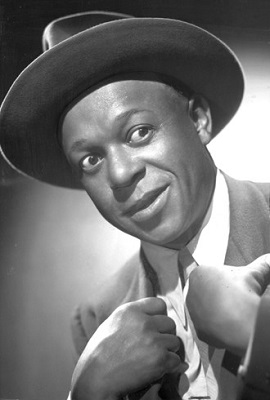
Eddie Rochester Anderson


September 18 …
Eddie Rochester Anderson was an actor and comedian whose gravelly voice and sharp timing made him one of the most recognizable entertainers of mid-20th century American radio, film, television, and theater.
Born Edmund Lincoln Anderson in Oakland, CA on September 18, 1905, Anderson hailed from a family steeped in performance. His father was involved in minstrel shows, and his mother was a circus tightrope walker. As a teenager, he began performing in vaudeville alongside his brother.
Anderson’s distinctive raspy voice developed early after damaging his vocal cords while selling newspapers. He transitioned from stage to film in the 1930s, ultimately breaking into the national scene as a regular on radio. Though his formal education in the performing arts was limited, he honed his craft through extensive practical experience in vaudeville, minstrel shows, and early Hollywood productions, where he refined his skills in timing, character portrayal, and musical comedy.
Anderson’s groundbreaking achievement came with the creation and portrayal of Rochester Van Jones on The Jack Benny Program starting in 1937, making him the first African American to hold a regular role on a national radio show, a role he later brought to television. “Rochester” evolved from a typical valet/porter character into a clever, assertive comic foil who often outsmarted Benny’s persona.
Over a career that spanned stage, screen, radio, and television, Anderson appeared in numerous films, including supporting roles in both mainstream and race productions, toured in stage performances, and guest-starred on television after Benny’s series concluded. Throughout his journey, he remained a prominent Black entertainer who navigated the constraints and opportunities of his time.
Anderson’s professional career was shaped by a blend of collaborators, contemporaries, and advocates. Jack Benny served as his most significant ally, both on and off stage, using his influence to protect Anderson from discrimination. Writers and producers from Benny’s show played a crucial role in evolving Rochester’s dialogue and status.
Anderson’s contemporaries included performers like Bill Bojangles Robinson and Ethel Waters, along with later Black entertainers who followed the paths he helped to pave, such as Sammy Davis Jr. and contrasting figures like Stepin Fetchit. His legacy influenced subsequent Black comedians and character actors seeking regular, dignified roles.
Anderson maintained connections with many leading entertainers of his era and admired the stage and vaudeville predecessors whose craft he inherited. He also engaged with the Black community in Los Angeles, building a homed designed by Paul R. Williams in the Sugar Hill area and participating in civic activities that had both social and cultural significance.
Anderson’s honors and recognition underscored his enduring impact across various media. He received a star on the Hollywood Walk of Fame in 1960, was celebrated for breaking barriers in radio and television, and was posthumously inducted into the Radio Hall of Fame in 2001.
At the height of his career, he was among the highest-paid Black actors in Hollywood during the early 1940s. However, his journey illustrates both the compromises and progress of Black performers in American entertainment.
The widespread popularity, professional dignity, and the gradual evolution of Eddie Rochester Anderson played a significant role in reshaping perceptions of Black characters in mass media and left a lasting mark on American culture and entertainment history.