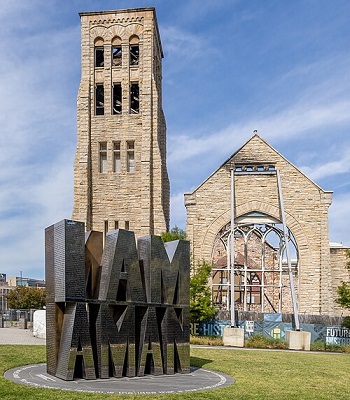
Memphis Sanitation Strike


February 12 …
The Memphis Sanitation Strike started as a quest for basic dignity, fair pay, and union recognition, but evolved into a pivotal battle at the crossroads of labor rights and civil rights.
On February 12, 1968, over 1,300 primarily Black sanitation workers in Memphis — men responsible for collecting the city’s refuse under brutal conditions and earning wages low enough that many qualified for welfare — reached a breaking point. Their grievances were numerous: hazardous equipment, degrading work practices, and the constant reminder of racial and economic disparity in a segregated city, where Black employees faced unpaid time off in the rain, while their white supervisors remained on the clock.
The tragic deaths of two colleagues, Echol Cole and Robert Walker, crushed by a malfunctioning garbage compactor during a storm just a few days earlier, sparked a shift from lasting frustration to collective action. T.O. Jones, a sanitation worker and union organizer who had been dismissed for previous union efforts, emerged as a key leader in rallying his coworkers.
They garnered support from the American Federation of State, County and Municipal Employees (AFSCME) and the local NAACP, creating a partnership between labor and civil rights activists that highlighted the scope of their struggle. The strike officially began when much of the city’s Black sanitation workforce chose not to report for work. The escalating conflict with city officials exposed profound racial divides in Memphis and illuminated the daily injustices confronting Black laborers in the Jim Crow South.
The city’s uncompromising stance, particularly from Mayor Henry Loeb, who refused to acknowledge the union, ignited widespread community support and drew national attention to the strike. Clashes with police, including the use of tear gas and arrests during peaceful protests, tested the determination of the strikers and their allies. Such confrontations brought students, clergy, and civil rights advocates into the streets, showcasing how workplace justice struggles could serve as flashpoints in the broader fight for equality and human rights in America.
Amid this tumultuous backdrop, Dr. Martin Luther King Jr. arrived, drawn by the strike’s significance to his broader Poor People’s Campaign, which sought to unite impoverished Americans across racial lines in the struggle for economic justice. King’s involvement transformed the sanitation workers’ battle into a national cause and lent moral authority to their demands.
King spoke fervently about the dignity of work and the necessity of viewing economic rights as civil rights, galvanizing thousands to support the strikers. It was during this campaign that he delivered his powerful “I’ve Been to the Mountaintop” speech, the night before his assassination at the Lorraine Motel — a tragedy that reverberated across the nation and indelibly linked his legacy to the Memphis struggle.
The strike ultimately ended on April 16, 1968, just days after King’s death, when the city of Memphis agreed to recognize the union and provide wage increases. This triumph was more than a resolution of labor conflicts; it represented a significant moment in American democracy where organized labor and civil rights advocates compelled a city government to confront systemic inequality.
The successful recognition of AFSCME Local 1733 empowered sanitation workers with a united voice and set a precedent for how marginalized communities could demand justice through solidarity and continuous protest.
The lasting impact of the strike is evident in its powerful imagery and slogans, particularly the “I Am a Man” placards carried by protesters, which boldly asserted their humanity amid indignity and discrimination. These words encapsulated the strike’s cultural and historical significance, serving as a reminder that the fight for equal rights transcended voting booths and lunch counters, extending to everyday working conditions and economic opportunities.
The strike’s integration of labor rights into the broader civil rights movement reshaped the national dialogue on justice, making it clear that racial equality was inextricably linked to economic equity.
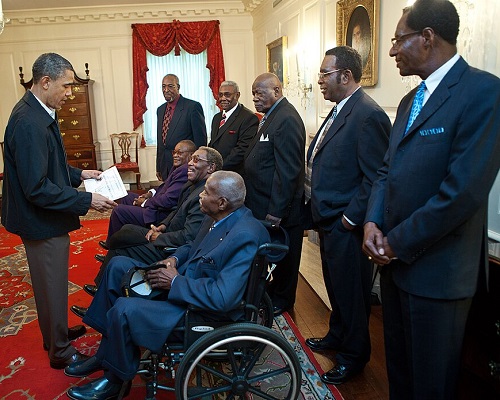
In 2011, President Barack Obama meets with former participants of the Strike.
The influence of the Memphis Sanitation Strike continues to resonate in contemporary discussions about economic justice, unionization, and racial equality. It demonstrated that grassroots activism could spur institutional change and that coalitions among diverse groups could enhance democratic engagement.
By challenging inequities in both the workplace and society at large, the Memphis sanitation workers and their allies imparted enduring lessons to American culture and history: that dignity in work is essential to the broader promise of freedom, and that ordinary individuals, through solidarity and perseverance, can expand the horizons of justice in a democratic society.