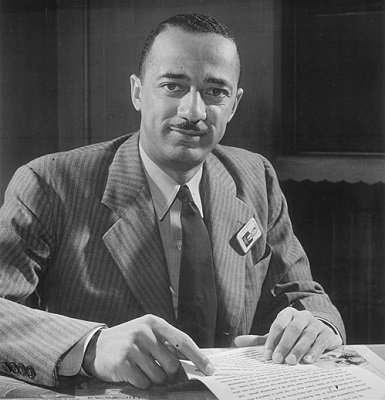
William H. Hastie

November 17 …
William H. Hastie was a distinguished judge and a trailblazer in American law, known for his groundbreaking contributions to civil rights and jurisprudence.
Hastie was the first African American to serve as Governor of the United States Virgin Islands, as a federal judge, and as a federal appellate judge. On the federal appeals court, he left an indelible mark on the legal landscape of the United States, especially in the pursuit of racial equality and justice. His legacy continues to resonate, shaping both the legal profession and society at large.
Born on November 17, 1904 in Knoxville, TN, Hastie grew up during a time of intense segregation and racial discrimination. Despite the formidable challenges of his era, he excelled academically, eventually attending Amherst College and earning his law degree from Harvard Law School. The rigorous education he received at these esteemed institutions distinguished him in a legal career that would confront systemic injustice.
Hastie’s formative years were characterized by a profound sense of social responsibility, driven by personal experiences with racism and a fervent desire for racial integration within both the legal system and American society.
His judicial career was marked by significant achievements, most notably his appointment to the U.S. Court of Appeals for the Third Circuit in 1949. Prior to this, he served as a judge on the U.S. District Court for the Virgin Islands, where he addressed complex legal issues tied to civil rights and labor law.
Hastie’s decisions often reflected a steadfast commitment to justice and fairness, playing a crucial role in shaping the outcomes of several landmark civil rights cases. During his tenure on the Third Circuit, he championed racial equality while emphasizing due process and the protection of constitutional rights for all individuals, irrespective of race.
Throughout his career, Hastie was influenced by prominent legal figures, including Thurgood Marshall, who would later become the first African American Supreme Court justice. Their careers intersected at times, and one such occurrence was Morgan v. Virginia — the case was argued by Hastie, and Marshall, representing the NAACP, served as co-counsel. They were part of a broader network of civil rights advocates, lawyers, and judges dedicated to dismantling racial segregation and discrimination.
Hastie’s contemporaries included influential figures like Charles Hamilton Houston, his mentor, and Constance Baker Motley, a distinguished civil rights attorney. Hastie also mentored a new generation of legal minds who continued his quest for justice.
While his career was largely defined by his judicial work, Hastie’s influence reached beyond the courtroom, contributing significantly to the broader civil rights movement. His many honors reflect his dedication to advancing justice, including prestigious judicial appointments and recognition from fellow legal professionals for his unwavering advocacy for equality under the law.
The legacy of William H. Hastie serves as a powerful testament to the role of law in driving social change.