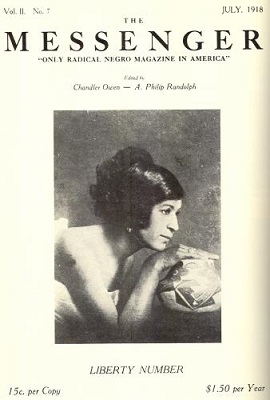
The Messenger magazine


August …
The Messenger magazine was a politically charged and later literary monthly that became a formative voice of Black radicalism and the Harlem Renaissance, shaping debates about labor, race, and culture in early 20th-century America.
Founded in New York City in August 1917 by A. Philip Randolph and Chandler Owen, The Messenger emerged from their earlier publication, Hotel Messenger. It initially served as a vehement socialist and labor voice, advocating trade unionism, workers’ rights, and opposing World War I.
With Randolph’s connections to organized labor and Owen’s persuasive activism, the magazine established both a practical foundation and a militant editorial stance that challenged conservative Black leadership and national wartime policies. In its early issues, The Messenger combined political polemics with investigative exposés, criticizing labor corruption, lynching, and Jim Crow laws.
After 1920, the magazine began to emphasize cultural and literary content, featuring fiction, poetry, drama critiques, and reports that contributed to the Harlem Renaissance. Editors and contributors throughout its history included notable figures like Theophilus Lewis, George Schuyler, and Wallace Thurman.
Many popular and emerging writers who later gained fame — Zora Neale Hurston, Langston Hughes, and Claude Mckay — wrote for the magazine. Randolph utilized the paper to advocate for the Brotherhood of Sleeping Car Porters and other labor issues.
The Messenger’s influence reached a diverse Black urban readership — including working-class and middle-class northerners, porters, and intellectuals — who sought news, commentary, and artistic expression from a Black perspective. Its campaigns, particularly its support for the organizing efforts of Pullman porters, and its exposé of social injustices established it as a potent advocacy tool, making it one of the Justice Department’s most scrutinized Black publications during the postwar years.
Despite facing financial difficulties throughout its lifespan and ultimately folding in 1928, The Messenger magazine garnered a lasting legacy as one of the most significant radical Black periodicals of its time. It is widely recognized for bolstering African American political awareness, nurturing or promoting key Harlem Renaissance writers. It left behind an intellectual and archival legacy that continues to be studied and celebrated by historians, literary scholars, and labor historians.