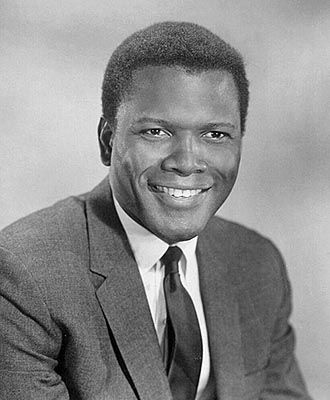
Sidney Poitier



February 20 …
Sidney Poitier was a groundbreaking figure in American film and culture, whose career transcended the screen to challenge societal norms and redefine the role of African Americans in Hollywood.
Born on February 20, 1927 in Miami, FL and raised in the Bahamas, Poitier arrived in the United States as a teenager with limited formal education and a strong determination to succeed. After facing significant hardship and rejection in his early attempts to pursue acting, he trained at the American Negro Theatre in New York City, eventually breaking through with a distinct voice, poise, and intelligence that stood out in an industry historically dominated by racial stereotypes.
Poitier’s film career began in the late 1940s, but it was in the 1950s and 1960s that he emerged as a singular presence in American cinema. He portrayed complex, dignified Black characters at a time when Hollywood routinely offered demeaning roles to African American actors. His performances in films like The Defiant Ones, A Raisin in the Sun, and Lilies of the Field — for which he became the first Black man to win the Academy Award for Best Actor in 1964 — signaled a profound shift in representation. He became a symbol of possibility, his roles challenging perceptions and opening the door for a more nuanced portrayal of Black life on screen.
In the racially charged climate of the 1960s, Poitier’s on-screen presence carried deep cultural and political weight. In Guess Who’s Coming to Dinner and In the Heat of the Night, he tackled themes of racial tension, justice, and social change, often playing characters who held moral authority and intelligence in contrast to the bigotry and ignorance surrounding them. His portrayal of Virgil Tibbs, a Black detective asserting his dignity in the face of Southern racism, was especially iconic. Poitier didn’t just act in films — he used his roles to push the conversation forward, making him both a cinematic and cultural force.
Beyond his artistic contributions, Poitier was also a dedicated advocate for civil rights and social justice. He marched with Martin Luther King Jr., supported the NAACP, and used his influence to fight segregation and promote equality. Unlike many public figures of his time, he navigated the complexities of being both an entertainer and a symbol of Black advancement with grace and clarity. His quiet but powerful activism made him a respected figure not only in Hollywood but also among civil rights leaders and everyday Americans.
As a director, Poitier further expanded his impact on American film. He broke ground behind the camera with a series of successful films in the 1970s, including Buck and the Preacher and Stir Crazy. These projects demonstrated his versatility and commitment to telling diverse stories, further establishing him as a multifaceted artist and a pioneer in an industry still slow to embrace Black talent in leadership roles.
His influence helped pave the way for future generations of Black directors and actors, including Denzel Washington, Spike Lee, and Ava DuVernay.
Poitier’s legacy also includes his contributions as an author and diplomat. His memoirs and writings offer insight into his personal philosophy and the challenges he faced navigating fame and racial politics.
In 1997, he was appointed the Bahamian ambassador to Japan, underscoring his international stature and lifelong commitment to bridging cultures.
In 2009, he was awarded the “Presidential Medal of Freedom” by President Barack Obama, a recognition of his lifelong contributions to American society.
Poitier’s life and career were monumental in reshaping the cultural and historical landscape of the United States. He stood as a beacon of excellence, integrity, and progress during some of the most turbulent periods in American history. Through his artistry, activism, and leadership, he helped change the way the world saw African Americans — and how African Americans saw themselves.
The story of Sidney Poitier remains an enduring testament to the power of representation, the importance of courage, and the lasting influence of a man who refused to be confined by the limitations of his time.