

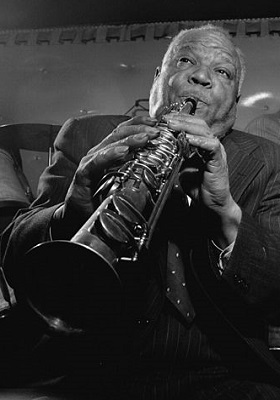
Sidney Bechet
May 14 …
Sidney Bechet was one of the earliest great soloists in jazz, a virtuoso clarinetist and soprano saxophonist whose bold tone and improvisational brilliance helped define the sound of early New Orleans jazz and carry it to audiences around the world.
Born on May 14, 1897 in New Orleans to a Creole family deeply rooted in the city’s musical heritage, Bechet was immersed in music from a young age. He began playing the clarinet early on, exhibiting remarkable talent despite limited formal education. Inspired by the vibrant sounds of New Orleans, Bechet drew influence from established musicians like Buddy Bolden and Freddie Keppard, sharing stages with the likes of King Oliver and Louis Armstrong during the nascent years of jazz.
As a teenager, he was already performing professionally in dance halls and parades. His early experiences with touring bands expanded his musical horizons, and during a trip to Europe in the late 1910s, he discovered the soprano saxophone, an instrument that would become emblematic of his unique musical voice.
Bechet’s career flourished during the pivotal decades of jazz as he traveled between the United States and Europe, where he played in various ensembles and led his own groups. His powerful vibrato, emotional depth, and bold improvisations established him as one of the first jazz musicians to gain recognition for a distinct solo style.
Throughout the 1920s, he recorded landmark performances, including collaborations with pianist and composer Duke Ellington and tracks like “Wild Cat Blues.” These events showcased his exceptional melodic creativity.
During the interwar years, Bechet remained a key figure in traditional jazz, playing a crucial role in popularizing New Orleans-style music on an international scale. His innovative artistry inspired generations of clarinetists and saxophonists, establishing the soprano saxophone as a respected jazz instrument and shaping the improvisational techniques of early jazz.
In the later stages of his career, Bechet settled primarily in France, where he achieved tremendous popularity and became a celebrated cultural figure. His music resonated deeply with European audiences during the postwar jazz revival, leading to extensive recording and touring, and establishing him as one of the most revered American jazz musicians abroad.
His contemporaries — Louis Armstrong, Jelly Roll Morton, and Duke Ellington — shaped the early jazz landscape alongside him. Many younger musicians admired his expressive phrasing and commanding sound, using them as benchmarks for their own improvisation.
Bechet’s legacy is honored through numerous posthumous accolades, including induction into the Jazz Hall of Fame and the Grammy Lifetime Achievement Award.
Sidney Bechet is remembered as a foundational figure who helped transform jazz into a global musical language and a lasting symbol of American cultural ingenuity.
