Rosalind Cash

December 31 …
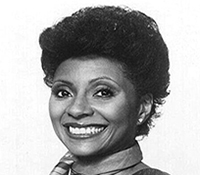
Rosalind Cash was a versatile performer whose work across film, theater, and television helped expand opportunities for Black actresses while contributing to evolving representations of race, gender, and professionalism in American entertainment.
Born on December 31, 1938 in Atlantic City, NJ, Cash was raised in a family that valued education and achievement. She attended City College of New York, where she studied drama and developed her interest in acting. She later refined her craft through stage work and training that emphasized both classical and contemporary performance.
Cash’s early exposure to theater, including work with the Negro Ensemble Company, placed her within a generation of Black artists committed to reshaping the cultural landscape. Influenced by pioneering performers such as Ethel Waters and Ruby Dee, she embraced roles that balanced artistic ambition with social significance.
Cash achieved widespread recognition for her performance opposite Charlton Heston in the 1971 film The Omega Man, a role that was notable for its portrayal of an interracial relationship during a period of significant cultural change. Her film work also included appearances in projects like Uptown Saturday Night. Her television career was extensive, featuring roles in popular series such as General Hospital, where she became one of the first Black actresses to hold a prominent role in daytime drama.
Cash’s contemporaries included actors such as Cicely Tyson, Diahann Carroll, and Sidney Poitier. All of them were instrumental in redefining Black representation in mainstream media.
Beyond screen roles, Cash maintained a strong presence in theater, including Broadway and off-Broadway productions, where she demonstrated range and depth as a performer. She also contributed behind the scenes as a writer and producer, reflecting a broader commitment to storytelling and creative control at a time when such opportunities were limited for Black women.
Cash’s career opened doors for subsequent generations of actresses, and she worked within artistic circles that fostered collaboration and mutual influence. Her performances often reflected a quiet strength and intelligence, helping to normalize complex, professional Black female characters in American narratives.
Although Cash did not accumulate a large number of widely publicized awards, her contributions were recognized through critical respect and lasting cultural impact. Her work in film and television during a transformative era helped shift industry expectations and broaden the scope of available roles for Black performers.
Through her artistry and perseverance, Rosalind Cash contributed to the gradual reshaping of American entertainment and its reflection of society, leaving a legacy that continues to inform discussions of representation, opportunity, and cultural history.