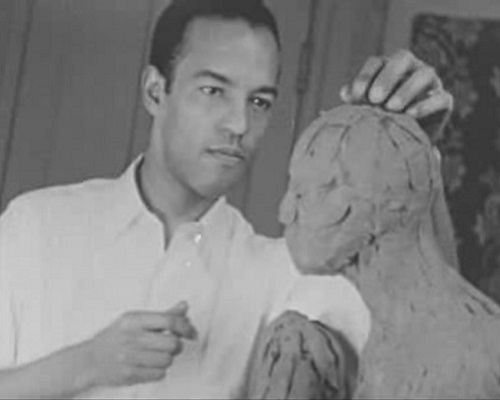
Richmond Barthé
January 28 …
Richmond Barthé was a pioneering African American sculptor whose expressive, elegant works helped redefine the visual language of Black identity in 20th-century American art and contributed meaningfully to broader cultural understandings of beauty, strength, and spirituality.
Born on January 28, 1901 in Bay St. Louis, MS, Barthé grew up in a family that fostered his early passion for art. As a child, he sculpted figures from clay, guided by a keen eye and a sensitive touch.
Barthé pursued formal art education at institutions such as Dillard University in New Orleans and later at the Art Institute of Chicago, where his talent garnered attention for its lyrical realism and emotional resonance. At the Art Institute, he was immersed in an environment of artists and educators who encouraged technical proficiency and artistic exploration, despite the racial barriers that limited opportunities for Black students in the broader American art scene. These formative experiences instilled in him a commitment to portraying Black subjects with nuance and grace, rather than through stereotypical lenses.
Barthé’s early professional career coincided with the Harlem Renaissance, a dynamic cultural movement that celebrated African American contributions across literature, music, and visual arts. In this context, he connected with prominent contemporaries such as writers Langston Hughes and Zora Neale Hurston, along with fellow artists like sculptor Augusta Savage and painter Aaron Douglas, all dedicated to redefining African American cultural expression.
Though Barthé was sometimes seen as more reserved than his peers, his sculptures exuded the same cultural urgency — to assert Black presence and artistry in a society marked by racial exclusion. In New York during the 1920s and 1930s, he gained recognition for works that skillfully blended figurative clarity with modernist sensibility, achieving commissions and exhibition opportunities that were exceptional for a Black sculptor of his era.
One of Barthé’s most notable contributions was his ability to transition fluidly between public monuments and deeply personal explorations of form. His sculptures captured a spectrum of human emotion, from the spiritual intensity of religious themes to the quiet dignity of everyday experiences.
Barthé’s significant achievements included commissions for public and sacred spaces, portraiture of cultural figures, and works that celebrated African American heritage. His art was displayed in galleries and museums, establishing him as one of the few African American sculptors whose work entered prominent collections during his lifetime.
Although formal accolades were scarce during a period when artistic institutions often marginalized artists of color, Barthé received acclaim and respect from peers and critics who recognized the technical brilliance and emotional power of his creations. His influences encompassed classical sculpture, Renaissance masters, African art traditions, and contemporary modernist currents — elements he wove into a distinctive voice that resonated with both universal human themes and the particular experiences of African Americans.
Barthé’s sculptures — ranging from monumental bronzes to intimate portrait busts — celebrate the dignity and humanity of Black subjects during a time when such representations were seldom seen in mainstream art institutions. His legacy transcends his personal body of work, inspiring younger artists who viewed his career as a beacon of artistic integrity and creative potential.
Through his artistic mastery and professional accomplishments, Barthé opened doors for future generations of artists of color while enriching the cultural narrative of American sculpture.
Today, Richmond Barthé sculptures are celebrated for their historical and aesthetic significance, and he is remembered as a vital figure in American art whose contributions helped reshape cultural perceptions and expand the narrative of who is seen, valued, and remembered in the visual history of the nation.