


Odetta

December 31 …
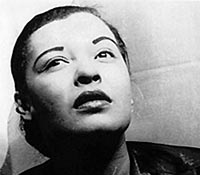
Odetta was one of the most powerful and influential voices in 20th-century American music, whose artistry and activism helped shape the soundscape and moral force of the civil rights era.
Born Odetta Holmes on December 31, 1930 in Birmingham, AL, Odetta was primarily raised in Los Angeles following the early death of her father, growing up in a working-class environment under the guidance of her mother, Flora Sanders. From an early age, she exhibited remarkable vocal talent, beginning her classical training at thirteen and later studying music at Los Angeles City College, where she established a solid foundation in operatic techniques and repertoire.
Marian Anderson emerged as one of Odetta’s early idols, symbolizing Black excellence in classical music, though she ultimately gravitated towards folk traditions. Her formative experiences with church music, spirituals, and the harsh realities of racism in both the South and the West significantly shaped her artistic identity. The results was a performer who skillfully blended technical precision with emotional and historical depth.
Odetta’s career flourished during the folk revival of the 1950s, where she became closely linked with icons like Pete Seeger and Harry Belafonte, who championed her early work. Her 1956 debut album, Odetta Sings Ballads and Blues, helped define the genre and left a lasting impact on a generation of artists, including Bob Dylan, Joan Baez, Janis Joplin, and Mavis Staples. Many of them considered her instrumental in their musical journeys.
Dylan notably credited Odetta’s recordings with guiding him towards folk music, while Baez regarded her as a near-mythical influence. Through these connections, she served as both a contemporary and a mentor-like figure within the folk community, drawing inspiration from earlier traditions and artists such as Lead Belly.
Odetta’s influence extended beyond music, permeating the social and political landscape of the United States. Often dubbed “the voice of the Civil Rights Movement,” she performed at crucial events like the 1963 March On Washington alongside leaders like Martin Luther King Jr. She used her renditions of spirituals and work songs to convey the movement’s moral urgency.
Odetta’s repertoire — deeply rooted in African American history — played a vital role in preserving and uplifting cultural traditions that had often been overlooked, while also impacting mainstream American entertainment. Over a career that spanned more than 50 years, she recorded over 25 albums and became a pivotal figure in bringing folk, blues, and gospel traditions into popular awareness.
Odetta’s legacy is evident in the numerous honors she received and her lasting cultural impact. In 1999, she was awarded the National Medal of Arts, one of the highest artistic honors in the United States, and was later designated a “Living Legend” by the Library of Congress. Additional accolades included the Kennedy Center’s Visionary Award and a posthumous induction into the Blues Hall of Fame.
Admired by such luminaries as Rosa Parks and Maya Angelou, Odetta redefined the artist’s role in society, serving as both a cultural historian and an agent of change. Through her powerful voice and steadfast commitment to justice, she not only influenced the realms of music and entertainment but also helped shape the American cultural memory and the historical narrative of equality and resistance.
