Lead Belly
January 23
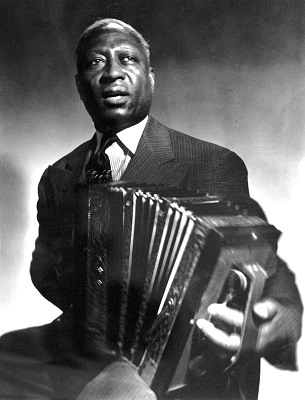
Huddie William Ledbetter, known to the world as Lead Belly, was born in Mooringsport, LA on January 23, 1888. He grew up in a deeply segregated South, surrounded by a rich mix of musical traditions, including gospel, work songs, and early blues.
From a young age, Lead Belly showed extraordinary talent on a variety of instruments, especially the 12-string guitar, which would become his signature. His life was turbulent, marked by poverty, racial injustice, and multiple stints in prison, but it was also defined by an unwavering commitment to music as a form of personal and cultural expression.
Lead Belly’s repertoire was vast and eclectic, spanning blues, folk, spirituals, field hollers, children’s songs, and ballads. What set him apart was not just his mastery of different styles, but the intensity with which he delivered them. Songs like “Goodnight, Irene,” “Midnight Special,” and “Bourgeois Blues” carried powerful narratives rooted in the Black American experience. His strong, commanding voice and rhythmic guitar playing made his performances unforgettable. Through these songs, Lead Belly became both a storyteller and a historian, documenting the realities of life for African Americans in the early 20th century.
Much of Lead Belly’s national recognition came during his time in prison, where folklorists John and Alan Lomax recorded him for the Library of Congress. These field recordings introduced his music to a broader audience and helped bridge the gap between rural Southern folk traditions and academic interest in American folklore. Lead Belly’s partnership with the Lomaxes, though controversial and shaped by racial dynamics of the time, also played a crucial role in preserving songs that might have otherwise been lost. He emerged from prison with the reputation of a folk hero — an artist whose music came from the heart of America’s working class.
In the 1940s, Lead Belly moved to New York City, where he found a receptive audience among leftist intellectuals, union organizers, and the burgeoning folk revival movement. He performed in coffeehouses, concert halls, and on radio, often addressing themes of social justice, racism, and labor struggles. His influence began to spread among younger artists, including Woody Guthrie and Pete Seeger, who viewed Lead Belly as a direct link to America’s musical roots. His songs, many of which became standards, laid the groundwork for the folk music boom of the 1950s and 60s.
Lead Belly’s impact on American music and culture cannot be overstated. He was a pioneering force who preserved a vast oral tradition and infused it with urgency and passion. A master of the twelve-string guitar, piano, mandolin, harmonica, violin, and accordion, his music helped shape the sounds of blues, folk, and even early rock ‘n’ roll, inspiring artists as diverse as Bob Dylan, Johnny Cash, and Nirvana.
More than a performer, Lead Belly was a cultural bridge, carrying the voices of marginalized people into the American mainstream. Though he died in 1949, his legacy continues to resonate, reminding us of the power of music to confront injustice, tell the truth, and bring people together.