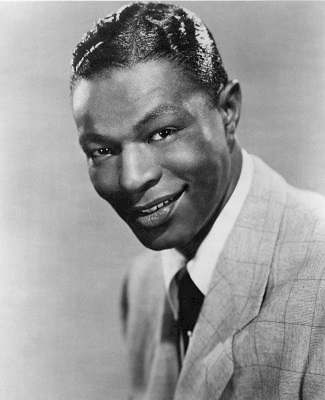
Nat King Cole

March 17 …
Nat King Cole was a groundbreaking American singer, pianist, and entertainer whose smooth voice and charismatic presence made him one of the most beloved figures in 20th-century popular music.
Born Nathaniel Adams Coles in Montgomery, AL on March 17, 1919 and raised in Chicago, he showed musical talent early on, studying classical piano before turning his attention to jazz. By his teenage years, he was performing professionally, eventually forming the Nat King Cole Trio in the late 1930s. The trio’s unique setup — piano, guitar, and bass, without a drummer — highlighted Cole’s sophisticated piano technique and laid-back swing, earning them widespread acclaim in jazz circles.
Though initially celebrated as a jazz pianist, it was Cole’s voice that launched him into national stardom. His smooth baritone and impeccable phrasing captured audiences during the 1940s and 1950s, with hits like “Straighten Up and Fly Right,” “Nature Boy,” and the timeless “Unforgettable.”
His vocal style blended jazz, pop, and traditional balladry, creating a crossover appeal that brought Black artistry into the homes of mainstream America. He became one of the first African American performers to achieve consistent success on white radio stations and in concert halls across the country, setting the stage for future generations of Black entertainers.
Cole’s impact extended well beyond music. In 1956, he became the first African American to host a national television variety show, The Nat King Cole Show. While it lasted only a year due to the inability to secure national advertisers — many of whom feared backlash from segregationist audiences — its cultural significance was immense.
Cole broke racial barriers in entertainment, appearing weekly in American living rooms and challenging the status quo of segregated media. His dignified presence and professional excellence defied stereotypes and paved the way for future Black television hosts and actors.
Despite his fame, Cole faced significant racial discrimination throughout his career. He was often denied entry to hotels and clubs where he performed, and in 1956, he was attacked onstage in Alabama by white supremacists. Rather than retreating, Cole used his platform to advocate quietly but powerfully for civil rights, supporting organizations like the NAACP and participating in fundraising efforts. His personal experiences with racism gave weight to his contributions, as he became both a symbol of Black excellence and a reminder of the challenges African Americans faced in mid-century America.
Musically, Cole influenced a wide range of artists across genres. His phrasing, timing, and tone became benchmarks for vocalists in jazz, pop, and soul. Singers like Frank Sinatra, Ray Charles, and Sam Cooke all cited him as an influence, and his elegant style helped define the sound of mid-century American music. His recordings remain standards in the Great American Songbook, and his holiday hits — especially “The Christmas Song” — continue to be cherished across generations.
Cole died in 1965 at the age of 45, but his legacy lives on as a trailblazer who reshaped American culture through talent, grace, and quiet resilience. He not only elevated the role of the jazz vocalist but also transformed how African American performers were perceived in the public eye.
His blend of musical artistry and cultural diplomacy helped break down racial barriers, leaving an indelible mark on American music and society. In doing so, Nat King Cole became not just a voice of his time, but a timeless figure in the story of American progress and artistic brilliance.