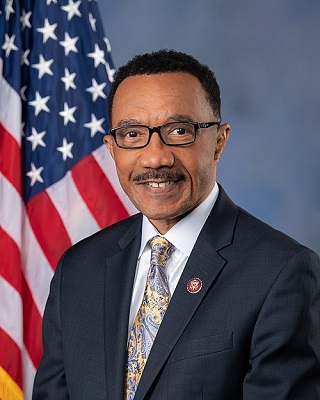
Kweisi Mfume


October 24 …
Kweisi Mfume is an influential politician, civil rights leader, and former president of the NAACP whose career has shaped modern discussions of racial equity, public policy, and leadership in the United States.
Born Frizzell Gray on October 24, 1948 in Baltimore, Mfume grew up in a working-class environment characterized by both challenges and resilience, experiences that profoundly influenced his later advocacy. After leaving high school as a teenager, he returned to complete his education, showcasing an early dedication to self-improvement. He attended Morgan State University, earning a degree in mass communications, and later pursued graduate studies at Johns Hopkins University.
Throughout his formative years, Mfume drew inspiration from the Civil Rights Movement and influential figures such as Thurgood Marshall and Martin Luther King Jr. Those examples helped to shape his developing sense of justice, discipline, and public responsibility.
Mfume started his public career in Baltimore politics, serving on the Baltimore City Council before being elected to the U.S. House of Representatives in 1986, where he represented Maryland’s 7th Congressional District. During his time in Congress from 1987 to 1996, he became renowned for his work on issues such as economic development, education, and anti-poverty initiatives.
As chairman of the Congressional Black Caucus, Mfume collaborated with contemporaries like Elijah Cummings, John Lewis, and Charles Rangel to elevate the legislative priorities of African Americans and other underserved communities. His leadership style combined grassroots awareness with strategic institutional navigation, enabling him to effectively manage both local and national political landscapes.
In 1996, Mfume stepped away from Congress to become president and CEO of the NAACP, one of the nation’s leading civil rights organizations. During his nearly decade-long tenure, he revitalized the organization both financially and structurally while expanding its advocacy efforts on voting rights, economic justice, and educational equity.
Mfume challenged major corporations over discriminatory practices and worked to enhance the NAACP’s national relevance amid a transforming political landscape. His leadership mentored a new generation of activists and leaders within the organization and beyond, solidifying a legacy of civic engagement and accountability.
After years in advocacy and the private sector, he returned to Congress in 2020 following the death of Elijah Cummings, resuming his public service in the same district.
Throughout his career, Mfume has received numerous accolades recognizing his leadership and impact, including awards from civil rights organizations, academic institutions, and civic groups. He is widely respected for his ability to bridge activism and governance, influencing American political culture by promoting ethical leadership, community empowerment, and racial justice.
The work of Kweisi Mfume represents a lifelong commitment to public service and social transformation, rooted in personal perseverance and shaped by the broader historical struggles for equality in the United States.