


Jayne Cortez


May 10 …
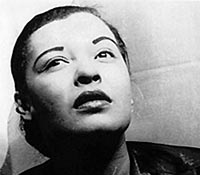
Jayne Cortez was a powerful poet, performance artist, and cultural organizer whose work fused poetry, music, and political resistance, making her a distinctive voice in late 20th-century African American literature and the international Black Arts Movement.
Born Sallie Jayne Richardson on May 10, 1934 in Fort Huachuca, AZ, Cortez spent a significant part of her youth in Los Angeles, immersed in a culturally rich environment shaped by Black migration and the social changes of the postwar era. Cortez attended local schools in Los Angeles before pursuing studies in theater and literature at Los Angeles City College and California State University, Los Angeles. During these formative years, she developed a passion for experimental performance, jazz culture, and African diasporic political thought, all of which became central to her poetic expression.
Cortez rose to prominence in the 1960s as a vital figure within the Black Arts Movement, seamlessly blending spoken word poetry with live jazz accompaniment. In 1975, she founded the literary publishing collective Bola Press to promote innovative poetry and support writers who might otherwise struggle to find a platform.
Her work drew profound inspiration from jazz musicians like John Coltrane and Ornette Coleman (to whom she was married from 1954 to 1964), whose improvisational styles influenced her performance technique. Additionally, she was shaped by the works of political and literary icons such as Langston Hughes and Amiri Baraka.
For a time, Cortez moved to New York City, where she became engaged in a dynamic network of poets, musicians, and artists pushing the boundaries of Black cultural expression.
Throughout her career, Cortez collaborated with numerous notable artists and writers. She formed the jazz-poetry ensemble The Firespitters, performing internationally and merging her poetry with avant-garde jazz instrumentation. Her contemporaries included poets like Sonia Sanchez, Nikki Giovanni, Haki R. Madhubuti, and Askia Touré, all of whom contributed significantly to the cultural and political momentum of the Black Arts movement.
Cortez was also active within civil rights and Black nationalist circles, maintaining strong connections with jazz musicians, visual artists, and younger poets who viewed her as a mentor. Her work frequently explored themes of colonialism, environmental devastation, gender politics, and global Black liberation.
Cortez published a number of influential poetry collections and gained acclaim for her electrifying performances that intertwined poetry with music and political activism. Her contributions were acknowledged with such honors as the American Book Award and the Langston Hughes Medal for poetry, along with international recognition for her role in cultural exchange and literary innovation.
Cortez also played a pivotal role in organizing and leading the Watts Repertory Theater Company. She later directed the Organization of Women Writers of Africa, extending her influence beyond the United States.
By the time of her death in 2012, Jayne Cortez had solidified her legacy as one of the most dynamic voices in American performance poetry, leaving behind a remarkable body of work that intertwined literature, jazz, activism, and global Black cultural expression.
