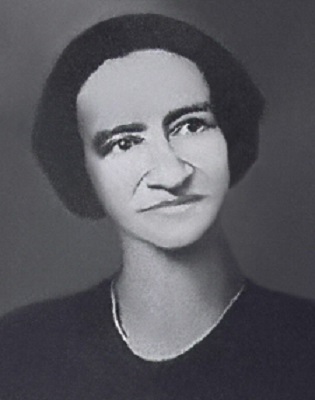
Drusilla Dunjee Houston



January 20 …
Drusilla Dunjee Houston was a pioneering writer, historian, journalist, musician, and activist whose intellectual and cultural work challenged dominant historical narratives and expanded the role of Black women in American literature and public life.
Born on January 20, 1876 in Harpers Ferry, WV, Houston was raised in a devoutly religious and intellectually vibrant household under the guidance of her father, Rev. John William Dunjee, a Baptist minister and educator affiliated with Storer College. Her early education included a finishing school in the North and classical piano training at the Northwestern Conservatory of Music in Minnesota, showcasing a harmonious blend of academic and artistic growth.
In 1892, Houston’s family moved to Oklahoma Territory, where she became one of the first kindergarten teachers in the region, igniting a lifelong commitment to education and community enhancement. Growing up in a family devoted to ministry, education, and activism — along with her siblings, including her brother and civil rights journalist Roscoe Dunjee — shaped her intellectual path and social awareness.
Houston’s intellectual development was shaped by her immediate environment and broader African American thought. Her father was an early mentor who instilled values of education, faith, and racial advancement, while her brother collaborated with her in journalism and advocacy.
Houston’s achievements spanned diverse domains, making her a remarkable multidisciplinary figure in early 20th-century America. As a historian, she gained recognition for her 1926 work, Wonderful Ethiopians of the Ancient Cushite Empire, a pioneering effort to trace the origins of civilization to African peoples and challenge dominant racist historical perspectives. Though some of her conclusions are now viewed as outdated, the work significantly influenced early Black intellectual thought and movements advocating for cultural pride.
In journalism, Houston made substantial contributions to The Black Dispatch, a newspaper founded by her brother. She served as a columnist and editor, and her involved with the paper shaped public discourse within Oklahoma’s Black community.
Houston also explored film and theater, writing the unproduced screenplay Spirit of the South: The Maddened Mob as a direct critique of D.W. Griffith’s The Birth of a Nation, illustrating her engagement with early cinema and resistance to racist depictions in entertainment. She understood early cinema as a powerful cultural force shaping public opinion and racial ideology. By creating a counter-narrative script, she was participating in what would later be recognized as early Black cinematic critique — challenging Hollywood’s racial narratives long before the emergence of either Blaxploitation or a formal Black film industry.
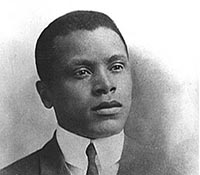
Although Houston did not work inside the commercial film industry or collaborate directly with filmmakers like Oscar Micheaux, her contemporaries in the broader cultural struggle included early Black intellectuals and activists who also criticized the spread of racist media imagery. Her work aligned with this early 20th-century movement to contest harmful representations through journalism, writing, and organizing.
Houston’s historical writings were informed by scholars like W.E.B. Du Bois, whose work, The Negro, inspired her exploration of African civilizations. She was in the company of prominent Black intellectuals and activists such as Ida B. Wells and Mary Church Terrell, who also utilized writing and activism to confront racial injustice.
Houston was actively involved in organizations such as the NAACP, YWCA, and Red Cross. She often served as a founder or leader of local chapters, thus she influenced future generations of activists, even though specific protégés are not extensively documented.
Beyond her literary and journalistic accomplishments, Houston made significant contributions to American society and culture through education, institution-building, and activism. She founded and led the McAlester Seminary for Girls and later directed the Oklahoma Baptist College for Girls, working toward expanding educational opportunities for Black women in the early 20th century.
Houston’s efforts in establishing organizations such as reading rooms, women’s clubs, and civic groups reinforced community infrastructure and promoted cultural growth. As a trained musician and an engaged writer in both literature and early film, she connected artistic and intellectual spheres, exemplifying how cultural production could facilitate social change.
Houston’s contributions are celebrated through initiatives like the Drusilla Dunjee Houston Memorial Scholarship Award, which supports emerging scholars of African descent in Africana women’s history. Today, she is acknowledged as a significant early voice in African American historiography, literature, and cultural criticism, whose work challenged prevailing narratives and paved the way for future generations of scholars, artists, and activists.
Through her writing, teaching, and advocacy, Drusilla Dunjee Houston made an enduring impact on American culture and history, particularly in broadening the intellectual and creative avenues available to Black women.