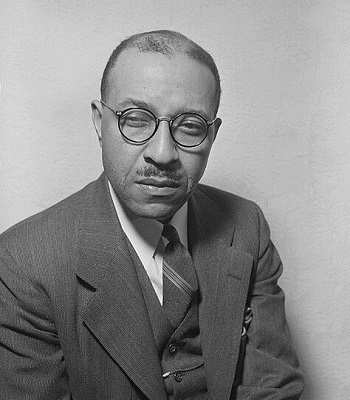
Charles S. Johnson



July 24 …
Charles S. Johnson was a pioneering American sociologist, author, and educator whose work had a profound influence on the study of race relations and the advancement of African American education and culture in the 20th century.
Born on July 24, 1893, in Bristol, VA, Johnson grew up during a time of deep racial segregation and limited opportunities for Black Americans. He attended Virginia Union University and later earned his Ph.D. in sociology from the University of Chicago, where he was influenced by the emerging discipline of social science and the tools it could provide in addressing issues of racial inequality and systemic injustice.
Johnson’s early career was marked by a unique combination of scholarship and activism. He served as research director for the National Urban League and played a vital role in the aftermath of the 1919 Chicago race riots, co-authoring a groundbreaking report on the causes and consequences of racial violence.
His findings emphasized the structural roots of racial tension and offered data-driven insights into segregation, housing inequality, and labor discrimination. Johnson believed in using social science as a means to create change and saw education and research as key tools in the pursuit of racial equity.
During the Harlem Renaissance, Johnson became the editor of Opportunity: A Journal of Negro Life, a critical publication that highlighted African American literature, art, and social issues. Through this platform, he helped elevate the voices of writers like Langston Hughes, Zora Neale Hurston, and Countee Cullen, encouraging dialogue between Black intellectuals and the broader American public.
He saw culture and the arts as vital components of Black self-expression and identity, and he used Opportunity to challenge stereotypes while promoting excellence in Black creative and scholarly work. His dual role as a cultural gatekeeper and academic researcher gave him a rare and influential position during a pivotal era of American history.
In 1928, Johnson joined the faculty at Fisk University in Nashville, TN, where he later became the university’s first Black president in 1946. As president, he strengthened Fisk’s academic reputation, promoted interracial cooperation, and expanded its curriculum to reflect both classical scholarship and the pressing social issues of the time.
He encouraged student activism and intellectual inquiry, fostering an environment where critical thinking and civic engagement thrived. Under his leadership, Fisk became a center for progressive thought and racial dialogue in the South, drawing attention for its commitment to educational excellence and social responsibility.
Johnson’s grandson, Jeh Johnson, served as the United States Secretary of Homeland Security from 2013 to 2017.
Charles S. Johnson’s contributions to American education, culture, and history were both deep and enduring. Through his sociological work, he laid the groundwork for the modern study of race and inequality. As an editor and promoter of African American culture, he helped define the intellectual and artistic legacy of the Harlem Renaissance. And as an educator, he nurtured generations of students who went on to become leaders in the fight for civil rights and social justice.
The vision of equality held by Charles S. Johnson was grounded in knowledge, understanding, and the belief that education could be the key to a more just society. His legacy remains a guiding light in American sociology and higher education.