


Carter G. Woodson


December 19 …
Carter G. Woodson emerged as one of the most influential historians and educators in American history.
“…it was widely-presumed that people of African descent had little history besides the subjugation of slavery. Of course, it is obvious today that Africans have significantly impacted the development of the social, political and economic structures of not just the United States but also the world. Credit for the evolving awareness of the true place of blacks in history can, in large part, be bestowed upon one man, Dr. Carter G. Woodson.” ~~ Addison Norton Scurlock
Born on December 19, 1875 to formerly enslaved parents in Virginia and growing up in a society shaped by the deep scars of slavery and systemic racism, Woodson’s early life was marked by hardship and limited access to formal education. Despite these obstacles, he displayed a fierce determination to learn, teaching himself the basics of reading, writing, and arithmetic before entering school at age 20. His insatiable intellectual curiosity eventually led him to earn a Ph.D. in history from Harvard University in 1912, making him only the second African American to receive such a distinction, after W.E.B. Du Bois.
Woodson’s academic achievement, however, was not an end in itself — it was a stepping stone toward his broader mission: to correct the distorted narrative of African American history that had been perpetuated by mainstream scholarship. He recognized that the contributions of Black people were largely ignored or misrepresented in historical texts, which reinforced notions of white superiority and Black inferiority.
Determined to challenge the status quo, Woodson committed his life to uncovering and disseminating a more accurate and inclusive history. He believed that by reclaiming their past, African Americans could build self-respect and a stronger sense of identity.
In 1915, Woodson co-founded the Association for the Study of Negro Life and History (ASNLH), which became a cornerstone of his efforts to institutionalize the study of African American history. Under his leadership, the organization published groundbreaking works and journals, most notably The Journal of Negro History, which provided a platform for Black scholars and preserved vital narratives that would otherwise have been lost. Through these publications, Woodson not only preserved history but also created a scholarly community that validated and uplifted Black experiences.
Perhaps his most lasting and widely recognized contribution came in 1926 when he launched Negro History Week, a precursor to what we now know as Black History Month. Held in February to coincide with the birthdays of Abraham Lincoln and Frederick Douglass, this observance was designed to highlight the achievements of African Americans and to foster pride among Black communities.
Woodson understood the importance of public education and the power of collective memory, and he encouraged schools, churches, and civic organizations to participate in the commemoration. Over time, this modest week evolved into a month-long celebration that is now recognized nationally and internationally.
Woodson’s influence extended beyond the academic realm. He saw history as a tool for social change and empowerment. His writings often critiqued systems of oppression and encouraged African Americans to take control of their own destinies. In his seminal book, The Mis-Education of the Negro, he argued that Black people had been systematically conditioned to accept a subordinate status through an education system that neglected their heritage. This work remains a powerful indictment of institutional racism and a call to reform education so that it reflects the diversity and richness of human experience.
Throughout his life, Woodson faced opposition and marginalization from both white academic institutions and members of the Black elite who were wary of his populist message. Nevertheless, he remained steadfast, often funding his projects out of his own modest means and working tirelessly to ensure that African American history was not only preserved but also respected. He refused to compromise his vision, insisting that true equality could not exist without historical justice.
Carter G. Woodson died in 1950, but his legacy endures. His vision laid the foundation for generations of scholars, educators, and activists who continue to challenge historical amnesia and fight for a more inclusive understanding of the American past.
More than a historian, Woodson was a visionary who saw education as a vehicle for liberation. His life’s work helped reshape the national consciousness and ensured that the stories of African Americans would be told not as footnotes, but as essential chapters in the American narrative.
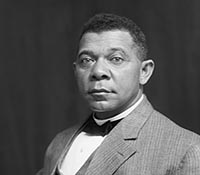
About The Photo:
- Click these links for more information about the above photograph and its photographer.
