Boynton v. Virginia


December 5 …
Boynton v. Virginia was a landmark U.S. Supreme Court case in 1960 that played a crucial role in dismantling segregation in public accommodations related to interstate travel.
The Court’s ruling — decided on December 5, 1960 — affirmed the federal government’s power to regulate interstate commerce, significantly advancing the civil rights movement and further challenging racial segregation in the American South.
The case originated in 1958 when Bruce Boynton, an African American Howard University law student, was arrested for sitting in the “whites-only” section of a bus terminal restaurant in Richmond, VA. Traveling on an interstate bus from Washington, DC to Alabama, Boynton sought to adhere to the Supreme Court’s previous decision in Morgan v. Virginia, which had abolished segregation on interstate buses.
Nevertheless, he was arrested due to Virginia’s noncompliance with federal desegregation laws at bus terminals. With the support of the NAACP, Boynton contested his arrest, arguing that the segregation violated the Interstate Commerce Act, which governs interstate travel.
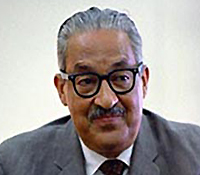
Boynton’s case was crucial as it tackled segregation in bus terminals and other public accommodations along interstate travel routes. The primary parties involved were Bruce Boynton, the plaintiff who was arrested for occupying a segregated area, and the state of Virginia, which defended its segregation policies. NAACP’s Thurgood Marshall argued the case for Boynton.
His legal challenge, backed by the prominent civil rights attorneys from the NAACP, aimed to determine whether the segregation at interstate facilities breached federal law. The U.S. Supreme Court heard the case on October 12, 1960, with Boynton represented by civil rights lawyers who contended that segregation in bus terminals infringed upon the Interstate Commerce Act, which banned discrimination in interstate travel.
On December 5, the Supreme Court ruled in favor of Boynton with a 7-2 decision. The Court concluded that segregation in interstate travel facilities, such as bus terminals and waiting areas, contravened the Interstate Commerce Act. This ruling was pivotal as it marked a significant advancement in the legal fight against segregation, strengthening the federal government’s authority to regulate interstate commerce and dismantle discriminatory practices.
Although it did not immediately ban all segregation in the South, it laid the groundwork for the 1961 Freedom Rides, where civil rights activists directly challenged segregation by traveling on buses through the South in defiance of the ruling. The case also had a lasting influence on civil rights legislation, helping to pave the way for the Civil Rights Act of 1964 and further desegregation efforts.
The decision was a landmark moment in the larger Civil Rights Movement, establishing a legal precedent for contesting segregation in public spaces. While it did not provide an instant solution to the deeply entrenched system of segregation in the South, it generated vital momentum for the movement, inspiring future legal challenges and direct-action campaigns.
Celebrated by civil rights advocates, the Boynton v. Virginia ruling is remembered as a key event in the fight for racial equality. Although Bruce Boynton did not receive immediate recognition for his contribution, the case profoundly shaped American culture, laying the foundation for the broader civil rights triumphs of the 1960s.