

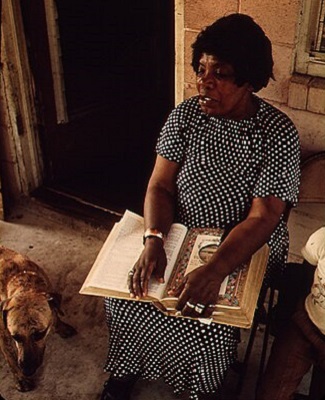
Bessie Jones
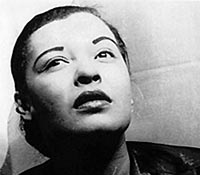
February 19 …
Bessie Jones was a vital preserver of African American folk traditions whose music and storytelling helped carry the sounds of the Georgia Sea Islands to national and international audiences.
Born on February 19, 1902 in rural Smithville, GA, Jones later relocated to the coastal area of St. Simons Island, where she immersed herself in the rich musical traditions of the Gullah Geechee culture. Growing up in a community steeped in oral traditions, spirituals, work songs, and ring shouts, she learned music in an informal setting rather than through formal schooling. Her early influences came from family members and local singers who transmitted songs passed down through generations, alongside the religious practices of her community, which profoundly shaped her repertoire and performance style.
Jones gained prominence through her collaboration with folklorist Alan Lomax, who recorded her during the 1950s and helped introduce her music to a wider audience. She became a prominent figure in the Georgia Sea Island Singers, a group committed to preserving and performing traditional African American spirituals, work songs, and dances.
Through her performances at major folk festivals like the Newport Folk Festival, Jones showcased authentic coastal Southern traditions to diverse audiences. Her contemporaries included influential folk revivalists such as Pete Seeger and Odetta, who, like Jones, highlighted the cultural and political significance of traditional music.
Deeply rooted in tradition, Jones acted as both a cultural bearer and mentor within her community, passing down songs and performance practices to younger members of the Georgia Sea Island Singers and beyond. While she didn’t have formal “protégés” in the conventional sense, her influence reached generations of folk musicians and scholars studying and performing Gullah Geechee music.
Jones’s work was informed by the collective memory of enslaved Africans and their descendants, and she played a critical role in ensuring these traditions remained visible during a time when modernization posed a threat to their survival. Her artistic inspirations were less individual celebrities and more the ancestral voices of her community, whose music she preserved with extraordinary fidelity.
Jones received significant recognition later in life, including the esteemed National Heritage Fellowship from the National Endowment for the Arts in 1984, one of the highest honors in American folk and traditional arts. Additionally, she was awarded an honorary doctorate from Brown University, acknowledging her contributions as a cultural educator and preserver.
Through her recordings, performances, and unwavering dedication to tradition, Bessie Jones left an enduring legacy that continues to shape American music, enrich cultural understanding, and emphasize the historical significance of African American folk heritage.
