


Alonzo (Lonnie) Johnson
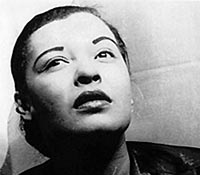
February 8 …
Alonzo (Lonnie) Johnson was a groundbreaking American musician whose mastery of the guitar and blues vocals made him a pivotal figure in the development of both blues and jazz.
Born in New Orleans on February 8, 1899, Johnson came from a musical family and was exposed early on to a diverse range of musical styles, from ragtime to classical. He initially played violin before gravitating toward the guitar, where his unique blend of technical precision and emotional expression quickly set him apart. By the 1920s, he had become a leading figure in the burgeoning blues scene, recording prolifically for Okeh Records and earning acclaim for his fluid, melodic guitar solos.
Johnson’s recordings in the 1920s and 1930s were among the first to feature sophisticated single-string guitar leads, a technique that predated and influenced the later development of electric blues and jazz guitar. His collaborations with jazz legends like Louis Armstrong, Duke Ellington, and Eddie Lang demonstrated his versatility and elevated the guitar’s role in ensemble settings. Notably, his duets with Lang are considered some of the earliest examples of jazz guitar interplay, highlighting Johnson’s ability to bridge the stylistic gap between blues and jazz with ease and elegance.
More than just a technical innovator, Johnson was also a powerful and expressive vocalist whose lyrics often explored themes of love, betrayal, and social struggle. His voice — tinged with melancholy and resilience — brought a deep emotional dimension to his music that resonated with audiences across racial and economic lines. Johnson’s songwriting helped shape the narrative tradition of the blues, offering intimate glimpses into the African American experience during the Jim Crow era and the Great Depression.
Johnson’s contributions extended far beyond his own recordings. His guitar work laid the groundwork for future blues and rock musicians, influencing icons such as B.B. King, Robert Johnson, and T-Bone Walker. In many ways, he served as a crucial link between the early acoustic blues traditions and the electric blues explosion that would dominate mid-20th-century music. His innovations in phrasing, fingerpicking, and lead playing were adopted and expanded upon by countless artists, ensuring his stylistic legacy would echo through generations.
Despite facing racial discrimination and periods of obscurity later in life, Johnson experienced a resurgence in the 1960s folk and blues revival, performing for new audiences who recognized his pioneering role in American music. His contributions were not only technical but also deeply cultural, helping to define the emotional and musical vocabulary of both blues and jazz.
The work of Alonzo (Lonnie) Johnson stands as a testament to the enduring power of innovation and expression, securing his place as a foundational figure in the story of American music.
