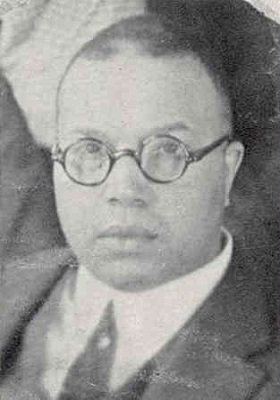
Vertner Woodson Tandy
May 17 …
Vertner Woodson Tandy was a pioneering architect, civic leader, and one of the seven founders of Alpha Phi Alpha Fraternity, Inc., the first intercollegiate Greek-letter fraternity established for African American men.
Born on May 17, 1885 in Lexington, KY, Tandy emerged from the post-Reconstruction South during a time when opportunities for Black professionals were severely limited. Despite these challenges, he would go on to leave a lasting imprint on American history through his leadership in education, fraternal life, and architecture.
Tandy’s academic journey was a testament to his perseverance and intellect. He began his collegiate studies at Tuskegee Institute and later transferred to Cornell University, where he made history as the university’s first African American architecture graduate.
While at Cornell, Tandy helped establish Alpha Phi Alpha in 1906, alongside six other students, to support the social, academic, and cultural development of Black men in predominantly white institutions. The fraternity would later grow into a national organization with a legacy of leadership and service in African American communities.
Following his graduation, Tandy became the first registered African American architect in the state of New York. His groundbreaking achievements in architecture included not just professional recognition, but also the creation of physical spaces that reflected the aspirations and dignity of African Americans in the early 20th century. In partnership with fellow Black architect George Washington Foster, Tandy co-founded the architectural firm Tandy & Foster, which would design some of the most iconic buildings serving Black communities during the Harlem Renaissance.
Among Tandy’s most notable architectural works is Villa Lewaro, the lavish mansion of entrepreneur and philanthropist Madam C.J. Walker in Irvington, NY. This Italianate-style estate stood as a powerful symbol of Black achievement and independence and remains a historic landmark today.
Tandy’s designs often blended classical elegance with modern functionality, offering an aesthetic that communicated both pride and progress in the Black experience. His architectural contributions helped shape the cultural identity of Black America during a period of intense racial segregation and discrimination.
Beyond his architectural accomplishments, Tandy was active in civic life and continued to advocate for racial equality and the advancement of African Americans. His involvement in Alpha Phi Alpha remained strong throughout his life, and he served as the fraternity’s first treasurer.
Tandy was also involved in other professional and social organizations, using his influence to open doors for younger generations of Black professionals. Through both his leadership and example, he emphasized the importance of excellence, self-determination, and community uplift.
Tandy died in 1949, but his legacy endures in the institutions he helped build, the lives he touched, and the buildings that still stand as monuments to his vision. As a barrier-breaking architect and a foundational figure in Black Greek life, he contributed profoundly to American architecture, culture, and history.
The life’s work of Vertner Woodson Tandy remains an inspiration for those who believe in the power of intellect, courage, and service to transform society.