
December 10 …
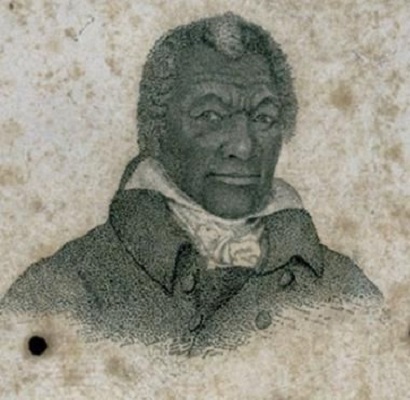
James Armistead Lafayette served the American colonies as a spy and double agent, providing significant intelligence that contributed to the American victory at Yorktown.
Born into slavery on December 10, 1748 in Virginia, Armistead belonged to William Armistead of New Kent County. Little documentation survives regarding his early education or childhood, as enslaved people were rarely recorded in detail in colonial records. Nevertheless, his literacy, discipline, and resourcefulness proved essential to his military service.
In 1781, during the Revolution’s final major campaigns, Armistead received permission from his enslaver to join the American forces under the command of the French officer Marquis de Lafayette. Lafayette assigned him to intelligence operations because he could move through British camps with less suspicion than white soldiers or officers.
Posing as a runaway enslaved man seeking refuge, Armistead infiltrated the camps of British General Benedict Arnold and later General Lord Charles Cornwallis. By feigning loyalty to the British cause, he gained access to military conversations, troop movements, supply conditions, and strategic plans. He then secretly relayed this information to American commanders and French allies.
Armistead’s most important contribution came during the Yorktown campaign in 1781. He provided crucial intelligence on Cornwallis’s troop positions, fortifications, and escape plans, helping coordinate the combined American and French siege of Yorktown. Historians have credited his reports with helping trap British forces, leading to Cornwallis’s surrender on October 19, 1781, a decisive event that effectively ended the war.
Despite his wartime service, Armistead was initially denied freedom, as Virginia law withheld emancipation from formerly enslaved people who had served only as spies or laborers rather than as enlisted soldiers. With support from Lafayette, who wrote a testimonial praising Armistead’s “essential services,” Armistead successfully petitioned the Virginia legislature for emancipation in 1787. In gratitude, he adopted the surname “Lafayette.”
James Armistead Lafayette later became a farmer in Virginia and remained locally respected as a Revolutionary War veteran until his death on August 9, 1830. His life stands as a powerful example of African American patriotism and intelligence work during the nation’s founding era.
Selected Sources:
- National Park Service. James Armistead Lafayette. “Yorktown Battlefield,” U.S. Department of the Interior.
- Pybus, Cassandra. Epic Journeys of Freedom: Runaway Slaves of the American Revolution and Their Global Quest for Liberty. Boston: Beacon Press, 2006.
- James Armistead Lafayette. Encyclopaedia Britannica.