Prince Hall Freemasonry
March 6 …
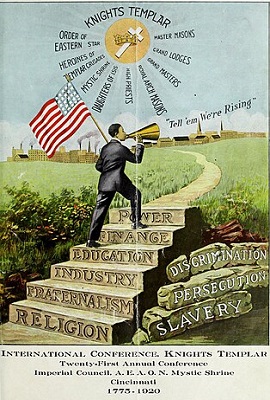
Prince Hall Freemasonry — the oldest and most influential African American fraternal organization in the United States — originated on March 6, 1775, when Prince Hall (Founder) and 14 other free Black men were initiated into a British military lodge in Boston after being denied admission to white colonial lodges.
From this beginning, they organized African Lodge No. 1, which in 1784 received a charter from the Grand Lodge of England as African Lodge No. 459. This charter established the institutional foundation for Black Freemasonry in North America and marked the emergence of an autonomous African American fraternal tradition grounded in mutual aid, moral instruction, and civic engagement.
The formation of Prince Hall Masonry must be understood in light of the racial exclusion that defined early American society. Denied participation in white lodges, Hall and his colleagues created a parallel institution that quickly became central to free Black community life.
In the late 18th and early 19th centuries, lodges in northern cities such as Boston, Philadelphia, and New York fostered literacy, leadership, and political awareness. After declaring independence in 1827, Prince Hall Masonry developed into a system of sovereign Grand Lodges. Its growth accelerated during the 19th century, particularly in the post–Civil War South, where it paralleled Black churches and schools as a stabilizing force during Reconstruction. Membership during this period reflected an emerging Black middle class of artisans, clergy, and professionals.
By the late 19th and early 20th centuries, Prince Hall Masonry had achieved national prominence and broad geographic reach. The fraternity expanded alongside urban Black populations, with lodges serving as centers for business networking, charitable activity, and civic leadership. At its height in the mid-20th century, the organization counted hundreds of thousands of members across thousands of lodges.
Although participation declined somewhat in the late 20th century — a trend shared by many American fraternal orders — Prince Hall Masonry has remained resilient into the 21st century. It maintains an estimated global membership exceeding 300,000 and continuing its emphasis on community service and leadership development.
The fraternity also left a significant architectural imprint on American cities, constructing major lodge buildings that symbolized Black institutional permanence and economic achievement. In Philadelphia, the Prince Hall Masonic Temple, completed in 1928, became a major center for civic and cultural life. In Chicago, the Prince Hall Masonic Temple, first built in 1895 and later expanded, stood as one of the largest Black-owned structures in the nation. Likewise, in Washington, the Prince Hall Masonic Temple functioned as a hub for fraternal, cultural, and civil rights activities. These buildings housed not only lodge meetings but also Black businesses, social organizations, and political gatherings, reinforcing the central role of Prince Hall Masonry in urban African American life.
Prince Hall Masonry has counted many prominent figures in African American history among its members. Paul Cuffe, initiated in the late 18th century, exemplified the fraternity’s early connections to Black Atlantic leadership. Richard Allen, initiated in the early 19th century, linked the order to the rise of independent Black religious institutions. In the modern era, Booker T. Washington (initiated 1895), Thurgood Marshall (initiated 1940), and Medgar Evers (initiated 1954) reflected the fraternity’s enduring influence in education, law, and civil rights activism. Their membership underscores the organization’s role as a training ground for leadership and social advancement.
In sum, Prince Hall Freemasonry evolved from a response to exclusion into a cornerstone of African American institutional life. From its founding in 1775 and chartering in 1784 to its expansion across the United States and beyond, it has fostered leadership, economic cooperation, and civic responsibility across generations. Its lodges — both as organizations and as prominent urban landmarks — are enduring symbols of Black resilience, collective identity, and the ongoing pursuit of social progress.
Selected Sources:
- Muraskin, William. “The Hidden Role of Fraternal Organizations in the Education of Black Adults: Prince Hall Freemasonry as a Case Study.” Adult Education, 26, no. 4 (1976): 235–252.
- Mihelich, Dennis N. “A Socioeconomic Portrait of Prince Hall Masonry in Nebraska, 1900–1920.” Great Plains Quarterly 17, no. 1 (1997): 35–47.
- “Prince Hall Freemasonry: Forming a Free African American Community.” Hinckley Journal of Politics, 17 (2016).
- Library of Congress. “Prince Hall Freemasonry: A Resource Guide.”
- Walkes, Joseph A. Black Square and Compass: 200 Years of Prince Hall Freemasonry. Richmond, VA: Macoy Publishing, 1981.