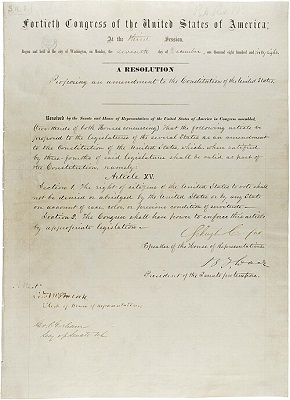
Fifteenth Amendment



February 3 …
The Fifteenth Amendment to the U.S. Constitution (Amendment XV) — ratified on February 3, 1870 — was a pivotal moment in the struggle for civil rights in the United States.
The amendment emerged from a long history of racial disenfranchisement leading up to the Civil War, especially in the Southern states, where laws systematically barred African Americans from political involvement. It prohibited the denial of the right to vote based on race, color, or previous condition of servitude, extending voting rights to African American men and marking a significant step in the post-Civil War era of Reconstruction.
Following the Civil War, the federal government aimed to ensure that the newly freed enslaved population could participate in the democratic process, culminating in the passage of the amendment. Signed into law by President Ulysses S. Grant, it was part of a broader set of Reconstruction Amendments — alongside the Thirteenth Amendment and Fourteenth Amendment — designed to protect the rights of formerly enslaved individuals.
Key figures in the creation and approval of the amendment included Senator Charles Sumner of Massachusetts and Representative Thaddeus Stevens of Pennsylvania, both fervent champions of civil rights and equality, advocating for legal safeguards for African Americans following the Confederacy’s defeat. African American activists and leaders, such as Frederick Douglass, also played a crucial role, tirelessly fighting to ensure that the political advancements of the Reconstruction era benefited Black men. Douglass and his contemporaries emphasized suffrage as an essential aspect of their new freedom.
While the amendment represented a significant victory, its immediate impact on American society was limited due to ongoing racial discrimination and barriers to Black voters, particularly in the South. Despite the legal affirmation of voting rights, tactics like poll taxes, literacy tests, and outright intimidation continued to disenfranchise African Americans. For many Black citizens, especially in the Jim Crow South, the promise of the amendment remained unfulfilled for decades, as state and local governments implemented systemic racism to undermine its effectiveness.
Nevertheless, the legacy of the amendment is profound. Over the years, it has served as a foundation for numerous civil rights battles, including the 20th-century struggle for full voting rights for African Americans. The landmark Voting Rights Act of 1965 aimed to eradicate discriminatory voting practices and ensure the comprehensive enforcement of this amendment.
Today, the Fifteenth Amendment remains a cornerstone of the American civil rights framework, continuing to influence movements for social justice, equality, and representation, and reminding us of the ongoing fight to secure voting rights for all citizens.