Charlayne Hunter-Gault


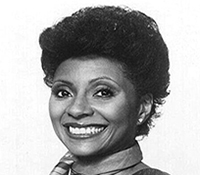
February 27 …
Charlayne Hunter-Gault is a pioneering journalist and civil rights figure whose career helped transform American broadcasting by centering race, global awareness, and human rights in mainstream media.
Born Alberta Charlayne Hunter on February 27, 1942 in Due West, SC, Hunter-Gault was raised in a military family — primarily by her mother and grandmother. They instilled in her a love of reading that fueled her intellectual curiosity.
She attended Wayne State University before making history as one of the first two African American students to integrate the University of Georgia. She and Hamilton E. Holmes enrolled on January 9, 1961 — and she subsequently graduated in 1963 with a degree in journalism.
Hunter-Gault’s desire to become a journalist was ignited in her childhood. Her experiences confronting segregation and resistance during her education deeply influenced her lifelong dedication to civil rights and honest reporting.
Hunter-Gault’s career began in print journalism, with positions at The New Yorker and later The New York Times, where she served as the Harlem bureau chief and shifted the coverage of Black communities towards more nuanced and accurate narratives. She transitioned into broadcast journalism with the Public Broadcasting Service (PBS). She was a national correspondent for “MacNeil/Lehrer NewsHour” and covered urgent issues such as apartheid and domestic inequality.
As Africa bureau chief for National Public Radio (NPR) and a correspondent for CNN, Hunter-Gault further expanded her global influence. She bridged African perspectives to American audiences and challenged narrow narratives about the continent.
Throughout her career, Hunter-Gault collaborated with and drew inspiration from prominent figures in journalism and civil rights, including contemporaries like Jim Lehrer and global leaders such as Nelson Mandela, whom she interviewed during crucial historical events. Her work was also shaped by the Civil Rights Movement and the legacy of earlier Black intellectuals like W.E.B. Du Bois. Her career has paved the way for generations of Black journalists in broadcast media, significantly impacting the portrayal of race, inequality, and global issues.
Hunter-Gault has received numerous accolades recognizing her contributions, including multiple Emmy Awards and Peabody Awards. She was designated as Journalist of the Year by the National Association of Black Journalists, and inducted into the NABJ Hall of Fame. The Washington Press Club Foundation bestowed upon her a Lifetime Achievement Award, and highlighted her decades of influence and excellence.
Through her reporting, writing, and advocacy, Charlayne Hunter-Gault has been instrumental in shaping American journalism, amplifying underrepresented voices, and connecting civil rights history to global discussions about justice and human dignity.