Carole Simpson


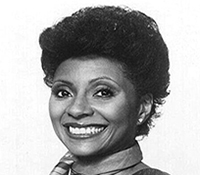
December 7 …
Carole Simpson is a trailblazing journalist whose groundbreaking career in radio and television transformed the visibility of Black women in news, while shaping public discourse on politics, culture, and social justice.
Born on December 7, 1940 in Chicago, Simpson grew up on the city’s South Side in a family that cherished education and storytelling, early influences that ignited her passion for journalism. Initially enrolled at the University of Illinois, she later transferred to the University of Michigan, where she earned her bachelor’s degree in journalism in 1962. She subsequently pursued graduate studies at the University of Iowa.
As one of the few Black students in her journalism program, Simpson encountered systemic barriers from the beginning, including rejection from Northwestern’s esteemed journalism school. Her drive was fueled by her admiration for journalists and fictional characters like Lois Lane, as well as meaningful interactions with civil rights leader Martin Luther King Jr., whose encouragement during a crucial early assignment profoundly shaped her sense of purpose.
Simpson began her career in Chicago radio at WCFL and WBBM before moving to television, where she made history as the first African American woman reporter at WMAQ-TV, eventually joining NBC News in 1975. There, she broke new ground as the first Black woman to anchor a major network newscast. She later joined ABC News, where she anchored the weekend edition of World News Tonight for over a decade.
Over her extensive four-decade career, Simpson reported on significant national and international events, including presidential elections, civil rights movements, and global conflicts, using journalism as a means to highlight inequality and humanize complex social issues. Her reporting style combined authority and empathy, reshaping how television news connected with diverse audiences.
Among her many historic achievements, Simpson became the first woman and the first person of color to moderate a U.S. presidential debate in 1992, featuring candidates George H.W. Bush, Bill Clinton, and Ross Perot. She received multiple Emmy Awards for her work and was named “Journalist of the Year” by the National Association of Black Journalists.
Working alongside notable figures like Peter Jennings, Barbara Walters, and Dan Rather, Simpson helped expand opportunities for women and minorities in a traditionally exclusive field. She also influenced newsroom policies to promote hiring equity and representation, leaving a lasting institutional legacy beyond her on-air contributions.
Later in her career, Simpson transitioned to education and mentorship, teaching journalism at Emerson College and establishing the Carole Simpson Scholarship to support aspiring minority journalists. Through her teaching, writing — including her memoir, Newslady — and leadership roles with organizations like the International Women’s Media Foundation, she nurtured future generations of reporters and storytellers.
The work and legacy of Carole Simpson is not only marked by her numerous groundbreaking achievements, but also by her enduring impact on American media, where she helped redefine who could tell the nation’s stories and how those narratives could shape society, culture, and history.